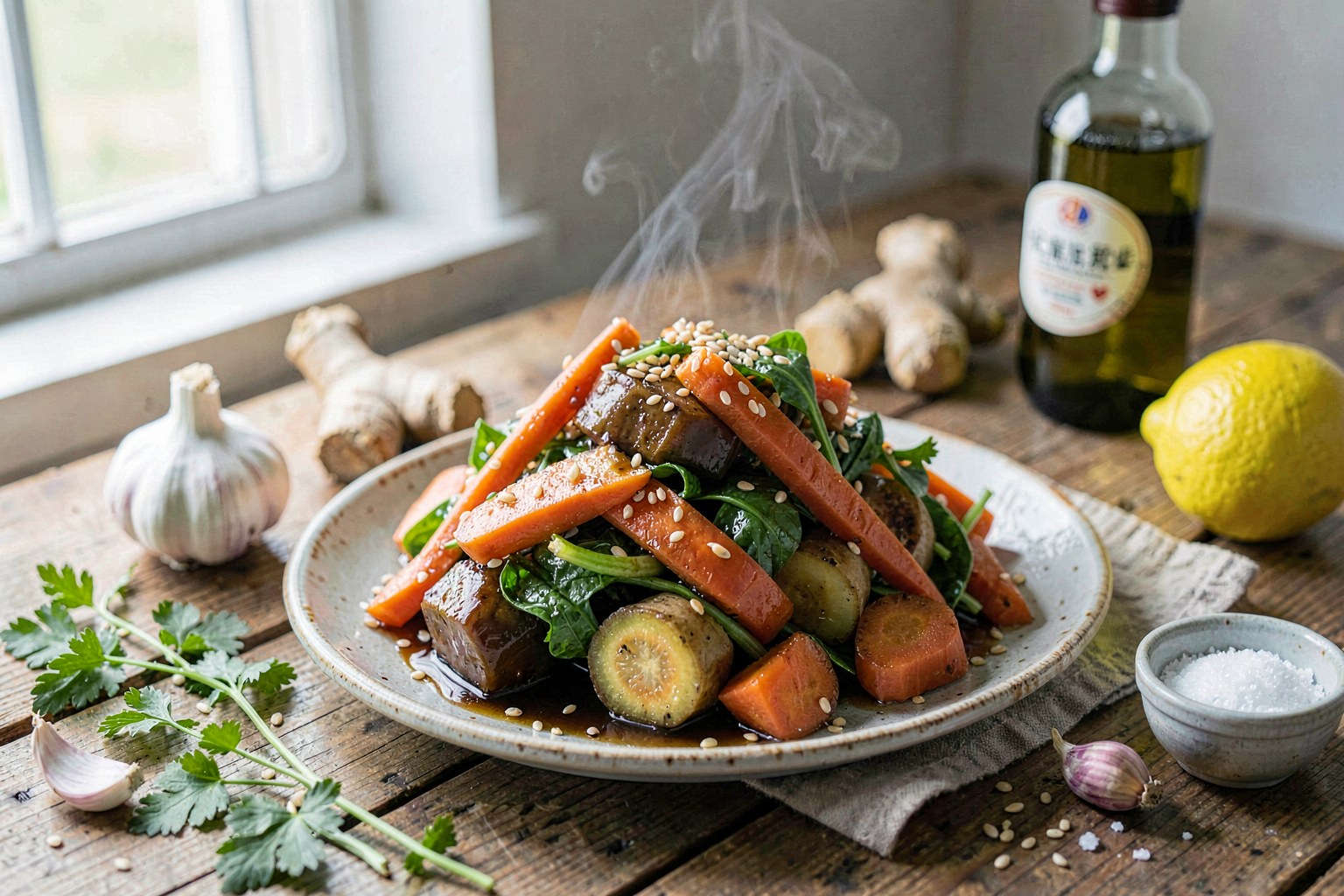
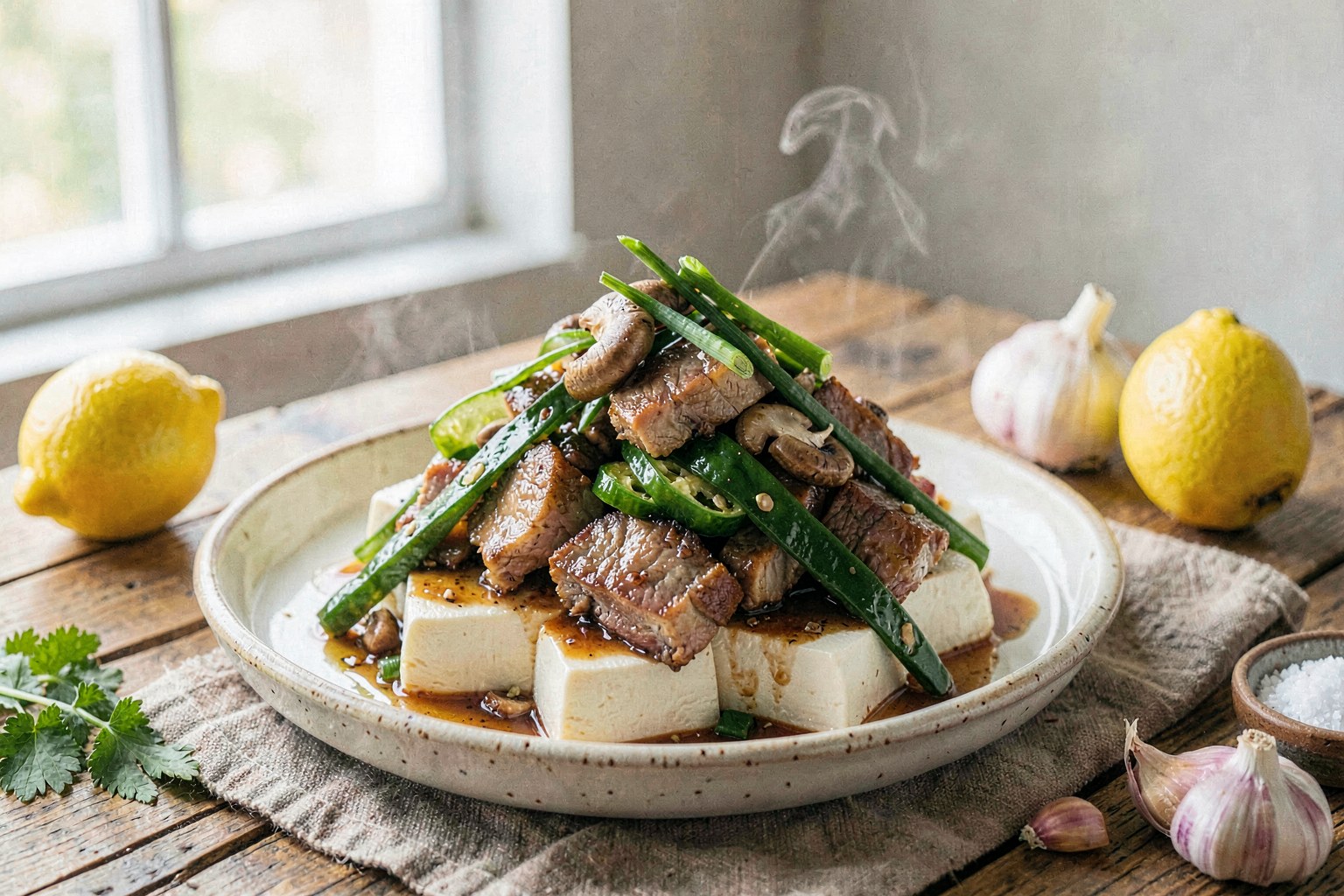
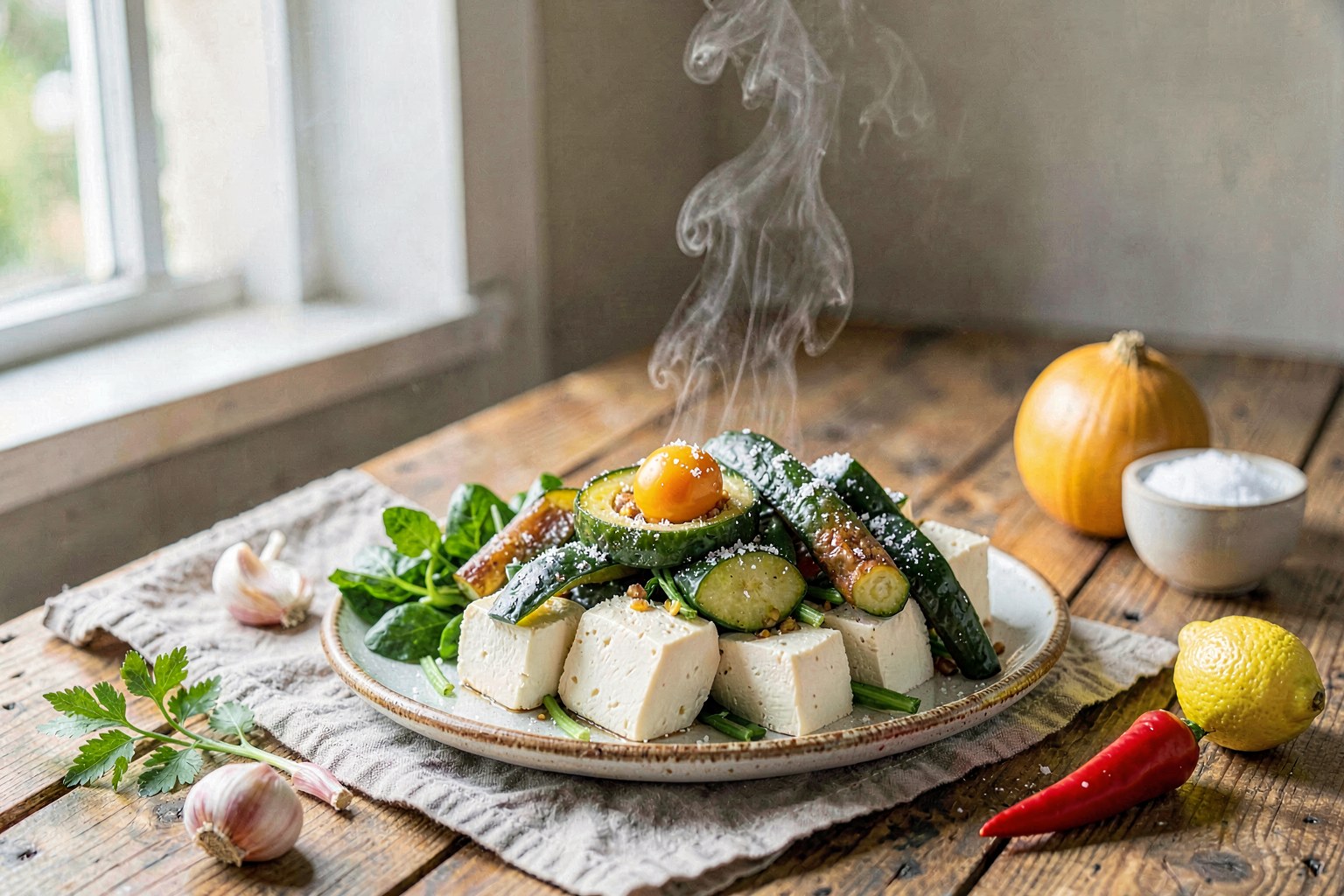
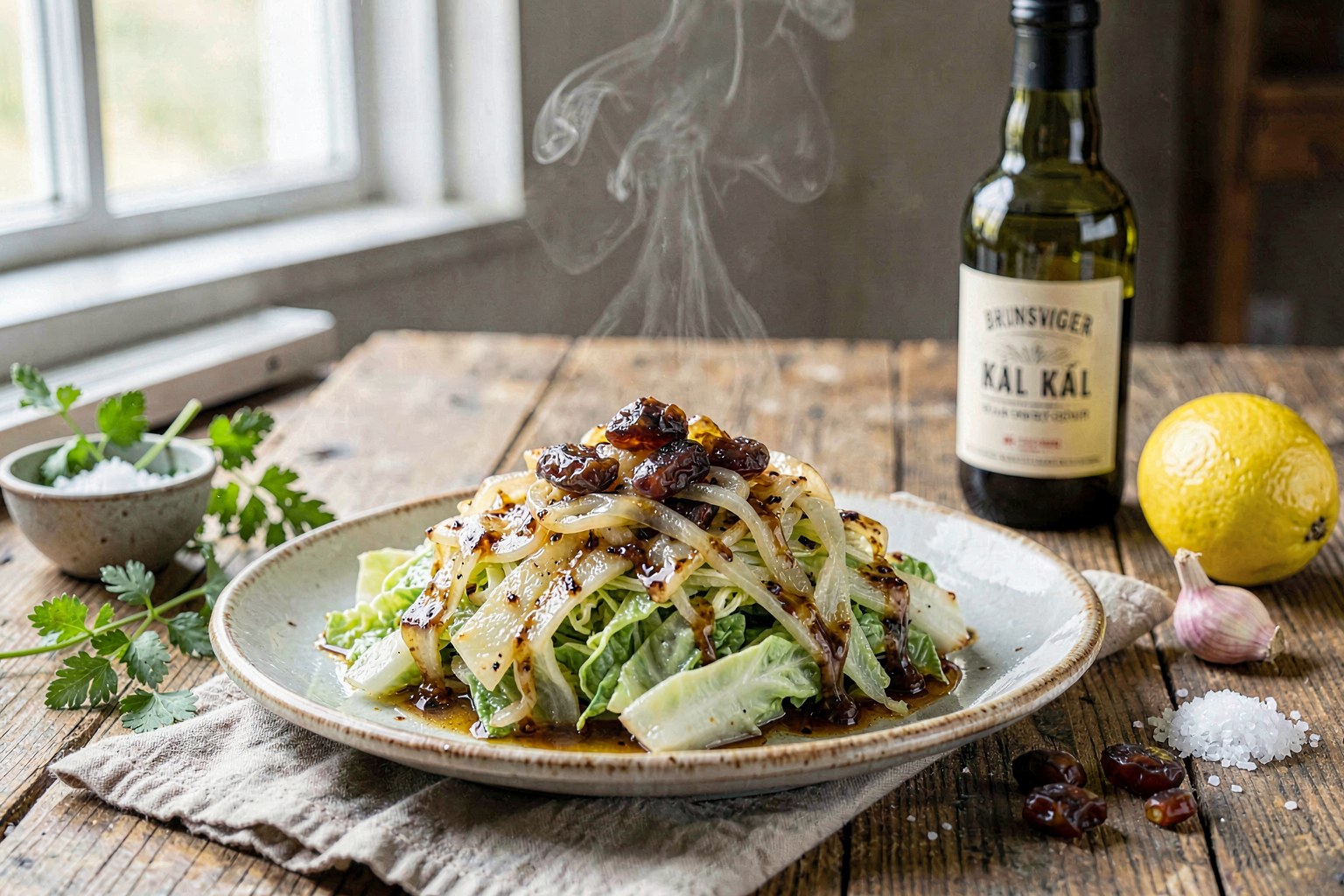
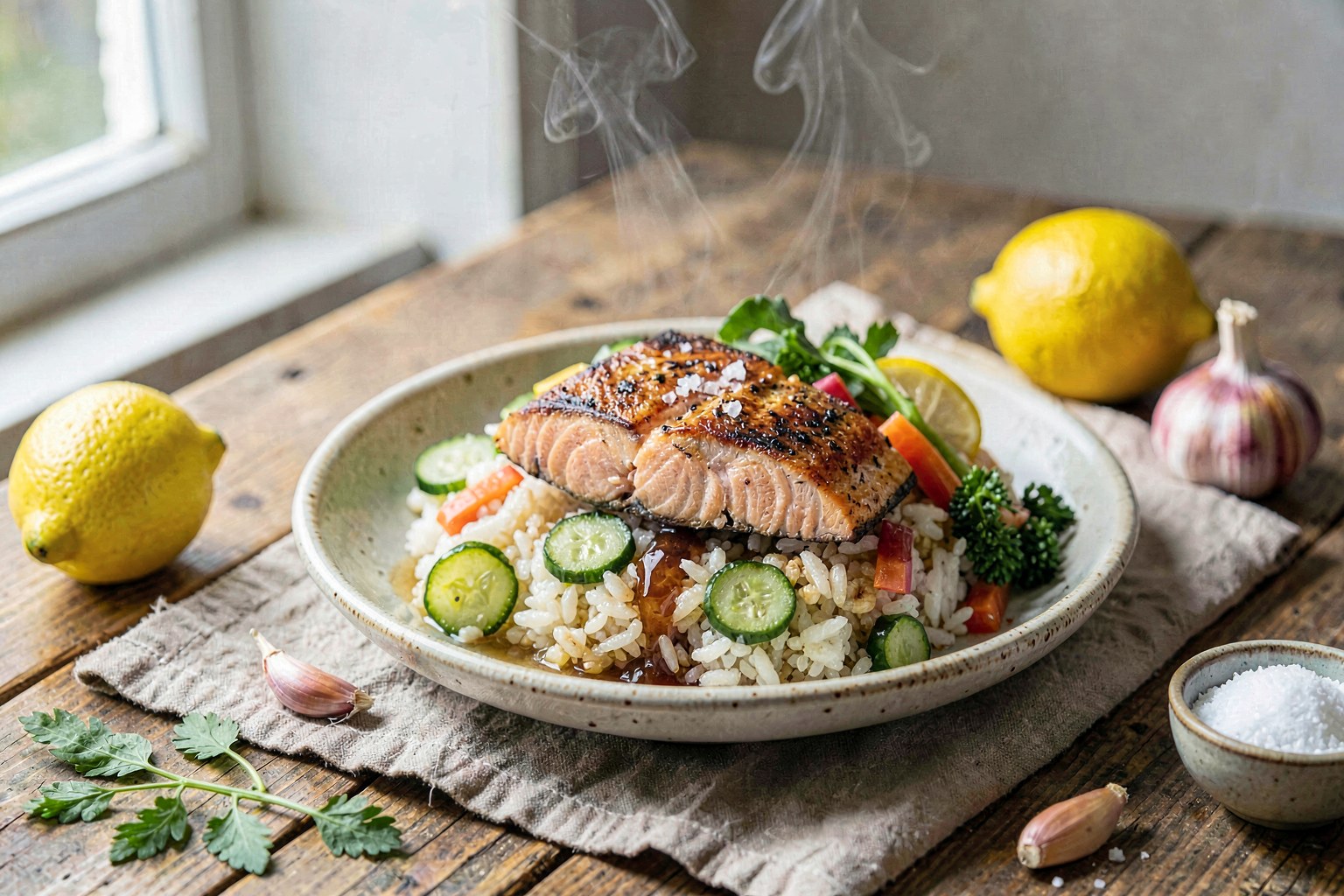
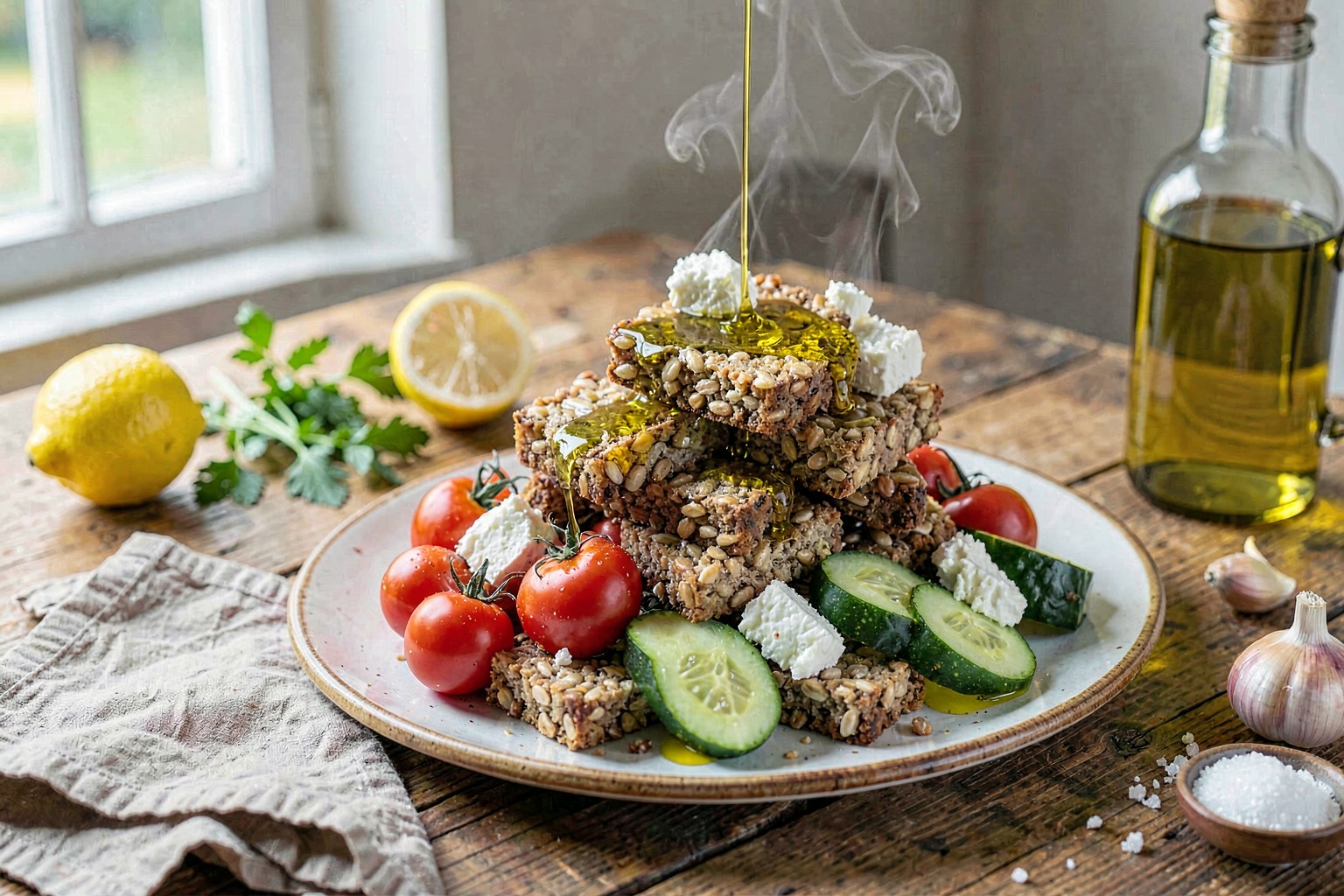
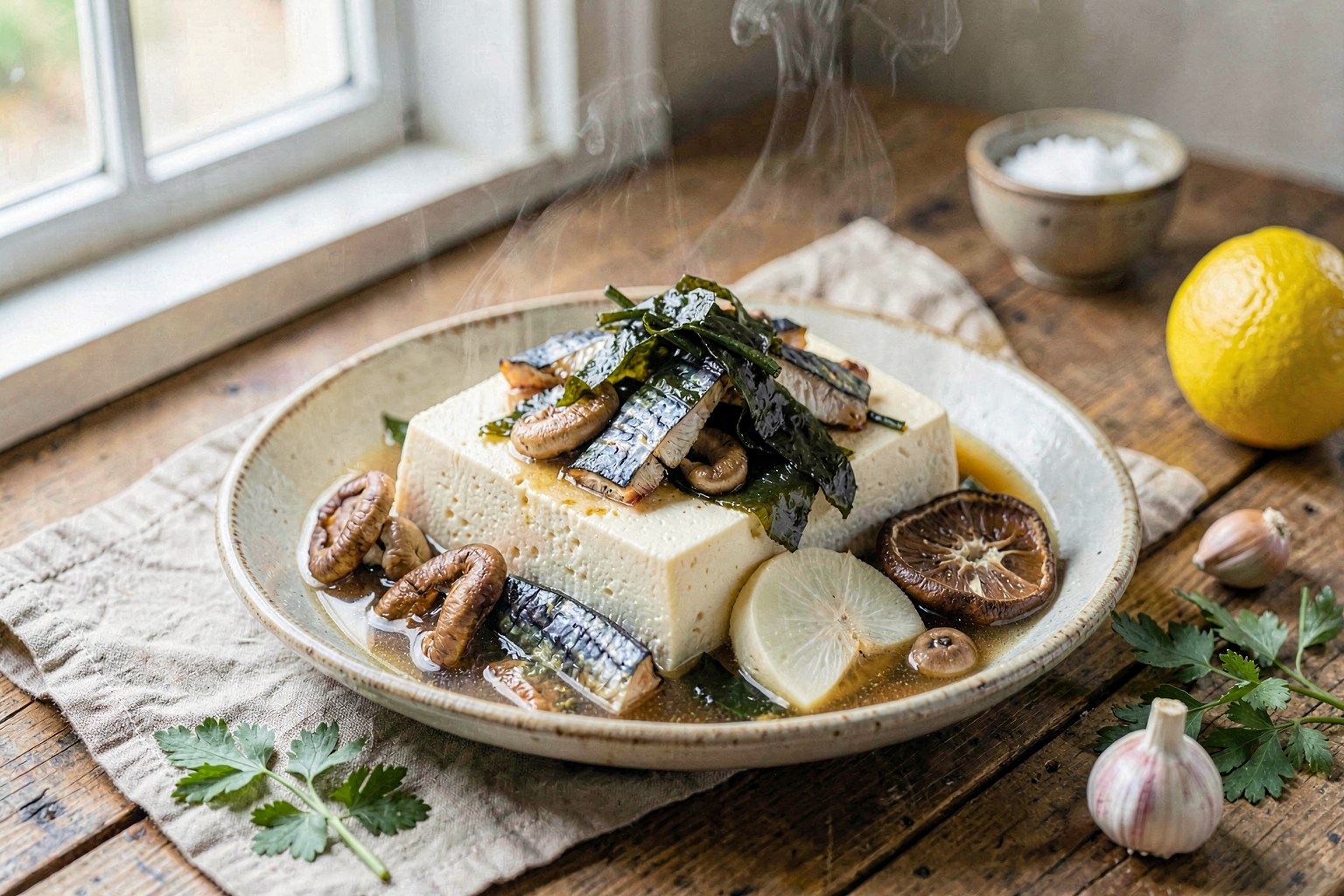
Okinawan Aji Tofu: Simmered Tofu with Salted Mackerel and Seaweed
A humble Okinawan staple where firm, organic tofu is gently simmered with wild-caught salted mackerel (aji), kombu, and shiitake in a savory dashi broth. This dish delivers a deep, umami-rich flavor profile without a single gram of refined sugar or seed oil, relying on the natural sweetness of vegetables and the richness of the fish to create a nourishing, longevity-focused dinner.
A little context
Traditionally, Aji Tofu is a 'nabemono' (simmered dish) from the Ryukyu Islands, designed to stretch protein and maximize umami. In the spirit of Okinawan longevity, we honor the technique of gentle simmering but strictly remove the traditional white sugar often used to balance the saltiness of the fish. Instead, we rely on the natural sweetness of caramelized daikon and the depth of a pure kombu-shiitake broth, ensuring the dish remains a true farm-to-table expression of the region's health principles.
Method
- 01
Rehydrate and Prep
Place the dried shiitake mushrooms in a bowl with 500ml of warm water and let soak for 30 minutes until soft. Remove mushrooms, squeeze them gently to release liquid, and reserve the soaking water. Wipe the kombu with a damp cloth (do not wash off the natural white dust, which is rich in umami).
- 02
Desalt the Mackerel
If using pre-salted mackerel, soak the fillets in cold water for 30 minutes to remove excess salt. Pat them completely dry with paper towels. Cut each fillet into two or three large chunks. This step is crucial to balance the sodium levels without needing refined sugar to counteract saltiness.
- 03
Build the Broth
In your Dutch oven, combine the reserved mushroom soaking water (strained through a fine-mesh sieve), the fresh filtered water to reach 500ml total, the kombu pieces, and the daikon radish slices. Bring to a gentle simmer over medium heat. Once simmering, remove the kombu after 10 minutes to prevent bitterness.
- 04
Simmer the Roots
Add the rehydrated shiitake mushrooms (sliced if large) to the pot. Lower the heat to low, cover, and simmer for 15 minutes until the daikon is tender but not falling apart. The daikon should be translucent, indicating it has released its natural sweetness into the broth.
- 05
Season and Add Fish
Stir in the coconut aminos and sea salt. Gently nestle the mackerel chunks into the broth. Simmer uncovered for 8-10 minutes. Do not stir vigorously; instead, spoon the broth over the fish to cook it evenly. The fish should be opaque and flake easily with a fork.
- 06
Add Tofu
Carefully slide the pressed tofu cubes into the pot. Simmer gently for another 5 minutes. Avoid boiling, as this will break the tofu. The tofu will absorb the savory, fish-infused broth.
- 07
Finish with Greens
Turn off the heat. Immediately stir in the fresh spinach or mizuna greens. The residual heat will wilt the greens perfectly in 2 minutes, preserving their vibrant color and heat-sensitive nutrients.
- 08
Serve
Ladle the tofu, fish, and broth into deep bowls. Garnish generously with fresh sliced shiso or scallions. Serve immediately while hot, ideally with a side of steamed brown rice or millet if desired, though the dish is complete on its own.
Pro tips
- ✦Sourcing the mackerel is key: Look for 'salted mackerel' (shiokara aji) at an Asian grocer or order online from a reputable seafood supplier. If you cannot find it, buy fresh, wild-caught mackerel, salt it heavily on both sides, and let it sit in the fridge for 1 hour before rinsing and using.
- ✦Never boil the tofu after adding it; a gentle simmer is all that is needed to warm it through and infuse flavor without compromising the texture.
- ✦The white powder on the kombu is mannitol, a natural umami compound. Do not scrub it off; simply wipe the surface with a damp cloth.
- ✦For a deeper umami kick without adding sugar, you can add a small piece of dried kelp (kombu) directly to the pot while simmering the daikon, removing it before serving.
Substitutions
- wild-caught salted mackerel → wild-caught salted sardines or herring (similar fatty acid profile and texture; adjust soaking time if saltier)
- coconut aminos → reduced-sodium tamari (gluten-free soy sauce) (ensure the brand does not add sugar or caramel color)
- daikon radish → white turnip or extra shiitake mushrooms (turnips offer a slightly sharper bite but similar texture when simmered)
Storage
Store in an airtight glass container in the refrigerator for up to 3 days. The flavors often improve on the second day as the tofu absorbs more broth. Reheat gently on the stovetop over low heat; do not microwave to avoid rubbery tofu.
What to serve with it
- Hot sencha green tea (rich in catechins) to complement the umami
- A glass of sparkling water with a wedge of fresh yuzu or lemon
- Steamed brown rice or millet to round out the meal if desired
FAQ
Can I use fresh mackerel instead of salted?+
Yes, but you must cure it. Salt the fresh fillets generously and let them sit in the fridge for 1 hour, then rinse thoroughly. This mimics the texture and flavor profile of the traditional salted fish and ensures the umami depth.
Why do we remove the kombu after 10 minutes?+
Leaving kombu in the pot too long while boiling can release glutamates that turn bitter and slimy. Removing it early captures the pure umami flavor without the downside.
Is this dish high in sodium?+
It contains sodium from the fish and salt, but by using wild-caught fish and no added refined sugar or processed bouillon, the sodium is balanced by high potassium (from daikon and greens) and is part of a nutrient-dense meal. Adjust salt at the end if you are strictly watching sodium intake.
Share this recipe
Notes from the community
Sign in to leave a note.
No notes yet — be the first.
You might also like