Baechu Kimchi from Scratch (Traditional Lacto-Fermented)
Crisp, spicy, and deeply tangy napa cabbage fermented with clean aromatics for maximum gut-microbiome support. This version honors the traditional lacto-fermentation process while eliminating refined sugars and seed oils, resulting in a probiotic-rich banchan that improves digestion and reduces inflammation.
A little context
Traditional kimchi often relies on glutinous rice flour paste and refined sugar to accelerate fermentation and add sweetness. We honor the tradition by using a salt-heavy brine instead of flour paste to keep the carb load low, and we replace white sugar with a minimal amount of date syrup to feed the microbes without disrupting blood sugar stability. The salted shrimp paste (saeujeot) is kept traditional for umami depth but sourced wild-caught to ensure a clean heavy-metal-free profile.
Method
- 01
Salt the cabbage
In a large bowl, layer the cabbage quarters and sprinkle generously with sea salt between each leaf. Pour 1L of filtered water over the cabbage to cover. Weigh down with a plate so leaves stay submerged. Rest for 2 hours at room temperature, turning occasionally.
- 02
Rinse and drain
Rinse the cabbage thoroughly under cold filtered water 3 times to remove excess salt. Drain in a colander for 30 minutes. The leaves should be limp but still crisp. Squeeze gently to remove standing water.
- 03
Make the paste
In a blender, combine garlic, ginger, gochugaru, salted shrimp paste, and date syrup. Blend until smooth. Add a splash of the reserved brine water if needed to help it blend.
- 04
Mix the kimchi
In a clean bowl, combine the drained cabbage, julienned daikon, and scallions. Pour the paste over the vegetables. Using gloved hands, massage the paste into every leaf, ensuring even distribution. Taste a small piece; it should be spicy and salty.
- 05
Pack the jar
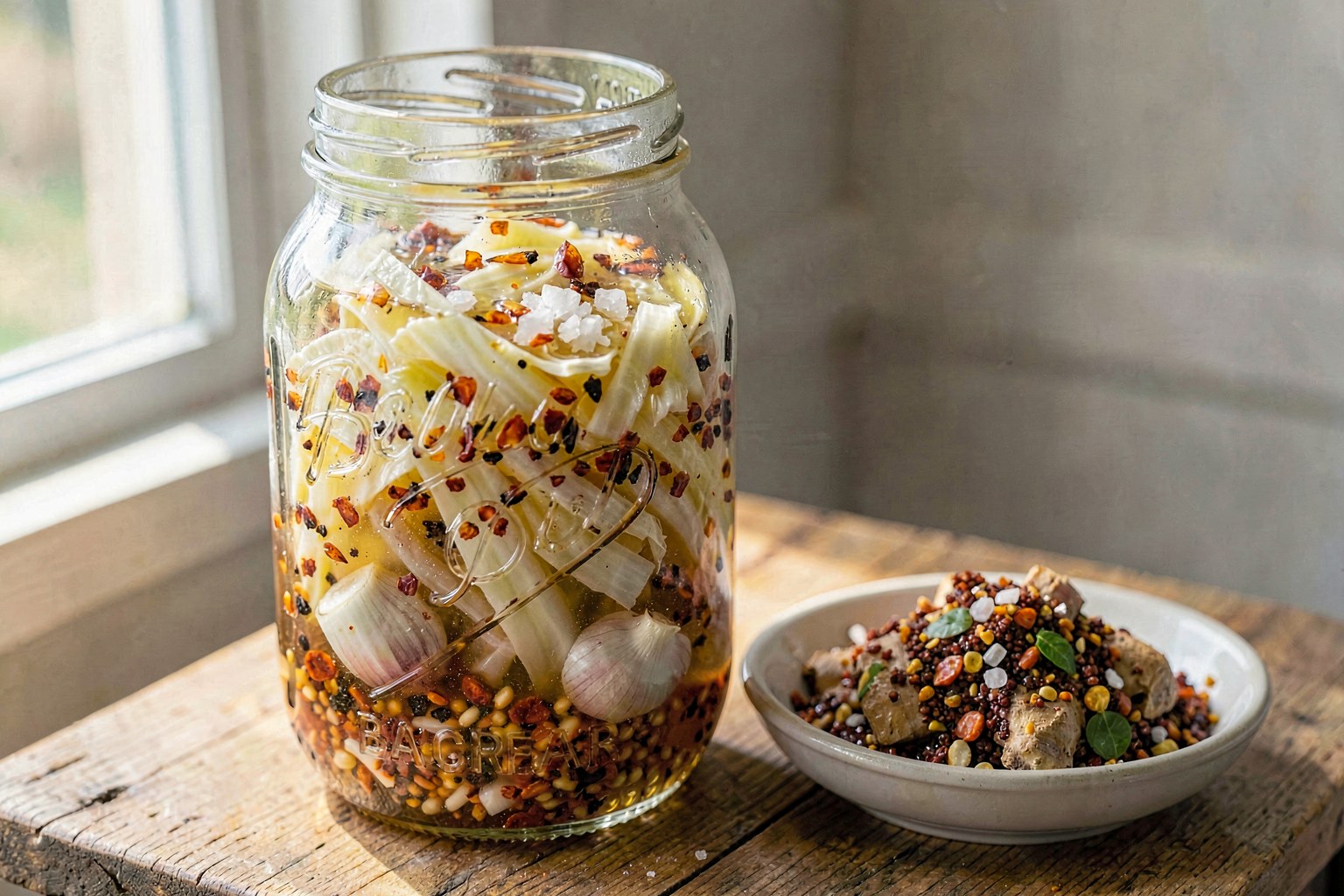
Press the kimchi tightly into the fermentation jar to remove air pockets. Leave at least 5 cm of headspace at the top. The vegetables must be fully submerged under their own juices.
- 06
Ferment
Place a fermentation weight on top. Seal the jar loosely or use an airlock lid. Store at room temperature (18-22°C / 65-72°F) for 3 to 7 days. Check daily for bubbles and burp the jar if using a tight seal.
- 07
Taste and store
Taste after day 3. When it reaches your desired tanginess, seal tightly and move to the refrigerator. Fermentation slows in the cold but continues slowly for months.
Pro tips
- ✦Source your gochugaru carefully; many commercial brands add sugar or anti-caking agents. Look for single-ingredient Korean chili flakes.
- ✦If the kimchi floats above the brine, add a little filtered water mixed with sea salt to submerge it fully.
- ✦White fuzz on the surface is usually Kahm yeast (harmless); scrape it off. Colored mold means discard.
- ✦Wear gloves when mixing to protect your skin from chili burn.
- ✦For maximum crunch, keep the radish in the fridge before cutting.
Shop this recipe
As an Amazon Associate we earn from qualifying purchases.
Substitutions
- wild-caught salted shrimp paste → vegan fish sauce or extra sea salt (maintains umami without animal products)
- date syrup → 1 tsp pure maple syrup (use sparingly to feed bacteria without spiking glucose)
- daikon radish → carrots or celery (adds different texture and polyphenol profile)
Storage
Refrigerate in a sealed glass jar for up to 6 months. The flavor deepens over time. Do not freeze as texture will degrade.
What to serve with it
- Matcha green tea
- Bone broth
- Sparkling water with lemon
- Steamed brown rice or quinoa
- Grilled wild-caught salmon
FAQ
Why use date syrup instead of sugar?+
Refined sugar spikes blood glucose. Date syrup provides minerals and feeds the bacteria slowly without the insulin spike, aligning with longevity protocols.
Can I skip the shrimp paste?+
Yes, kimchi can be vegan. You will lose some umami depth, but adding a dash of kombu or mushroom powder can help replace the savory note.
How do I know if it's safe to eat?+
If it smells sour and tangy (like vinegar), it is good. If it smells putrid, rotten, or like ammonia, discard it. White sediment is normal yeast.
Share this recipe
Notes from the community
Sign in to leave a note.
No notes yet — be the first.