Cava Seco: The Perfect Spanish Aperitivo
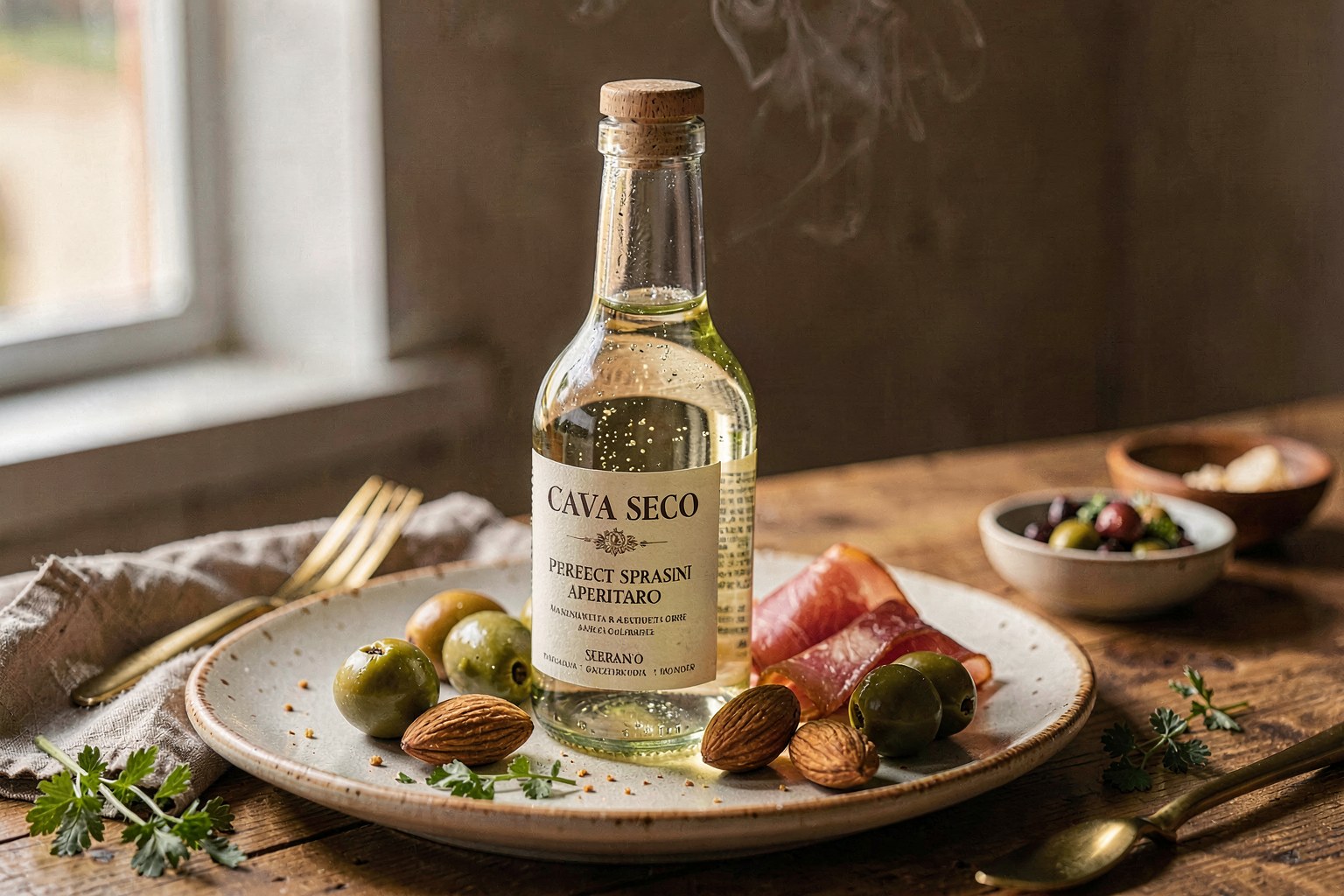
Cava Seco is a crisp, dry sparkling wine from Catalonia, offering bright acidity and subtle notes of green apple and citrus. It serves as the quintessential Spanish aperitivo, refreshing the palate before a meal or pairing effortlessly with light tapas like olives, almonds, and cured ham.
A little context
Originating in the Penedès region of Catalonia in the late 19th century, Cava is produced using the traditional method (méthode traditionnelle), the same process used for Champagne. The term 'Seco' in Spanish wine labeling historically indicated a specific sweetness level, though today it generally refers to a dry style (17–32 g/L residual sugar) that is less sweet than 'Demi-Sec' but slightly sweeter than 'Brut'. In Spanish culture, these wines are often enjoyed during 'la sobremesa' or as a pre-dinner drink, reflecting a social tradition of leisurely dining and conversation.
Method
- 01
Chill the wine
Place the bottle of Cava in the refrigerator at least 3 hours before serving. The ideal serving temperature is between 6°C and 8°C (43°F–46°F) to ensure the bubbles remain lively and the acidity is crisp.
- 02
Prepare the tapas
While the wine chills, arrange the olives, toasted Marcona almonds, and Serrano ham on small serving plates or in bowls. If using olives, you can toss them with a tiny drizzle of extra virgin olive oil and a sprig of fresh thyme for aroma.
- 03
Open the bottle safely
Remove the foil and loosen the wire cage (muselet) without removing it completely. Place your thumb firmly over the cork, tilt the bottle at a 45-degree angle away from your face and guests. Slowly twist the base of the bottle, not the cork, until you hear a gentle sigh. Avoid a loud pop to preserve the carbonation.
- 04
Pour with care
Pour the Cava into chilled flutes or tulip glasses. Start by pouring down the side of the glass to minimize foam, then straighten the glass and pour into the center to build a fine, persistent bead of bubbles. Fill each glass only two-thirds full to allow the aromas to develop.
- 05
Serve immediately
Present the wine alongside the prepared olives, almonds, and ham. Encourage guests to enjoy the wine while the bubbles are at their peak activity, typically within the first 15 minutes of pouring.
Pro tips
- ✦Never shake the bottle before opening; this forces carbon dioxide into the liquid and causes a messy eruption.
- ✦If you don't have a specialized opener, use a kitchen towel wrapped around the cork for grip and safety.
- ✦Cava Seco pairs exceptionally well with fried calamari, patatas bravas, and aged Manchego cheese.
- ✦Store an opened bottle in the fridge with a sparkling wine stopper; it will stay fresh for 24 to 48 hours.
- ✦Avoid stirring the wine in the glass, as this releases carbonation too quickly.
Substitutions
- Cava Seco → Brut Cava or dry Prosecco (Prosecco is fruitier and less yeasty, but works well for casual pairings)
- Serrano ham → Prosciutto or Manchego cheese (Cheese is a classic vegetarian alternative that complements the acidity)
- Manzanilla olives → Kalamata or green olives (Kalamata offers a bolder, fruitier flavor profile)
Storage
Unopened Cava can be stored in a cool, dark place for up to 2 years. Once opened, refrigerate immediately with a stopper and consume within 24-48 hours for best quality.
What to serve with it
- Fried calamari
- Patatas bravas
- Manchego cheese
- Gambas al ajillo (garlic shrimp)
- Pintxos
- Light salads with vinaigrette
FAQ
Is Cava Seco the same as Brut?+
Not exactly. 'Seco' (Dry) in Spanish labeling historically meant a specific sweetness range (17-32 g/L), which is actually sweeter than 'Brut' (0-12 g/L). However, in modern casual usage, 'Cava Seco' often refers generically to dry, non-sweet styles. Check the label for 'Brut' if you want the driest option.
Can I use a regular wine opener?+
No. Cava bottles are under high pressure (6 atmospheres). Use a standard corkscrew only if you have removed the wire cage and are ready to pour immediately, but a specialized sparkling stopper or the manual release technique is safer.