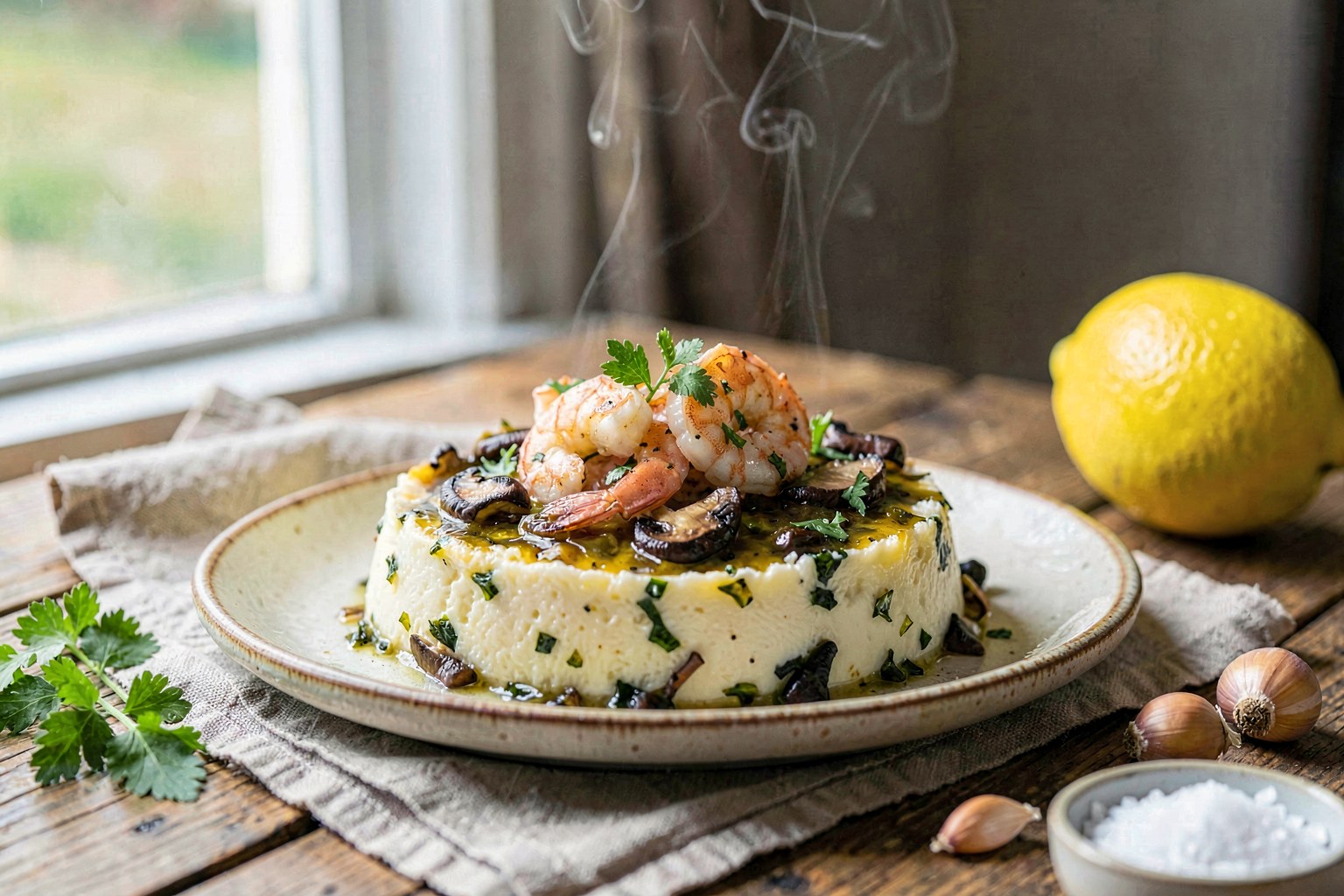
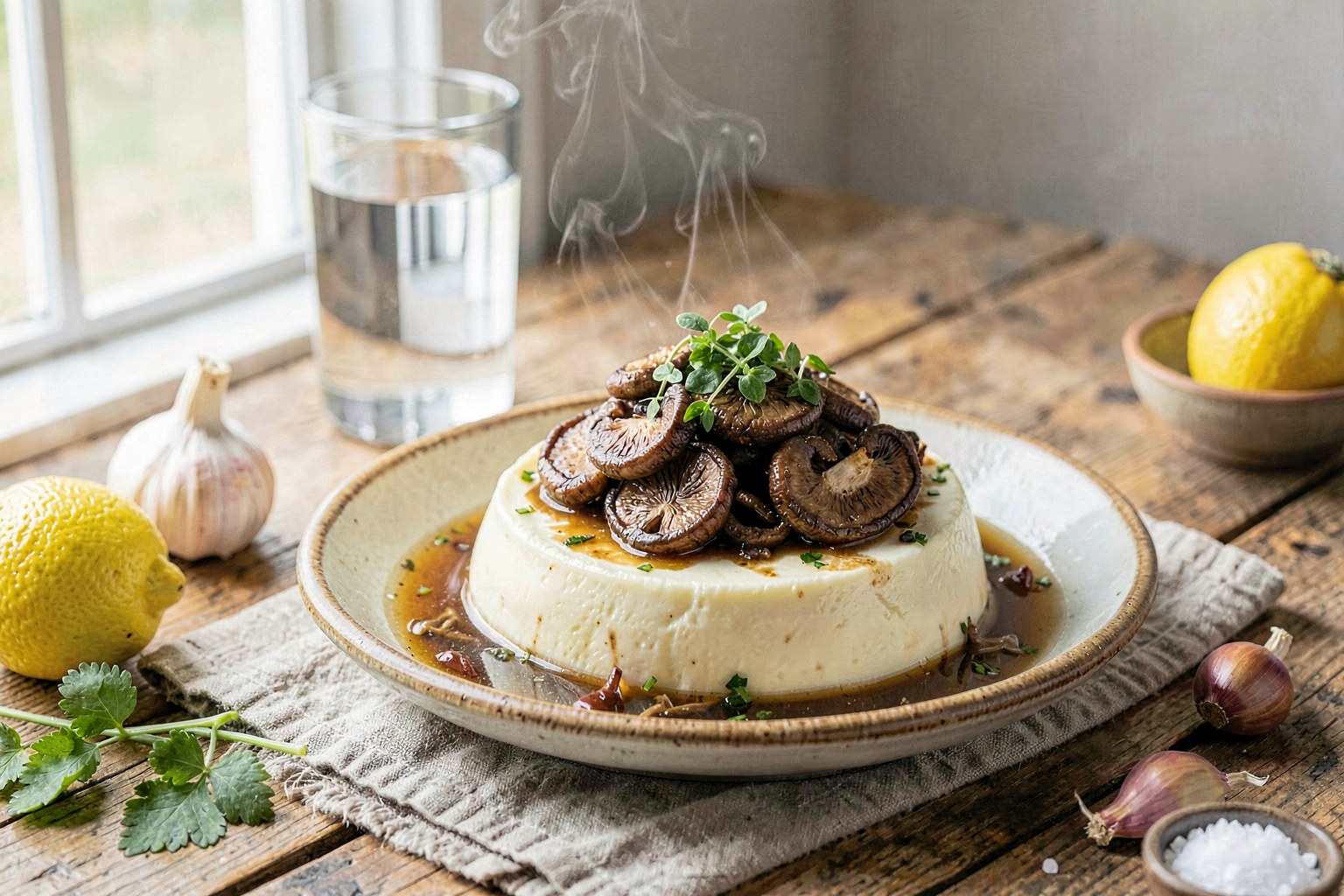
Chawanmushi with Shiitake & Mitsuba (Japanese Washoku Tradition)
Silken steamed egg custard infused with homemade kombu-shiitake dashi, topped with earthy fresh shiitake and aromatic mitsuba. A savory, umami-rich lunch that honors the Japanese tradition of slow-steamed simplicity while adhering to sugar-free, seed-oil-free standards.
A little context
Chawanmushi is a staple of Washoku, traditionally relying on the deep umami of dashi rather than sugar. We honor this by using a slow-simmered kombu and dried shiitake broth instead of processed bouillon cubes or sweetened mirin, stripping out industrial seed oils and refined sugars that often appear in modern adaptations.
Method
- 01
Prepare the Dashi
Combine 500 ml water, kombu, and dried shiitake in a pot. Soak for 30 minutes, then heat gently over low-medium heat. As soon as small bubbles appear at the edge (approx 80°C/175°F), remove kombu and mushrooms. Do not boil.
- 02
Strain and Cool
Strain the dashi through a fine mesh sieve into a heat-proof jug. Allow it to cool to room temperature (approx 40°C/105°F) before mixing with eggs to prevent curdling.
- 03
Whisk the Eggs
In a bowl, lightly whisk the pasture-raised eggs just enough to blend yolks and whites. Do not over-whisk to avoid foam. Add tamari and sea salt to the eggs and mix gently.
- 04
Combine and Strain
Pour the cooled dashi into the egg mixture slowly. Stir gently. Pass the mixture through a fine mesh sieve into a jug to remove chalaza and air bubbles for a smooth texture.
- 05
Assemble Cups
Place 2-3 slices of fresh shiitake into each of the 4 cups. Pour the egg-dashi mixture through a sieve into the cups, filling them 3/4 full to allow for expansion.
- 06
Steam
Cover cups with foil or small plates. Place in a steamer over simmering water (not boiling). Steam on low heat for 15-20 minutes until the center is set but still slightly jiggly.
- 07
Garnish and Serve
Remove from heat and let rest for 2 minutes. Top with chopped mitsuba immediately before serving to preserve its fresh aroma.
Pro tips
- ✦Temperature control is critical: if the dashi is too hot, you will scramble the eggs in the bowl.
- ✦Always strain the custard mixture; skipping this step results in a textured, rather than silken, finish.
- ✦Source organic mitsuba or Italian parsley with deep green, unblemished leaves for maximum nutrient density.
- ✦Keep the steamer water at a gentle simmer; boiling water will create holes in the custard surface.
Shop this recipe
As an Amazon Associate we earn from qualifying purchases.
Substitutions
- mitsuba → Italian parsley + chives (mimics the fresh, herbal note of mitsuba)
- fresh shiitake → fresh enoki or maitake mushrooms (adjust cooking time slightly for thinner mushrooms)
Storage
Refrigerate in airtight glass container for up to 2 days. Best served fresh; texture firms up when cold.
What to serve with it
- hot sencha green tea
- small side of pickled daikon
- warm miso soup with tofu
FAQ
Can I use katsuobushi (bonito flakes) instead of dried shiitake?+
Yes, traditional dashi uses bonito. For this version, we use dried shiitake to keep it vegetarian and avoid potential heavy metals in some fish stocks, though wild-caught bonito is acceptable if pescatarian.
Why did my custard turn out bubbly?+
This usually happens if the water was boiling too hard during steaming or if you didn't strain the egg mixture to remove air bubbles.
Is tamari safe for this recipe?+
Yes, provided you choose a gluten-free, sugar-free version. Traditional shoyu often contains wheat and sometimes added sugar.
Share this recipe
Notes from the community
Sign in to leave a note.
No notes yet — be the first.
You might also like