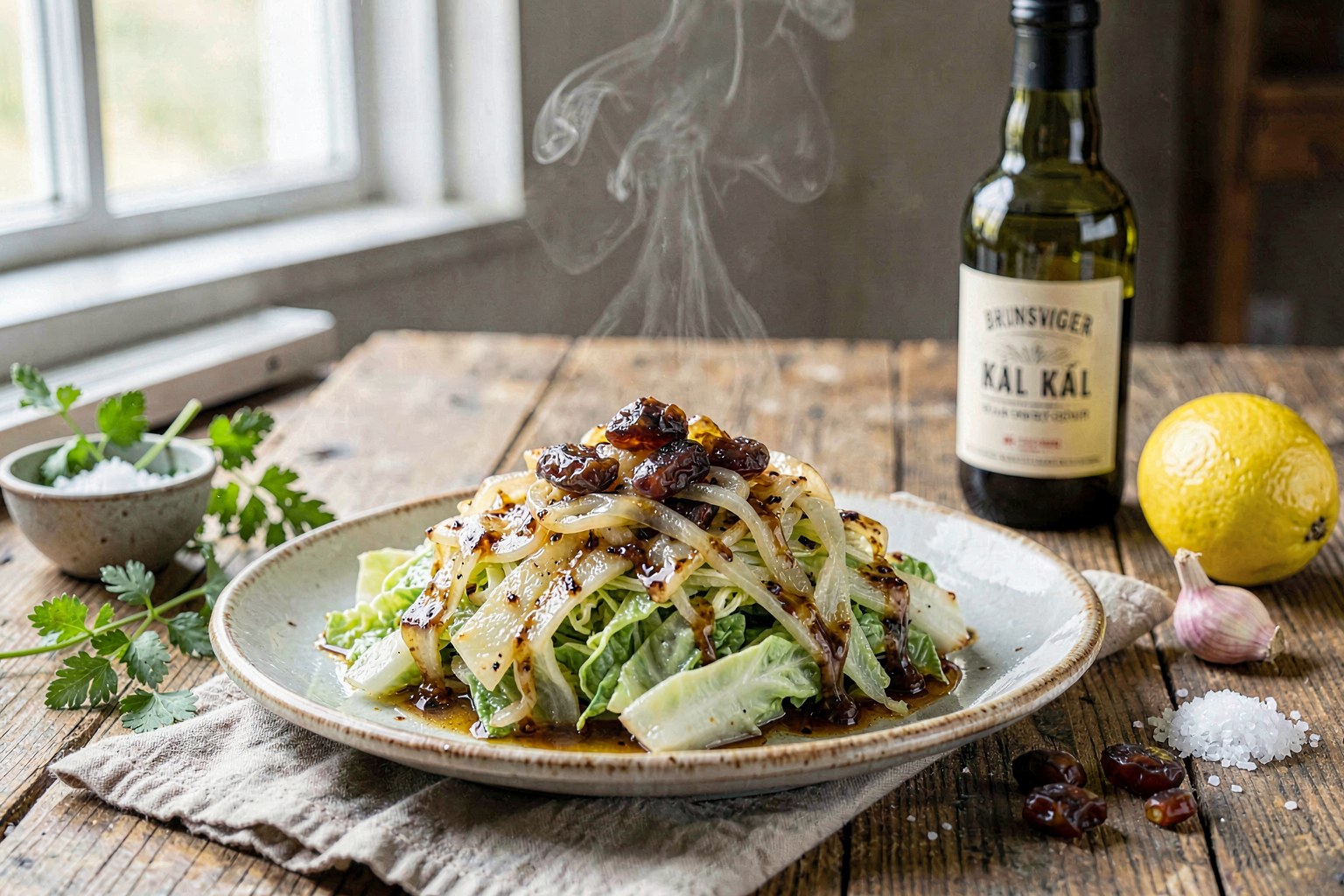
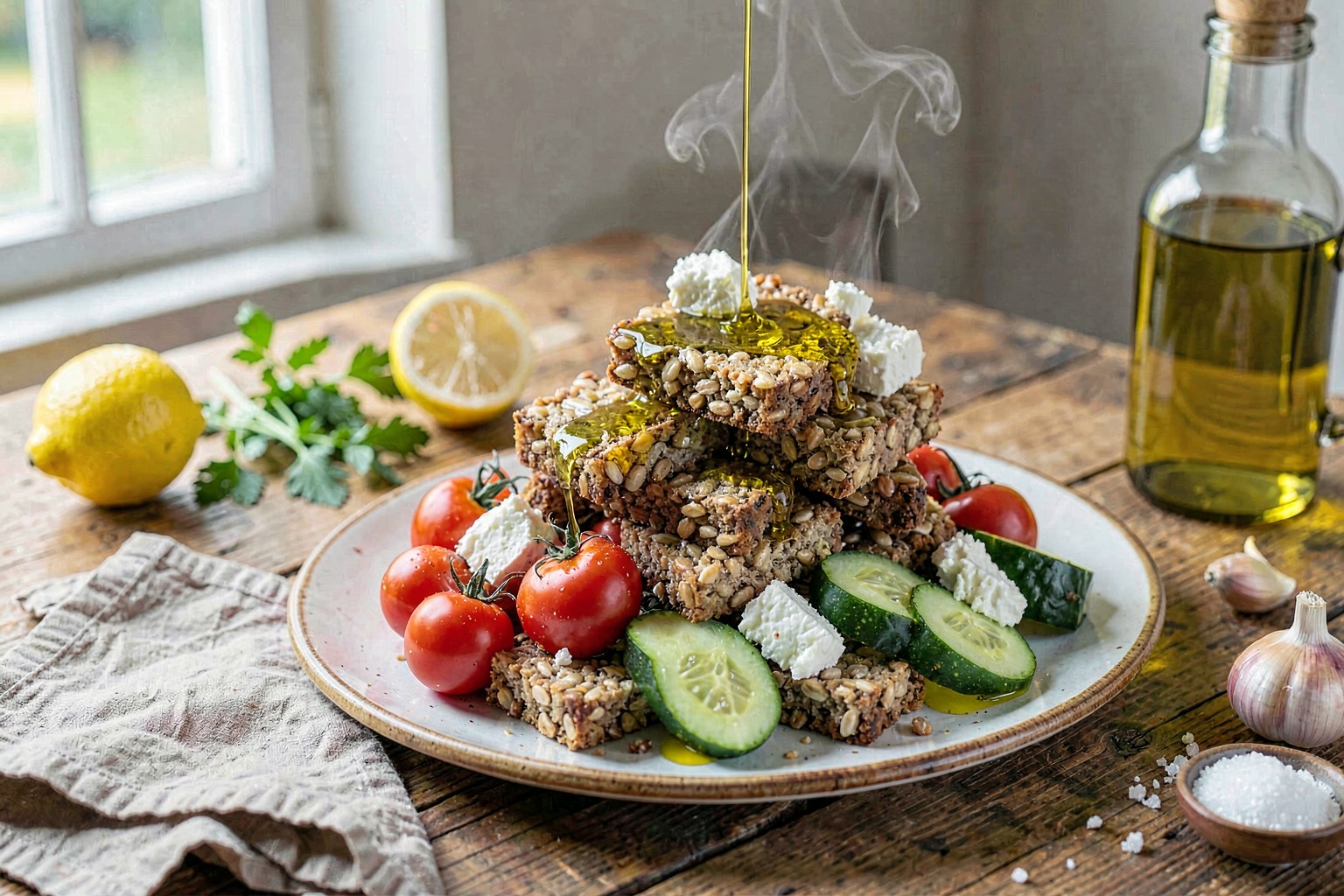
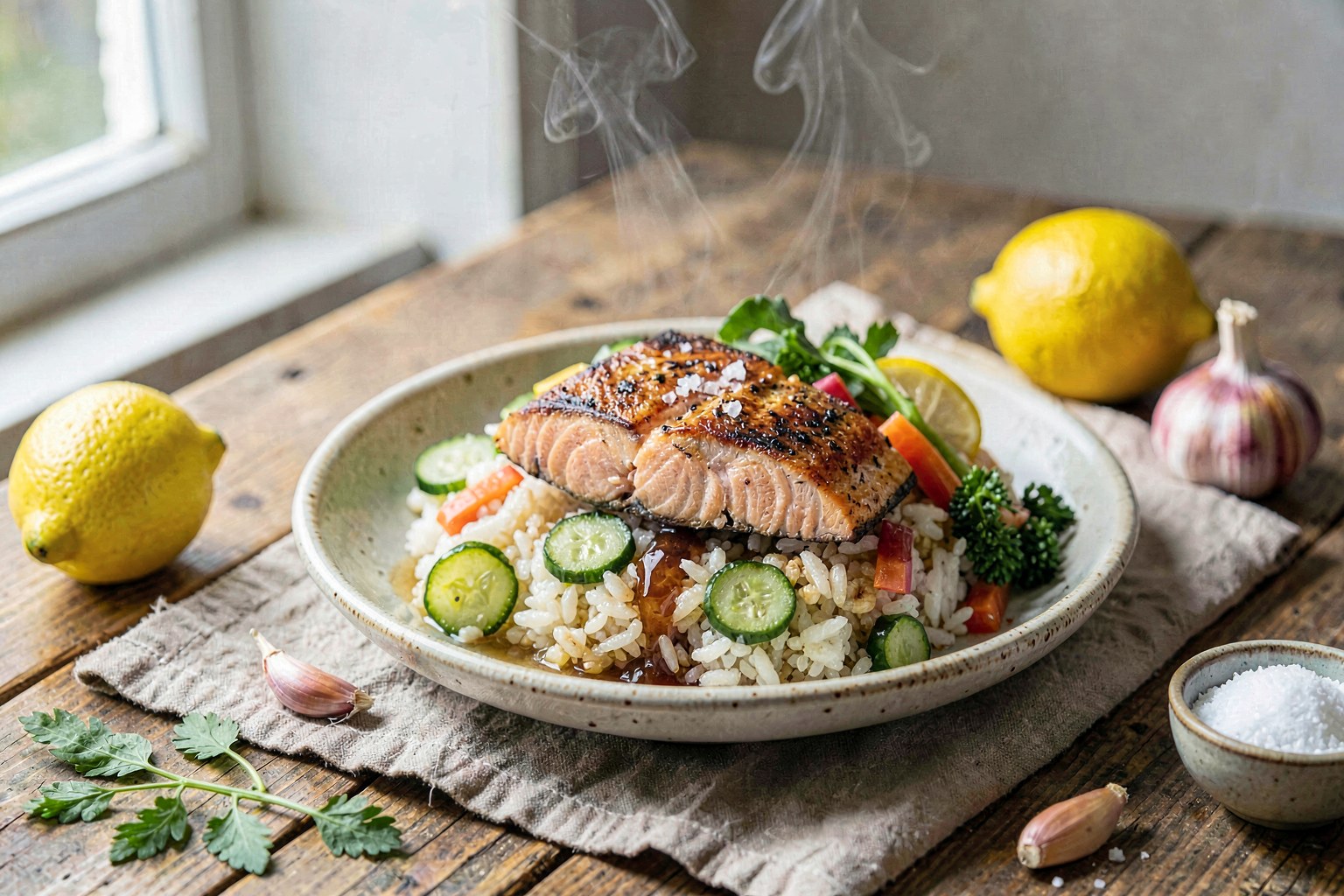
Seared Wild Salmon Chirashi-Zushi with Date-Sweetened Vinegar Rice
A vibrant bowl of vinegared short-grain rice topped with seared wild salmon, crisp quick-pickles, and fresh seasonal vegetables. This version honors the Edo-period tradition while removing refined sugar and seed oils for a longevity-focused meal rich in omega-3s and polyphenols.
A little context
Chirashi-zushi traditionally features scattered toppings over seasoned rice, often sweetened with refined sugar in modern variations. We honor the Washoku balance of flavors by using date syrup for a lower-glycemic sweetness and avocado oil for high-heat searing instead of neutral seed oils. This approach preserves the texture and integrity of the ingredients while aligning with modern longevity standards.
Method
- 01
Rinse and Soak Rice
Rinse 300 g sushi rice under cold water until the runoff is clear. Soak for 30 minutes in fresh water, then drain thoroughly.
- 02
Cook the Rice
Cook rice with 360 ml water in a heavy pot. Bring to a boil, cover, reduce to low for 12 minutes. Turn off heat and let steam for 10 minutes without lifting the lid.
- 03
Season the Rice
While rice cooks, mix 60 ml rice vinegar, 15 ml date syrup, and 5 g sea salt. Transfer hot rice to a wooden bowl or glass dish, drizzle vinegar mix, and fold gently with a rice paddle. Fan to cool to room temperature.
- 04
Make Quick Pickles
Combine 150 g julienned daikon, 60 ml apple cider vinegar, 10 g salt, and 5 ml date syrup. Let sit for 20 minutes while you prep other toppings.
- 05
Sear the Salmon
Pat 500 g wild salmon dry and season with sea salt. Heat 30 ml avocado oil in cast-iron skillet over high heat. Sear skin-side down for 3 minutes until crisp, flip for 1 minute. Rest and slice into 1 cm cubes.
- 06
Prepare Vegetables
Julienned cucumber, slice avocado, cut nori into strips, and slice scallions on a bias.
- 07
Assemble Bowls
Divide seasoned rice among 4 bowls. Arrange salmon, cucumber, avocado, pickled daikon, and fresh daikon slices artfully over the rice.
- 08
Finish and Serve
Sprinkle with toasted sesame seeds and scallions. Drizzle 15 ml extra-virgin olive oil over the top just before serving to preserve polyphenols.
Pro tips
- ✦Source wild-caught sockeye salmon from Alaska or the Pacific Northwest for the highest DHA content and lowest contaminant load.
- ✦Do not mash the rice when mixing in the vinegar; use a cutting motion with the paddle to keep grains distinct.
- ✦Sear the salmon skin-side down first to render fat and create a barrier that prevents overcooking.
- ✦Chill the rice slightly before assembling to prevent the nori from becoming soggy too quickly.
- ✦Use a mandoline for the daikon to ensure consistent thickness for even pickling.
Substitutions
- wild-caught sockeye salmon → wild-caught Arctic char or rainbow trout (similar fat profile and searing properties)
- date syrup → pure maple syrup (use sparingly to maintain low-glycemic profile)
- avocado oil → grass-fed ghee (adds a buttery flavor but higher saturated fat)
Storage
Store components separately in glass containers. Rice and fish last 3 days in the fridge; pickles up to 1 week. Do not freeze assembled bowls.
What to serve with it
- Hot green tea (matcha or sencha)
- Sparkling water with fresh lemon slice
- Dry sake served warm
FAQ
Can I use farmed salmon?+
You can, but farmed salmon often has a weaker omega-3 profile and is fed corn/soy diets. Wild-caught is preferred for the anti-inflammatory benefits.
Is white rice compatible with longevity eating?+
Yes, in moderation and paired with vinegar and fiber-rich toppings, the glycemic impact is significantly reduced compared to plain rice.
Can I make this vegan?+
Replace salmon with marinated grilled tofu or mushrooms, though you will lose the direct DHA/EPA source.
Share this recipe
Notes from the community
Sign in to leave a note.
No notes yet — be the first.
You might also like