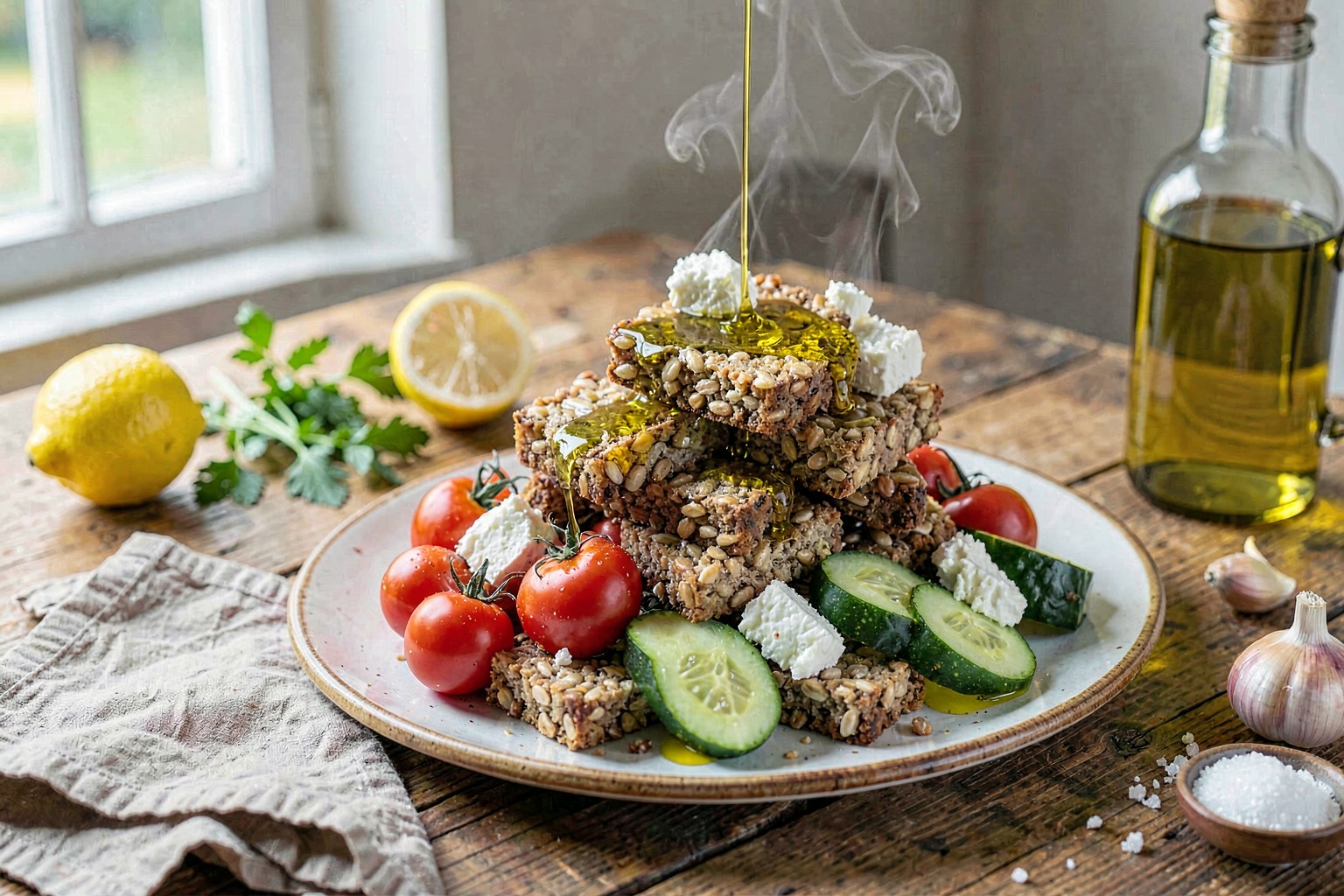
Cretan Dakos with Heirloom Tomatoes and Grass-Fed Feta
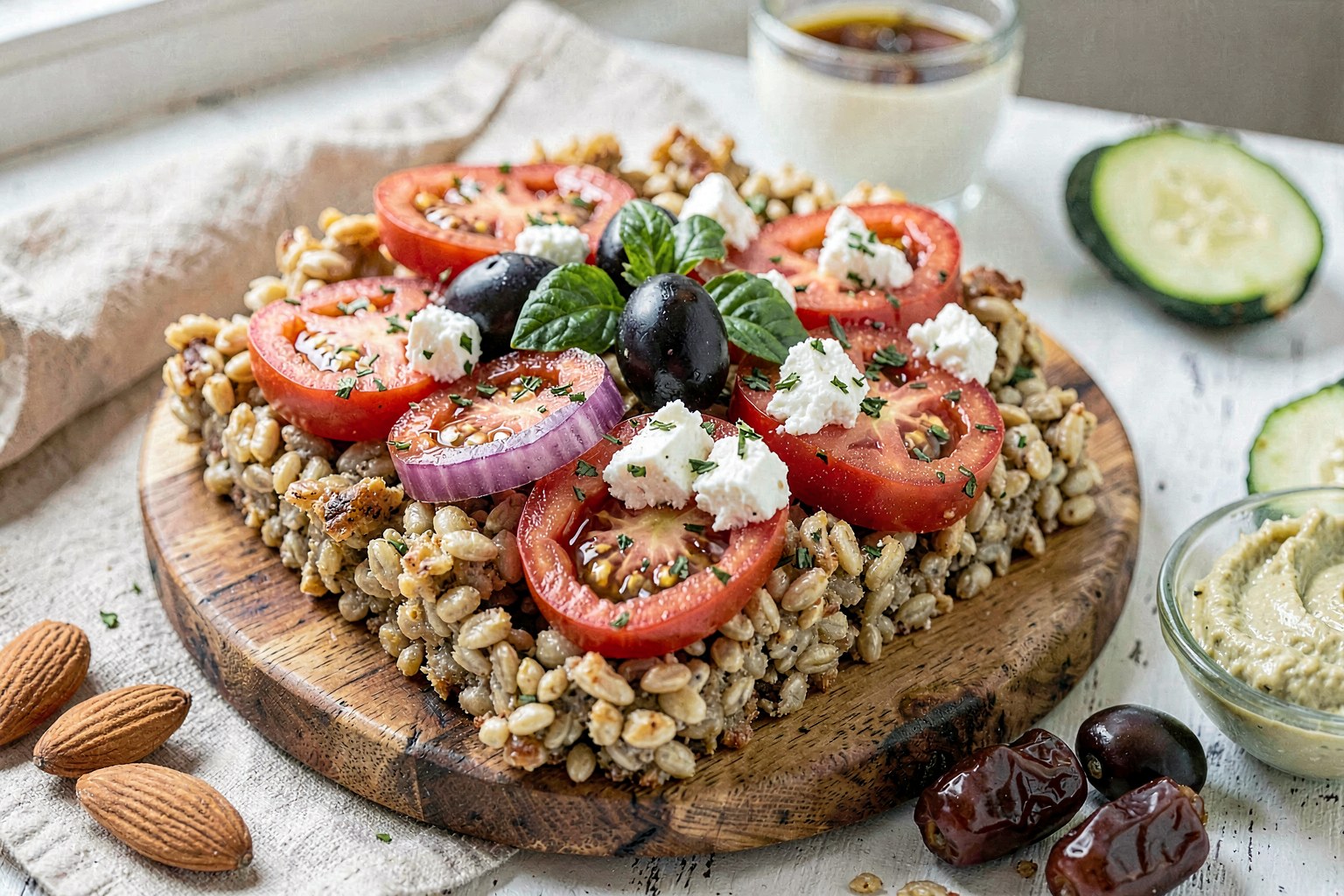
This authentic Cretan dish features crunchy, toasted barley rusks (paximadia) soaked briefly in a generous shower of polyphenol-rich extra virgin olive oil and lemon, then piled high with hand-crushed, in-season heirloom tomatoes, crisp cucumber, and tangy, grass-fed feta. It delivers a satisfying textural contrast between the chewy rusk and the juicy vegetables, delivering a burst of umami and freshness without a single drop of refined sugar or seed oil.
A little context
Dakos is a staple of the Cretan diet, historically made with leftover barley bread toasted until hard to preserve it through the summer. We honor this tradition by using traditional barley rusks and high-quality, cold-pressed EVOO, strictly avoiding the modern shortcuts of refined sugar often found in commercial feta brines or the seed oils used in mass-produced rusks. This version strips away any industrial additives, relying solely on the natural sweetness of ripe, sun-ripened tomatoes.
Method
- 01
Prepare the Rusks
If your barley rusks are not already toasted to a golden brown, place them on a wire rack and bake at 180°C (350°F) for 5-7 minutes until crisp. They should be hard but not burnt. Let them cool completely.
- 02
Make the Tomato Base
In a bowl, combine the diced heirloom tomatoes with half the sea salt. Using a fork or your hands, gently crush the tomatoes to release their juices. If you have a mortar, pound the tomatoes and salt briefly to create a rustic salsa.
- 03
Soak the Rusks
Arrange the toasted rusks on a serving platter. Drizzle generously with about half of the extra virgin olive oil and a splash of lemon juice. Let them sit for 2-3 minutes to absorb the oil and soften slightly, but retain some crunch.
- 04
Assemble the Salad
Pile the crushed tomato mixture generously over the soaked rusks. Top with the cucumber slices, Kalamata olives, and the crumbled grass-fed feta.
- 05
Finish and Serve
Drizzle the remaining olive oil over the entire dish, ensuring the cheese and vegetables are coated. Sprinkle with fresh oregano leaves and a final grind of black pepper. Serve immediately while the rusk is still distinct from the topping.
Pro tips
- ✦Source your barley rusks from a Greek specialty store or make your own by slicing whole-grain barley bread into rounds and baking until hard; check the label to ensure no seed oils or sugar were added.
- ✦The 'soak' is the secret: do not skip letting the rusk sit in the oil and lemon; it transforms the texture from rock-hard to a perfect chew.
- ✦Select tomatoes that smell like dirt and vines; if they don't have a strong aroma at room temperature, they won't have the sweetness to balance the salty feta.
- ✦Always buy feta in brine rather than pre-crumbled blocks; the brine preserves the probiotics and prevents the cheese from drying out.
Substitutions
- barley rusks → sprouted whole-grain toast or gluten-free sorghum crackers (Ensure the substitute is toasted and sturdy enough to hold the weight of the tomatoes)
- grass-fed feta → high-quality goat cheese or sheep's milk ricotta salata (Ricotta salata is less salty but provides a similar salty, crumbly texture)
Storage
Best eaten immediately. If storing, keep the tomato mixture and toppings separate from the rusks in airtight glass containers in the fridge for up to 2 days. Re-toast rusks before serving.
What to serve with it
- A glass of chilled Assyrtiko wine (dry white from Santorini)
- Freshly brewed green tea with lemon
- Sparkling water with a slice of cucumber and mint
FAQ
Can I use regular feta cheese?+
Traditional Cretan feta is made from sheep or a mix of sheep and goat milk. Mass-market cow's milk feta often lacks the distinct tang and has a different fatty acid profile. For a Blueprint-aligned meal, seek out authentic PDO feta.
Is this dish gluten-free?+
No, traditional barley rusks contain gluten. You can substitute with certified gluten-free sorghum or buckwheat crackers, but the texture will differ slightly.
Share this recipe
Notes from the community
Sign in to leave a note.
No notes yet — be the first.
You might also like