Cretan Honey and Olive Oil Baked Figs with Walnuts
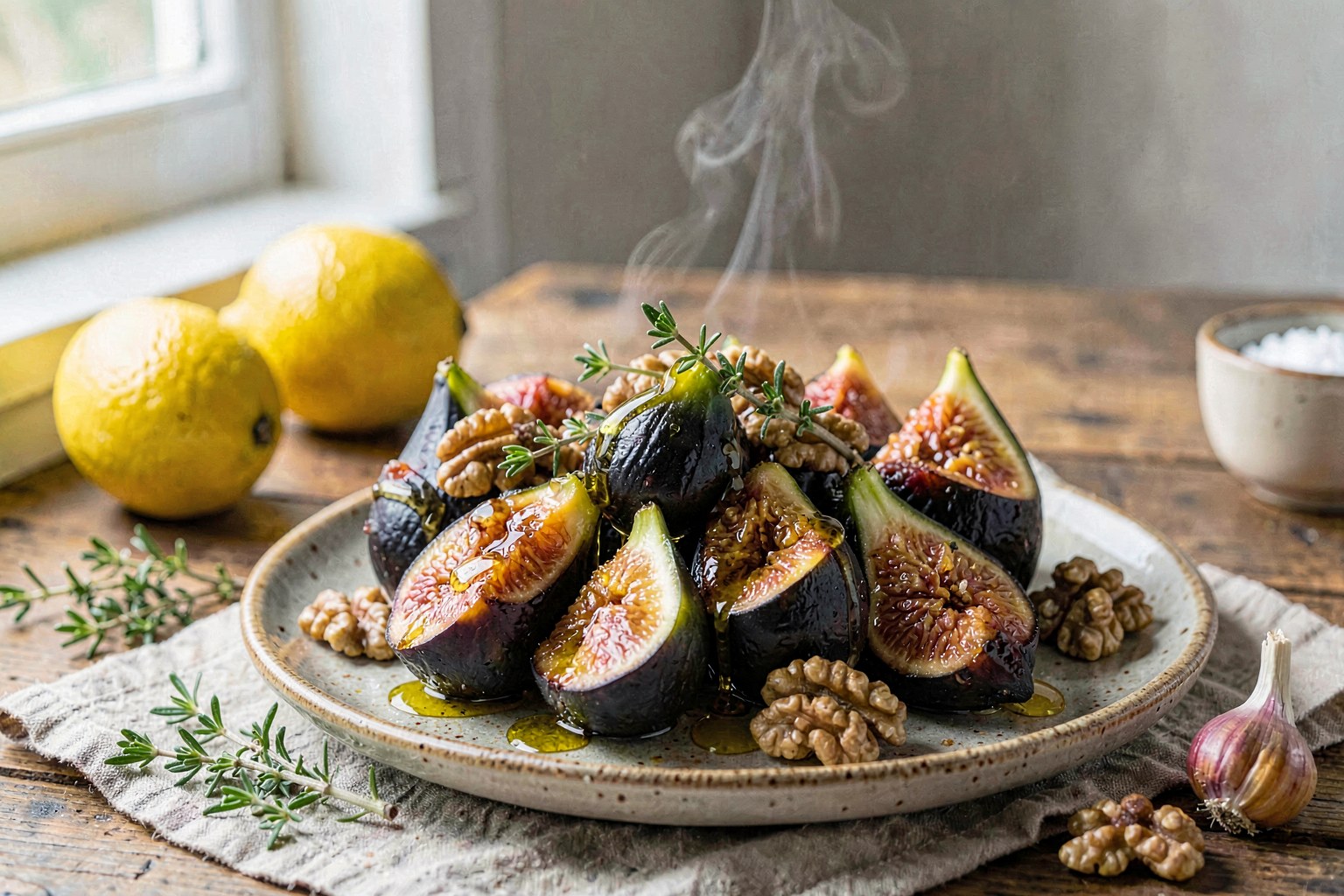
This warm, rustic dessert features in-season fresh figs baked until tender, drizzled with high-polyphenol extra virgin olive oil and a touch of raw Cretan honey. Topped with toasted walnuts and fresh thyme, it delivers the rich, caramel-like sweetness of traditional Greek cuisine without a single gram of refined sugar or seed oil.
A little context
Rooted in the Cretan diet of the Blue Zone, where locals have historically consumed honey and olive oil as primary sweeteners and fats, this recipe honors the ancient tradition of 'dakos' style desserts. We have stripped away the modern tendency to use refined sugar syrups and seed oils, returning to the pure, farm-fresh ingredients of the region: organic figs, grass-fed (or organic) walnuts, and unrefined honey.
Method
- 01
Preheat and Prep
Preheat your oven to 180°C (350°F). Arrange the halved figs cut-side up in a single layer within your ceramic dish or cast-iron skillet.
- 02
Season the Fruit
Drizzle the extra virgin olive oil evenly over the figs. In a small bowl, mix the raw honey, cinnamon, and a pinch of sea salt. Drizzle this mixture over the figs, ensuring each piece gets a light coating.
- 03
Add Aromatics
Scatter the fresh thyme leaves over the figs and place the reserved thyme stems on top of the dish. These will infuse the oil and fruit as they bake.
- 04
Bake
Bake for 25–30 minutes, or until the figs are tender when pierced with a fork and the juices are bubbling gently. The edges should be slightly caramelized, but the fruit should hold its shape.
- 05
Toast the Walnuts
While the figs bake, place the chopped walnuts in a dry skillet over medium-low heat. Toast for 3–5 minutes until fragrant and lightly golden. Watch closely to prevent burning.
- 06
Finish and Serve
Remove the baking dish from the oven and discard the thyme stems. Immediately sprinkle the toasted walnuts over the warm figs. Let rest for 5 minutes to allow the flavors to meld. Serve warm, optionally with a dollop of grass-fed Greek yogurt.
Pro tips
- ✦Select figs that are heavy for their size and have a slight give when gently squeezed; they should smell sweet, not fermented.
- ✦Use the highest quality EVOO you own; since it is a primary flavor and not just a cooking medium, the polyphenol content matters.
- ✦Do not substitute the honey with refined sugar; the specific enzyme profile of raw honey interacts with the figs' natural pectin to create the perfect texture.
- ✦If using canned figs, drain them thoroughly and pat dry to prevent the dish from becoming watery.
- ✦Toast the walnuts just before serving to maintain their crunch and prevent the fats from oxidizing.
Substitutions
- fresh black mission figs → fresh green figs or ripe pears (pears should be firm-ripe; adjust baking time by 5 minutes if using pears)
- raw Cretan thyme honey → pure maple syrup (Grade A Dark) (add 1 tsp of lemon juice to mimic the slight acidity of thyme honey)
- Greek yogurt → coconut cream (full fat) (for a dairy-free, vegan option that still provides healthy fats)
Storage
Store cooled figs in an airtight glass container in the refrigerator for up to 3 days. Reheat gently in a 150°C (300°F) oven for 10 minutes to restore the warm texture. Do not freeze, as the texture of the fresh figs will degrade.
What to serve with it
- Hot green tea (sencha or matcha) to enhance polyphenol absorption
- Sparkling water with a slice of lemon and fresh mint
- A small glass of dry red wine (e.g., Xinomavro or Cabernet Sauvignon) if alcohol is consumed
FAQ
Can I make this vegan?+
Yes, simply omit the Greek yogurt or use full-fat coconut cream. Ensure your honey is substituted with pure maple syrup, as honey is an animal product.
Why use EVOO instead of butter?+
While pastured butter is allowed in this diet, EVOO is the traditional fat of the Cretan Blue Zone and provides a superior polyphenol profile (oleocanthal) that supports longevity and reduces inflammation.
Is the honey considered 'added sugar'?+
In the context of the Blueprint diet, raw honey is used sparingly as a whole-food sweetener, distinct from refined sucrose or high-fructose corn syrup. It is included here to maintain the cultural integrity of the recipe while keeping the glycemic load low.
Share this recipe
Notes from the community
Sign in to leave a note.
No notes yet — be the first.
You might also like