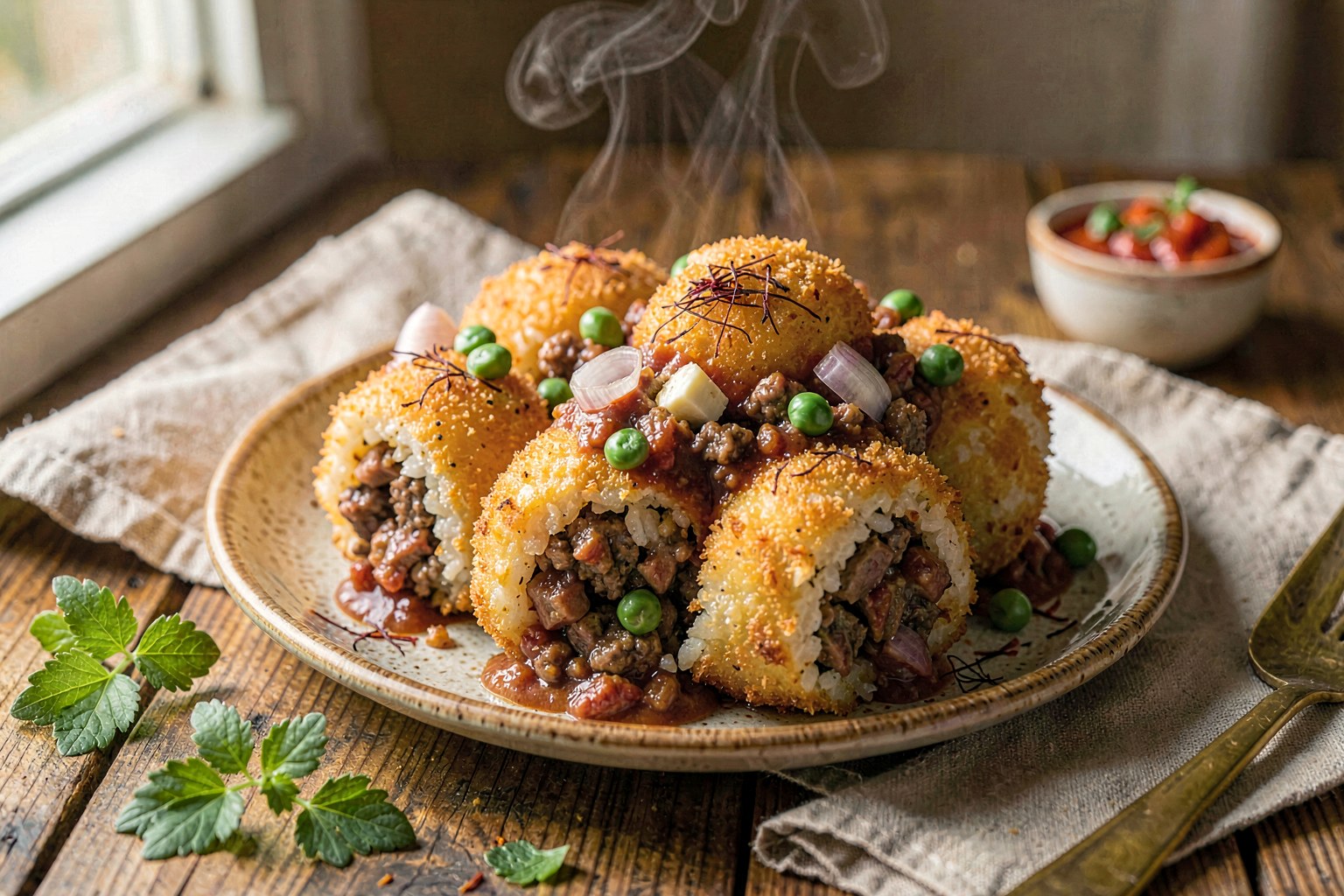
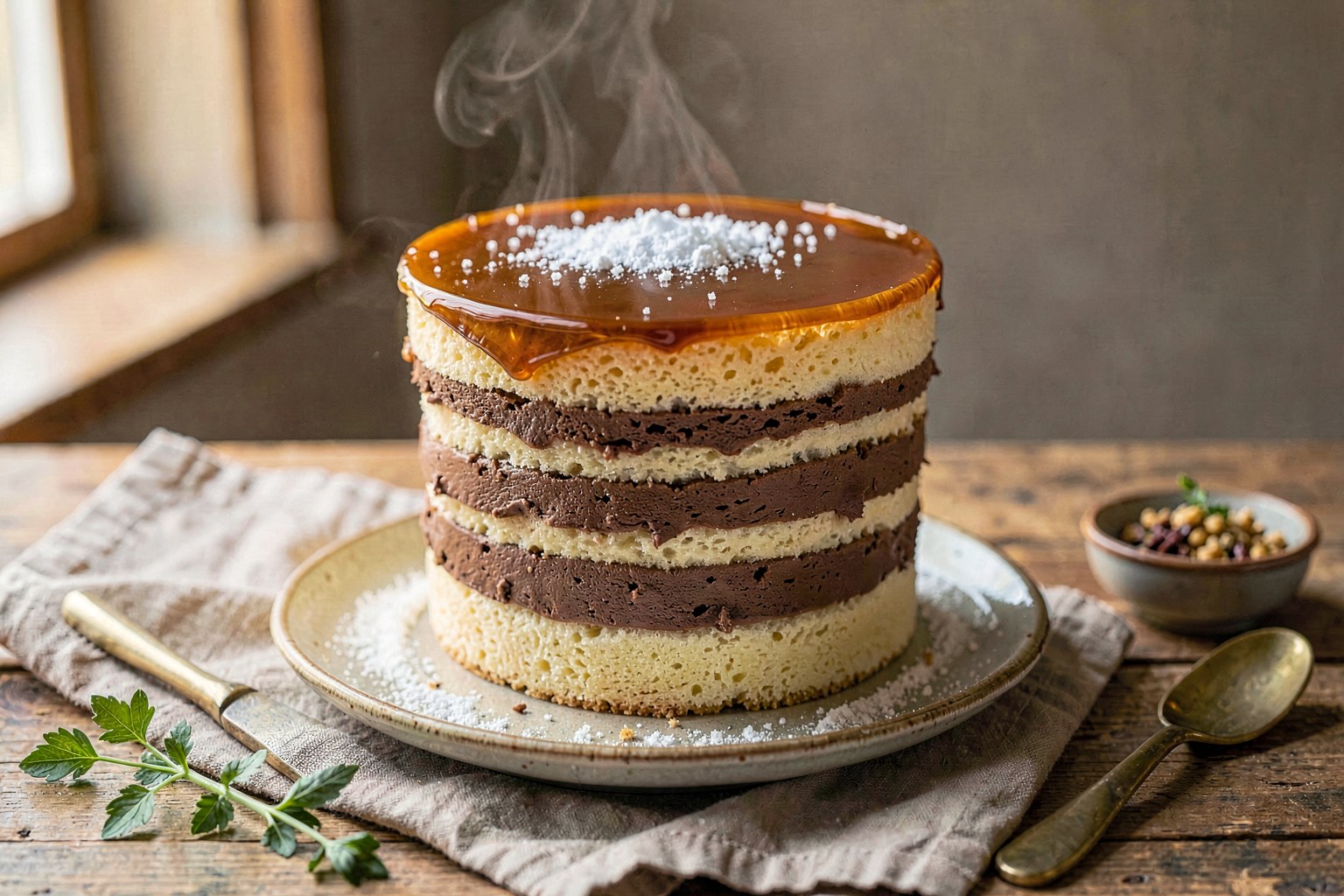
Classic Dobos Torta (Hungarian Caramel Layer Cake)
An elegant, tall sponge cake featuring six thin layers separated by rich chocolate buttercream and crowned with a hard, glass-like caramel topping. The texture contrasts the light, airy sponge with the creamy filling and the satisfying snap of the caramel, finished with toasted almond crumbs.
A little context
Created by József C. Dobos in 1884, this cake revolutionized Hungarian pastry by introducing the caramel topping to prevent the sponge from drying out. Originally a luxury item served at the Hungarian National Opera, it became a symbol of the Austro-Hungarian Empire's culinary sophistication. It is traditionally reserved for Christmas, Easter, and significant family celebrations, representing the pinnacle of Buda's confectionery arts.
Method
- 01
Prepare the sponge batter
Preheat oven to 180°C (350°F). Line the bottom of a 9-inch springform pan with parchment paper; do not grease the sides. In a large bowl, whisk the 6 egg whites until soft peaks form. Gradually add 60g (2 oz) of the sugar, beating until stiff, glossy peaks form. In a separate bowl, whisk the 6 egg yolks with the remaining 60g (2 oz) sugar until pale and thick. Gently fold the egg whites into the yolk mixture in three batches. Sift the flour over the batter and fold gently until no streaks remain.
- 02
Bake the thin layers
Divide the batter into 6 equal portions (approx. 130g each). Pour one portion into the prepared pan, spreading it thinly and evenly with a spatula. Bake for 8-10 minutes until golden and springy to the touch. Remove, let cool slightly, and carefully lift the cake out. Repeat with the remaining batter. Stack the cooled layers on a wire rack with parchment between them.
- 03
Make the sugar syrup
In a saucepan, combine the 200g sugar and 100ml water. Heat over medium heat, swirling the pan occasionally (do not stir), until the syrup reaches 118°C (245°F) on an instant-read thermometer. This is the soft-ball stage.
- 04
Whip the egg yolks
While the syrup heats, beat the 4 egg yolks in a stand mixer on high speed until they are pale, thick, and tripled in volume. This may take 5-8 minutes.
- 05
Emulsify the buttercream base
With the mixer running on medium, slowly pour the hot sugar syrup into the beating egg yolks in a thin stream, avoiding the beaters. Continue beating on high speed until the mixture cools to room temperature and becomes a thick, fluffy ribbon. This creates a stable foam base.
- 06
Finish the buttercream
Melt the dark chocolate and let it cool to room temperature. Add the softened butter to the yolk mixture one tablespoon at a time, beating well after each addition. Once all butter is incorporated, add the melted chocolate and beat until smooth and creamy. If the mixture looks curdled, continue beating; it will emulsify.
- 07
Assemble the cake
Place the first sponge layer on a serving plate. Spread a thin, even layer of buttercream over it. Repeat with the remaining 5 layers, ensuring each layer is perfectly flat. Do not frost the sides yet; the cake must be chilled to set the structure.
- 08
Chill the assembled cake
Refrigerate the stacked cake for at least 30 minutes to firm up the buttercream. This prevents the layers from sliding when applying the caramel.
- 09
Make the caramel topping
In a small, heavy saucepan, combine the 170g sugar and 30ml water. Cook over medium-high heat without stirring until the sugar turns a deep amber color. Swirl the pan gently to ensure even coloring. Immediately pour the hot caramel over the top of the chilled cake, tilting the pan to cover the surface completely. Work quickly as the caramel will harden in seconds.
- 10
Apply almond garnish
While the caramel is still warm and tacky, sprinkle the ground toasted almonds around the outer edge of the cake, pressing them gently so they adhere. If the caramel hardens too fast, use a hair dryer on low heat to soften the edge slightly.
- 11
Final set and serve
Allow the caramel to harden completely at room temperature. For the cleanest slices, warm a sharp knife under hot water, wipe dry, and cut. Serve immediately. The cake is best enjoyed the same day the caramel is applied.
Pro tips
- ✦Ensure all ingredients are at room temperature before starting; cold eggs will not whip properly, and cold butter will break the emulsion.
- ✦When baking the thin layers, do not open the oven door until the cake has set (about 6 minutes) to prevent collapsing.
- ✦The syrup temperature is non-negotiable; if it is too cool, the buttercream will be runny; if too hot, it will cook the eggs.
- ✦Use a springform pan with a tight seal; if your pan leaks, wrap the bottom with heavy-duty foil before assembling.
- ✦Cutting the cake: Dip your knife in hot water and wipe it dry between every single slice to get clean, sharp layers.
Shop this recipe
As an Amazon Associate we earn from qualifying purchases.
Substitutions
- dark chocolate (60%) → semi-sweet chocolate chips (50-60% cocoa) (ensure they are high quality to avoid waxy texture)
- blanched almonds → hazelnuts or walnuts (roast and grind finely for a different but authentic nutty profile)
- all-purpose flour → cake flour (use 105g (3.7 oz) of cake flour for an even more tender crumb)
Storage
Store covered at cool room temperature for up to 24 hours to keep the caramel crisp. Do not refrigerate as the caramel will become sticky and the sponge will dry out. Best consumed on the day of preparation.
What to serve with it
- Strong black coffee or espresso
- Sweet Tokaji Aszú dessert wine
- Hot tea with lemon
FAQ
Can I make this cake ahead of time?+
You can bake the sponge layers and make the buttercream 1 day in advance and store them separately. However, the caramel topping must be applied immediately before serving to maintain its glass-like texture.
Why did my caramel turn out grainy?+
This usually happens if you stir the sugar while it melts or if the syrup cools too quickly. Ensure you only swirl the pan and do not stir until the caramel is fully dissolved and colored.
My buttercream separated; can I fix it?+
Yes, if the butter was too cold or the syrup too hot, the emulsion may break. Try beating the mixture on high speed for a few more minutes; if it remains split, add a tablespoon of warm syrup and beat again until smooth.
Share this recipe
Notes from the community
Sign in to leave a note.
No notes yet — be the first.