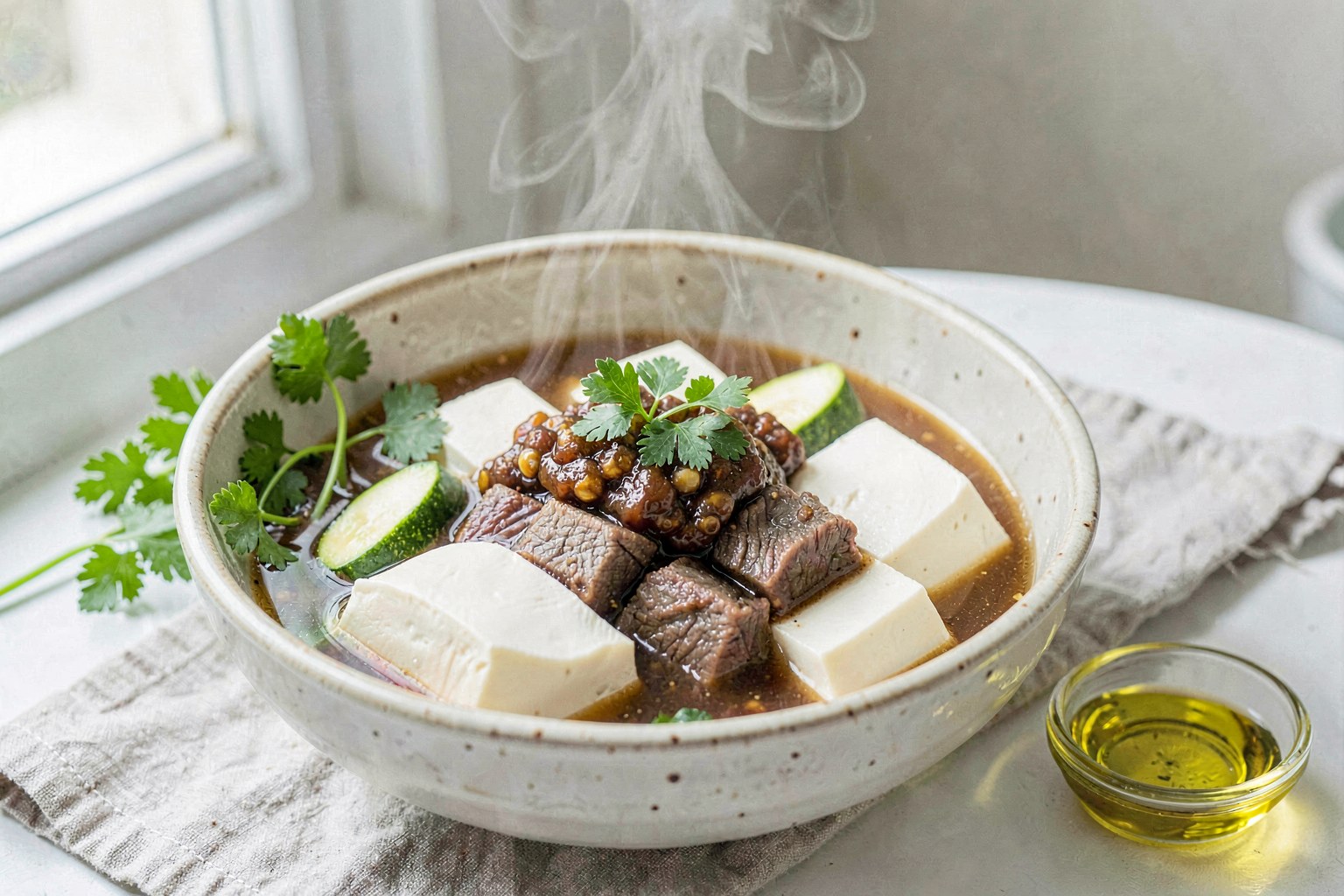
Fermented Soybean Stew with Grass-Fed Beef & Zucchini
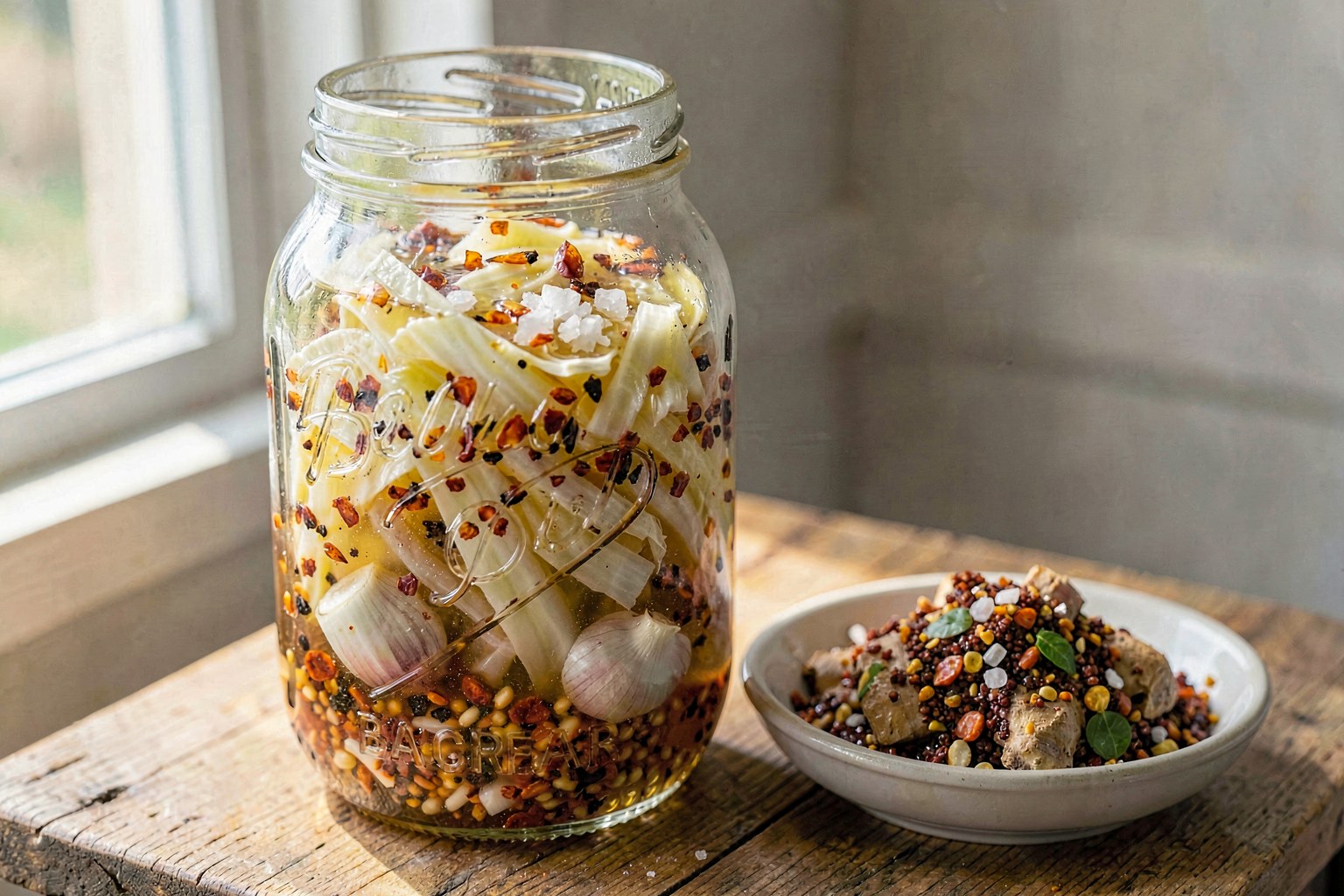
A deeply savory, umami-rich Korean stew built on a base of traditional fermented soybean paste (doenjang), tender grass-fed beef, and silken tofu. This weeknight version swaps refined sugars and seed oils for natural sweetness from ripe Korean pear and healthy fats from extra-virgin olive oil, delivering a gut-friendly, nutrient-dense meal that warms from the inside out.
A little context
Rooted in the Korean tradition of 'guk' (soup) and 'banchan' (side dishes), this recipe honors the centuries-old practice of fermenting soy to unlock nutrients. We have respectfully modernized the preparation by eliminating the small amount of refined sugar or corn syrup often added to commercial pastes and stews, replacing it with the subtle sweetness of fresh Asian pear. Furthermore, we substitute traditional sesame oil with a high-quality, cold-pressed extra-virgin olive oil for cooking to avoid the oxidative stress associated with heating seed oils, while finishing with a touch of sesame oil for aroma only.
Method
- 01
Dissolve the Ferment
In a small bowl, whisk the 60g of doenjang with 1/2 cup of the warm stock until completely smooth. Pour this mixture through a fine-mesh sieve into the main pot to remove any large soybean chunks, then add the remaining stock. This ensures a silky, consistent broth.
- 02
Sear the Beef
Heat the extra-virgin olive oil in the pot over medium-high heat. Add the grass-fed beef strips in a single layer. Sear for 2-3 minutes until browned on the outside but still slightly pink inside. Do not overcrowd; cook in batches if necessary. Remove beef and set aside.
- 03
Sauté Aromatics
Reduce heat to medium. Add the minced garlic, ginger, and the white parts of the green onions to the pot. Sauté for 2 minutes until fragrant, being careful not to burn the garlic. Add the grated pear and cook for another minute to release its juices.
- 04
Simmer the Base
Return the seared beef and any accumulated juices to the pot. Bring the broth to a gentle boil, then immediately reduce the heat to low. Cover and simmer for 20 minutes to allow the beef to tenderize and the flavors to meld.
- 05
Add Vegetables
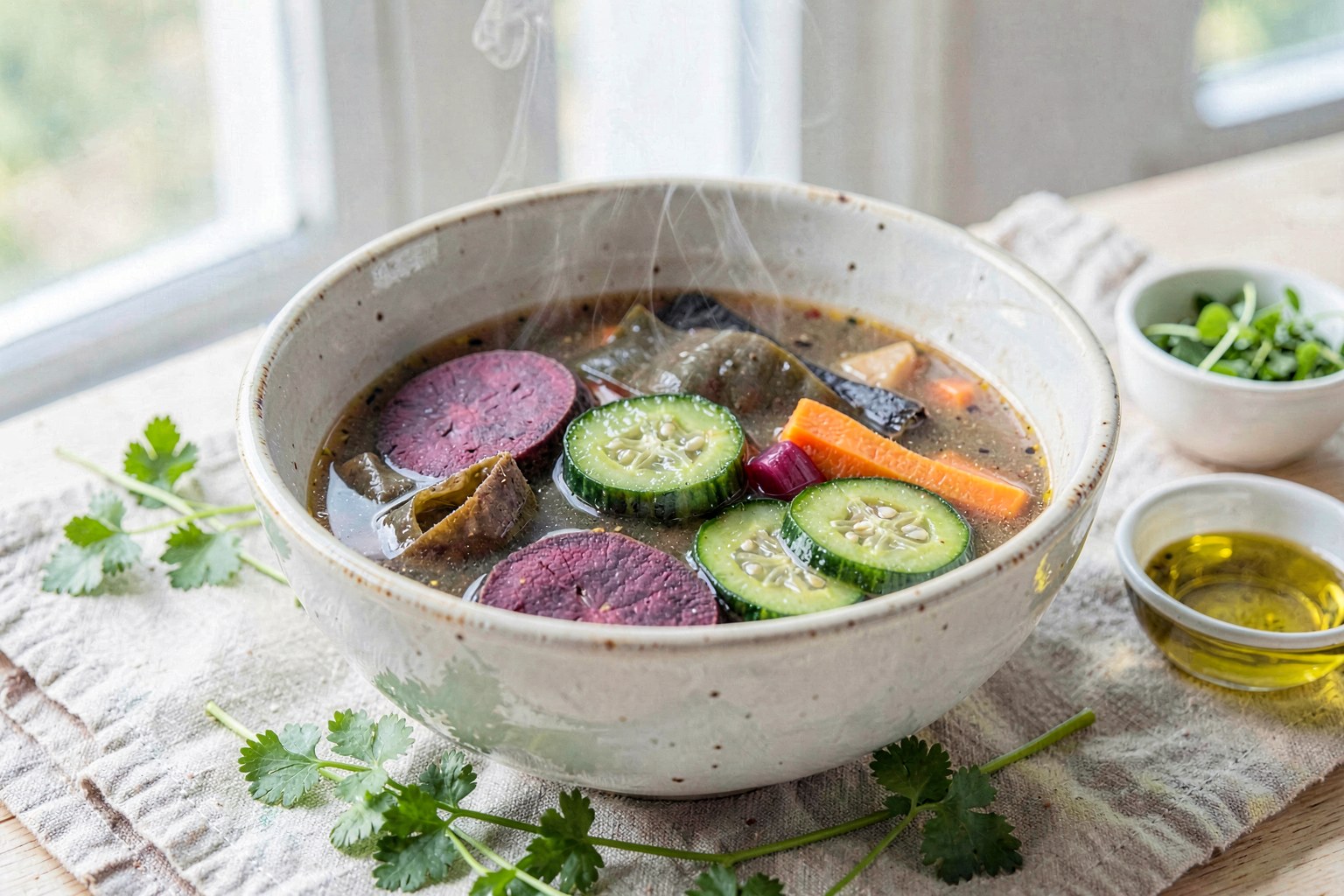
Add the sliced zucchini and cubed silken tofu to the pot. Simmer uncovered for another 10-12 minutes until the zucchini is tender but still holds its shape and the tofu is heated through. Avoid vigorous boiling to prevent the tofu from breaking apart.
- 06
Finish and Serve
Taste the broth; if a deeper savory note is needed, stir in the coconut aminos or tamari. Remove from heat. Drizzle with the toasted sesame oil and garnish generously with the reserved green onion tops. Serve immediately in deep bowls.
Pro tips
- ✦Sourcing Doenjang: Look for a paste that lists only soybeans, salt, and water (and maybe barley). Avoid any brand with corn syrup, sugar, or MSG. If you can find it, a local Korean market's house-made version is superior.
- ✦Pear Selection: Choose a ripe but firm Asian pear or Bosc pear. The fruit acts as a natural tenderizer for the beef and provides the necessary sweetness without spiking blood sugar like refined sugar would.
- ✦Tofu Handling: When adding silken tofu, slide it gently into the pot rather than dropping it. Let it warm in the broth without stirring aggressively for the first 5 minutes to maintain its structure.
- ✦Fat Quality: Since we are not using sesame oil for cooking (which can degrade at high heat), ensure your extra-virgin olive oil is high-quality and cold-pressed to maintain its polyphenol content.
Shop this recipe
As an Amazon Associate we earn from qualifying purchases.
Substitutions
- grass-fed beef → wild-caught salmon fillet or firm white fish (add the fish in the last 5 minutes of cooking to prevent overcooking)
- zucchini → summer squash, radish, or shiitake mushrooms (radish takes longer to cook; add it with the beef)
- silken tofu → firm tofu or tempeh (firm tofu holds shape better; tempeh adds more protein and a nuttier texture)
Storage
Store in a glass container in the refrigerator for up to 3 days. The flavors often deepen overnight. Freeze in portioned containers for up to 2 months; thaw in the fridge before reheating gently on the stovetop.
What to serve with it
- Hot green tea (sencha or matcha) to complement the polyphenols
- Fermented kimchi (check for no added sugar) as a side
- Steamed short-grain brown rice or quinoa
- Sparkling water with a wedge of lemon
FAQ
Why did you use olive oil instead of sesame oil?+
Sesame oil has a lower smoke point and is often used for flavor rather than cooking. We use extra-virgin olive oil for sautéing because it is more stable at medium heat and rich in polyphenols, adding the toasted sesame oil only at the end for aroma.
Is this stew spicy?+
Traditional Doenjang Jjigae is savory and umami, not spicy. If you want heat, add a pinch of gochugaru (Korean red pepper flakes) or fresh chili slices, but the base recipe is mild.
Can I make this vegan?+
Yes, simply omit the beef and use a rich mushroom or seaweed-based broth instead of bone broth. The dish remains high in protein from the tofu and ferments.
Share this recipe
Notes from the community
Sign in to leave a note.
No notes yet — be the first.