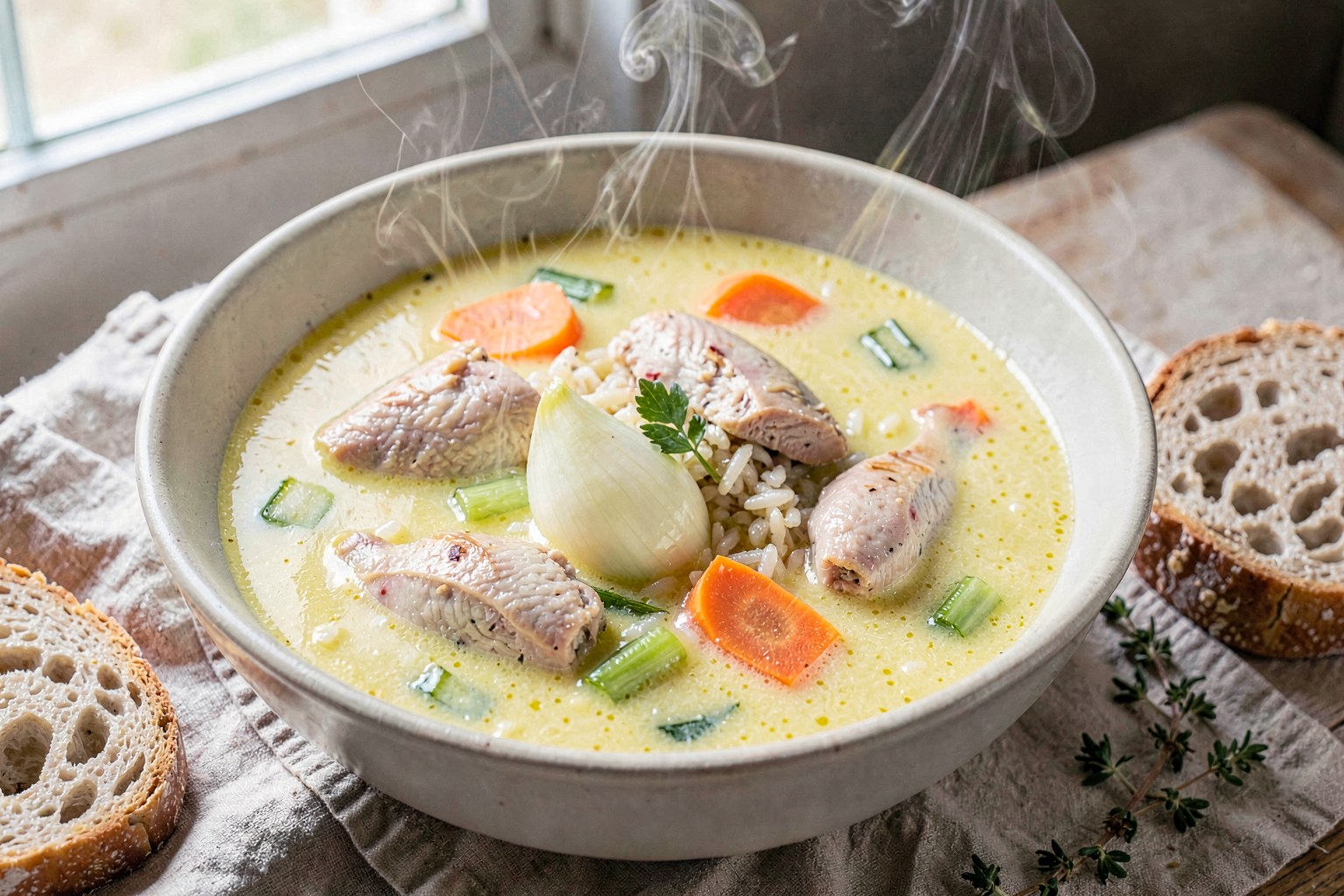
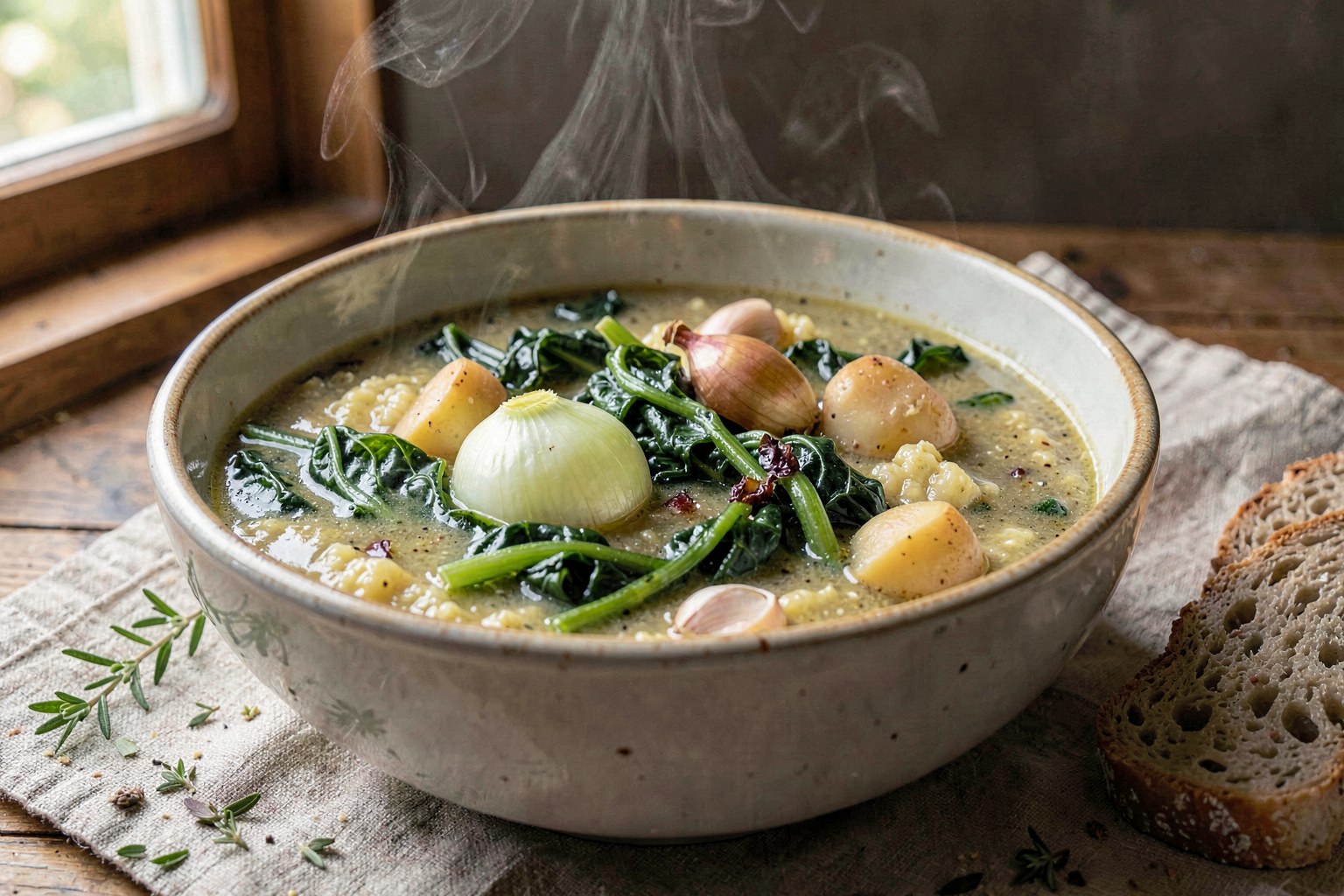
Erbseneintopf: Hearty German Pea Stew with Bacon and Barley
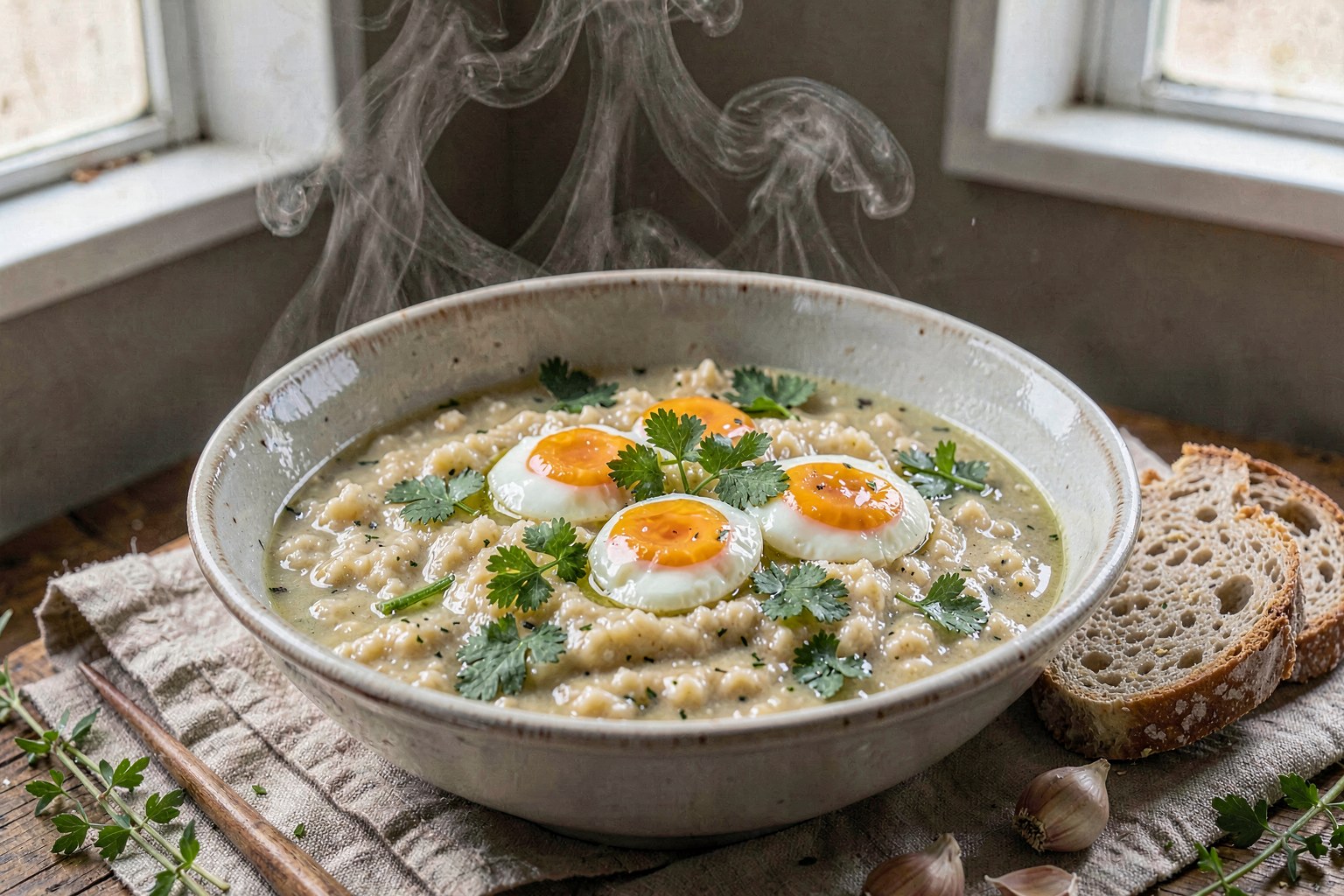
A rustic, thick German pea stew featuring smoky bacon, sweet onions, and pearl barley simmered in a savory broth. This comforting dish balances earthy split peas with the richness of cured pork, creating a spoon-standing consistency perfect for cold days.
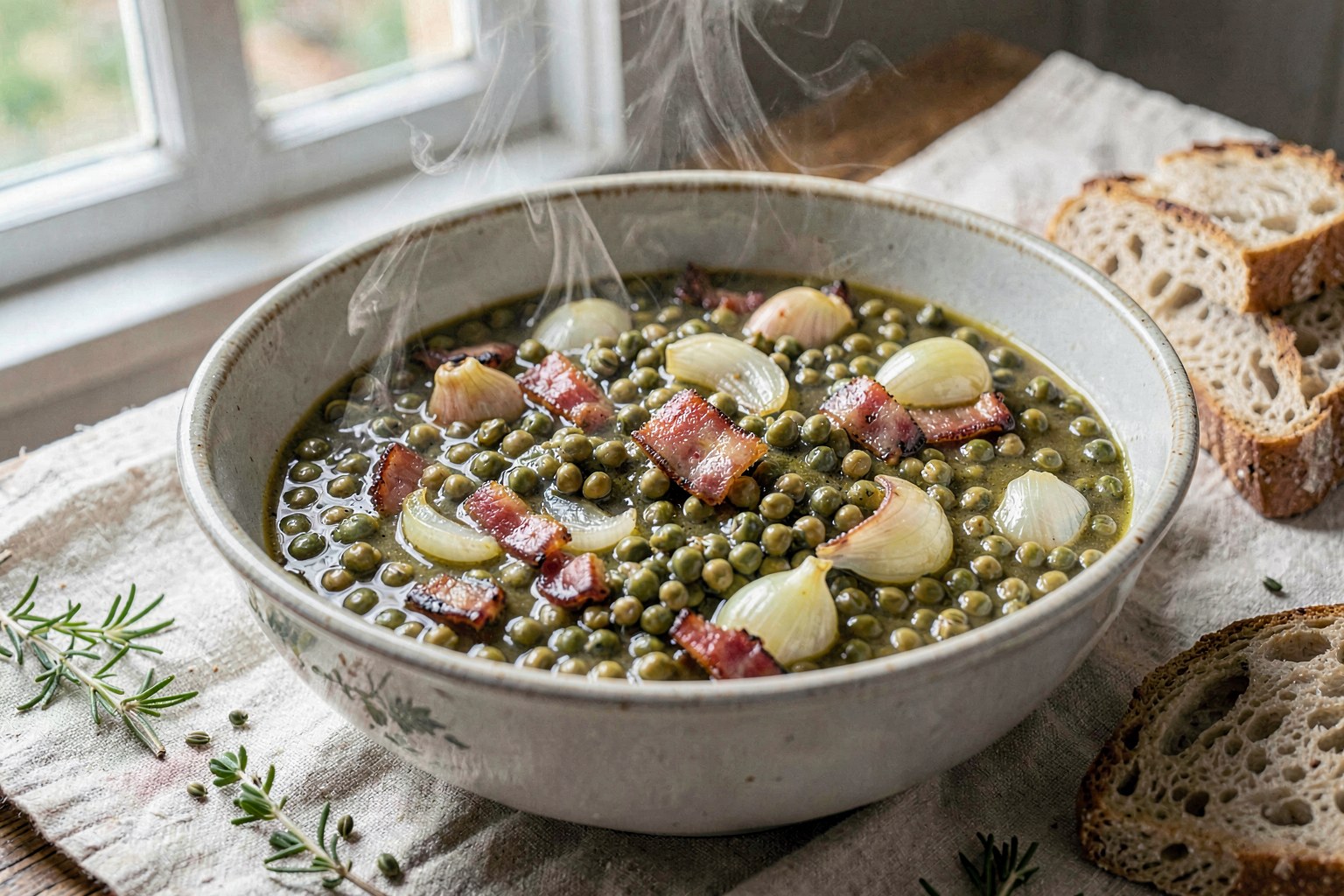
A little context
Erbseneintopf is a traditional German one-pot meal that dates back to times of frugality, utilizing preserved split peas and salted pork. It is deeply associated with the colder months, particularly winter and early spring, and is a staple in both rural households and urban taverns across Germany. Authentic versions often include barley or potatoes to thicken the stew, and it is traditionally served with a slice of dark rye bread or a dollop of mustard on the side.
Method
- 01
Sear the bacon
Place the Dutch oven over medium-high heat. Add the bacon lardons and render the fat until they are golden and crispy, about 6-8 minutes. Do not drain the fat; it is essential for flavor.
- 02
Sauté aromatics
Reduce heat to medium. Add the diced onions to the bacon fat and cook, stirring occasionally, until soft and translucent (about 5 minutes). Add the minced garlic and cook for another minute until fragrant.
- 03
Deglaze and combine
Pour in the broth, scraping the bottom of the pot to release any browned bits. Add the rinsed split peas, pearl barley, bay leaves, and thyme sprigs. Stir well to combine.
- 04
Simmer the stew
Bring the mixture to a boil, then immediately reduce the heat to low. Cover the pot with a lid, leaving it slightly ajar to allow steam to escape. Simmer gently for 40-45 minutes, stirring every 10 minutes to prevent sticking.
- 05
Check consistency
The stew is ready when the split peas have broken down into the broth and the barley is tender but still has a slight chew. If the stew is too thick, add a splash of warm water or broth. If too thin, simmer uncovered for 5 more minutes.
- 06
Season and serve
Remove the bay leaves and thyme sprigs. Taste the stew carefully before adding salt, as the bacon and broth may already be salty. Season with black pepper and fresh parsley just before serving.
Pro tips
- ✦Soaking the split peas for at least an hour reduces cooking time and ensures even texture.
- ✦Stir frequently during the last 15 minutes of cooking as the starch from the peas thickens the stew rapidly.
- ✦This stew tastes even better the next day as the flavors meld and the texture settles.
- ✦For a traditional touch, serve with a teaspoon of sharp German mustard on the side.
- ✦If you prefer a smoother texture, use an immersion blender to puree 1/4 of the stew before serving.
Shop this recipe
As an Amazon Associate we earn from qualifying purchases.
Substitutions
- pearl barley → small pasta like ditalini or rice (add in the last 15 minutes if using rice or pasta to avoid mushiness)
- smoked bacon → smoked sausage (Kielbasa) (slice into rounds; adds a different smoky profile but works well)
- dried thyme → fresh thyme (use 3 sprigs of fresh thyme instead of 1 tsp dried)
Storage
Store in an airtight container in the refrigerator for up to 4 days. The stew will thicken significantly when cold; reheat with a splash of broth or water. Freezes well in portioned containers for up to 3 months.
What to serve with it
- Dark rye bread (Roggenbrot)
- German mustard
- Dry Riesling or German Pilsner
- Pickled cucumbers or a simple green salad with vinaigrette
FAQ
Can I make this without soaking the peas?+
Yes, but you will need to increase the cooking time by about 15-20 minutes and add more liquid as the peas absorb more water.
Why is my stew too thick?+
Split peas continue to absorb liquid as they cool. Simply stir in warm broth or water a little at a time until you reach the desired consistency.
Can I use frozen peas instead of dried?+
No, frozen peas will turn to mush and lack the creamy texture needed for a traditional Eintopf. Dried split peas are essential for the correct consistency.
Share this recipe
Notes from the community
Sign in to leave a note.
No notes yet — be the first.