Velvety Greek Fava with Olive Oil and Chili
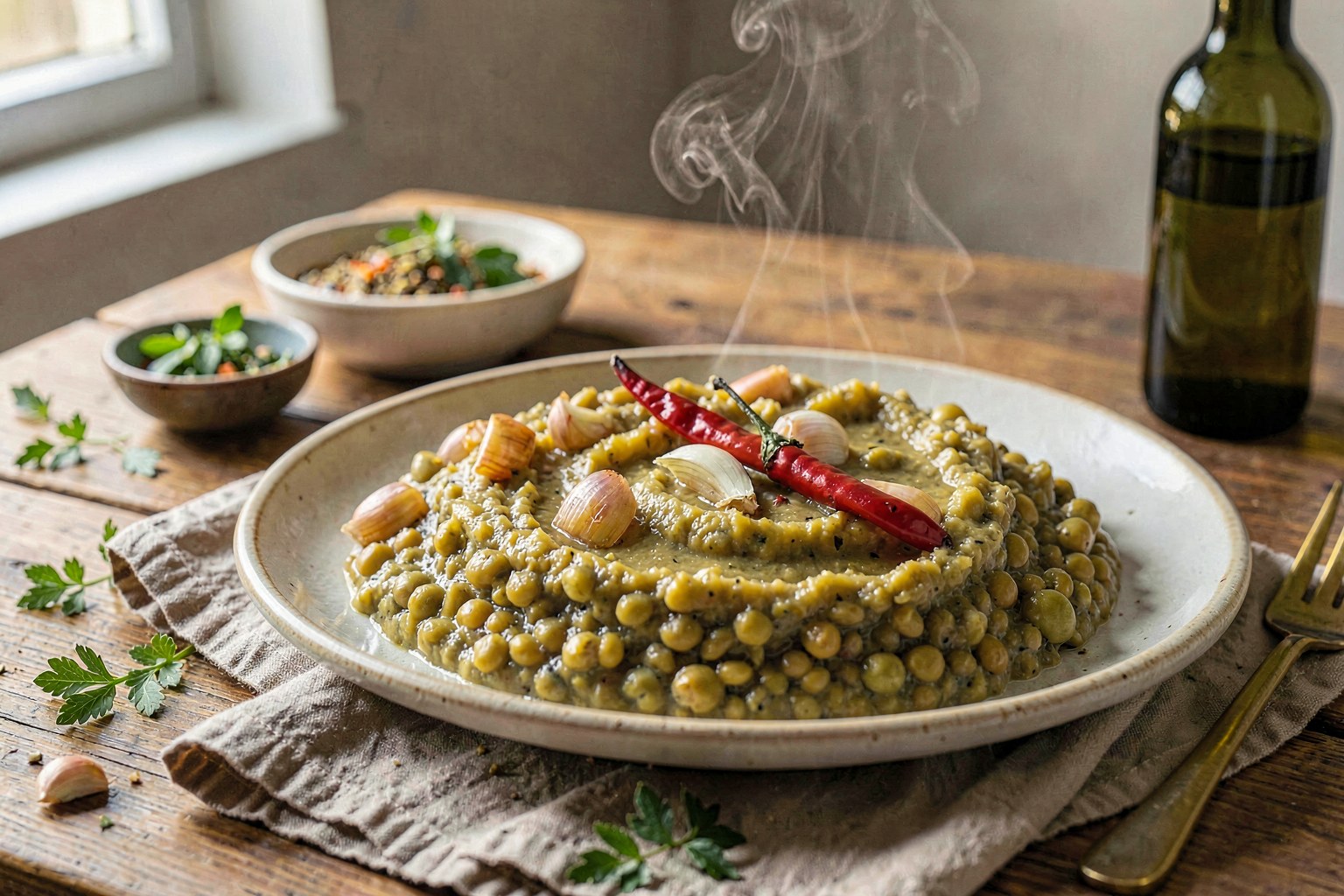
A classic Aegean meze transformed into a hearty dinner, this dish features yellow split peas slow-cooked until they dissolve into a luxurious, velvety purée. The earthy, nutty flavor is elevated by a generous pool of fruity extra virgin olive oil, sharp red onion, and a hint of heat from dried chili flakes.
A little context
Fava is a staple of the Cycladic islands, particularly Santorini, where the volcanic soil produces split peas with an unmatched creamy texture. Historically a humble peasant food, it is now celebrated as a sophisticated meze or light main course, traditionally served warm or at room temperature. Authentic preparation avoids blending with a food processor for the entire process, relying instead on a wooden spoon to break down the peas for a rustic, textured consistency. It is most commonly enjoyed in the spring and summer with crusty bread and crisp white wine.
Method
- 01
Sauté the aromatics
In a heavy-bottomed pot, heat 120 ml (½ cup) of the olive oil over medium heat. Add the diced yellow onion and cook until translucent and soft, about 5-7 minutes. Stir in the minced garlic and cook for another minute until fragrant, being careful not to brown it.
- 02
Toast the peas
Add the rinsed yellow split peas to the pot and stir to coat them in the oil and onions. Toast for 2-3 minutes, stirring constantly, until the peas smell nutty and turn a slightly deeper yellow.
- 03
Simmer
Pour in the water and add 1 ½ teaspoons of the salt. Bring to a boil, then immediately reduce the heat to low. Cover the pot, leaving the lid slightly ajar to allow steam to escape. Simmer gently for 35-45 minutes.
- 04
Check consistency
Stir every 10 minutes to prevent sticking. If the water evaporates before the peas are soft, add hot water in 60 ml (¼ cup) increments. The dish is ready when the peas have completely broken down and the mixture is thick and porridge-like.
- 05
Mash to perfection
Remove the pot from the heat. Using a wooden spoon, vigorously mash the mixture against the side of the pot. Continue mashing until the texture is smooth and velvety with no large chunks remaining. For an ultra-smooth result, you can press the mixture through a fine-mesh sieve, though a rustic texture is traditional.
- 06
Adjust seasoning and fat
Stir in the remaining 130 ml (½ cup) of olive oil and the remaining ½ teaspoon of salt. The oil should emulsify into the puree, making it glossy and rich. Taste and add more salt if needed.
- 07
Rest and serve
Transfer the fava to a shallow serving bowl. Let it rest for 5 minutes to settle. Create a deep well in the center with the back of a spoon.
- 08
Finish with toppings
Fill the well with a generous drizzle of extra virgin olive oil. Top with the soaked red onion rings, red chili flakes, and crushed oregano. Serve immediately with warm crusty bread.
Pro tips
- ✦Do not rinse the peas after cooking; the starchy water is crucial for the binding texture.
- ✦If the fava becomes too thick while cooling, stir in a splash of hot water to loosen it before serving.
- ✦The flavor improves significantly if made an hour ahead and allowed to sit at room temperature.
- ✦Use the highest quality extra virgin olive oil you own, as it is a primary ingredient, not just a garnish.
- ✦If the mixture sticks to the bottom, add a little hot water and continue stirring vigorously to re-emulsify.
Shop this recipe
As an Amazon Associate we earn from qualifying purchases.
Substitutions
- red onion for garnish → thinly sliced scallions or capers (adds a different briny or fresh bite)
- dried oregano → fresh mint or dill (adds a bright, herbal contrast to the earthiness)
- chili flakes → fresh red chilies, sliced (provides a fresher, sharper heat)
Storage
Cool completely and store in an airtight container in the refrigerator for up to 4 days. Fava thickens significantly when cold; reheat with a splash of water and whisk to restore creaminess. It freezes well for up to 3 months.
What to serve with it
- Crusty sourdough or whole wheat bread for scooping
- Crisp Assyrtiko or Sauvignon Blanc
- Grilled octopus or sardines for a protein-rich meal
- Greek olives and feta cheese (if not vegan) on the side
FAQ
Why is my fava too thick or too thin?+
Fava thickens as it cools. If it is too thick after cooking, stir in hot water a tablespoon at a time. If it is too thin, continue simmering uncovered for 5-10 minutes to evaporate excess liquid.
Can I make this in a pressure cooker?+
Yes. Sauté the onions and peas using the sauté function, then add water and cook on high pressure for 12 minutes. Allow a natural release for 10 minutes, then mash and finish with oil.
Is this dish spicy?+
Traditionally mild, but the chili flakes can be adjusted to your preference. For a non-spicy version, omit the flakes entirely.
Share this recipe
Notes from the community
Sign in to leave a note.
No notes yet — be the first.