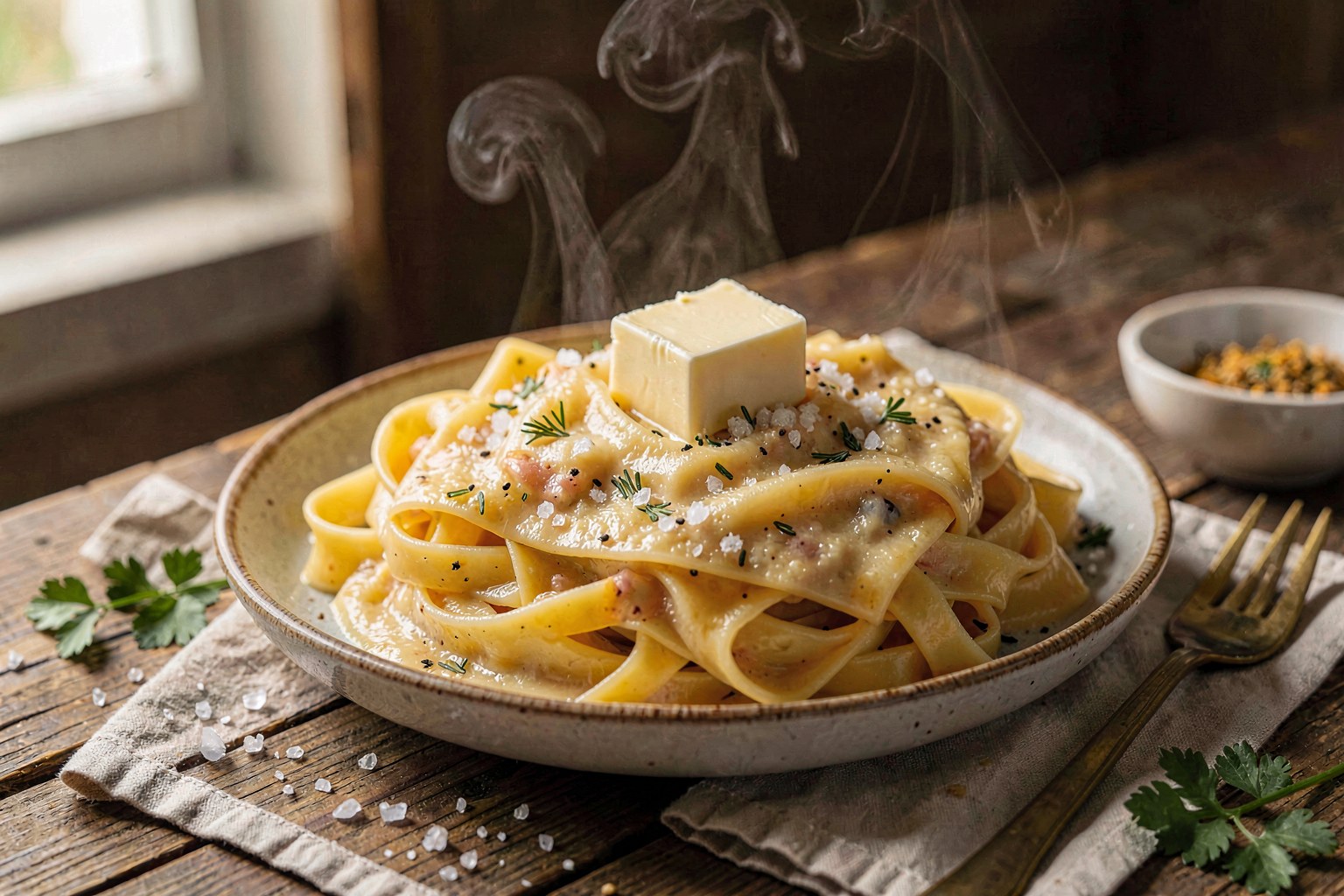
Fettuccine al Burro e Parmigiano (Authentic Roman Alfredo)
This Roman classic achieves a silky, creamy texture without using a single drop of cream. It relies on the precise emulsion of room-temperature butter, aged Parmigiano-Reggiano, and starchy pasta water tossed over fresh egg noodles.
A little context
Originating in Rome in the 1910s, this dish was created by Alfredo Di Lelio to entice his appetite-less wife to eat. Unlike the Americanized version, the authentic recipe contains no cream, garlic, or herbs, focusing strictly on fat and cheese. It is a staple of Roman cuisine, typically served as a primo piatto or a simple family dinner. The technique requires high-quality ingredients and precise temperature control to prevent the cheese from clumping.
Method
- 01
Prepare ingredients
Grate the Parmigiano-Reggiano finely and set aside in a bowl. Cut the butter into small cubes and let it sit on the counter to reach room temperature.
- 02
Boil the water
Fill the large pot with water and bring to a rolling boil. Add the sea salt once boiling; the water should taste distinctly salty.
- 03
Cook the pasta
Add the fettuccine to the boiling water. Cook for 2-3 minutes until very al dente. Fresh pasta cooks much faster than dried.
- 04
Reserve pasta water
Before draining, scoop out 1 cup (240 ml) of the starchy cooking water. Set this aside near the stove.
- 05
Warm the butter
Place the large skillet over low heat. Add the cubed butter and let it melt gently without browning.
- 06
Emulsify the sauce
Transfer the cooked pasta directly into the skillet with the butter. Add a splash of the reserved pasta water and toss vigorously with tongs to create a creamy emulsion.
- 07
Incorporate cheese
Remove the skillet from the heat. Add the grated Parmigiano-Reggiano in batches, tossing constantly until fully melted and creamy. Add more pasta water if the sauce is too thick.
- 08
Serve immediately
Plate the pasta while hot. The sauce will thicken as it cools, so serve right away with extra cheese on the side if desired.
Pro tips
- ✦Never use pre-grated cheese as anti-caking agents prevent proper melting.
- ✦Keep the butter at room temperature so it emulsifies smoothly without separating.
- ✦Save plenty of starchy pasta water; it is the key to the sauce consistency.
- ✦Finish cooking the pasta in the skillet to absorb the flavors.
- ✦Work quickly once cheese is added to prevent it from clumping due to heat.
Shop this recipe
As an Amazon Associate we earn from qualifying purchases.
Substitutions
- fresh egg fettuccine → dried fettuccine (increase boiling time to package instructions; texture will be slightly different)
- Parmigiano-Reggiano → Grana Padano (slightly less sharp but acceptable for authentic technique)
Storage
Best eaten immediately. Leftovers keep in the fridge for 1 day. Reheat gently with a splash of water as the sauce will solidify.
What to serve with it
- Frascati or Pinot Grigio white wine
- Arugula salad with lemon vinaigrette
- Grilled asparagus with lemon
FAQ
Can I add cream to make it smoother?+
No, adding cream makes it an American-style Alfredo. The authentic Roman version relies solely on butter and cheese emulsified with pasta water.
Why did my sauce turn grainy?+
The heat was likely too high when adding the cheese, causing the proteins to seize. Always remove the pan from heat before adding cheese.
Share this recipe
Notes from the community
Sign in to leave a note.
No notes yet — be the first.