Gazpacho Andaluz: Classic Chilled Tomato Soup
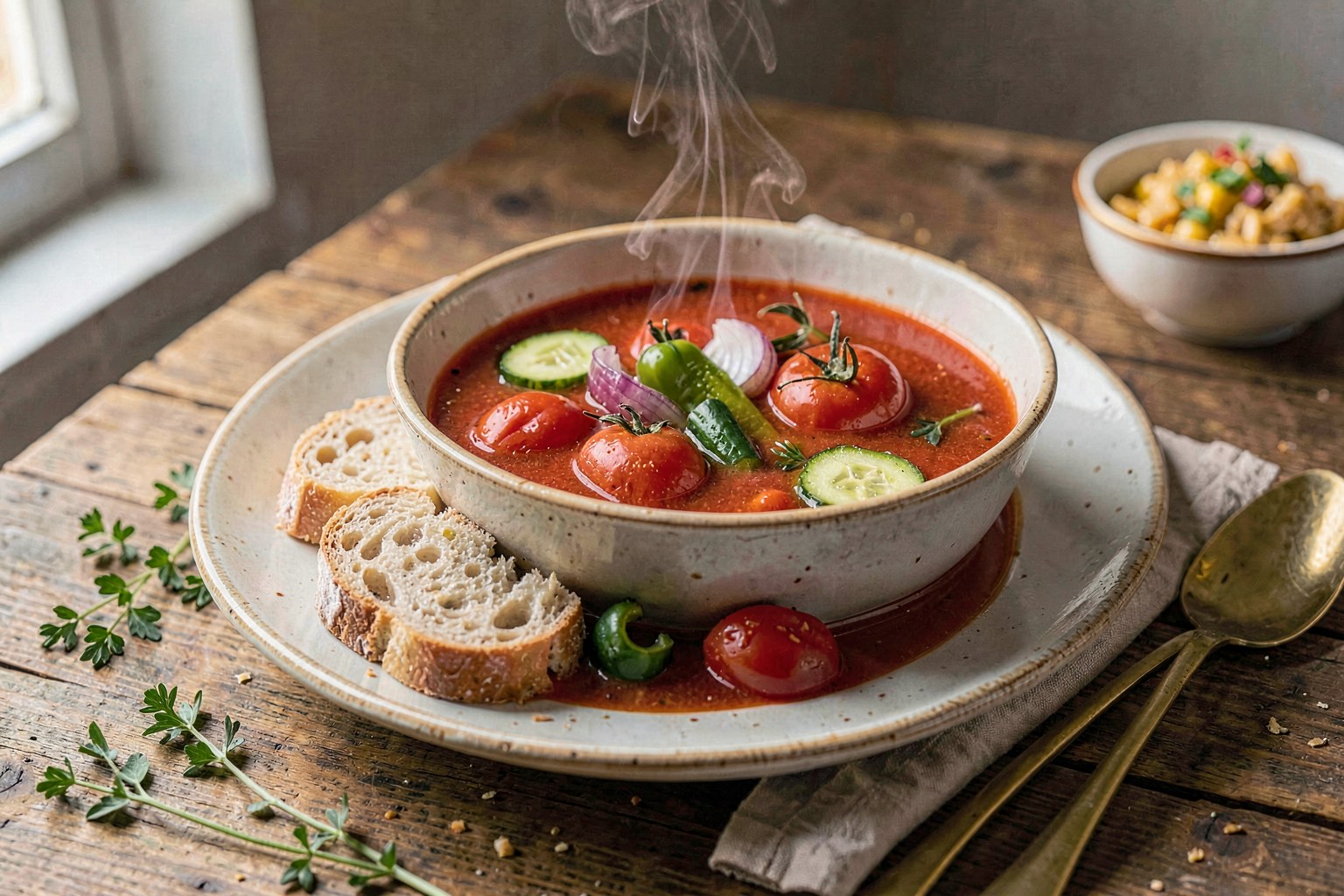
A vibrant, chilled soup from Andalusia that balances the sweetness of ripe tomatoes with the sharpness of sherry vinegar and the richness of extra virgin olive oil. The inclusion of stale bread creates a luxurious, velvety texture that distinguishes this rustic summer staple from lighter gazpachos.
A little context
Originating in the hot plains of Andalusia, Gazpacho was historically a peasant food designed to hydrate laborers working in the scorching summer sun using ingredients found in the local orchard. Authentic versions rely heavily on the 'trinity' of tomato, garlic, and cucumber, bound together with stale bread to achieve a creamy consistency without dairy. While modern variations often omit the bread or use raw vegetables only, the traditional method involves soaking the bread to emulsify the soup, making it a hearty meal rather than just an appetizer. It is strictly served ice-cold, often accompanied by diced vegetables and croutons on the side.
Method
- 01
Soak the bread
Place the torn stale bread in a large bowl and cover with 120 ml (1/2 cup) of the ice water. Let it sit for 10 minutes until the bread is completely softened and has absorbed the water.
- 02
Combine vegetables
Add the chopped tomatoes, cucumber, green bell pepper, red onion, and garlic cloves to the bowl with the soaked bread. If the bread has not fully absorbed the water, add a splash more.
- 03
Blend the base
Transfer the vegetable and bread mixture to a high-speed blender. Add the sherry vinegar, sea salt, and half of the olive oil (50 ml / 3.5 tbsp). Blend on high speed for 2-3 minutes until the mixture is completely smooth and emulsified.
- 04
Emulsify the oil
With the blender running on medium speed, slowly drizzle in the remaining olive oil (50 ml / 3.5 tbsp) through the feed tube. This step is crucial for creating the traditional creamy, opaque texture of Gazpacho Andaluz.
- 05
Strain for silkiness
Pour the blended soup through a fine-mesh sieve into a large bowl, pressing down on the solids with the back of a ladle to extract as much liquid as possible. Discard the remaining skins and seeds left in the sieve.
- 06
Chill thoroughly
Cover the bowl with plastic wrap, pressing the wrap directly onto the surface of the soup to prevent a skin from forming. Refrigerate for at least 4 hours, or ideally overnight, to allow the flavors to meld and the soup to become thoroughly chilled.
- 07
Adjust and serve
Taste the soup before serving. If it is too thick, whisk in a little more ice water. Adjust salt or vinegar if needed. Serve in chilled bowls, garnished with diced vegetables, croutons, or a drizzle of olive oil as desired.
Pro tips
- ✦Use day-old bread rather than fresh; fresh bread can make the soup too gummy.
- ✦For the best texture, peel the tomatoes by scoring an 'X' on the bottom, blanching for 30 seconds, and shocking in ice water before chopping.
- ✦Do not skip the straining step if you want the authentic, silky mouthfeel of the Andaluz style.
- ✦Serve the soup in chilled bowls to keep it cold longer on the table.
- ✦The soup will thicken as it sits in the fridge; keep extra ice water on hand to thin it out before serving.
Substitutions
- sherry vinegar → red wine vinegar (slightly less complex but acceptable in a pinch)
- stale white bread → soaked gluten-free bread or 2 tbsp ground almonds (almonds add richness but change the traditional profile)
- green bell pepper → red bell pepper (makes the soup sweeter and slightly less bitter)
Storage
Refrigerate in an airtight container for up to 3 days. Freezing is not recommended as the texture will separate and become grainy upon thawing.
What to serve with it
- Crusty Spanish bread and a glass of chilled Fino or Manzanilla sherry
- Sliced hard-boiled eggs and diced serrano ham
- A simple green salad with lemon vinaigrette
FAQ
Why does my gazpacho taste bitter?+
This usually comes from the seeds and white pith of the green bell pepper. Ensure you remove all seeds and the inner white membrane before blending.
Can I make this without a blender?+
Traditionalists sometimes use a mortar and pestle (mortero) to crush the ingredients into a paste, then whisk in the oil, but this takes significantly longer and yields a slightly different, more rustic texture.
Is it supposed to be sweet?+
No, authentic Gazpacho Andaluz should be a balance of savory, acidic, and fresh vegetable flavors, not sweet. If your tomatoes are very sweet, you may need to increase the vinegar slightly.