Traditional Portuguese Ginja (Ginjinha)
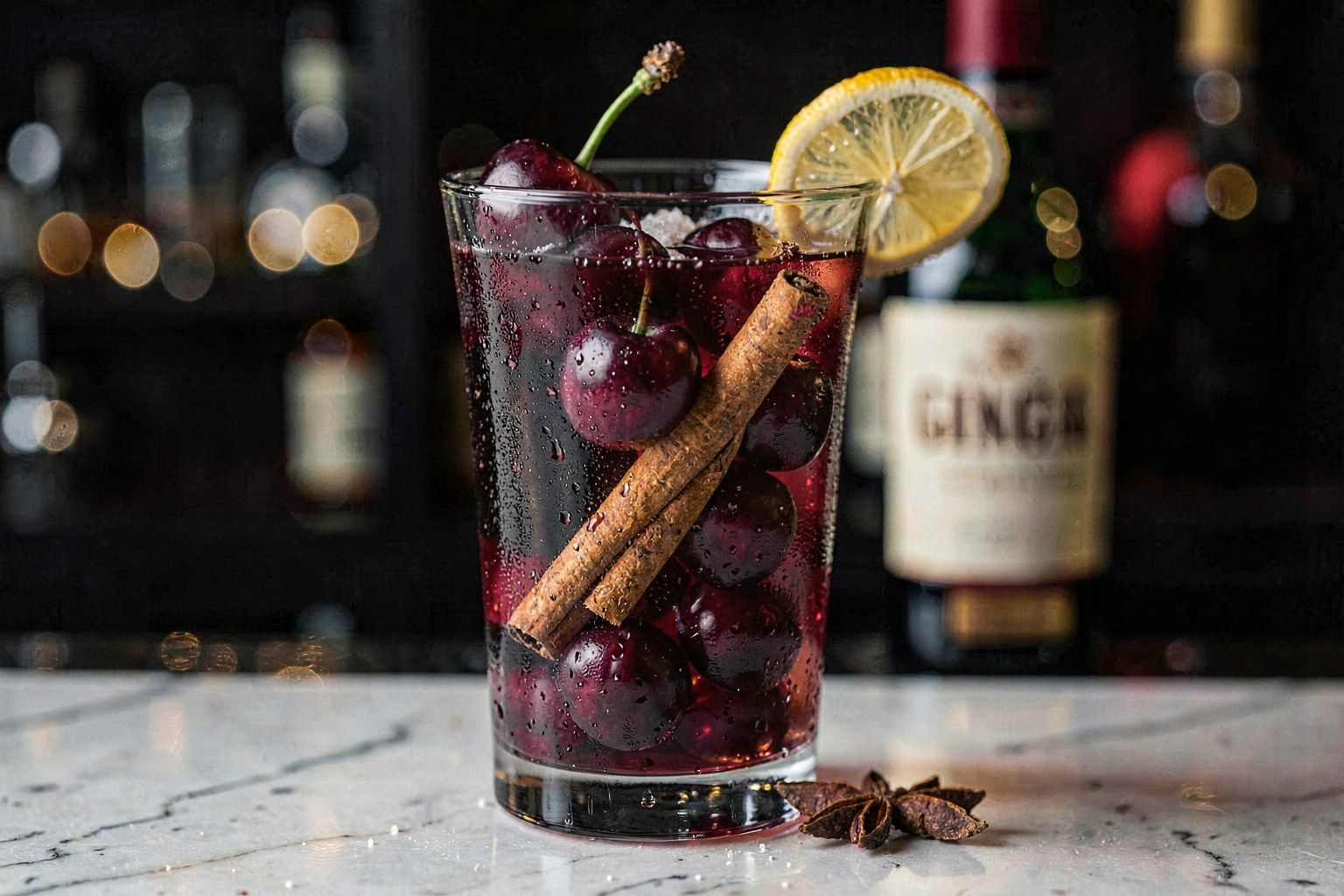
A vibrant, sweet-sour cherry liqueur made by infusing sour cherries, sugar, and spices in aguardente. It offers a deep ruby color and a rich, boozy cherry flavor with a hint of almond from the pits, traditionally served as a digestif.
A little context
Originating in the town of Óbidos, Ginja has been a staple of Portuguese culture since at least the 19th century. It is most famously served in small chocolate cups or ceramic shot glasses, with a whole cherry left inside the drink. Locals often sip it slowly after a meal as a digestive aid, particularly during festive seasons like Christmas and Easter.
Method
- 01
Prepare the fruit
Thoroughly wash the sour cherries and pat them completely dry with a clean kitchen towel. Ensure no stems remain, but do NOT remove the pits; the pits release the characteristic almond-like flavor essential to authentic Ginja.
- 02
Layer the ingredients
Place the dried cherries, cinnamon stick, and star anise (if using) into the clean glass jar. Pour the sugar over the fruit, ensuring it is mostly covered.
- 03
Add the spirit
Pour the aguardente (or high-proof spirit) over the fruit and sugar mixture. The liquid must completely submerge the fruit by at least 2-3 cm. Seal the jar tightly.
- 04
Initial agitation
Gently shake the jar for about 30 seconds to help dissolve the sugar slightly. Store the jar in a cool, dark place away from direct sunlight.
- 05
Maceration
Let the mixture infuse for at least 4 to 6 weeks. Shake the jar gently once every 3 to 4 days to redistribute the sugar and fruit flavors. The longer it sits, the deeper the color and flavor will become (up to 3 months is ideal).
- 06
Strain the liqueur
After the infusion period, line a fine-mesh sieve with cheesecloth and place it over a large bowl. Pour the liquid through the sieve to separate the cherries and spices. Do not press hard on the solids; let the liquid drain naturally for a clear finish.
- 07
Bottle and rest
Using a funnel, transfer the strained Ginja into sterilized glass bottles. Seal tightly. For the best flavor, let the bottled liqueur rest in a dark place for another 2 weeks before serving.
- 08
Serve traditionally
Serve chilled in small shot glasses or traditional chocolate cups. Place one of the strained, macerated cherries in each glass. Serve immediately.
Pro tips
- ✦Do not pit the cherries before infusion; the almond flavor from the pits is the signature of authentic Ginja.
- ✦If using frozen cherries, thaw them completely and pat them very dry to prevent dilution of the alcohol.
- ✦The liqueur improves significantly with age; it can be stored in a cool, dark place for up to 2 years.
- ✦For a clear, professional look, strain the liquid twice using a coffee filter if you notice any sediment.
- ✦Always use high-proof alcohol (at least 60% ABV) to properly extract flavors and preserve the fruit.
Shop this recipe
As an Amazon Associate we earn from qualifying purchases.
Substitutions
- sour cherries (Morello) → sweet red cherries (dark sweet) (will result in a sweeter, less tart profile; increase sugar slightly if needed.)
- aguardente → high-proof vodka (150 proof/75% ABV) (more neutral flavor, but works well if Portuguese brandy is unavailable.)
- star anise → cloves (2-3 whole) (adds a different warm spice note; use sparingly.)
Storage
Store in a cool, dark place (pantry or cellar) for up to 2 years. Once opened, it keeps indefinitely due to the high alcohol content, but flavor is best within the first year. Refrigeration is not required but can be done for a colder serving temperature.
What to serve with it
- Freshly baked pastel de nata
- Dark chocolate truffles
- Portuguese almond cookies (Biscoitos de amêndoa)
- Strong espresso (as a digestif)
FAQ
Can I use sweet cherries instead of sour cherries?+
Yes, but the result will be much sweeter and lack the signature tartness. You may need to reduce the sugar by 25%.
Is it safe to eat the cherries inside the glass?+
Yes, the macerated cherries are safe to eat and are traditionally consumed along with the drink. The pits inside are hard and should be spat out.
Why is my Ginja cloudy?+
Cloudiness usually happens if the fruit wasn't dried properly before adding alcohol, or if the sugar didn't fully dissolve. Strain through a coffee filter next time for clarity.