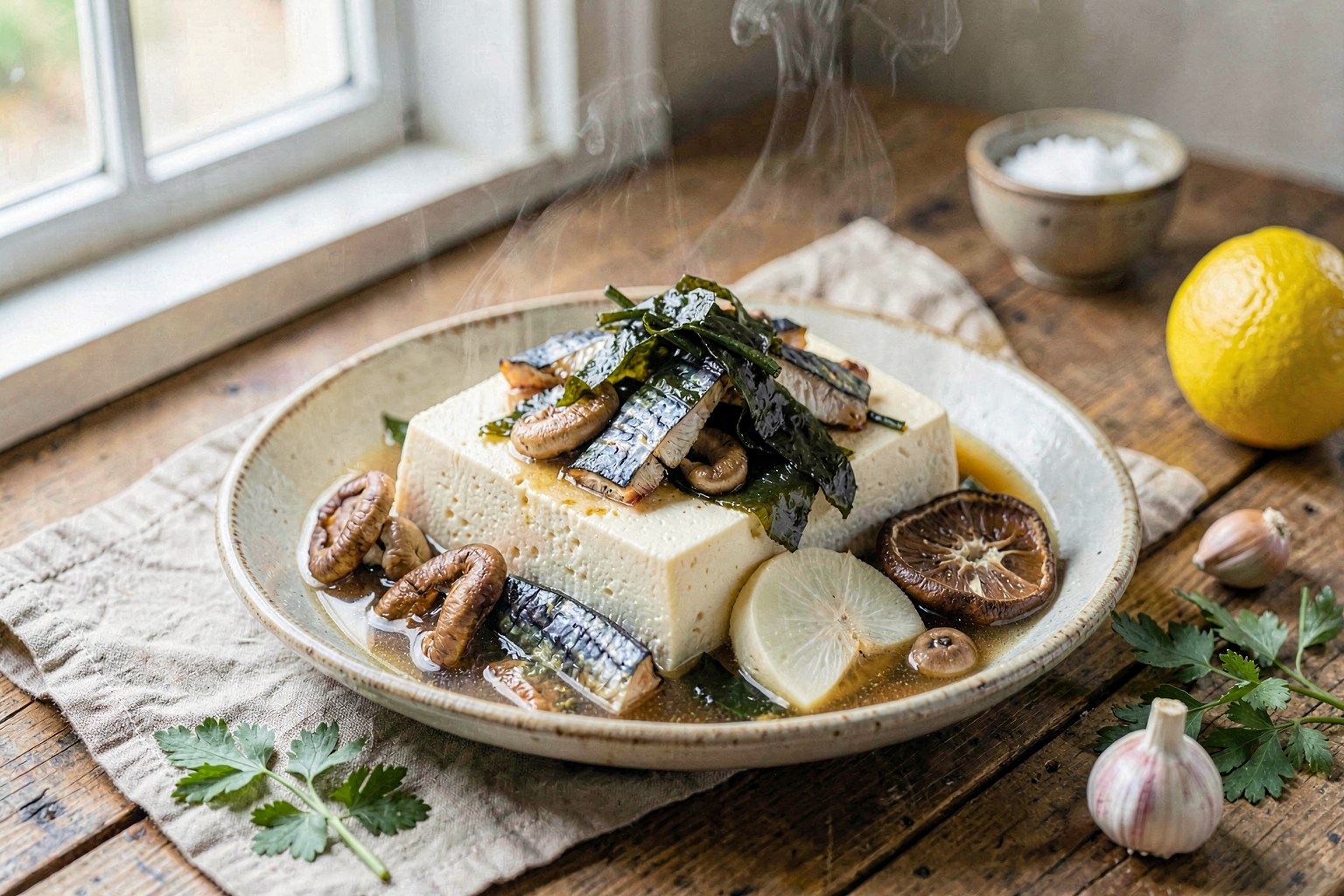
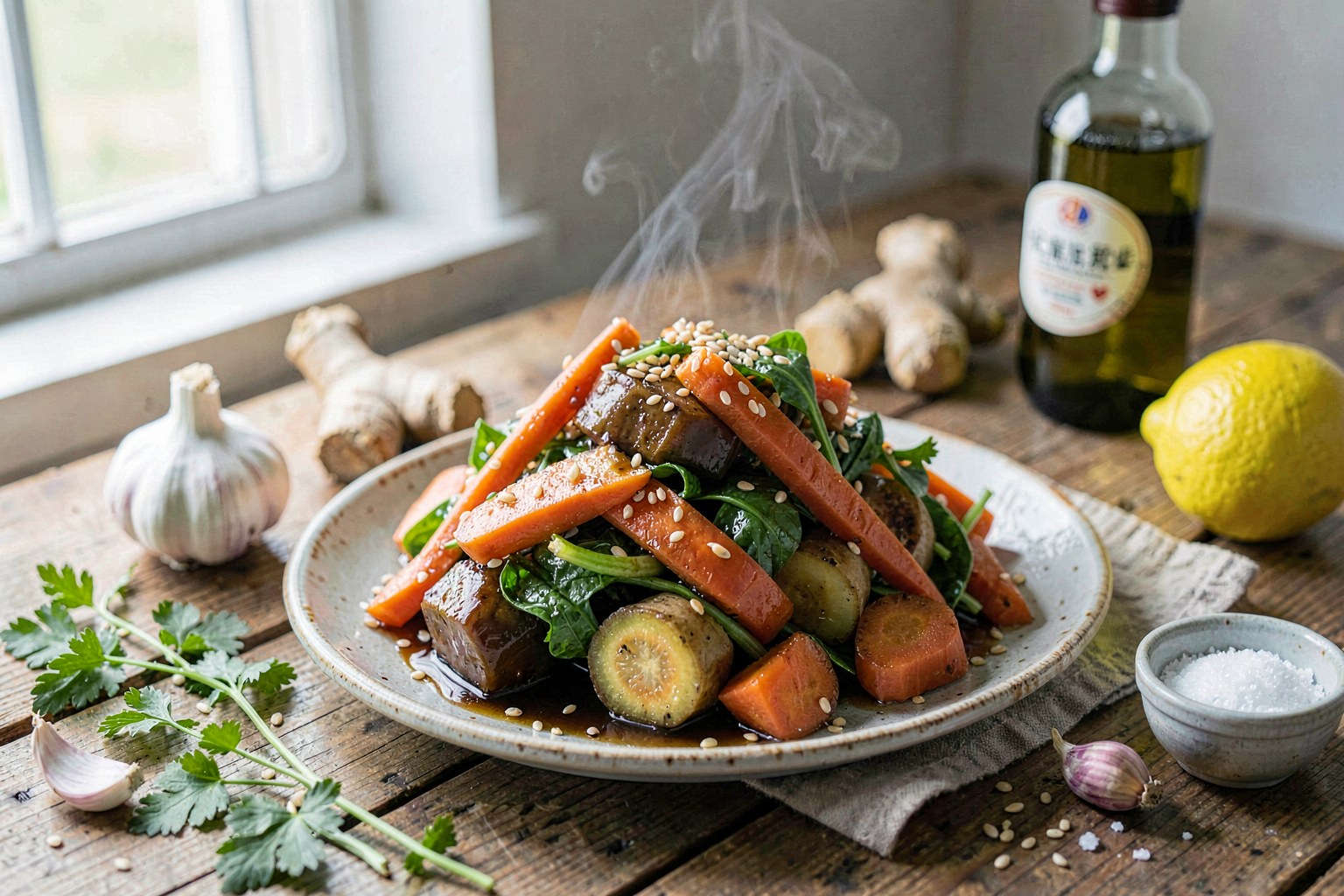
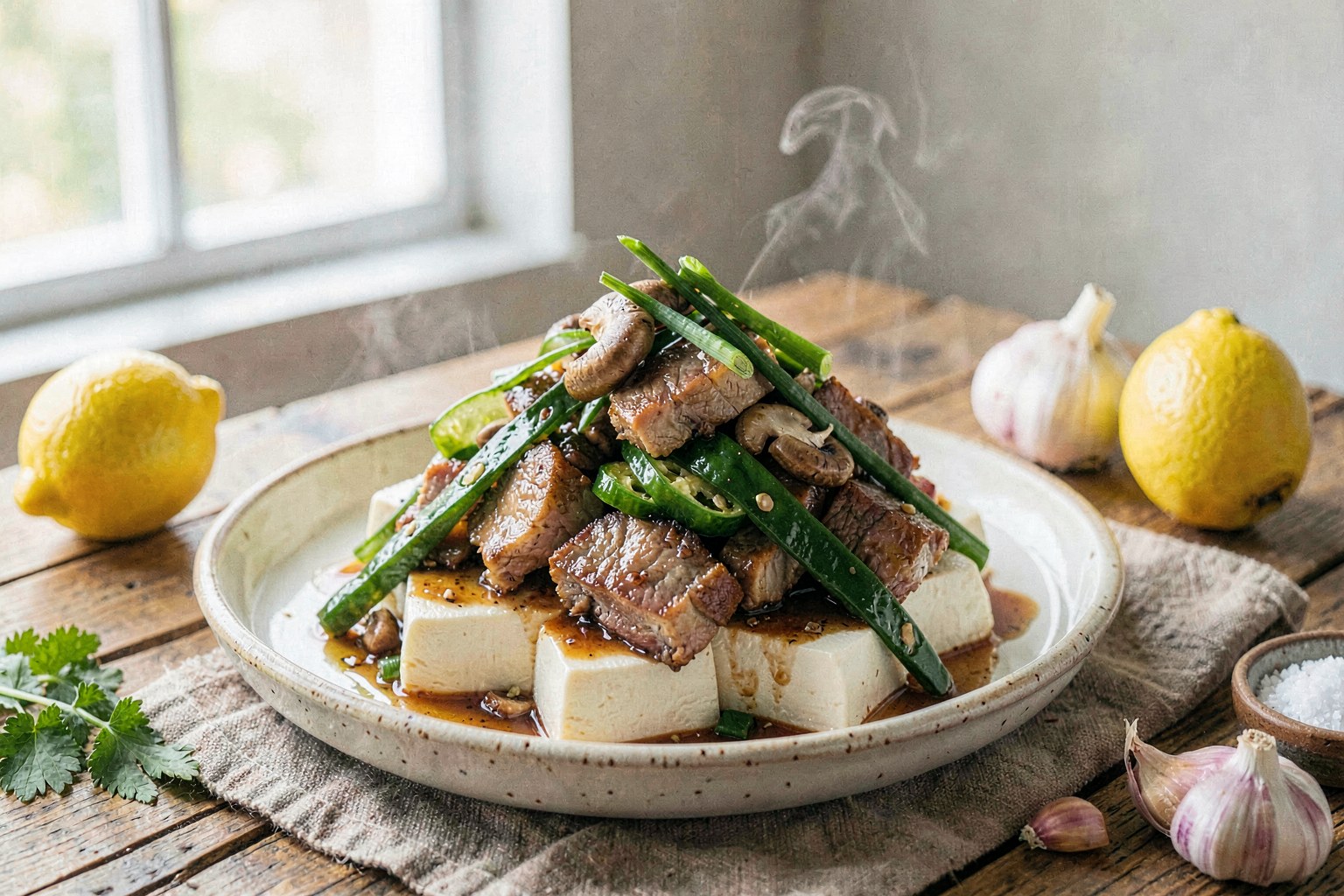
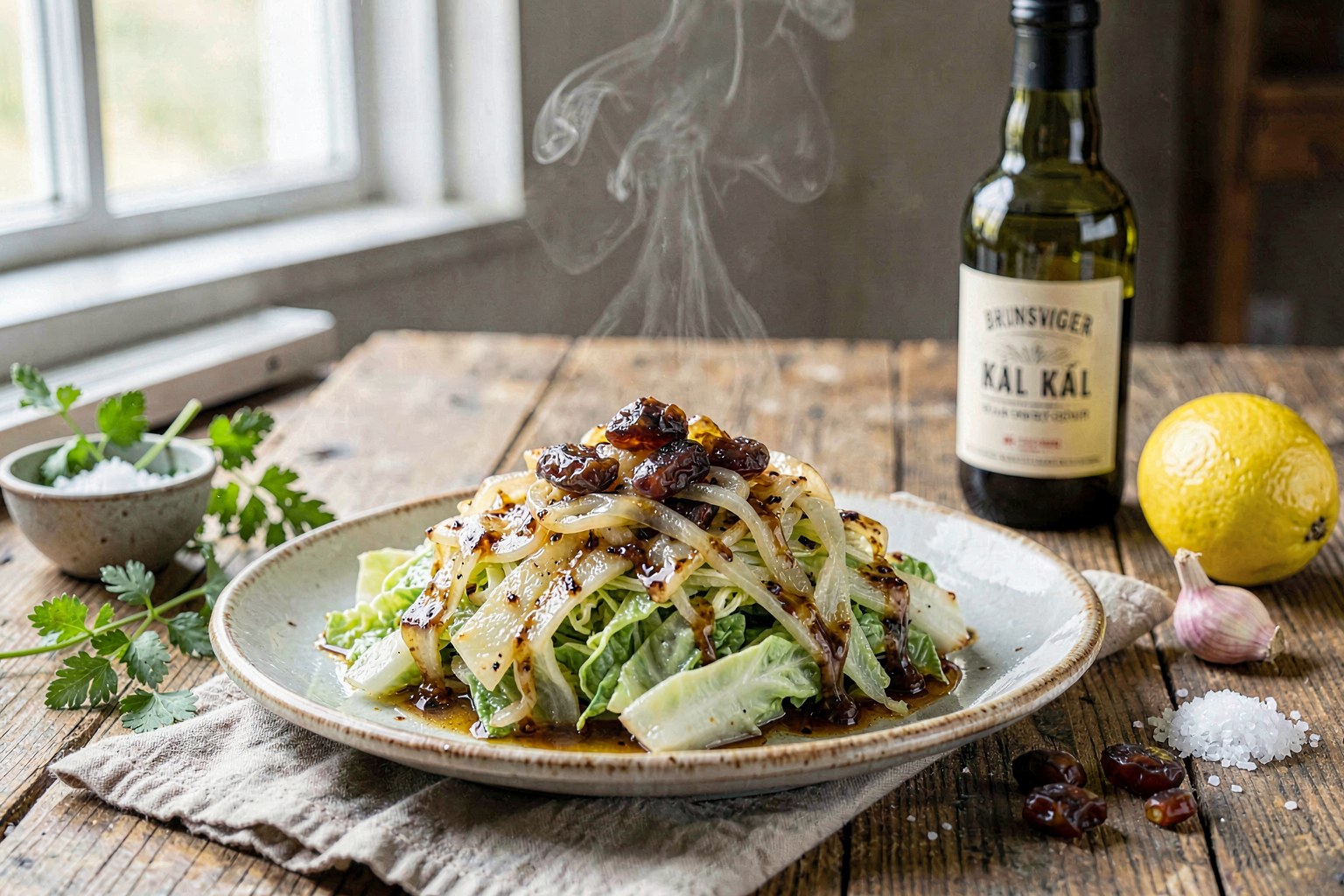
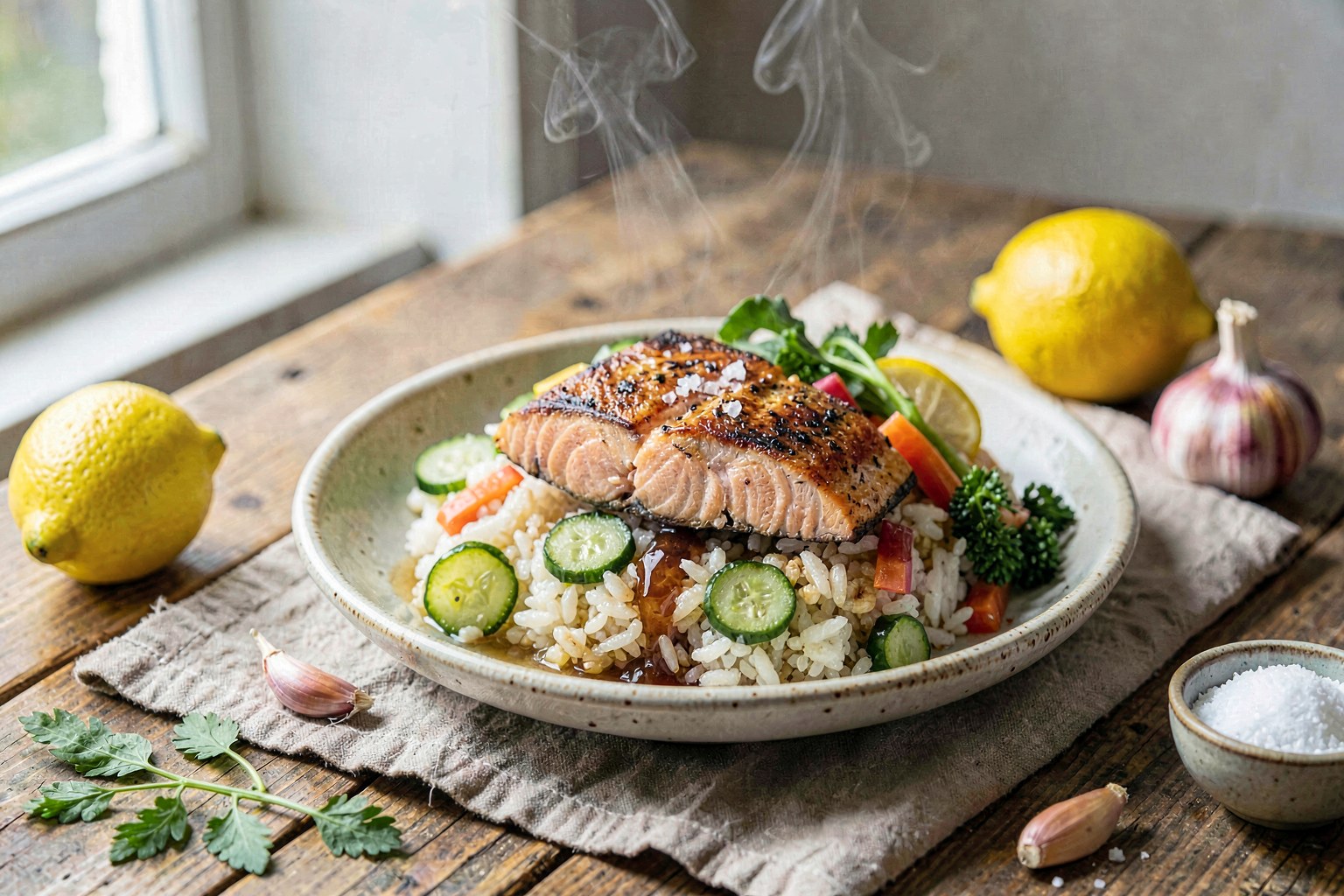
Goya No Amis: Fermented Bitter Melon with Wild Sockeye Salmon
This dish honors the Okinawan tradition of preserving bitter melon (goya) through fermentation, pairing it with rich, wild-caught salmon. The result is a savory, umami-rich dinner where the natural bitterness of the melon is tamed by salt and rice vinegar, creating a deep, complex flavor profile without a single grain of refined sugar.
A little context
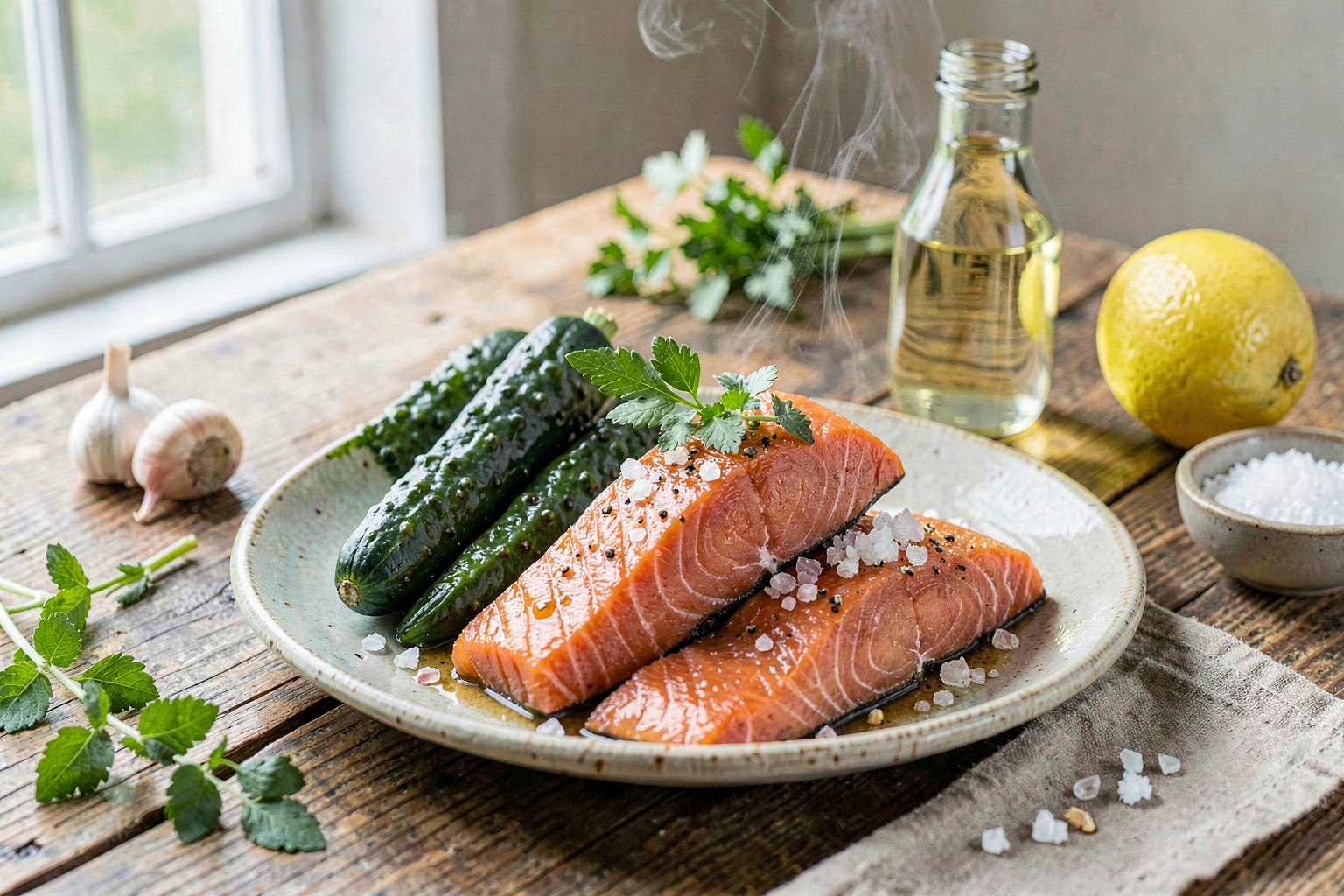
In Okinawa, bitter melon is a staple of the Blue Zone diet, traditionally stir-fried with tofu and pork, often with added sugar to balance the intense bitterness. We honor this tradition by utilizing a salt-and-vinegar fermentation method that preserves the vegetable's integrity and probiotic potential, eliminating the need for refined sugar or seed oils. The addition of wild salmon aligns with the modern Blueprint focus on high-quality marine proteins, replacing the traditional pork for a cleaner, anti-inflammatory profile.
Method
- 01
Salt and Mass the Bitter Melon
In a large bowl, toss the sliced bitter melon with the sea salt. Using clean hands, vigorously massage the slices for 3–4 minutes until they begin to wilt and release liquid. This breaks down the cell walls and reduces the initial harsh bitterness.
- 02
Initiate Fermentation
Pack the salted melon tightly into your clean glass jar, ensuring it is submerged in its own juices. Add the raw rice vinegar and julienned ginger. If the melon is not fully submerged, add a small amount of filtered water mixed with a pinch more salt. Seal the jar and let it sit at room temperature (away from direct sun) for 24–48 hours. The melon should turn a slightly duller green and smell tangy. After fermentation, refrigerate to halt the process; this can be done up to 2 weeks in advance.
- 03
Prepare the Aromatics
While the melon ferments, grate the fresh turmeric and mince the garlic. Let the garlic rest for 10 minutes to maximize its allicin content. In a small bowl, whisk together the coconut aminos and 1 tablespoon of the extra-virgin olive oil.
- 04
Prep the Salmon
Pat the wild-caught sockeye fillets completely dry with a paper towel. Season both sides lightly with sea salt. Let them rest at room temperature for 15 minutes to take the chill off, ensuring even cooking.
- 05
Sear the Salmon
Heat a cast-iron skillet over medium-high heat. Add 1 tablespoon of olive oil. Once the oil shimmers, place the salmon fillets skin-side down. Press gently with a spatula for 10 seconds to prevent curling. Cook undisturbed for 4–5 minutes until the skin is crisp and golden. Flip and cook for another 2–3 minutes until the center is just opaque (medium-rare to medium).
- 06
Sauté the Fermented Melon
Remove the salmon from the pan and set aside on a warm plate. In the same pan (do not wipe it out), add the remaining 1 tablespoon of olive oil, the turmeric, and garlic. Sauté for 30 seconds until fragrant. Add the fermented bitter melon (including the liquid from the jar) to the skillet. Stir-fry for 3–4 minutes until the liquid reduces slightly and the melon is tender-crisp.
- 07
Glaze and Combine
Pour the coconut aminos and olive oil mixture over the sautéed melon. Toss to coat evenly and let the sauce bubble and thicken for 1 minute. Return the seared salmon to the pan, skin-side up, and spoon the sauce and melon over the fish to warm through gently for 30 seconds.
- 08
Serve Immediately
Plate the salmon over a bed of the fermented bitter melon. Garnish generously with fresh shiso leaves or cilantro. Serve immediately while the skin is still crisp.
Pro tips
- ✦When selecting bitter melons, choose ones that are heavy for their size with deep, warty ridges; smooth skin often indicates a less flavorful, older melon.
- ✦Do not over-ferment the melon beyond 48 hours at room temperature, or it will become too soft and lose its characteristic crunch.
- ✦For the crispiest skin, ensure the salmon is bone-dry before it hits the pan and do not move the fillet until the skin releases naturally.
- ✦If you cannot find fresh turmeric, use 1/2 teaspoon of high-quality organic turmeric powder, but fresh provides superior bioavailability.
- ✦Save the brine from the fermented melon jar; it makes an excellent, probiotic-rich dressing base for leafy green salads.
Substitutions
- wild-caught sockeye salmon → wild-caught Arctic char or rainbow trout (These fish have a similar fat profile and cook in the same timeframe.)
- coconut aminos → tamari (gluten-free soy sauce) (Use tamari if you tolerate soy and want a deeper umami flavor, though coconut aminos are lower in sodium.)
- extra-virgin olive oil → avocado oil (A neutral-tasting high-heat alternative if you prefer not to use EVOO for cooking.)
Storage
Store salmon and melon separately in airtight glass containers in the refrigerator for up to 3 days. The fermented melon brine can be kept for up to 2 weeks. Do not freeze the cooked salmon as it alters the texture; the raw fermented melon freezes well for up to 2 months.
What to serve with it
- Hot sencha green tea to complement the bitterness and aid digestion.
- A small side of steamed white rice (traditional Okinawan style) or quinoa.
- Sparkling water with a wedge of fresh lime.
- A dry, low-sulfite red wine like Pinot Noir.
FAQ
Is this dish too bitter for the average palate?+
The fermentation process significantly mellows the intense bitterness of the raw melon, replacing it with a complex, savory tang similar to pickled vegetables. If you are new to bitter melon, start with a smaller portion.
Can I make this vegan?+
Yes, simply omit the salmon. The fermented bitter melon is a complete dish on its own, rich in probiotics and fiber. You could add pan-seared tempeh for protein.
Why use raw rice vinegar instead of regular vinegar?+
Raw, unfiltered vinegar contains the 'mother' (beneficial bacteria and enzymes) which supports the gut health benefits of the fermentation process, whereas pasteurized vinegar is sterile.
Share this recipe
Notes from the community
Sign in to leave a note.
No notes yet — be the first.
You might also like