Grass-Fed Ribeye with Roasted Garlic Chimichurri
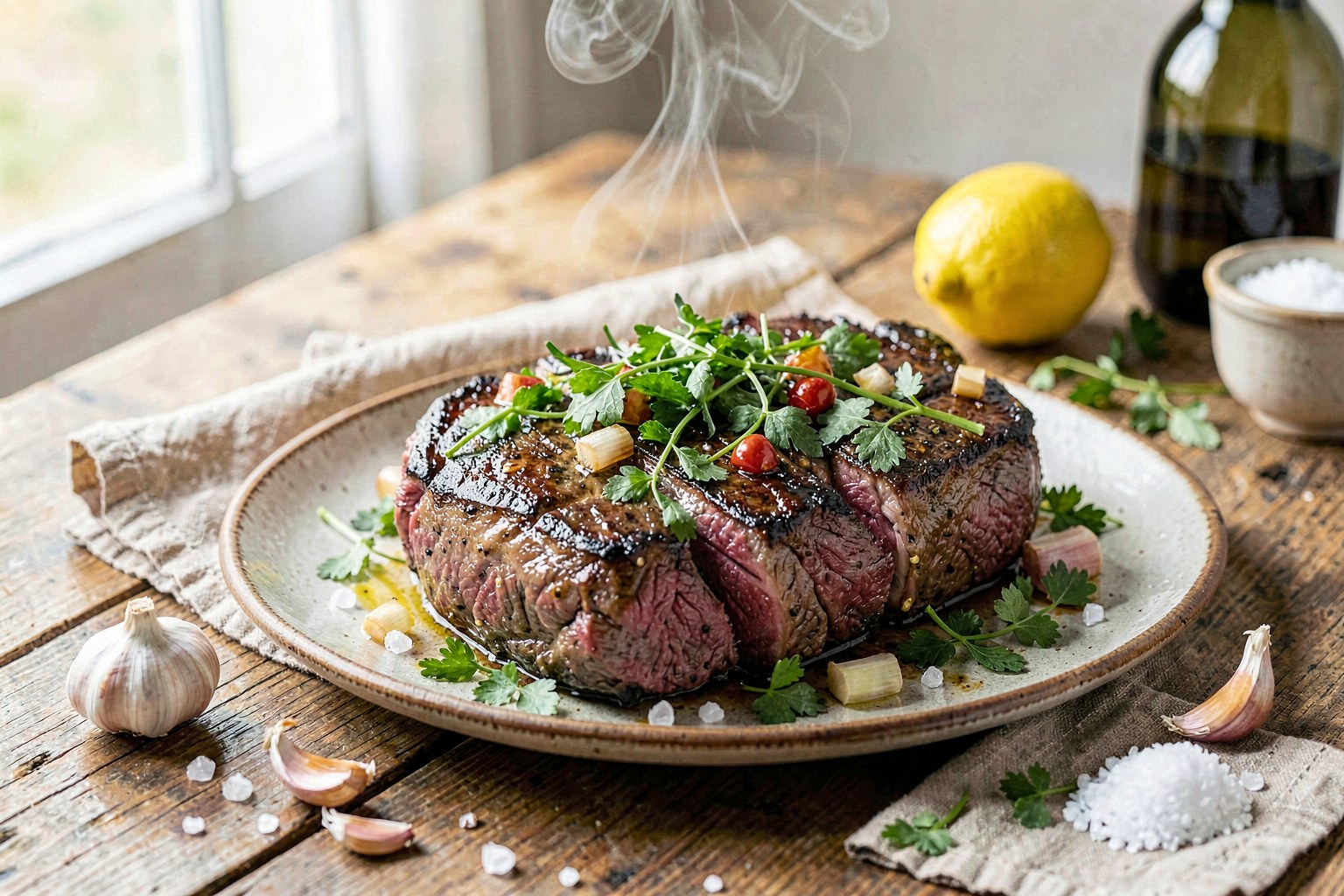
A Sacramento Valley tradition reimagined for longevity: a thick-cut, grass-fed ribeye seared to a perfect crust and resting in a vibrant, raw chimichurri loaded with polyphenol-rich parsley, oregano, and roasted garlic. This dish delivers high-quality protein and healthy fats without a drop of seed oil or refined sugar, honoring the California farm-to-table ethos with clean, bioactive ingredients.
A little context
Rooted in the Argentine-style grilled steak traditions embraced by California's Central Valley ranchers, this recipe strips away the industrial shortcuts often found in modern American steakhouses. Traditional chimichurri sometimes includes a splash of sugar or vinegar with added preservatives, which we have replaced with the natural acidity of fresh lemon juice and the sweetness of whole roasted garlic. We also swap the ubiquitous seed oils used for searing with high-heat stable grass-fed tallow or avocado oil, ensuring the fat profile aligns with a longevity-focused diet while preserving the dish's rustic, earthy soul.
Method
- 01
Roast the garlic
Preheat oven to 200°C (400°F). Slice the top off the garlic head to expose the cloves. Drizzle with 1 tsp (5 ml) of EVOO, wrap tightly in foil, and roast for 35–40 minutes until soft and golden. Let cool, then squeeze the cloves out of their skins.
- 02
Prepare the steak
Pat the ribeyes completely dry with paper towels. Rub them generously with coarse sea salt on all sides. Let them sit at room temperature for 30–45 minutes to ensure even cooking.
- 03
Make the chimichurri
In a medium bowl, mash the roasted garlic cloves into a paste. Stir in the EVOO, lemon juice, red pepper flakes, and sea salt. Fold in the finely chopped parsley and oregano. Let sit at room temperature to allow flavors to meld while the steak cooks.
- 04
Sear the steak
Heat your cast-iron skillet over high heat until it is smoking slightly. Add the tallow or avocado oil. Carefully place the steaks in the pan. Sear undisturbed for 3–4 minutes until a deep brown crust forms.
- 05
Flip and baste
Flip the steaks. Reduce heat to medium-high. Add a small knob of pastured butter (optional) and a sprig of fresh thyme or rosemary to the pan. Tilt the pan and spoon the foaming fat over the steaks for 2–3 minutes.
- 06
Check temperature
Insert the instant-read thermometer into the thickest part of the steak. For medium-rare (ideal for grass-fed), pull at 52°C (125°F). The temperature will rise 5–7 degrees while resting.
- 07
Rest the meat
Transfer steaks to a warm plate or cutting board. Do not cut yet. Let rest for 10 minutes to allow juices to redistribute throughout the muscle fibers.
- 08
Serve
Slice the steak against the grain into 1 cm (1/2 inch) strips. Spoon the roasted garlic chimichurri generously over the top, ensuring each slice gets some of the herb oil.
Pro tips
- ✦Sourcing matters: Look for '100% Grass-Fed' labels, not just 'Grass-Fed' which can imply grain-finishing. Local Sacramento Valley ranches often sell directly to consumers for the best traceability.
- ✦Do not skip the dry pat: Moisture is the enemy of the Maillard reaction. If the steak surface is wet, it will steam instead of sear.
- ✦Fresh herb selection: When buying parsley, choose bunches with crisp, dark green leaves and no yellowing. If the stems are woody, trim them off completely as they add a bitter texture to the sauce.
- ✦Room temperature is non-negotiable: Taking the steak out of the fridge 45 minutes before cooking prevents the center from remaining raw while the outside burns.
- ✦Chimichurri emulsion: If the sauce separates, whisk in 1 tsp of warm water to re-emulsify the oil and herbs before serving.
Substitutions
- grass-fed ribeye → grass-fed strip steak or sirloin (Strip is leaner; reduce cook time by 1-2 minutes. Sirloin is more affordable but requires careful slicing against the grain.)
- grass-fed tallow → high-heat avocado oil (Use if you prefer a neutral flavor profile, though tallow adds a distinct beefy richness.)
- fresh oregano → fresh marjoram (Marjoram is sweeter and milder; use the same volume if oregano is out of season.)
Storage
Store leftover steak and sauce separately in glass containers in the fridge for up to 3 days. The chimichurri can be refrigerated for up to 5 days; bring to room temperature before serving. Do not freeze the sauce as the herbs may oxidize and turn black.
What to serve with it
- Steamed broccolini with lemon zest
- Roasted asparagus with EVOO and sea salt
- Dry red wine (Cabernet Sauvignon or Malbec) from organic vineyards
- Sparkling water with a wedge of fresh lime and mint
FAQ
Why is grass-fed beef harder to cook than grain-fed?+
Grass-fed beef has less intramuscular fat (marbling) and cooks about 30% faster. Overcooking makes it tough and chewy. Always use a thermometer and aim for medium-rare.
Can I make the chimichurri ahead of time?+
Yes, it actually tastes better after sitting for a few hours or overnight as the roasted garlic mellows and the herbs infuse the oil. Store in a sealed glass jar in the fridge.
Is this recipe truly Blueprint-aligned?+
Yes, provided the beef is 100% grass-fed and the oil is high-quality EVOO. We avoid all seed oils, refined sugars, and processed additives, focusing on whole-food polyphenols and clean proteins.
Share this recipe
Notes from the community
Sign in to leave a note.
No notes yet — be the first.
You might also like