Miel con Albahaca
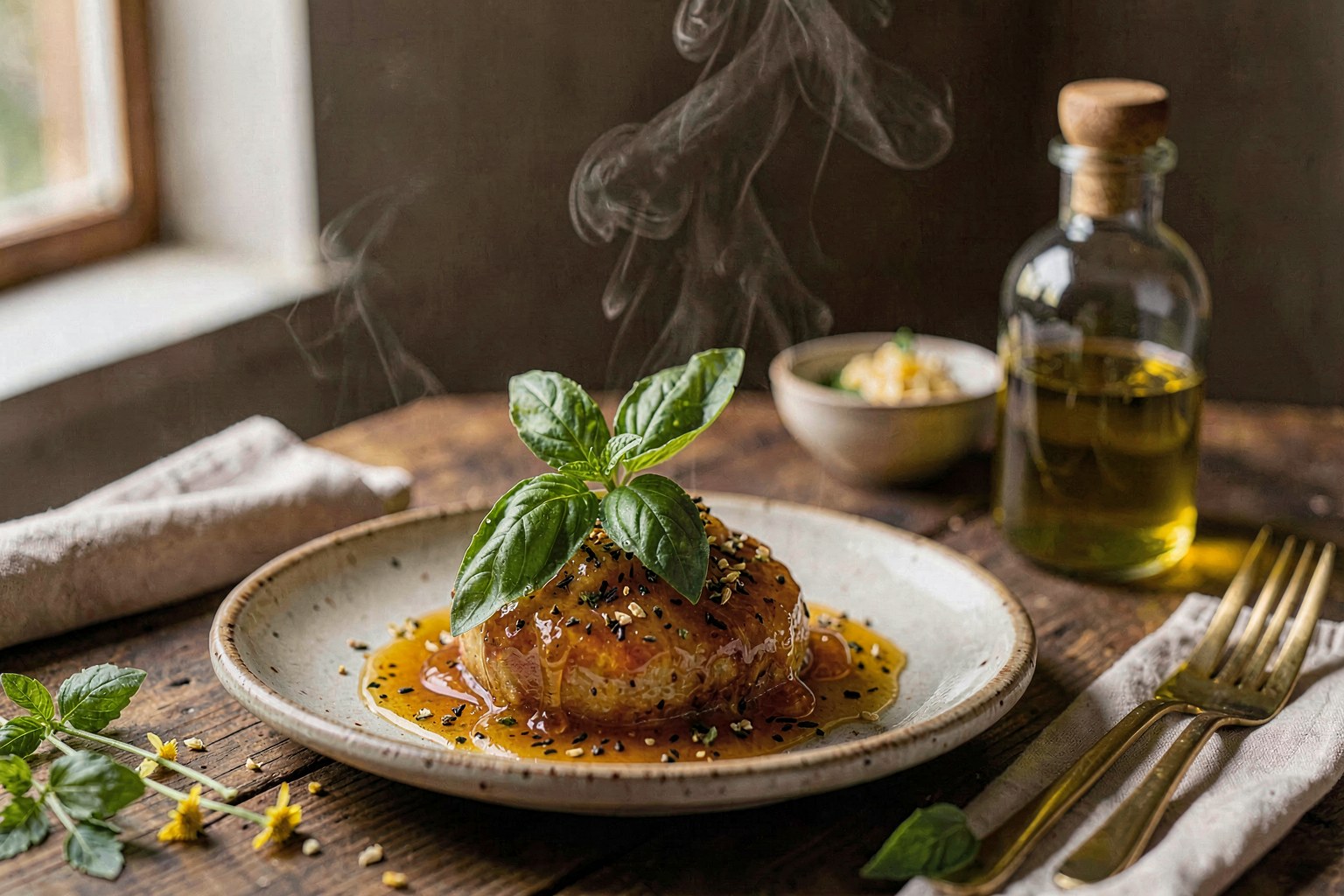
This elegant Spanish condiment balances the floral sweetness of raw honey with the peppery, anise-like brightness of fresh basil. It is traditionally served as a digestif after a heavy meal or drizzled over soft, mild cheeses to cut through the richness.
A little context
Miel con Albahaca is a classic example of Spanish culinary minimalism, often found in the regions of Andalusia and Catalonia where both honey and basil thrive. Historically, it was served as a 'digestif' to aid digestion after large Sunday family lunches or festive dinners, acting as a palate cleanser before coffee. While modern interpretations sometimes add lemon or chili, the authentic version relies solely on the quality of the raw honey and the freshness of the basil to create a harmonious, soothing finish to a meal.
Method
- 01
Prepare the basil
Rinse the basil leaves gently in cold water and pat them completely dry with a clean kitchen towel. Any remaining moisture will dilute the honey and shorten its shelf life.
- 02
Warm the honey
Pour the honey into a small saucepan over the lowest possible heat. Warm it gently until it becomes fluid, approximately 3 to 5 minutes. Do not let it simmer or boil, as high heat destroys the delicate enzymes and flavor compounds in raw honey.
- 03
Infuse the leaves
Once the honey is warm and fluid, remove the pan from the heat immediately. Stir in the basil leaves and the olive oil if using. The residual heat will gently release the essential oils from the leaves without cooking them into a mush.
- 04
Steep
Cover the saucepan with a lid and let the mixture steep at room temperature for 45 minutes. This allows the basil flavor to permeate the honey fully while maintaining its bright green color.
- 05
Strain and serve
Pour the mixture through a fine-mesh sieve into a sterilized glass jar. Press gently on the leaves to extract the last drops of flavored honey, then discard the leaves. Serve immediately as a digestif or store for later use.
Pro tips
- ✦Never boil honey; temperatures above 40°C (104°F) degrade its flavor and nutritional properties.
- ✦Use basil leaves that are dry to the touch; water introduces bacteria that can cause fermentation.
- ✦For a stronger flavor, bruise the basil leaves slightly with the back of a spoon before adding them to the honey.
- ✦This condiment pairs exceptionally well with Manchego cheese or fresh figs.
- ✦If the honey crystallizes during storage, gently warm the jar in a bowl of hot water to re-liquefy.
Substitutions
- wildflower honey → acacia honey (milder flavor, lighter color)
- sweet basil → lemon balm (adds a citrusy, floral note instead of peppery)
Storage
Store in a sealed glass jar in a cool, dark pantry for up to 3 weeks. Refrigeration is recommended for longer storage (up to 1 month), though the honey may thicken.
What to serve with it
- Manchego cheese
- fresh goat cheese
- ripe figs
- crusty sourdough bread
- dry sherry or sweet Moscatel
FAQ
Can I add lemon juice to this recipe?+
Traditionally, no. The acidity of lemon can alter the preservation qualities of the honey and change the flavor profile from sweet-herbal to tart. For a digestif, the pure honey-basil balance is preferred.
How do I know if the honey is warm enough?+
It should be fluid enough to stir easily but not hot to the touch. If you can hold your finger in it comfortably, it is ready. If it steams, it is too hot.