Pão de Ló (Portuguese Sponge Cake)
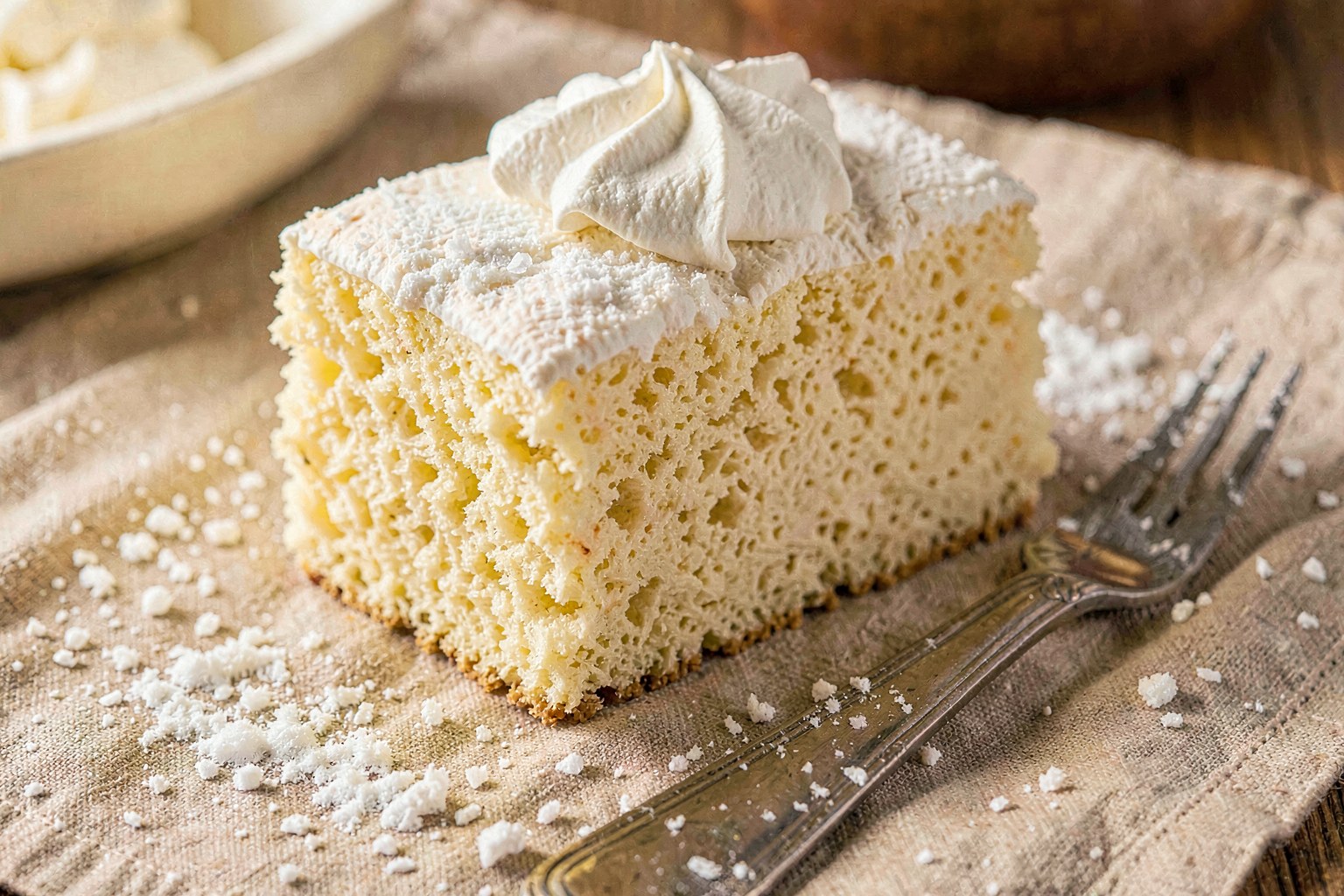
A velvety, airy Portuguese sponge cake that relies on whipped egg whites and sugar for its structure, containing no butter or yolks. The result is a delicate, cloud-like texture with a subtle sweetness that melts in the mouth.
A little context
Pão de Ló, meaning 'bread of glory,' is a historic Portuguese sponge cake with roots tracing back to 18th-century convents where nuns used surplus egg whites for starching habits. Unlike butter-heavy cakes, this version uses only egg whites and sugar, creating a unique, moist crumb that is distinct from French génoise or American sponge cakes. It is traditionally served in small slices as a tea-time treat or dessert, often accompanied by coffee or a sweet Madeira wine. Authentic recipes from regions like Ovar emphasize a slightly custard-like center.
Method
- 01
Preheat and prepare
Preheat oven to 175°C (350°F). Line the bottom of a 9-inch (23 cm) springform pan with parchment paper. Do not grease the sides, as the cake needs to climb the walls to rise properly.
- 02
Create the sugar syrup
In a small saucepan, combine 125 g (1/2 cup) of the sugar with 60 ml (1/4 cup) of water. Heat over medium until the sugar dissolves and the syrup reaches 115°C (240°F) on a candy thermometer. Remove from heat immediately.
- 03
Whip the egg whites
In a stand mixer bowl, combine the egg whites and salt. Beat on medium speed until foamy. Gradually add the remaining 125 g (1/2 cup) of sugar, increasing speed to high. Beat until soft peaks form.
- 04
Temper the meringue
With the mixer running on low, slowly pour the hot sugar syrup in a thin, steady stream down the side of the bowl into the egg whites. Avoid pouring directly onto the whisk to prevent splattering.
- 05
Achieve stiff peaks
Increase mixer speed to medium-high and beat for 8–10 minutes until the meringue is glossy, cool to the touch, and holds stiff peaks. Add the vanilla extract in the last minute of mixing.
- 06
Fold in dry ingredients
Sift the flour and cornstarch together over the meringue. Using a rubber spatula, gently fold the dry ingredients into the meringue in three additions, cutting through the center and folding over the top until just combined. Do not overmix.
- 07
Bake
Pour the batter into the prepared pan, smoothing the top gently. Bake for 40–45 minutes. The cake is done when the top is golden brown and a skewer inserted into the center comes out clean, though it may still feel slightly jiggly in the very center.
- 08
Cool completely
Let the cake cool in the pan for 10 minutes, then carefully release the springform ring. Transfer to a wire rack to cool completely before slicing. The texture will firm up as it cools.
Pro tips
- ✦Ensure egg whites are at room temperature for maximum volume when whipping.
- ✦Use a candy thermometer for the syrup; if it cools too much, the meringue will be unstable; if too hot, it will cook the eggs.
- ✦Do not grease the sides of the pan; the cake needs friction to rise vertically.
- ✦Fold gently and quickly to avoid deflating the delicate air bubbles created during whipping.
- ✦Store the cake in an airtight container at room temperature for up to 3 days to maintain its moist texture.
Shop this recipe
As an Amazon Associate we earn from qualifying purchases.
Substitutions
- all-purpose flour → cake flour (creates an even lighter, more tender crumb)
- vanilla extract → lemon zest (adds a bright, citrusy note common in some regional variations)
- granulated sugar → caster sugar (dissolves more easily into the egg whites for a smoother texture)
Storage
Store in an airtight container at room temperature for up to 3 days. Can be frozen whole or sliced for up to 1 month; thaw at room temperature.
What to serve with it
- Strong black coffee
- Port wine (specifically Tawny Port)
- Fresh berries
- A dusting of powdered sugar
FAQ
Why does my cake collapse after baking?+
This usually happens if the meringue was under-whipped or if the pan was greased on the sides, preventing the cake from climbing. Ensure stiff peaks are achieved before adding flour.
Can I use a different pan size?+
Yes, but adjust the baking time. A smaller pan will require more time, while a larger, shallower pan will bake faster. Watch for a golden top and clean skewer.
Is Pão de Ló supposed to be dry?+
No, authentic Pão de Ló should be moist and slightly custardy in the center. If it is dry, it was likely overbaked.