Pão de Queijo
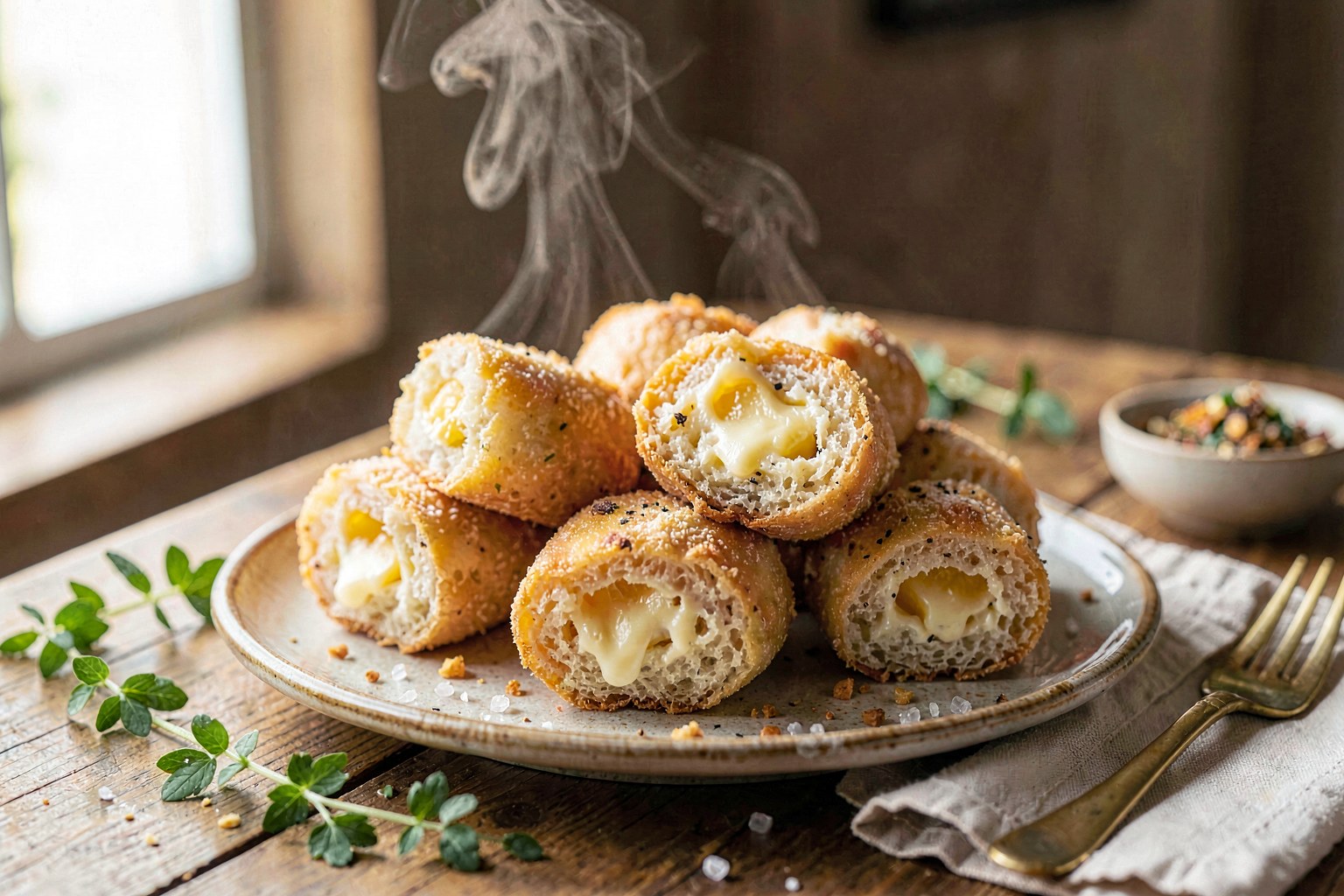
These iconic Brazilian rolls are soft and chewy on the inside with a crisp, golden exterior, made from tapioca starch, eggs, and melted cheese. They are savory, slightly tangy, and irresistible, offering a perfect balance of texture and flavor that pairs beautifully with coffee or wine.
A little context
While often associated with Portuguese cuisine globally, Pão de Queijo is actually a beloved staple of Brazilian cuisine, originating in the state of Minas Gerais. It emerged in the 18th century when enslaved people utilized the cassava root (tapioca) left over from starch production, mixing it with local cheeses and eggs to create a filling bread. Today, it is served everywhere from street stalls to high-end bakeries, traditionally as a morning coffee accompaniment but equally popular as a dinner side or late-night snack.
Method
- 01
Preheat and prepare
Preheat your oven to 200°C (400°F). Line a baking sheet with parchment paper. Sift the tapioca starch into a large bowl to remove any lumps, then set aside.
- 02
Heat the liquid base
In a saucepan over medium heat, combine the milk, oil, and salt. Bring to a gentle boil, ensuring the oil is fully incorporated and the mixture is steaming. Do not let it boil over.
- 03
Cook the starch
Immediately pour the boiling milk mixture into the sifted tapioca starch while stirring vigorously with a wooden spoon. The mixture will look like a shaggy, wet mess. Continue stirring constantly for about 2 minutes until the starch absorbs the liquid and begins to form a cohesive, hot dough.
- 04
Cool the dough
Remove the bowl from the heat. Let the dough cool for 10–15 minutes. It must be warm, not hot, before adding eggs, or they will scramble. The dough should be cool enough to touch but still pliable.
- 05
Incorporate the eggs
Add the beaten eggs one at a time, mixing thoroughly after each addition. Use a stand mixer on low speed or a strong wooden spoon. The dough will become sticky and glossy. If using a hand mixer, be careful not to over-whip.
- 06
Add the cheese
Fold in the grated cheese until evenly distributed. The dough should be sticky but manageable. If it feels too stiff, add a teaspoon of milk; if too runny, add a tablespoon of tapioca starch.
- 07
Shape the rolls
Wet your hands with a little oil or water to prevent sticking. Scoop about 30 g (1 oz) of dough and roll it into a smooth ball. Place them on the prepared baking sheet, spacing them 5 cm (2 inches) apart as they will spread slightly.
- 08
Bake
Bake for 25–30 minutes, rotating the pan halfway through, until the rolls are puffed, golden brown, and firm to the touch. They should not deflate when you take them out.
- 09
Serve
Allow to cool on the pan for 5 minutes. Serve warm. These are best eaten fresh but can be reheated in an oven for 5 minutes to restore crispness.
Pro tips
- ✦Use low-moisture cheese; fresh mozzarella balls contain too much water and will make the dough soggy.
- ✦Do not skip the cooling step before adding eggs, or you will end up with scrambled eggs in your dough.
- ✦For extra flavor, add 1 tsp of dried oregano or 1 tbsp of chopped chives to the cheese mixture.
- ✦If the dough feels too dry to roll, wet your hands with water; if too sticky, wet your hands with oil.
- ✦These freeze beautifully unbaked: freeze the shaped balls on a tray, then bag them. Bake from frozen, adding 5–8 minutes to the cooking time.
Shop this recipe
As an Amazon Associate we earn from qualifying purchases.
Substitutions
- Pápriga cheese → Low-moisture Mozzarella (Most accessible substitute; texture will be slightly less tangy but very similar.)
- Whole milk → Half milk, half water (Results in a slightly less rich but still authentic texture.)
- Neutral oil → Butter (Use melted butter for a richer flavor, though traditional recipes use oil.)
Storage
Store cooled rolls in an airtight container at room temperature for 1 day or in the fridge for 3 days. Reheat in a 180°C (350°F) oven for 5 minutes. Freeze unbaked or baked rolls for up to 3 months.
What to serve with it
- Strong black coffee (café)
- Red wine (Cabernet or Merlot)
- Fresh fruit salad
- Cold cuts or charcuterie board
- Caipirinha cocktail
FAQ
Why did my pão de queijo not rise?+
This usually happens if the milk/oil mixture wasn't hot enough to gelatinize the starch, or if the eggs were added when the dough was too hot and scrambled. Ensure the liquid is boiling before pouring.
Can I make this vegan?+
It is very difficult to replicate the texture without cheese and eggs. There are vegan versions using tofu and cashews, but they differ significantly from the traditional recipe.
What if I don't have tapioca starch?+
There is no direct substitute. Regular flour will make a bread, not pão de queijo. You must source tapioca starch (often labeled as 'polvilho doce' or 'sweet cassava starch').
Share this recipe
Notes from the community
Sign in to leave a note.
No notes yet — be the first.