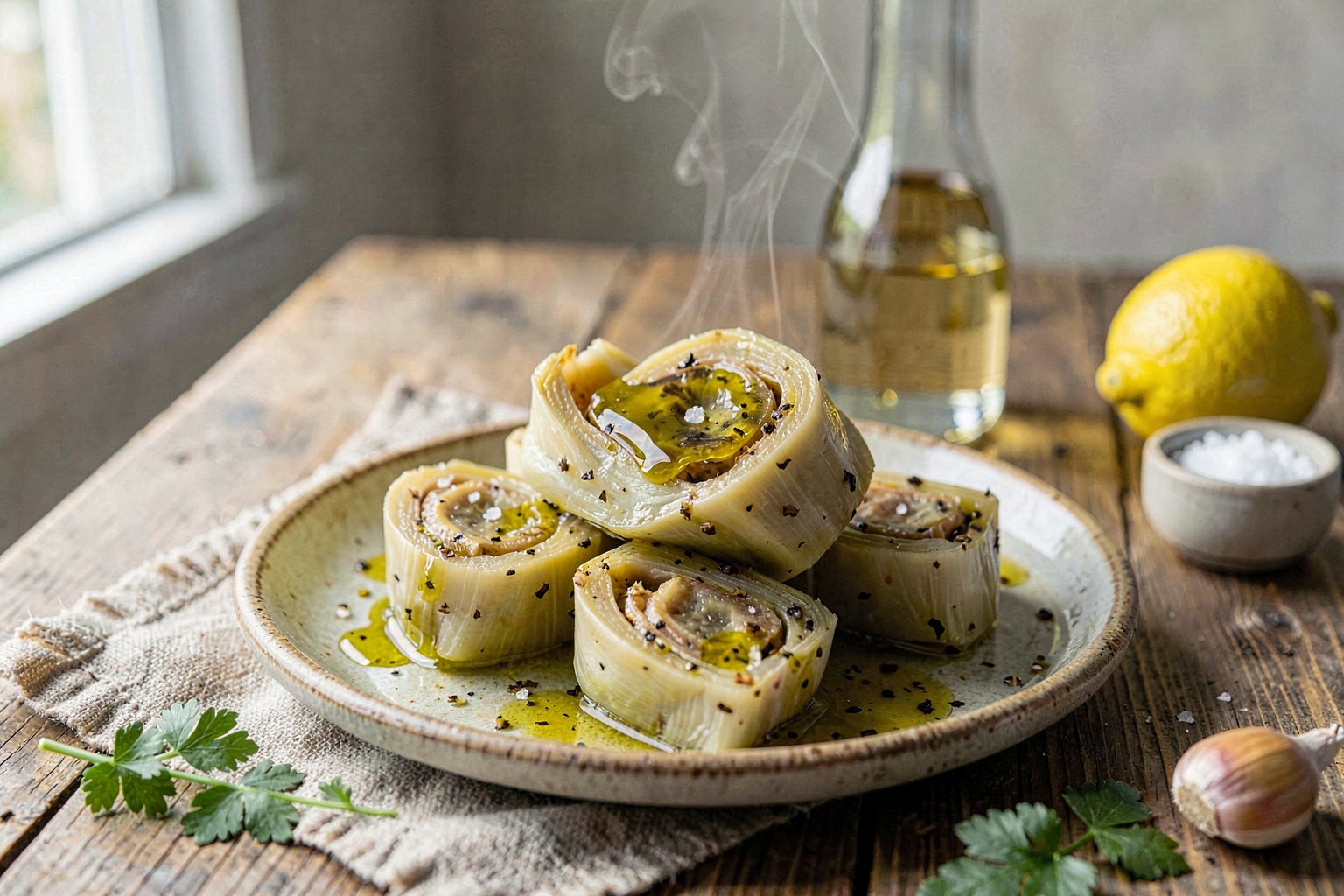
Pickled Artichoke Hearts with Garlic Vinegar (California Farm Tradition)
Tender artichoke hearts preserved in a tangy garlic vinegar brine and topped with a layer of extra-virgin olive oil. This dish offers a bright, briny crunch that cuts through rich dinners while delivering prebiotic fiber and polyphenols. A staple of California farm preservation, made here without refined sugar or seed oils.
A little context
California farm traditions often rely on preserving the harvest at peak season. Traditional recipes frequently call for added sugar to balance the acidity of vinegar, but we omit this to honor the natural sweetness of the artichokes and lemon. We also swap seed oils for cold-pressed extra-virgin olive oil to protect the polyphenol content and avoid inflammatory fats, keeping the spirit of the recipe intact while upgrading the biochemistry.
Method
- 01
Prepare the Artichokes
Wash the artichokes thoroughly. Remove outer tough leaves until you reach the pale yellow heart. Trim the stem and slice the heart into quarters. Immediately submerge in acidulated water (water with lemon juice) to prevent browning.
- 02
Blanch
Bring a large pot of salted water to a boil. Add the artichoke quarters and blanch for 5-7 minutes until tender but still holding shape. Do not overcook.
- 03
Shock and Dry
Transfer artichokes immediately to an ice bath to stop the cooking process. Drain well and pat completely dry with clean kitchen towels. Moisture is the enemy of preservation.
- 04
Make the Brine
In a saucepan, combine vinegar, water, salt, and lemon juice. Bring to a simmer just until the salt dissolves. Do not boil vigorously, as this can degrade the acidity.
- 05
Pack the Jars
Sterilize glass jars by washing in hot soapy water and rinsing well. Pack artichoke quarters tightly into jars, layering with smashed garlic cloves and herb sprigs.
- 06
Pour and Seal
Pour the hot brine over the artichokes until fully submerged. Leave 2 cm headspace. Top with a generous layer of extra-virgin olive oil to seal out air. Wipe rims clean and seal with airtight lids.
- 07
Rest
Let the jars cool to room temperature, then refrigerate. Allow flavors to meld for at least 48 hours before serving. The oil will solidify in the fridge; let sit at room temp for 15 minutes before serving.
Pro tips
- ✦Select artichokes with tight, compact leaves and a squeaky feel when squeezed; this indicates freshness.
- ✦Use unpasteurized vinegar with 'the mother' for added probiotic benefits during the fermentation window.
- ✦Always ensure artichokes are fully submerged in liquid to prevent mold growth.
- ✦Store the jar upright in the back of the fridge where temperature is most consistent.
- ✦If the oil solidifies in the fridge, place the jar in a bowl of warm water for 5 minutes to liquefy before serving.
Substitutions
- fresh artichoke hearts → frozen organic artichoke hearts (skip blanching step, thaw and pat dry thoroughly)
- white wine vinegar → raw apple cider vinegar (adds a slightly fruitier profile and more enzymes)
- rosemary → fresh oregano or basil (add basil only after cooling to preserve flavor)
Storage
Keeps refrigerated for up to 3 weeks in a sealed glass jar. Ensure artichokes remain submerged under oil and brine. Discard if smell is off or mold appears.
What to serve with it
- Grilled wild-caught sardines or mackerel
- Roasted root vegetables with thyme
- Green tea or sparkling water with lemon wedge
- Full-bodied dry red wine like Pinot Noir
FAQ
Can I use distilled white vinegar?+
Technically yes, but it lacks the polyphenols and enzymes found in raw apple cider or wine vinegar. For longevity goals, choose raw, unfiltered vinegar.
Why is there oil on top?+
The oil layer acts as an anaerobic seal, preventing oxidation and keeping the artichokes moist. It is traditional in California farm preserves.
Is this fermented or pickled?+
This is a vinegar pickle (quick pickle). It does not rely on lacto-fermentation for preservation, but the raw vinegar still offers gut benefits.
Share this recipe
Notes from the community
Sign in to leave a note.
No notes yet — be the first.
You might also like