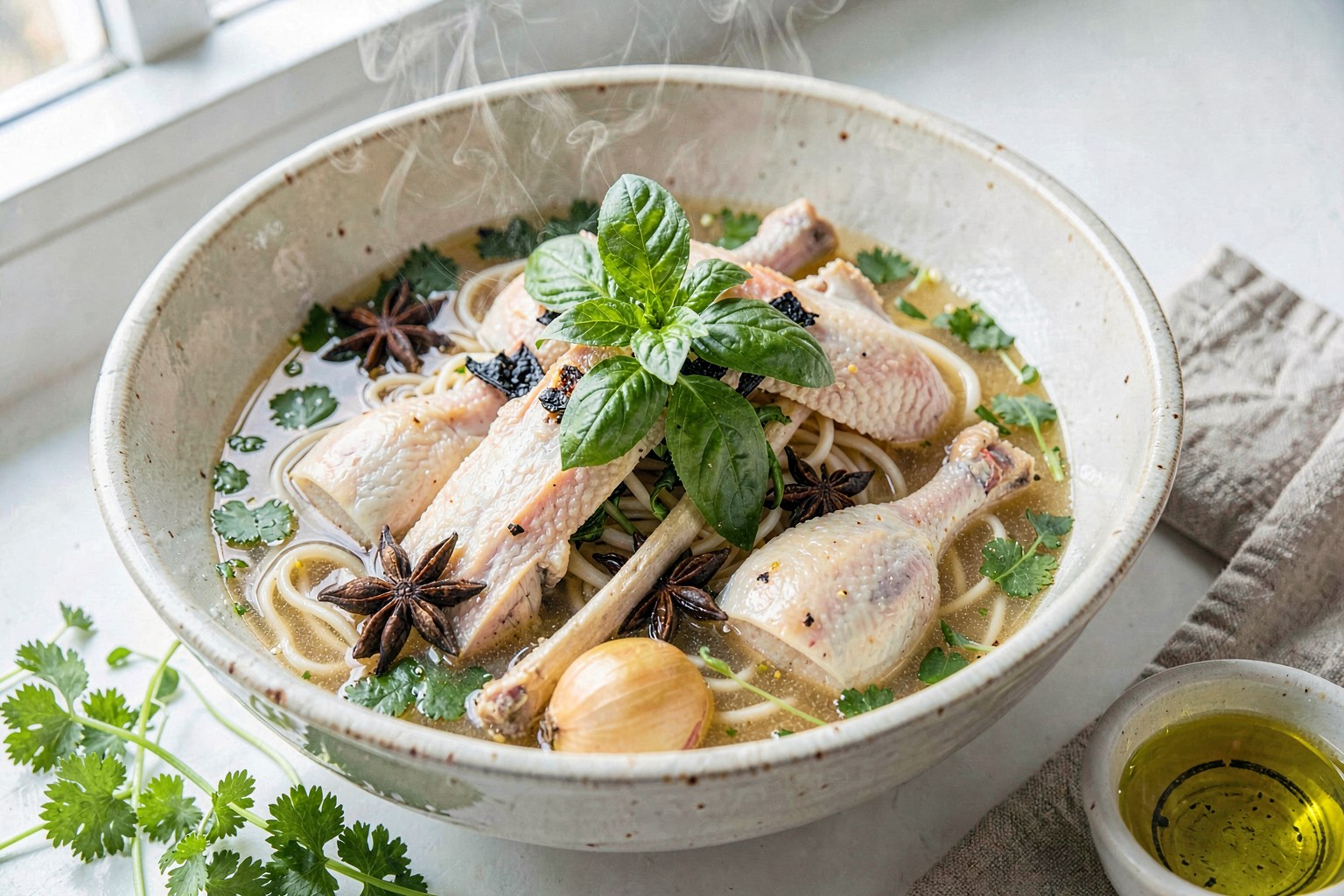
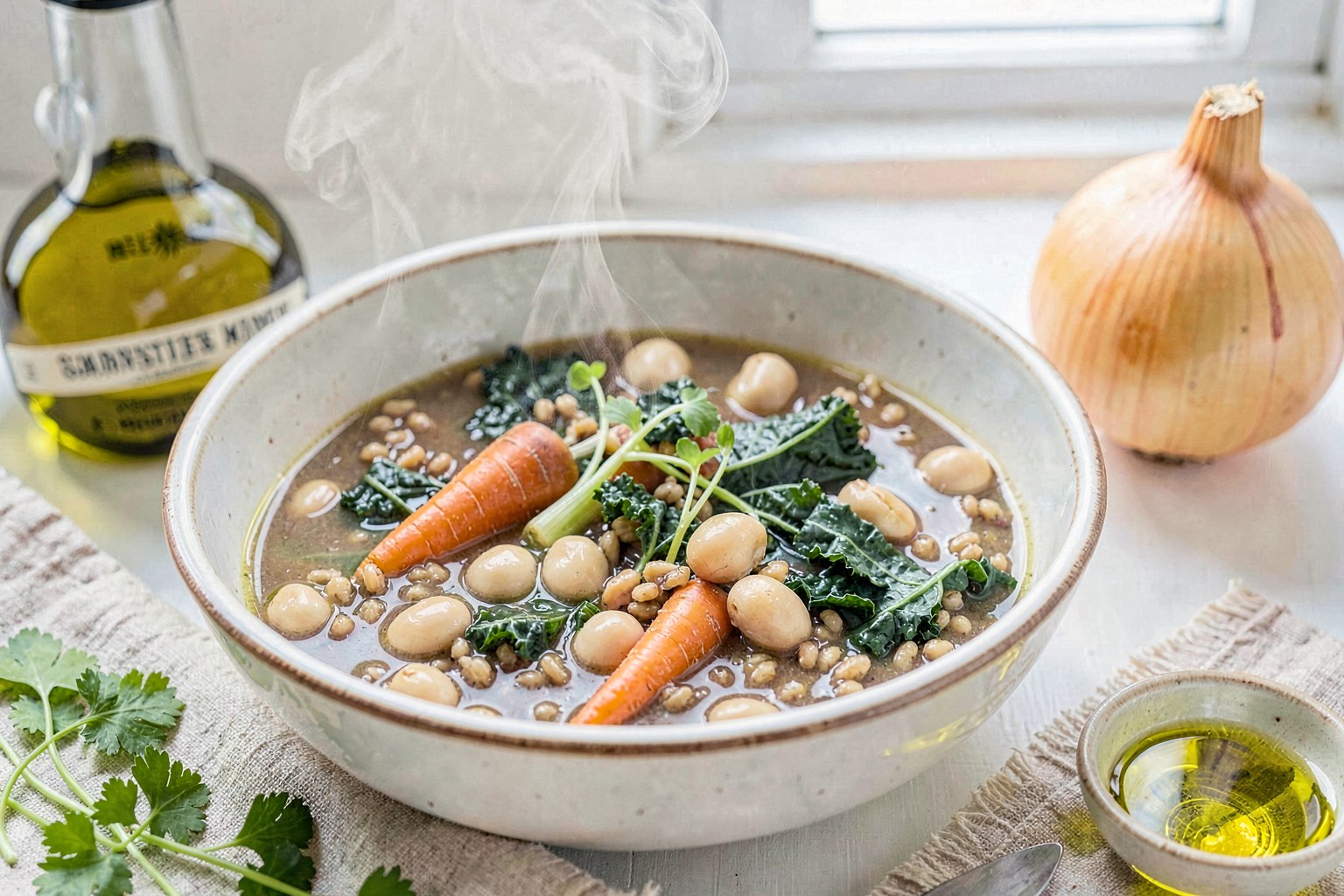
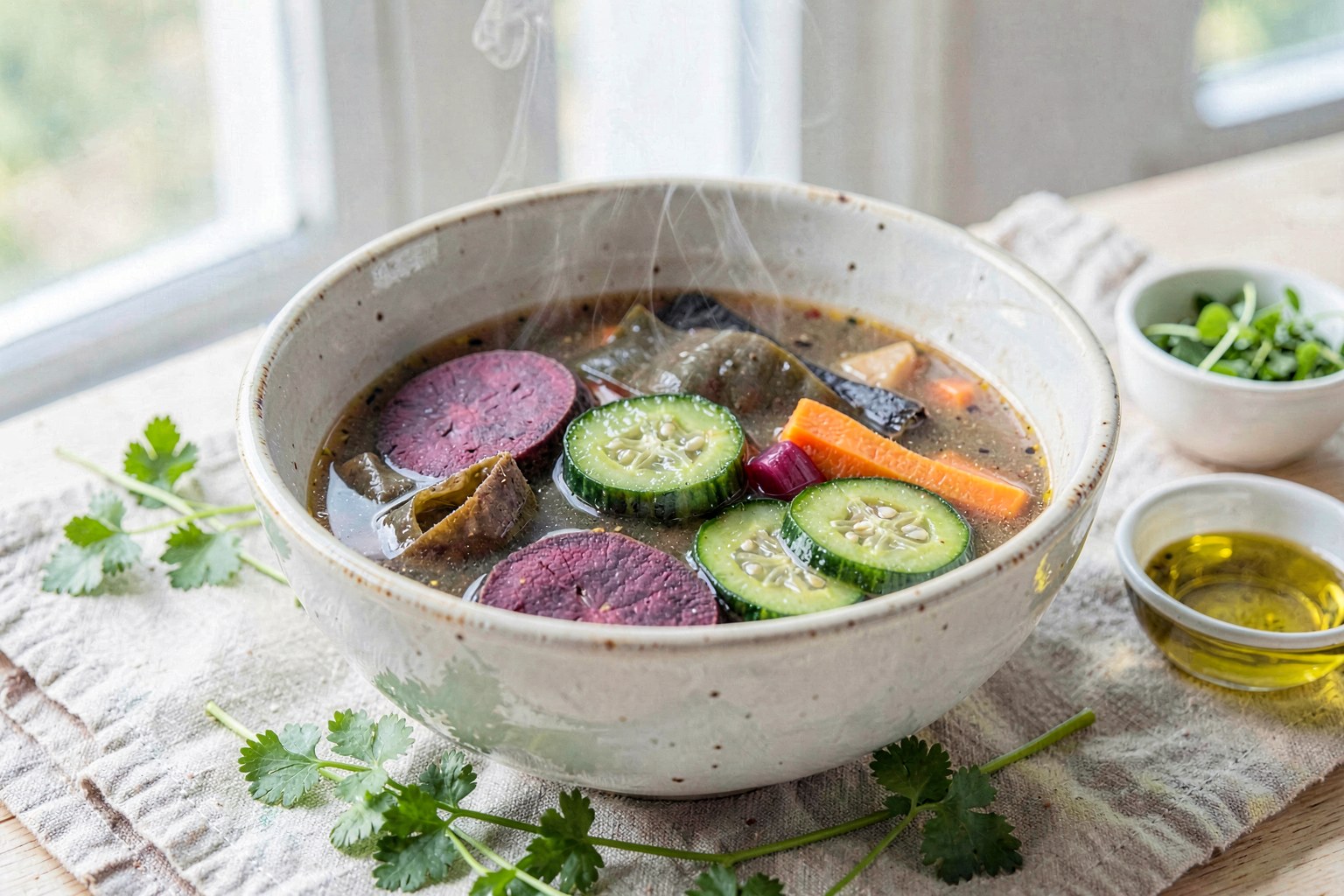
Okinawan Purple Sweet Potato & Bitter Melon Miso Soup
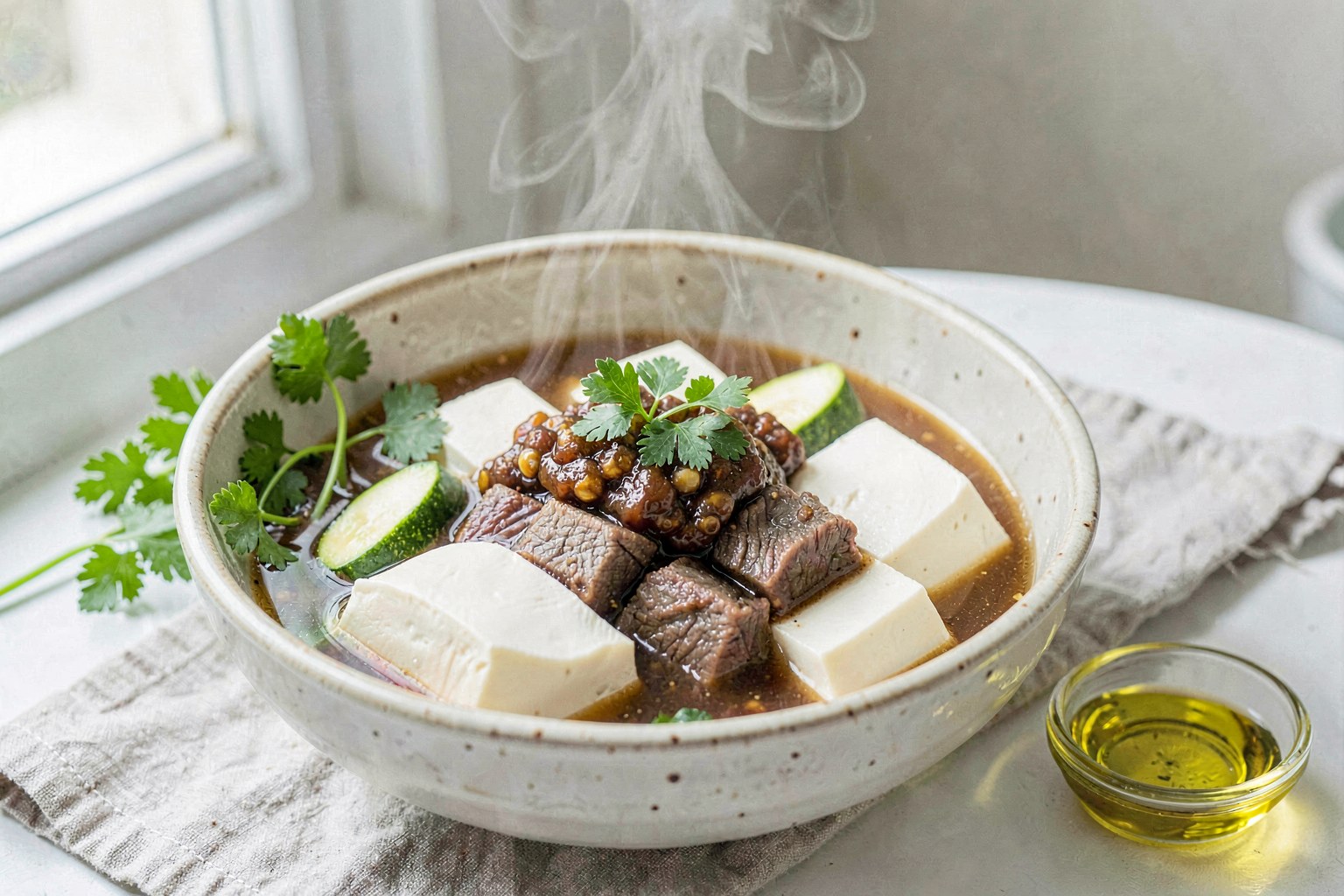
A vibrant, earthy broth featuring the signature purple flesh of Okinawan sweet potatoes and the distinct, nutrient-dense bite of bitter melon. This soup balances the umami depth of artisanal white miso with the natural sweetness of root vegetables, creating a gut-healing bowl that honors the Blue Zone tradition without refined sugars or processed oils.
A little context
Rooted in the Okinawan 'Goya Champuru' and 'Nimono' traditions, this soup strips away the traditional addition of sugar and seed oils (like canola) often found in modern adaptations. We honor the 'hara hachi bu' (eat until 80% full) philosophy by focusing on high-volume, low-calorie, high-nutrient density ingredients. The sweetness is derived solely from the natural caramelization of the purple sweet potatoes, respecting the ingredient's integrity rather than masking its flavor with refined sweeteners.
Method
- 01
Prepare the Dashi Base
In a large pot, combine the filtered water and dried kombu strips. Bring to a bare simmer over medium heat. Just before boiling (small bubbles forming at the edges), remove the pot from heat and take out the kombu. Do not boil the kombu, or the broth will become slimy and bitter. This creates a mineral-rich dashi base.
- 02
Blanch the Bitter Melon
While the water heats, place the sliced bitter melon in a bowl, toss with 1 tsp of coarse sea salt, and let sit for 10 minutes. Rinse thoroughly under cold water to remove excess salt and bitterness. This step reduces the harshness while retaining the nutrient profile.
- 03
Simmer the Root Vegetables
Return the pot with the dashi to medium heat. Add the purple sweet potato cubes and carrots. Bring to a gentle simmer and cook for 15 minutes, or until the sweet potatoes are tender but not falling apart. The purple color should begin to leach slightly, turning the broth a soft violet.
- 04
Add Mushrooms and Melon
Add the shiitake mushrooms and the blanched bitter melon to the pot. Continue to simmer for another 10 minutes until the bitter melon is tender-crisp. Overcooking bitter melon destroys its beneficial compounds and makes the texture unpleasant.
- 05
Finish with Wakame
Stir in the rehydrated wakame seaweed. Cook for just 2 minutes; wakame expands quickly and can become slimy if boiled too long.
- 06
Dissolve the Miso
Turn the heat to the lowest setting. Ladle about 1/2 cup of the hot broth into a small bowl and whisk in the white miso paste until completely smooth. Pour the dissolved miso mixture back into the main pot. Do not boil the soup after adding miso, as high heat kills the beneficial probiotics and degrades the enzymes.
- 07
Temper with Olive Oil
Remove the pot from the heat entirely. Drizzle the extra-virgin olive oil over the soup and stir gently. This adds a layer of healthy monounsaturated fats and enhances the absorption of fat-soluble vitamins from the vegetables.
- 08
Serve Immediately
Ladle into pre-warmed bowls. Garnish with fresh sliced shiso leaves if using. Serve hot, ideally with a side of plain brown rice or a small portion of fermented vegetables.
Pro tips
- ✦When selecting purple sweet potatoes, look for firm tubers with smooth skin and no soft spots; the flesh should be a deep, vibrant violet.
- ✦Never boil the miso after adding it; the 'dead zone' for probiotics is above 60°C (140°F), so keep the soup at a bare simmer or off heat.
- ✦If the bitter melon is too bitter for your palate, salt it for 15 minutes instead of 10, rinse well, and squeeze out excess water before cooking.
- ✦For a deeper umami hit, soak the shiitake stems in the water while making the dashi, then remove them before adding the vegetables.
Shop this recipe
As an Amazon Associate we earn from qualifying purchases.
Substitutions
- purple sweet potatoes → orange sweet potatoes or white yams (will reduce anthocyanin intake but maintains the texture and sweetness profile)
- white shiro miso → red aka miso (use less (start with 40g) as red miso is saltier and more pungent; adds more depth but less sweetness)
- bitter melon → zucchini or chayote (removes the blood-sugar regulating benefits of bitter melon; best to stick with the original for this specific longevity recipe)
Storage
Cool completely and store in a glass container in the refrigerator for up to 3 days. The flavor of the miso and vegetables deepens overnight. Do not freeze with the miso already dissolved, as the texture may separate; freeze the broth and vegetables separately, then add fresh miso upon reheating.
What to serve with it
- Hot green tea (sencha) to complement the earthy notes
- Sparkling water with a wedge of yuzu or lemon
- A small side of fresh natto or pickled daikon radish
- Steamed brown rice or quinoa for a complete meal
FAQ
Why is the soup violet/purple?+
The color comes from the anthocyanins in the purple sweet potatoes. These are the same antioxidants found in blueberries and are a key reason this variety is favored in the Blue Zone diet.
Can I make this broth ahead of time?+
Yes, you can make the dashi base and chop vegetables 2 days in advance. However, add the miso and olive oil only when you are ready to serve to preserve the probiotics and fresh flavor.
Is this soup gluten-free?+
Yes, provided you use a certified gluten-free miso (some traditional misos use barley or wheat) and ensure your kombu and seaweed are processed in a gluten-free facility.
Share this recipe
Notes from the community
Sign in to leave a note.
No notes yet — be the first.
You might also like