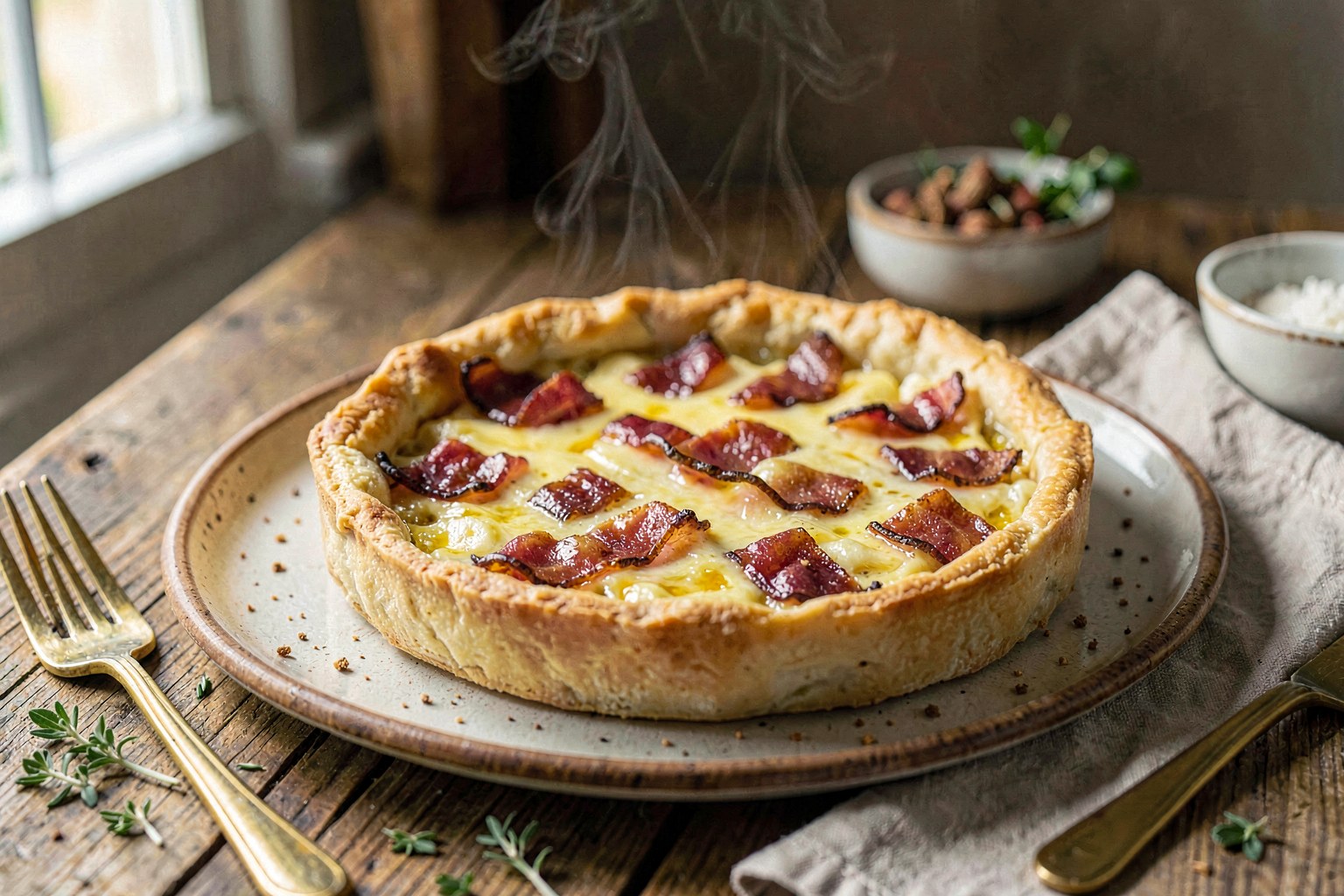
Authentic Quiche Lorraine (Grand Est)
A savory tart from France's Grand Est region featuring a buttery shell filled with a rich egg custard, diced smoky streaky bacon, and a hint of nutmeg. True to tradition, this version contains no cheese and no heavy cream, relying solely on whole milk and eggs for a delicate, silky texture.
A little context
Originating in Lorraine, this dish dates back to the 16th century, though the name 'Quiche Lorraine' was first recorded in the early 19th century. Authentic versions strictly exclude cheese and cream; the richness comes from the fat rendered by the lardons and the emulsion of eggs and milk. It is a staple of the region's cuisine, traditionally served hot as a main course with a green salad to cut the richness, or sliced cold as part of a picnic spread.
Method
- 01
Make the dough
In a bowl, rub the cold butter into the flour and salt until the mixture resembles coarse breadcrumbs. Add ice water gradually, mixing just until the dough comes together into a ball. Do not overwork. Wrap in plastic and refrigerate for 30 minutes.
- 02
Roll and blind bake
Preheat oven to 200°C (400°F). Roll the dough on a floured surface to a circle 3mm thick. Line the tart pan, trim excess, and prick the base with a fork. Line with parchment paper and fill with weights. Bake for 15 minutes, remove weights and paper, then bake 5 more minutes until lightly golden.
- 03
Cook the bacon
While the crust bakes, cook the diced bacon in a dry skillet over medium heat until the fat renders and the pieces are crisp but not burnt. Drain on paper towels, reserving 1 tbsp of the rendered fat.
- 04
Prepare the custard
In a bowl, whisk the eggs, milk, salt, pepper, and nutmeg vigorously until fully combined and slightly frothy. Strain the mixture through a fine-mesh sieve into a jug to ensure a silky, lump-free texture.
- 05
Assemble the quiche
Reduce oven temperature to 180°C (350°F). Distribute the cooked bacon evenly over the pre-baked crust. Pour the custard mixture over the bacon. Drizzle the reserved bacon fat over the top.
- 06
Bake until set
Bake for 35–40 minutes. The quiche is done when the edges are puffed and golden, but the center still has a slight jiggle (it will set as it cools). Avoid overbaking to prevent a rubbery texture.
- 07
Rest and serve
Let the quiche rest in the pan for at least 15 minutes before removing the ring. Serve warm or at room temperature.
Pro tips
- ✦Keep all ingredients cold for the dough to ensure a flaky, tender crust.
- ✦Do not skip the blind bake; a wet filling will make the bottom soggy without it.
- ✦Use whole milk, not cream; the fat from the bacon provides the necessary richness.
- ✦Grate nutmeg fresh; pre-ground nutmeg lacks the necessary aromatic punch.
- ✦Let the quiche rest before slicing to allow the custard to fully set.
Substitutions
- streaky bacon → thick-cut smoked pancetta (similar fat content and smoke profile, ensure it is diced small)
- all-purpose flour → French T55 flour (traditional choice for a softer, more tender crust)
Storage
Refrigerate in an airtight container for up to 3 days. Reheat gently in an oven at 160°C (325°F) for 10 minutes to restore texture. Freezing is not recommended as the custard may separate upon thawing.
What to serve with it
- Simple green salad with a vinaigrette to cut the richness
- Dry white wine from Alsace, such as Sylvaner or Pinot Blanc
- Crusty baguette
FAQ
Why is there no cheese in authentic Quiche Lorraine?+
Traditional recipes from the Grand Est region strictly exclude cheese. The richness is intended to come entirely from the egg custard and the rendered fat of the smoked bacon.
Can I use heavy cream instead of milk?+
While common in modern variations, using heavy cream or a cream-milk blend deviates from the strict authenticity of the original Lorraine recipe, which relies on milk for a lighter texture.
Share this recipe
Notes from the community
Sign in to leave a note.
No notes yet — be the first.