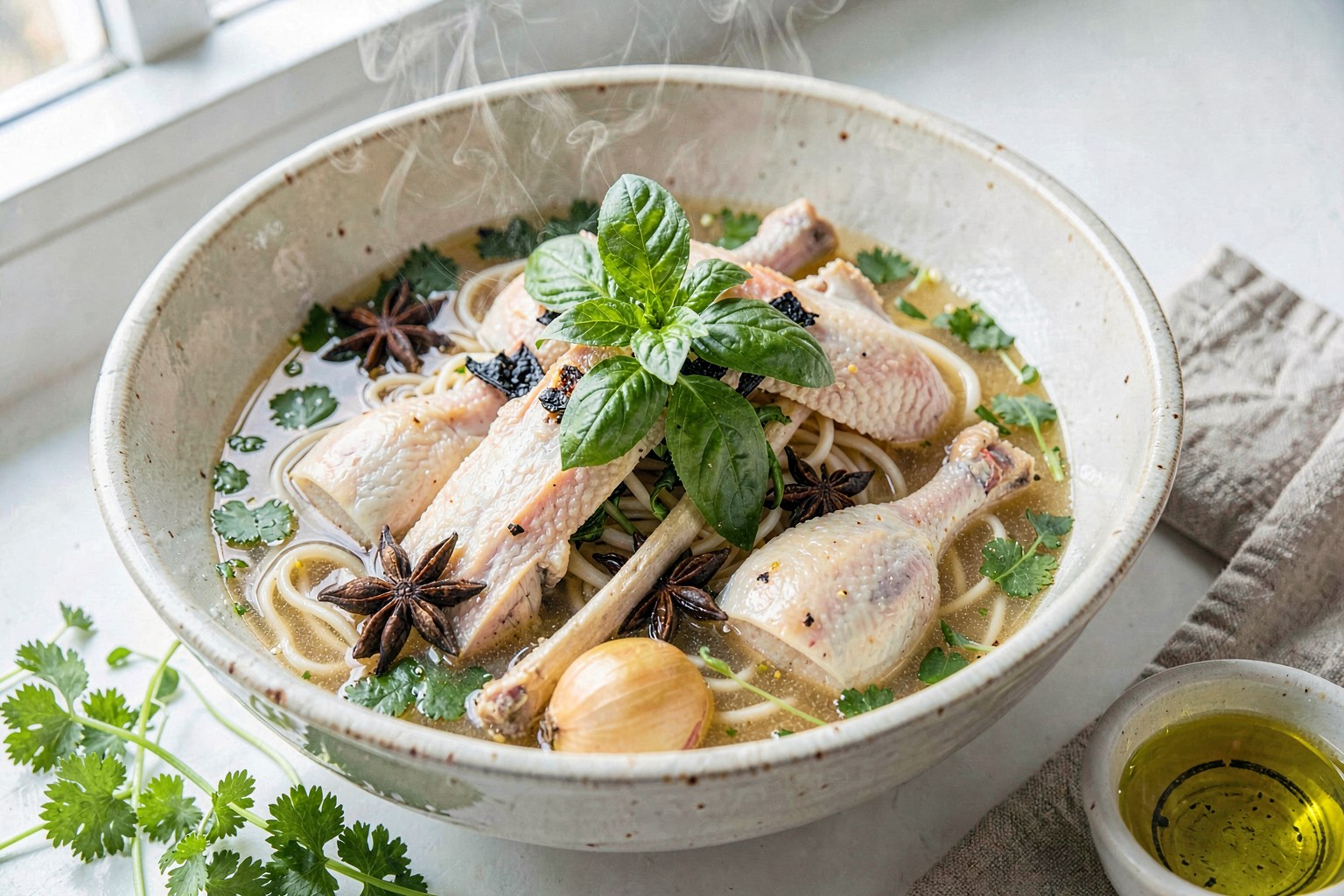
Sardinian Longevity Minestrone
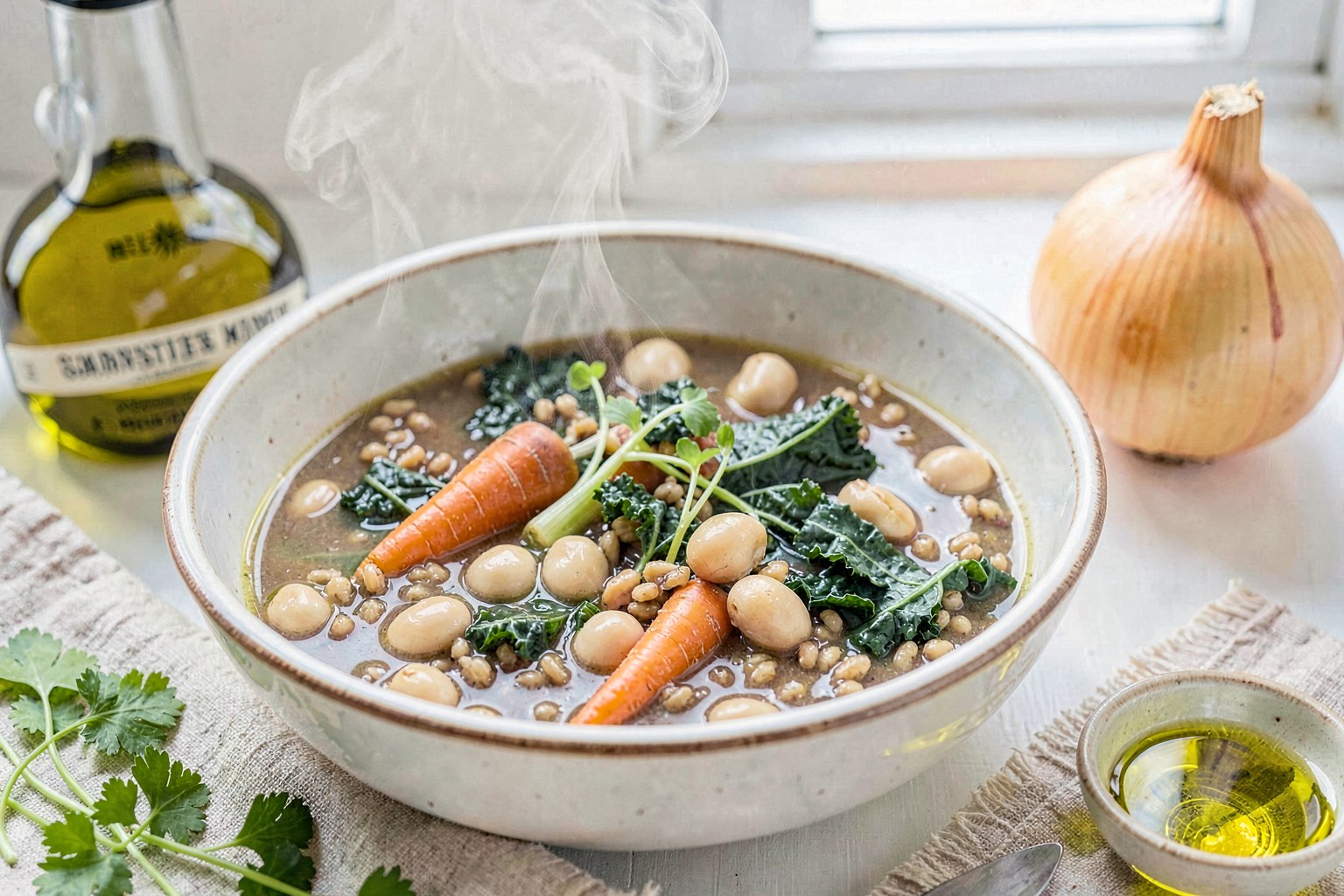
This rustic Sardinian staple brings together creamy cannellini beans, earthy farro, and crisp kale in a savory broth enriched with a generous finish of extra-virgin olive oil. The flavor profile is deeply savory and herbaceous, relying on the natural sweetness of caramelized fennel and carrots rather than added sugar. It is a nutrient-dense, polyphenol-rich bowl designed to support cellular longevity and sustained energy.
A little context
In the Blue Zones of Sardinia, minestrone is not a side dish but the daily sustenance of the elderly, traditionally made with whatever is fresh from the garden. We honor this tradition by strictly adhering to the original ingredient list—no cream, no sugar, no seed oils—while ensuring the fats used are high-quality extra-virgin olive oil to maximize the Mediterranean benefits. Traditional recipes sometimes call for a small amount of wine or a sugar pinch to balance acidity; we achieve balance solely through the slow roasting of carrots and fennel to release their natural sugars, keeping the dish strictly whole-food aligned.
Method
- 01
Sauté the aromatics
Heat 60 ml (1/4 cup) of extra-virgin olive oil in a Dutch oven over medium heat. Add the diced fennel, carrots, celery, and onion. Cook slowly for 12–15 minutes, stirring occasionally, until the vegetables are soft and just beginning to caramelize. Do not rush this step; the natural sugars in the fennel and carrots are our only sweeteners.
- 02
Bloom the aromatics
Add the minced garlic, crushed oregano, and sea salt. Stir constantly for 1 minute until fragrant. Be careful not to burn the garlic, which can introduce bitterness.
- 03
Simmer the base
Pour in the homemade vegetable broth. If using dried beans, add them now. Bring to a boil, then reduce heat to low, cover, and simmer for 30 minutes. If using canned beans, wait until the farro is nearly done to add them.
- 04
Cook the grains
Add the rinsed farro to the pot. Continue to simmer, partially covered, for another 15–20 minutes, or until the farro is tender but still has a slight chew (al dente) and the beans are soft.
- 05
Add the greens
Stir in the chopped kale. Simmer uncovered for 5–7 minutes until the kale is wilted and tender but still vibrant green. The soup should be thick and hearty; add a splash of water if it becomes too dense.
- 06
Finish with healthy fats
Remove the pot from the heat. Stir in the remaining 80 ml (1/3 cup) of unheated extra-virgin olive oil and the fresh lemon juice. This finishing step is non-negotiable for maximizing polyphenol absorption and flavor.
- 07
Serve
Ladle into warm bowls. Garnish generously with fresh fennel fronds. Serve immediately while hot.
Pro tips
- ✦Source your extra-virgin olive oil with a harvest date within the last 12 months; polyphenol levels degrade significantly over time.
- ✦If using dried beans, soak them overnight in plenty of water with a splash of apple cider vinegar to reduce phytates and improve digestibility.
- ✦For a creamier texture without dairy, use an immersion blender to puree exactly one-quarter of the soup right in the pot before adding the kale.
- ✦Select fennel bulbs that feel heavy for their size with bright green fronds; avoid any with brown spots or soft texture.
- ✦Taste the broth before adding salt; homemade vegetable broth can vary in sodium content depending on the base vegetables used.
Shop this recipe
As an Amazon Associate we earn from qualifying purchases.
Substitutions
- pearl farro → spelt berries or freekeh (spelt offers a nuttier flavor; freekeh adds a smoky note. Adjust cook times as needed.)
- cannellini beans → borlotti beans or chickpeas (borlotti beans are traditional in many Sardinian regions and offer a similar creamy texture.)
- lacinato kale → curly kale or Swiss chard (Swiss chard cooks faster; add it in the last 3 minutes to prevent overcooking.)
Storage
Store in airtight glass containers in the refrigerator for up to 4 days. The flavors deepen overnight. Freeze in portioned containers for up to 3 months; thaw overnight in the fridge and reheat gently.
What to serve with it
- A glass of Cannonau di Sardegna (low-sugar, high-antioxidant red wine)
- Hot green tea with a slice of lemon
- Sparkling water with fresh mint and a squeeze of orange
- A side of fermented sauerkraut or kimchi for extra probiotics
FAQ
Can I make this gluten-free?+
Yes, simply substitute the farro with certified gluten-free quinoa, buckwheat groats, or millet. Buckwheat maintains the earthy, hearty profile of the original dish.
Why is so much olive oil added at the end?+
Heat degrades some of the delicate polyphenols and antioxidants in high-quality EVOO. Adding it raw at the end preserves the anti-inflammatory compounds and provides the signature silky mouthfeel of Sardinian cuisine.
Is this soup too heavy?+
The fiber from the beans and farro provides satiety without heaviness. If you prefer a lighter broth, simply reduce the olive oil by half, though we recommend keeping the full amount for the health benefits.
Share this recipe
Notes from the community
Sign in to leave a note.
No notes yet — be the first.
You might also like