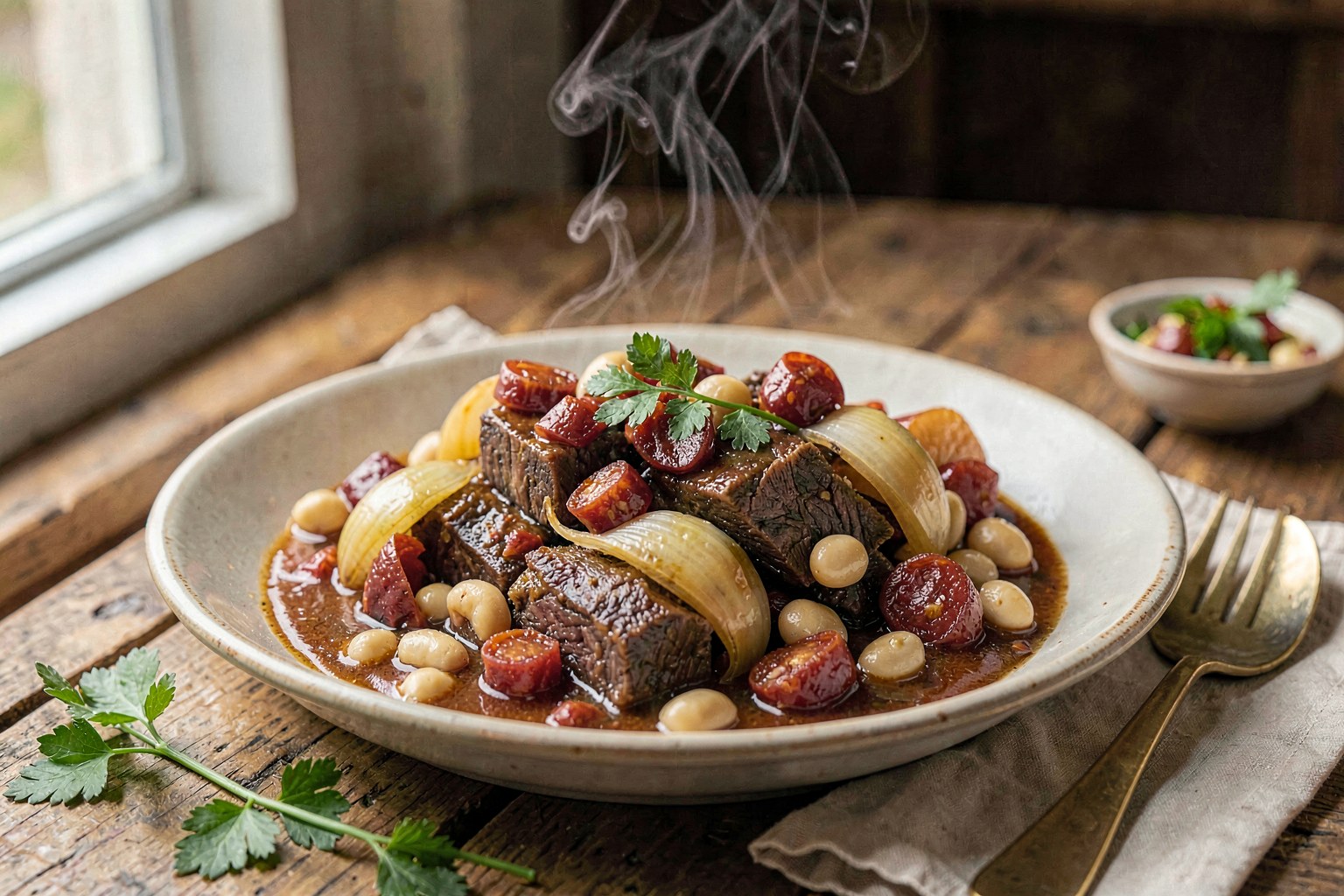
Tarta de Santiago
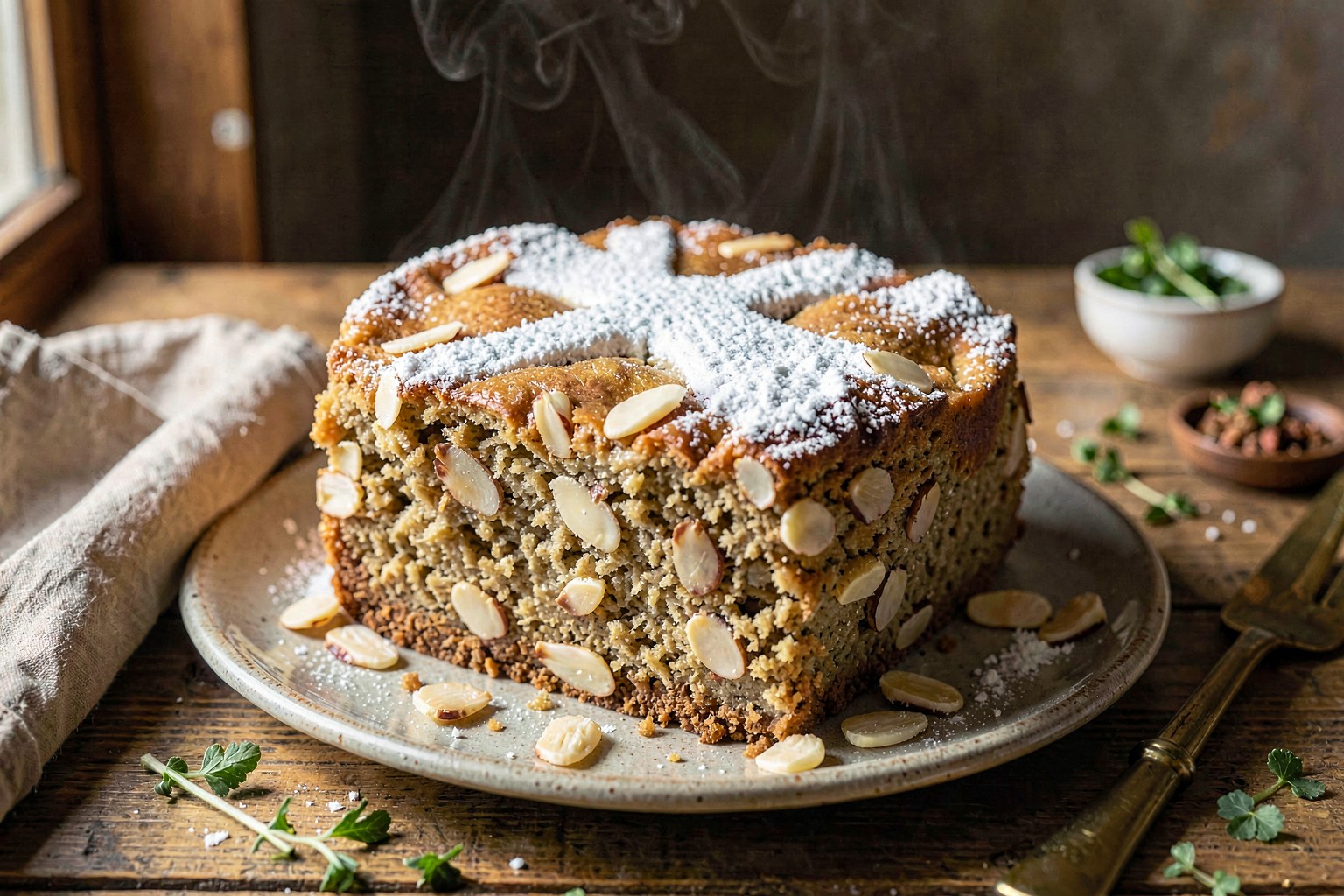
A rustic, dense almond cake from Galicia with a moist, chewy interior and a crisp, golden crust. It is traditionally dusted with powdered sugar in the shape of the Cross of Saint James, offering a rich, nutty flavor that balances perfectly with sweet dessert wines.
A little context
Originating in the Galicia region of northwestern Spain, this cake is named after Saint James the Greater, the patron saint of Spain. Legend suggests it was first baked in the 15th century to feed pilgrims walking the Camino de Santiago. The distinctive cross design is stamped with powdered sugar and has been the official trademark of the cake since 1996, ensuring authenticity.
Method
- 01
Prepare the pan and oven
Preheat your oven to 180°C (350°F). Grease the springform pan generously with butter and line the bottom with parchment paper. Ensure the paper is cut to fit snugly.
- 02
Grind the almonds
Place the ground blanched almonds and 150 g (5.3 oz) of the granulated sugar into a food processor. Pulse until the mixture resembles a fine, moist sand. Be careful not to over-process into almond butter.
- 03
Combine wet ingredients
In a large bowl, whisk the 4 egg yolks until pale and slightly thickened. Stir in the melted butter, lemon zest, and cinnamon (if using). Add the almond-sugar mixture and mix until fully incorporated.
- 04
Whip the egg whites
In a separate, clean bowl, beat the 4 egg whites until soft peaks form. Gradually add the remaining 50 g (1.8 oz) of granulated sugar while continuing to beat until stiff, glossy peaks form. Do not overbeat until dry.
- 05
Fold the batter
Gently fold one-third of the egg whites into the almond mixture to lighten it. Carefully fold in the remaining whites using a spatula, cutting down the center and folding up the sides to maintain as much air as possible.
- 06
Bake
Pour the batter into the prepared pan and smooth the top. Bake for 35–45 minutes, or until the top is deep golden brown and a toothpick inserted into the center comes out clean. The cake will firm up as it cools.
- 07
Cool completely
Remove the cake from the oven and let it cool in the pan for 15 minutes. Release the springform ring and transfer the cake to a wire rack to cool completely. The cake must be room temperature before garnishing.
- 08
Create the cross
Place a paper stencil with the Cross of Saint James cut out over the top of the cooled cake. Sift the 30 g (1 oz) of powdered sugar evenly over the stencil. Carefully lift the stencil straight up to reveal the white cross against the golden crust.
Pro tips
- ✦Grinding your own almonds yields a moister, more authentic texture than store-bought almond flour.
- ✦Do not skip the room temperature eggs; they incorporate into the batter much more evenly.
- ✦The cake tastes even better the next day as the flavors meld and the texture settles.
- ✦If you don't have a stencil, you can draw the cross on parchment paper and cut it out with a small knife.
- ✦Serve with a glass of sweet Moscatel or Albariño wine for a traditional Galician pairing.
Shop this recipe
As an Amazon Associate we earn from qualifying purchases.
Substitutions
- granulated sugar → coconut sugar (will darken the crust and add a caramel note, but texture may vary slightly)
- butter → neutral oil (like grapeseed) (makes the cake slightly more tender but removes the buttery richness)
Storage
Store in an airtight container at room temperature for up to 3 days. Can be refrigerated for up to 5 days; bring to room temperature before serving to restore texture.
What to serve with it
- Moscatel de Galicia
- Albariño wine
- Café con leche
- Fresh berries
FAQ
Why is the cake so dense?+
This is intentional. Unlike sponge cakes, Tarta de Santiago relies on the fat from the almonds and butter for moisture, resulting in a fudgy, dense crumb.
Can I use almond flour instead of grinding whole almonds?+
You can, but ensure it is blanched (no skins) and very finely ground. Store-bought almond meal often has skins which will make the cake darker and the texture coarser.
Share this recipe
Notes from the community
Sign in to leave a note.
No notes yet — be the first.