Saffron
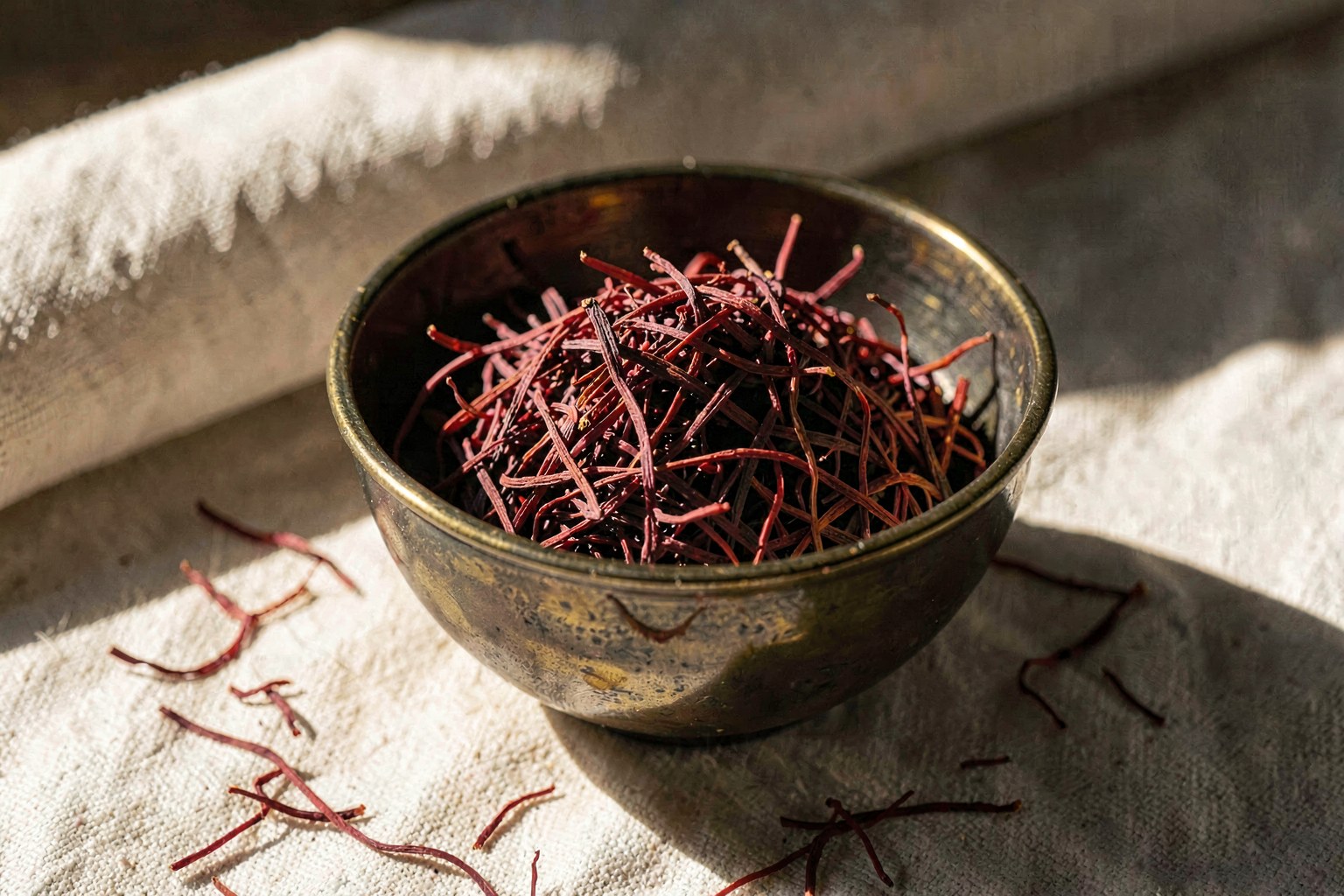
The dried red stigmas of the Crocus sativus flower, prized for its distinct hay-like aroma, earthy flavor, and golden-yellow coloring power.
What it is
Saffron comes from the hand-harvested stigmas of the autumn-flowering Crocus sativus. It takes roughly 75,000 flowers to produce one pound of saffron, making it the world's most expensive spice by weight. It is sold primarily as whole threads (red stigmas with a bit of yellow style) or ground powder. The flavor profile is complex: metallic, honey-like, and hay-like, with a distinct bitterness if overused. It is a cornerstone of dishes ranging from Spanish paella to Persian tahdig and Indian biryani, valued as much for its ability to dye rice and broths a vibrant gold as for its taste.
How to buy
Look for whole threads rather than powder, which is frequently adulterated with turmeric, paprika, or safflower. High-quality threads should be deep red with minimal yellow, brittle to the touch, and smell distinctly of hay and honey. Avoid pre-ground saffron unless from a trusted spice merchant with high turnover. Purchase from specialty spice shops or reputable online retailers specializing in Middle Eastern or Mediterranean goods, as mainstream supermarkets often sell old stock. Check the harvest date on the packaging; saffron loses potency quickly after three years.
Storage
Store in an airtight container away from light and heat to preserve volatile oils; a cool, dark pantry is sufficient. Do not refrigerate, as moisture causes clumping and mold. Properly stored whole threads remain potent for up to three years, while ground saffron degrades within six months. Discard if the threads turn soft, smell musty, or fail to release color when soaked.
How to use
Always bloom saffron in warm liquid (water, broth, or milk) for at least 15 minutes before adding to the dish to unlock its color and aroma. Use sparingly; a pinch (10-20 threads) is usually enough for a family-sized pot. Adding dry threads directly to a dish often results in uneven distribution and wasted potency. Crush threads between your fingers or in a mortar before blooming to maximize surface area. Do not boil saffron for extended periods, as high heat can degrade the delicate crocin and safranal compounds responsible for its signature color and scent.
Where it comes from
Originating in Greece or Southwest Asia, saffron has been cultivated for over 3,500 years. It is essential to Persian, Spanish, and Indian cuisines, where it signifies celebration and luxury. In Persian cuisine, it is used in both savory stews and sweet rice puddings, while in Spain, it defines the authenticity of paella. Its historical value once rivaled gold, and it remains a status ingredient in traditional festive cooking.
Substitutions
- Turmeric + Paprika — Matches color only; adds earthiness without saffron's floral bitterness
- Safflower (Mexican Saffron) — Cheap colorant with negligible flavor; use only if color is the priority