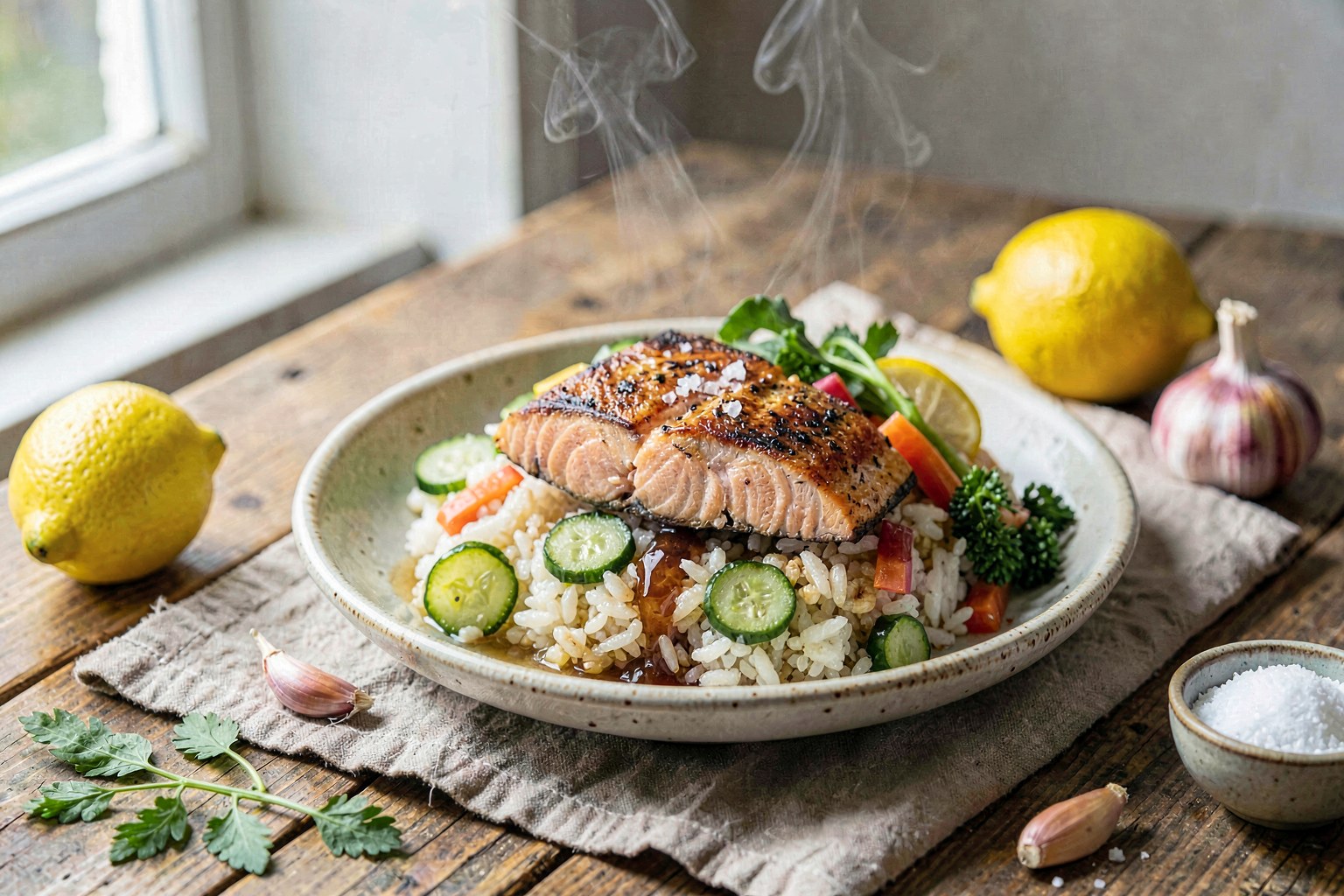
Slow-Cooked Fårikål with Grass-Fed Mutton and Polyphenol-Rich Cabbage
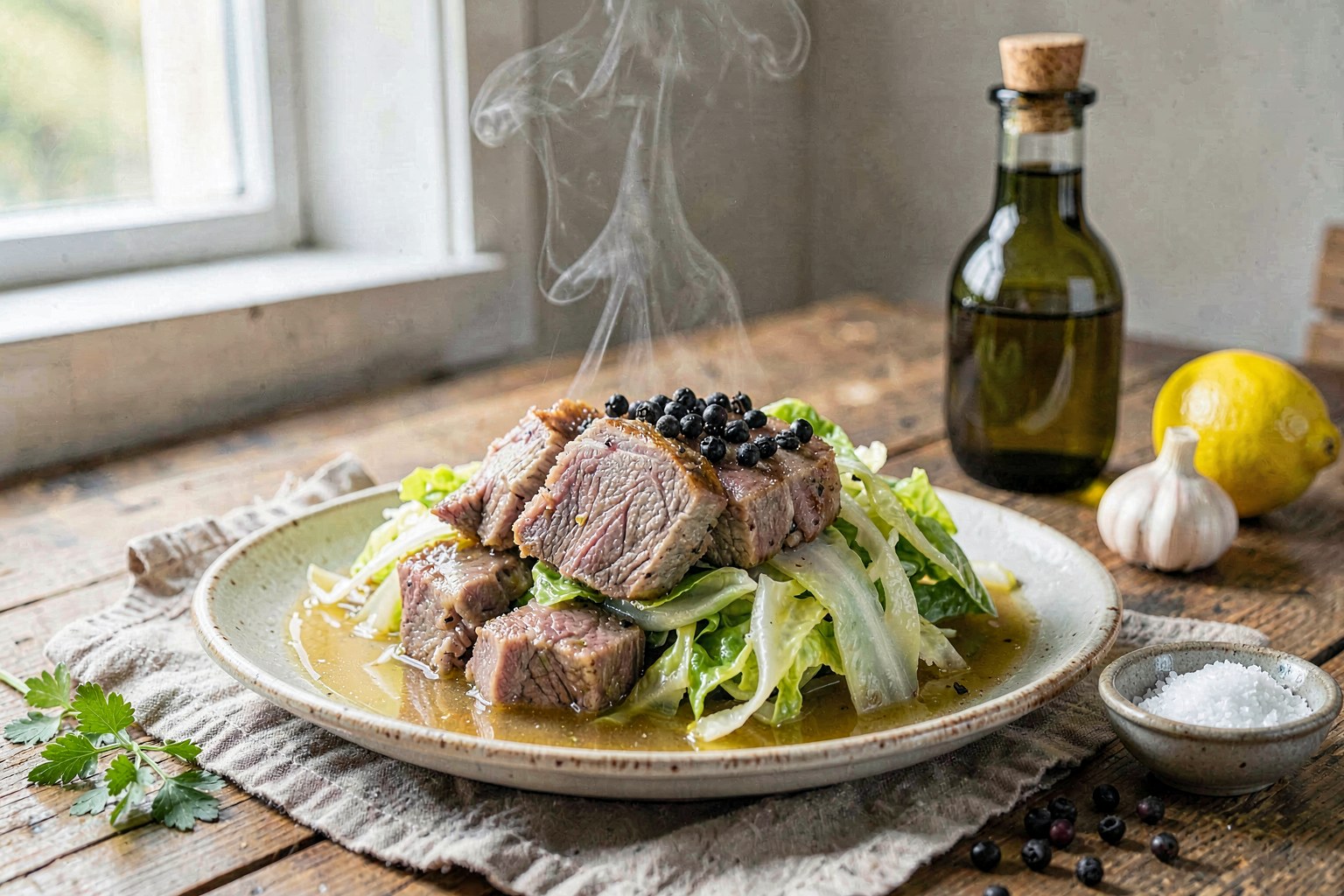
This is the essence of Nordic winter comfort: tender, grass-fed mutton and crisp organic cabbage layered slowly until the meat falls apart and the broth turns into a golden, savory nectar. We honor the original 18th-century Norwegian recipe by stripping away modern shortcuts, using only whole black peppercorns and extra-virgin olive oil to extract maximum flavor without inflammatory seed oils. The result is a deeply nourishing, one-pot meal that balances protein, fiber, and healthy fats for sustained energy.
A little context
Fårikål, Norway's national dish, traditionally relies on lamb or mutton, cabbage, whole black peppercorns, and water, often finished with a dusting of wheat flour to thicken the broth. We have honored this rustic simplicity by omitting the flour thickener entirely, allowing the natural pectin in the cabbage to create a silky texture, and swapping traditional butter for high-quality extra-virgin olive oil to boost the polyphenol count. This version respects the 'clean' philosophy of the original while ensuring every ingredient aligns with a longevity-focused, whole-food diet free of refined sugars and processed fats.
Method
- 01
Layer the foundation
In your Dutch oven, create the first layer with 1/3 of the mutton cubes. Season generously with sea salt and half of the crushed black peppercorns. Cover the meat completely with 1/3 of the cabbage wedges, arranging them vertically to create a tight seal.
- 02
Repeat the strata
Add the remaining mutton, seasoning with more salt and the rest of the peppercorns. Top with the remaining cabbage. The alternating layers are crucial; they ensure the cabbage steams in the meat juices while the meat braises in the cabbage steam.
- 03
Add the liquid and fat
Pour the filtered water (or bone broth) over the layers until the ingredients are just submerged. Drizzle the extra-virgin olive oil evenly over the top. Do not stir; the dish must cook in its own steam and juices.
- 04
The slow braise
Bring the pot to a gentle simmer over medium heat, then immediately reduce to the lowest possible setting. Cover tightly with a lid. If your lid is not perfectly sealed, place a sheet of parchment paper directly on the food before covering to trap the steam. Cook for 3.5 to 4 hours.
- 05
Check for tenderness
After 3 hours, check the meat. It should be falling off the bone and the cabbage should be translucent but not mushy. If the liquid has evaporated too much, add a splash of warm water. The broth should be rich and slightly gelatinous if using bone broth, or clear and savory if using water.
- 06
Finish and serve
Remove from heat. Stir in the fresh chopped dill just before serving to release its aromatic oils. Serve immediately in deep bowls, ensuring each person gets a mix of meat, cabbage, and a generous spoonful of the golden broth.
Pro tips
- ✦Sourcing Matters: Seek out 'grass-finished' mutton rather than grain-finished. Grass-finished meat has a significantly higher omega-3 to omega-6 ratio and more CLA, which is critical for an anti-inflammatory diet.
- ✦Pepper Freshness: Buy whole black peppercorns and crush them yourself 10 minutes before cooking. Pre-ground pepper loses its volatile oils and piperine content rapidly.
- ✦Don't Stir: Resist the urge to stir the pot during the first 2 hours. The layers need to stay intact to steam properly; stirring breaks the cabbage wedges and makes the texture muddy.
- ✦Broth Quality: If you prefer a deeper flavor, use homemade grass-fed beef or lamb bone broth instead of water. Ensure the broth contains no added sugars or seed oils.
Substitutions
- grass-fed mutton → grass-fed beef chuck or pasture-raised pork shoulder (Beef chuck works well but requires a slightly longer cook time (4.5 hours) to break down the connective tissue; pork is leaner and cooks in 3 hours.)
- extra-virgin olive oil → grass-fed ghee or avocado oil (Ghee adds a richer, buttery flavor profile closer to traditional Norwegian cooking, while avocado oil has a higher smoke point if you choose to sear the meat first (though searing is not traditional).)
Storage
Cool completely and store in airtight glass containers in the refrigerator for up to 4 days. The flavors deepen significantly after 24 hours. Freeze in single portions for up to 3 months; thaw overnight in the fridge.
What to serve with it
- Serve with a side of fermented beet kvass or sauerkraut to boost gut microbiome diversity.
- Pair with a glass of unsweetened green tea or a dry, polyphenol-rich red wine like Pinot Noir.
- Avoid starchy sides; the cabbage provides ample fiber. If a starch is desired, serve with a small portion of wild-caught salmon or a side of roasted root vegetables.
FAQ
Why is the broth thin and not thickened with flour?+
Traditional Fårikål often uses a flour slurry to thicken the broth. We omit this to keep the meal low-glycemic and gluten-free. The natural pectin from the cabbage and the gelatin from the bone broth create a satisfying, silky mouthfeel without the need for refined carbohydrates.
Can I use a slow cooker instead of a Dutch oven?+
Yes, but the flavor will be slightly less concentrated. If using a slow cooker, sear the meat in olive oil first to develop a fond, then transfer to the slow cooker. Cook on Low for 6-7 hours.
Share this recipe
Notes from the community
Sign in to leave a note.
No notes yet — be the first.
You might also like