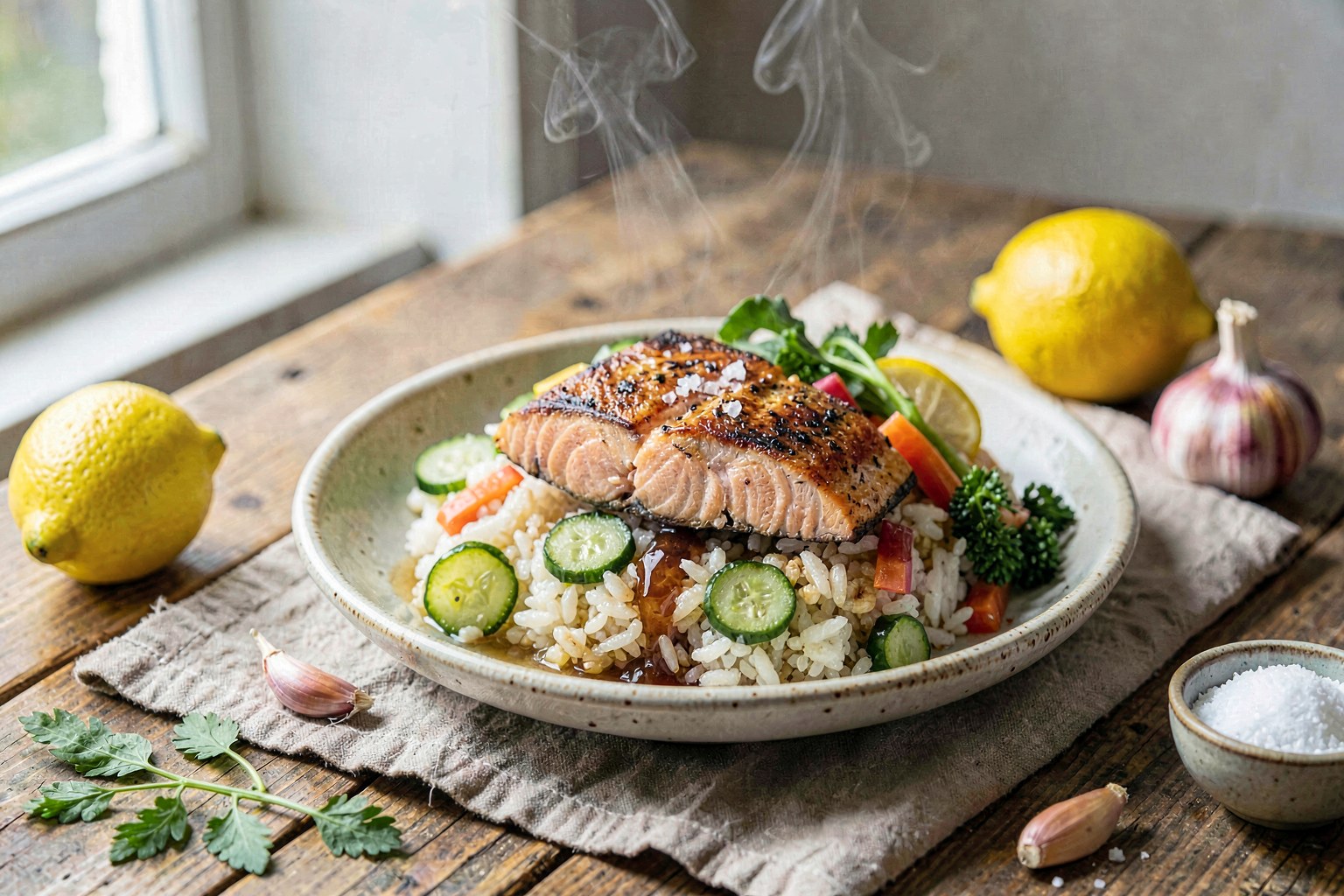
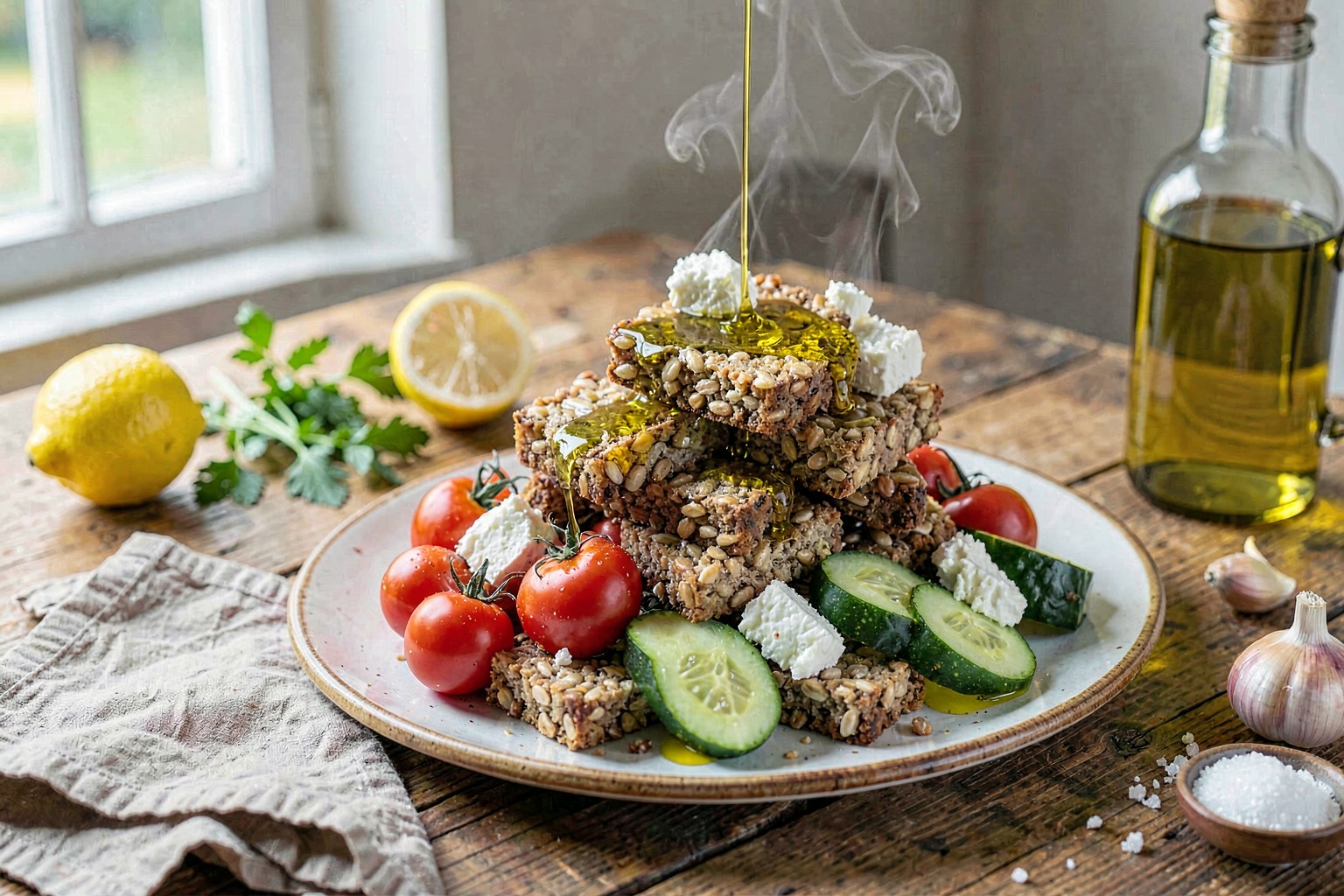
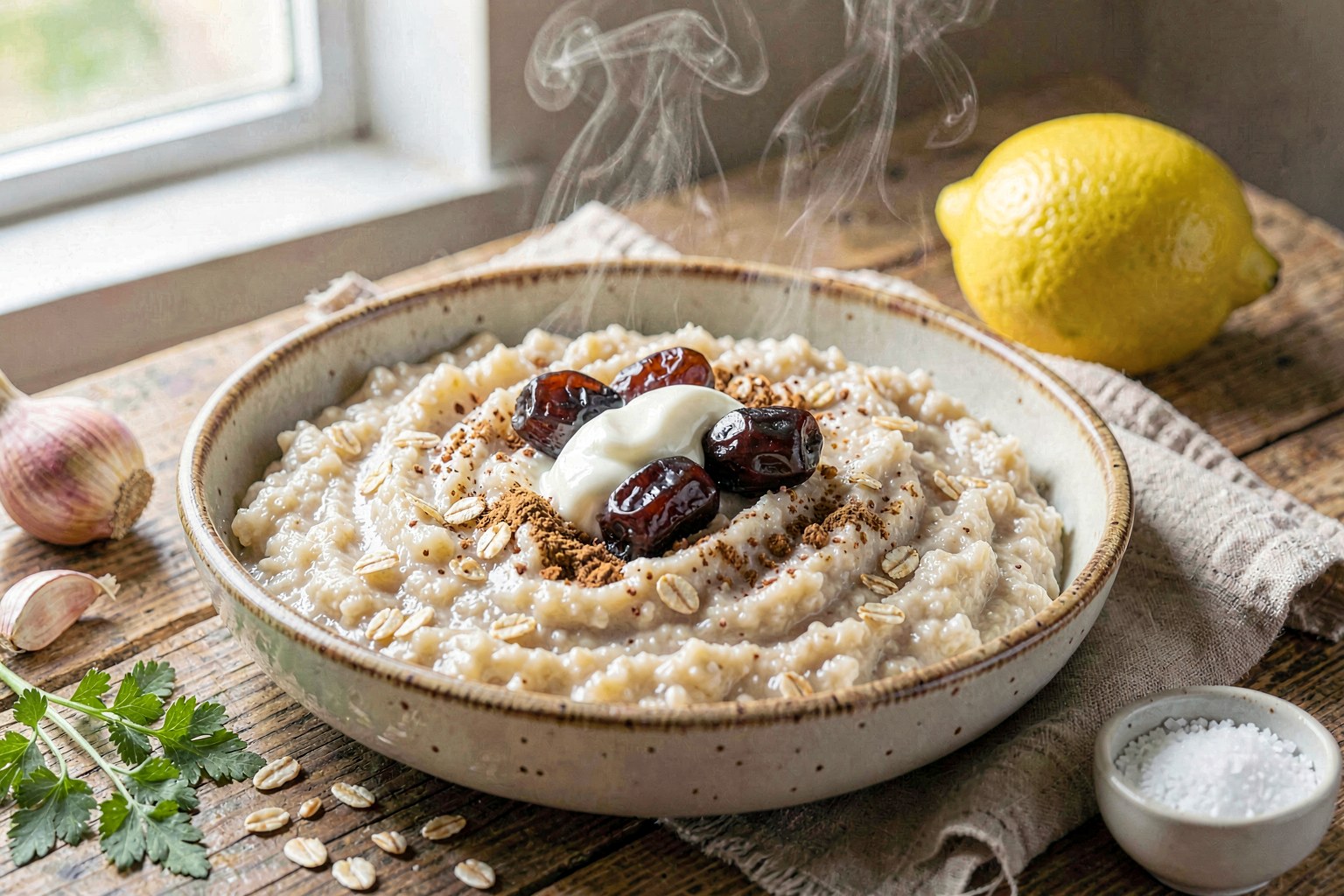
Havreflod (Nordic Clean Oat Porridge)
This Nordic classic transforms humble oats into a creamy, spiced porridge using only whole milk and the natural sweetness of Medjool dates. Served warm with a dollop of grass-fed clotted cream and a dusting of cinnamon, it offers a comforting, polyphenol-rich dinner that honors tradition without refined sugars or industrial seed oils.
A little context
Havreflod is a cherished Scandinavian comfort dish historically made with oats, milk, and a touch of sugar or honey. In this Blueprint-aligned version, we honor the Nordic tradition of simplicity and seasonality by replacing refined white sugar with whole Medjool dates and swapping any industrial thickeners for the natural creaminess of high-fat dairy. We strictly avoid seed oils and ultra-processed additives, focusing instead on farm-fresh, organic oats and pasture-raised dairy to maintain the dish's soothing, nourishing integrity.
Method
- 01
Prepare the date base
In a small bowl, combine the pitted Medjool dates with 120 ml (1/2 cup) of the milk. Let soak for 10 minutes to soften, then blend until completely smooth. This creates a natural sweetener that integrates fully into the porridge.
- 02
Combine oats and liquids
In your heavy-bottomed pot, combine the remaining 880 ml (3 1/2 cups) of milk, the date puree, the oats, and the Ceylon cinnamon. Whisk gently to ensure the oats are submerged and no dry pockets remain.
- 03
Simmer slowly
Place the pot over medium-low heat. Bring to a gentle simmer, stirring frequently with a wooden spoon to prevent sticking at the bottom. Do not boil rapidly, as this can cause the milk to curdle or the oats to become gummy.
- 04
Cook to creaminess
Reduce heat to low and cook for 20–30 minutes, stirring every 5 minutes. The mixture will thicken as the oats release their starch. It should reach a consistency similar to thick custard or mashed potatoes. If it becomes too thick before the oats are tender, add a splash of warm milk.
- 05
Finish with vanilla
Remove the pot from the heat. Stir in the pure vanilla extract. The residual heat will release the vanilla aroma without burning the delicate compounds.
- 06
Rest and serve
Let the porridge rest for 5 minutes; it will continue to thicken slightly. Ladle into warm bowls, top generously with a dollop of grass-fed clotted cream, and scatter the wild blueberries on top. Serve immediately.
Pro tips
- ✦Source Ceylon cinnamon ('true cinnamon') rather than the common Cassia variety to avoid excessive coumarin intake, which can stress the liver over time.
- ✦If using rolled oats instead of oat flour, you may need an extra 5–7 minutes of cooking time to achieve that signature creamy texture.
- ✦For the best clotted cream, look for a brand that lists only 'organic cream' as the ingredient, avoiding stabilizers like carrageenan.
- ✦Warm your serving bowls in the oven for 5 minutes before plating to keep the porridge hot longer, mimicking the Nordic tradition of serving in heated earthenware.
Substitutions
- whole milk → organic coconut milk (full fat) or oat milk (unsweetened) (coconut milk will add a tropical note; oat milk will enhance the oat flavor but ensure it is free of seed oil additives.)
- clotted cream → full-fat Greek yogurt or coconut cream (Greek yogurt adds a tangy probiotic boost; coconut cream is the best dairy-free alternative for richness.)
Storage
Store in a glass container in the refrigerator for up to 3 days. Reheat gently on the stovetop with a splash of milk to restore creaminess. Freezing is not recommended as the dairy may separate upon thawing.
What to serve with it
- Hot green tea (sencha or matcha) to pair with the antioxidants
- Sparkling water with a slice of lemon and a sprig of fresh mint
- Dry red wine (Pinot Noir) if enjoying alcohol with dinner
FAQ
Can I use steel-cut oats instead of rolled oats?+
Yes, but the cooking time will increase significantly (40–50 minutes) and the texture will be chewier rather than the traditional creamy consistency of Havreflod. You may need to increase the liquid by 20%.
Is this recipe gluten-free?+
Oats are naturally gluten-free but are often cross-contaminated. You must use oats labeled 'certified gluten-free' to ensure safety for those with celiac disease or gluten sensitivity.
Share this recipe
Notes from the community
Sign in to leave a note.
No notes yet — be the first.
You might also like