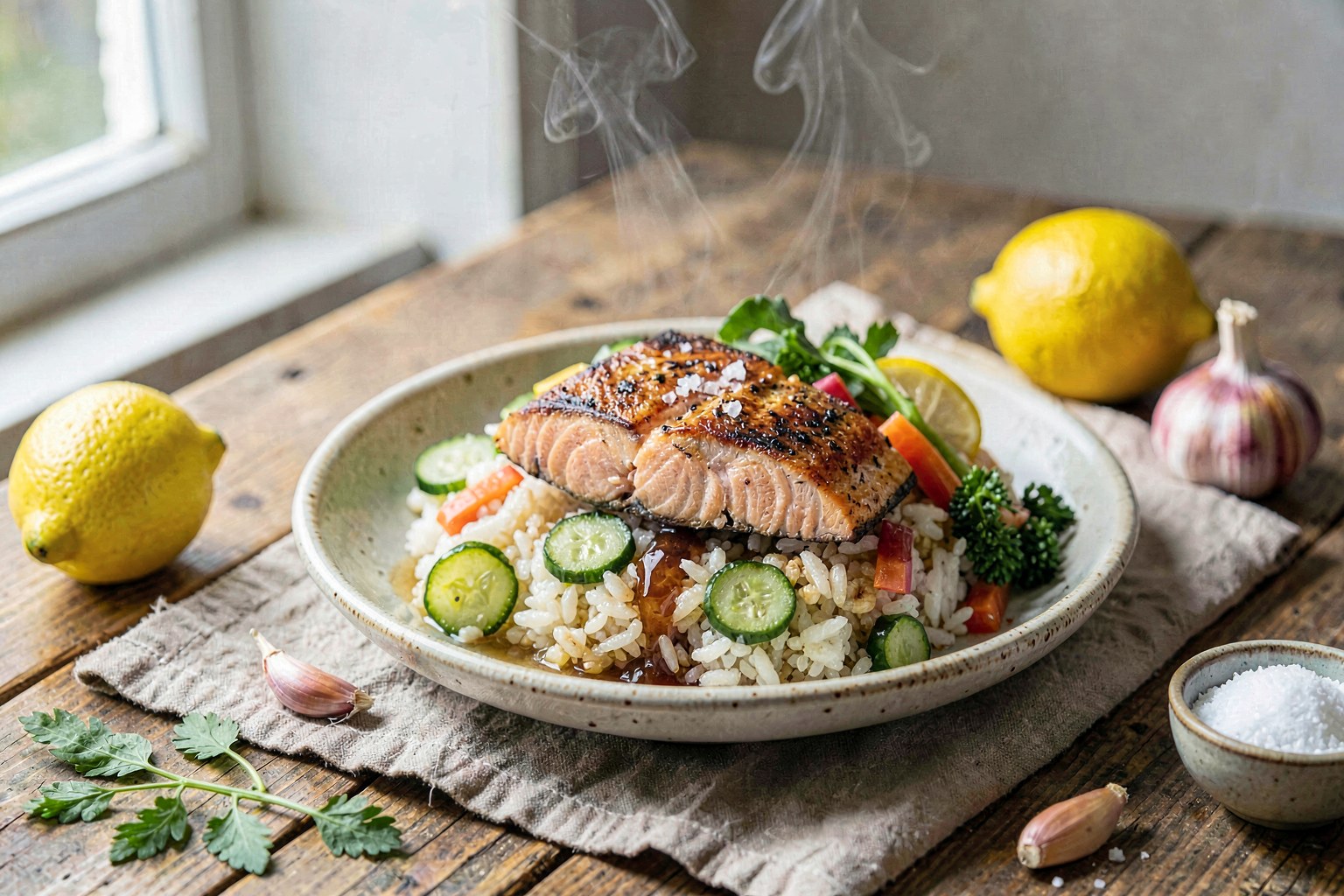
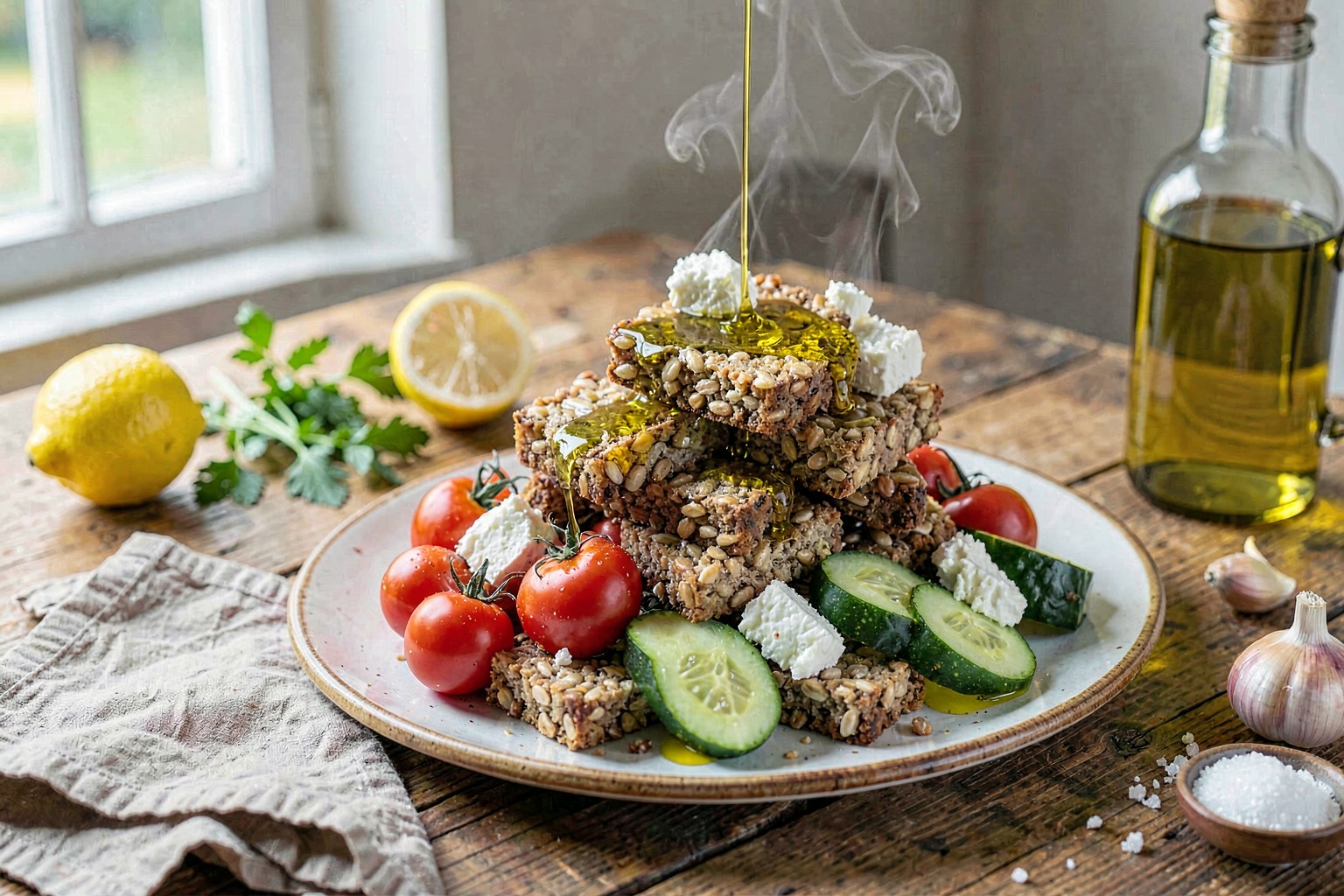
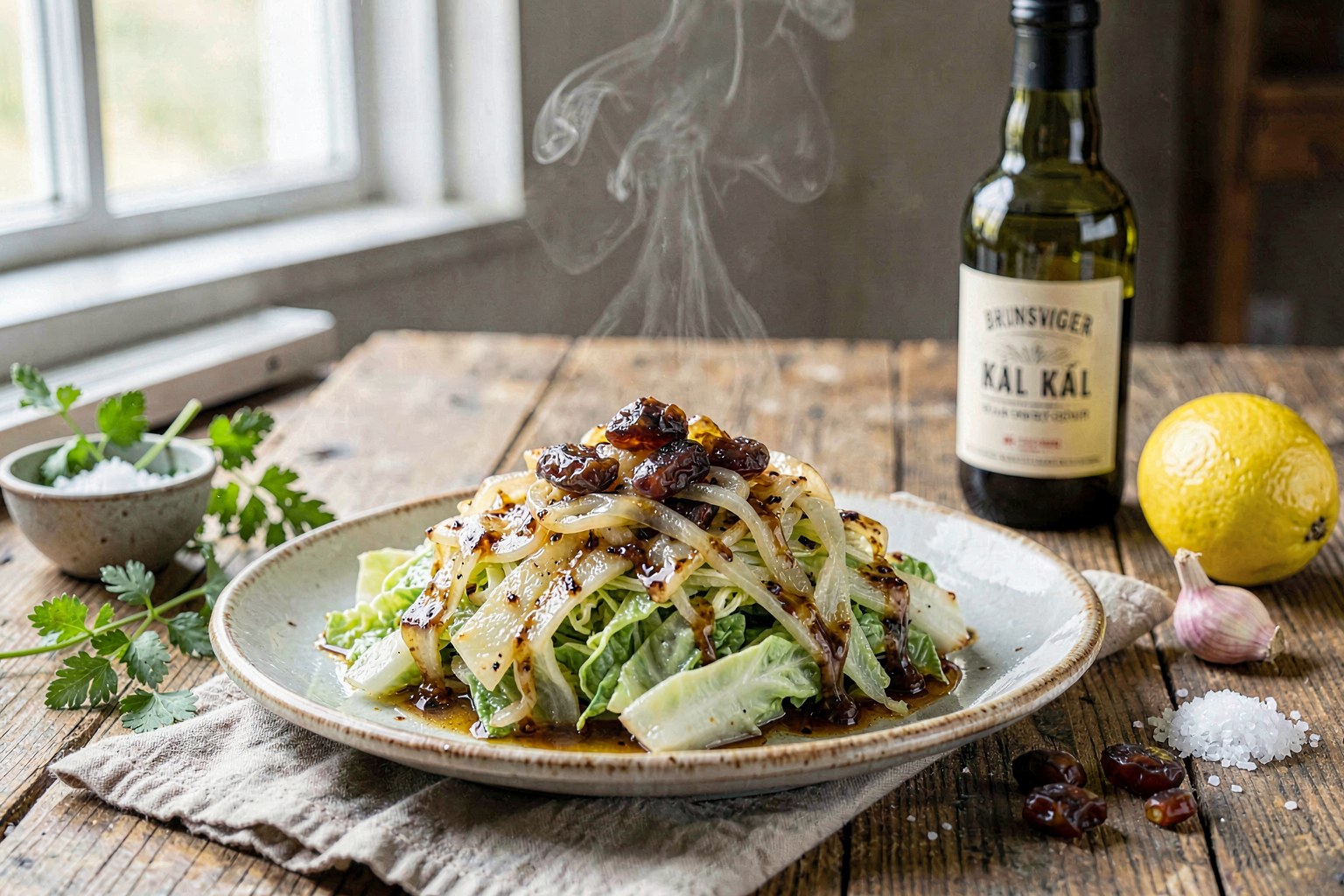
Brunsviger Kål (Nordic Clean Sweet-Sour Cabbage)
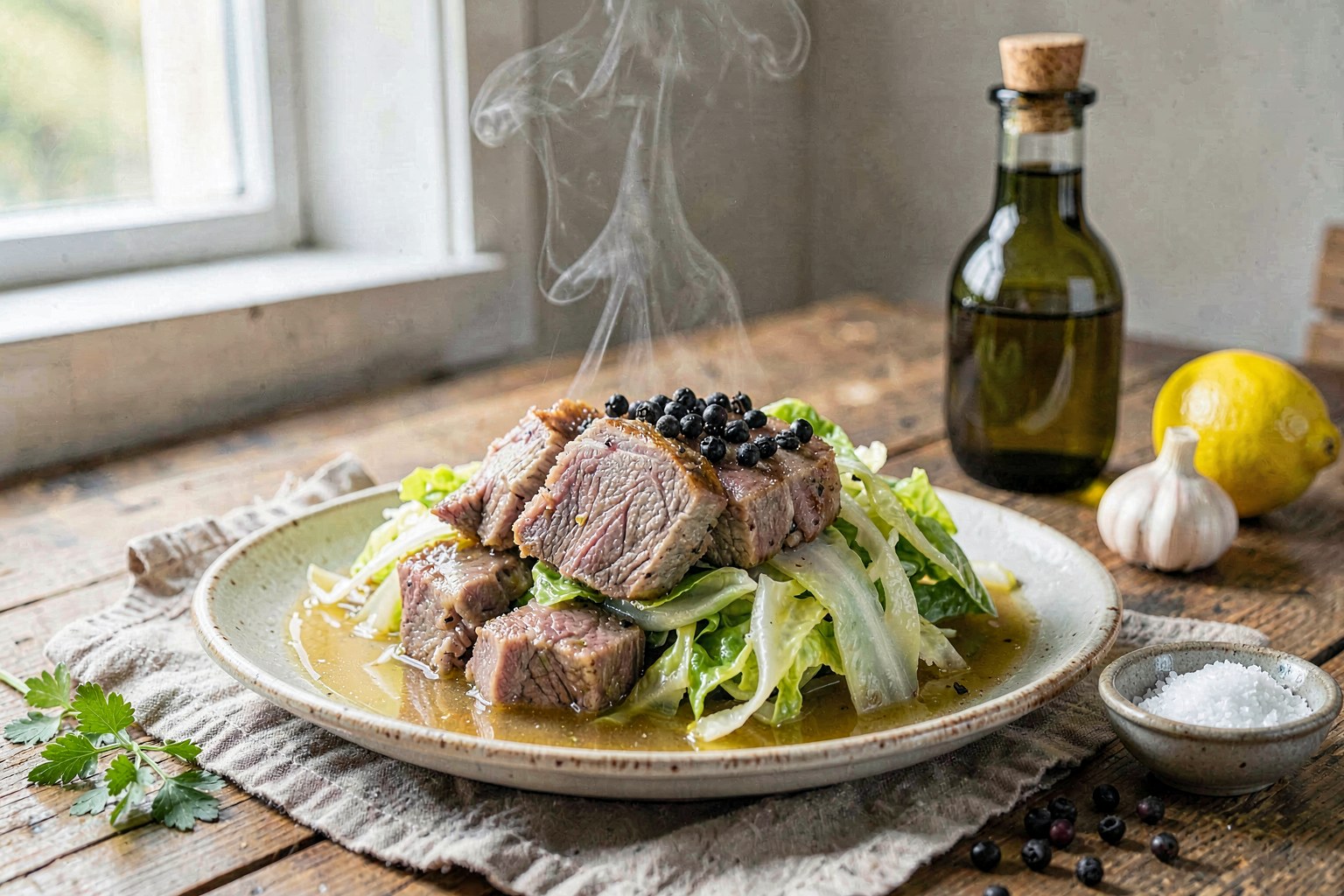
A historic Northern German sweet-sour cabbage dish reimagined for longevity, featuring fermented sauerkraut and fresh cabbage sweetened with date syrup. Served with seared wild-caught mackerel, this meal delivers a powerhouse of probiotics, omega-3s, and polyphenols without refined sugar or seed oils.
A little context
Traditional Brunsviger dishes often relied on refined sugar and butter for the sweet-sour profile common in Northern German and Danish coastal cuisine. We honor this tradition by using organic date syrup for slow-release sweetness and grass-fed ghee or extra-virgin olive oil for richness. The fermentation aspect remains central, preserving the probiotic integrity of the cabbage while stripping out ultra-processed additives.
Method
- 01
Prepare the Cabbage Base
Heat the cast-iron skillet over medium heat. Add the onion and 30 ml of the olive oil. Sauté until translucent, about 5 minutes. Add the crushed caraway seeds and cook for 1 minute until fragrant.
- 02
Combine Sauerkraut and Fresh Cabbage
Add the shredded fresh cabbage and the drained sauerkraut to the skillet. Pour in the apple cider vinegar and the reserved sauerkraut liquid. Stir to combine thoroughly.
- 03
Sweeten and Simmer
Stir in the date syrup. Reduce heat to low, cover, and simmer for 30 minutes. Check occasionally and add a splash of water if it dries out. The cabbage should be tender but retain some bite.
- 04
Season the Fish
While the cabbage cooks, pat the mackerel fillets dry with a paper towel. Season liberally with sea salt on both sides. Let rest at room temperature for 15 minutes to take the chill off.
- 05
Sear the Mackerel
Heat the non-stick pan over medium-high heat. Add the remaining 15 ml of olive oil. Place mackerel skin-side down. Press gently for 10 seconds to prevent curling. Cook for 4-5 minutes until skin is crisp.
- 06
Finish Cooking
Flip the fish and cook for another 2-3 minutes until the flesh is opaque and flakes easily. Remove from heat immediately to prevent overcooking.
- 07
Taste and Adjust
Taste the cabbage. If it needs more acid, add a splash of vinegar. If it needs more sweetness, add a drop of date syrup. Serve immediately with the fish.
Pro tips
- ✦Always choose refrigerated sauerkraut; shelf-stable jars are pasteurized and lack live probiotics.
- ✦Look for mackerel with clear eyes and bright red gills if buying whole, or firm flesh for fillets.
- ✦Do not overcook the cabbage; it should be soft but not mushy to retain texture and nutrients.
- ✦For extra polyphenols, drizzle a final teaspoon of raw cold-pressed extra-virgin olive oil over the finished dish.
Substitutions
- wild-caught Atlantic mackerel → wild-caught sockeye salmon or Arctic char (Adjust cooking time slightly based on thickness; salmon takes longer)
- date syrup → raw honey or monk fruit syrup (Add honey at the end to preserve enzymes; monk fruit for zero glycemic impact)
- mackerel → cooked lentils or chickpeas (For a vegan version, add 1 cup cooked lentils in step 3)
Storage
Store cabbage and fish separately in glass containers in the fridge for up to 3 days. Reheat cabbage gently on the stove. Fish is best eaten fresh but can be chilled.
What to serve with it
- Dry German Riesling (low residual sugar)
- Unsweetened green tea
- Sparkling water with lemon and fresh mint
- Kombucha with ginger flavor
FAQ
Can I use regular vinegar instead of apple cider vinegar?+
White vinegar works for acidity but lacks the 'mother' and enzymes found in raw apple cider vinegar. We recommend unfiltered ACV for gut health benefits.
Is date syrup considered added sugar?+
Technically yes, but it is a whole-food sweetener with a lower glycemic index than refined sugar and retains some minerals. We use it sparingly to mimic the traditional sweet-sour profile without spiking blood sugar.
Can I make this ahead of time?+
The cabbage actually improves in flavor after sitting for a day. Store it separately from the fish and reheat before serving.
Share this recipe
Notes from the community
Sign in to leave a note.
No notes yet — be the first.
You might also like