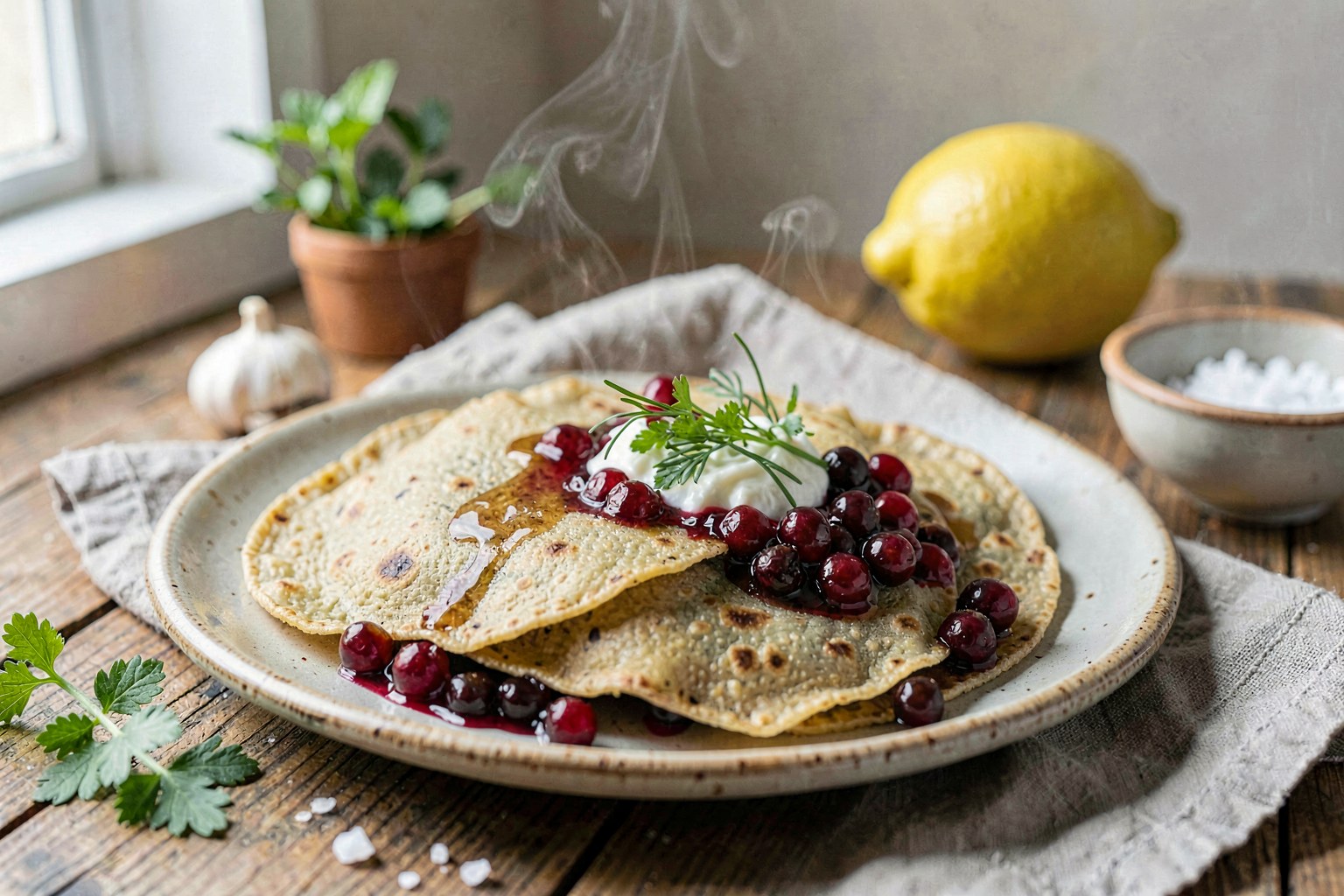
Nordic Clean Rye Pannkaka with Lingonberry Compote
Thin, earthy rye crepes made with organic whole milk and pasture-raised eggs, sweetened only with date syrup. Served with a fresh lingonberry compote and a dollop of cultured grass-fed cream for a nutrient-dense Swedish breakfast.
A little context
In Sweden, Friday night pannkaka is a cherished tradition, traditionally made with wheat flour and sugary jam. We honor this by using nutrient-dense rye flour for a deeper, nuttier flavor and swapping refined sugar for dates. Grass-fed butter replaces industrial seed oils, keeping the dish aligned with clean eating principles without losing the soul of the recipe.
The longevity story
Whole grain rye provides soluble fiber and polyphenols that support gut microbiome diversity and stable blood sugar. Lingonberries are rich in anthocyanins and antioxidants that reduce systemic inflammation. The absence of seed oils and refined sugar prevents oxidative stress, while grass-fed butter adds fat-soluble vitamins A and K2.
Method
- 01
Make the batter
Combine rye flour, milk, eggs, date syrup, melted butter, and salt in a blender. Blend on high for 30 seconds until completely smooth and no lumps remain.
- 02
Rest the batter
Pour batter into a jug and let rest at room temperature for 20 minutes. This allows the rye to fully hydrate, preventing grittiness.
- 03
Prepare the compote
While batter rests, combine lingonberries, water, and date syrup in a small saucepan over medium heat. Simmer for 8-10 minutes until berries burst and liquid thickens slightly. Remove from heat.
- 04
Heat the pan
Heat your skillet over medium heat. Add a small knob of grass-fed butter (approx 2g) and swirl to coat the bottom. It should sizzle gently but not smoke.
- 05
Cook the crepes
Pour about 1/4 cup of batter into the center. Quickly tilt and rotate the pan to spread the batter into a thin, even circle. Cook for 60-90 seconds until edges lift and bottom is golden.
- 06
Flip and finish
Flip carefully with a thin spatula. Cook the other side for 30-45 seconds. Transfer to a plate and cover with a clean kitchen towel to keep warm.
- 07
Repeat
Continue with remaining batter, adding a tiny dab of butter to the pan every 2-3 crepes to prevent sticking. You should yield 8-10 crepes.
- 08
Serve
Stack crepes on a warm plate. Top with generous spoonfuls of warm lingonberry compote and a dollop of cold grass-fed cream. Serve immediately.
Nutrition facts
Per serving · 1 of 4- — Saturated
- 5 g
- — Polyunsaturated
- 1 g
- Carbohydrates
- 42 g
- — Fiber
- 7 g
- — Sugars
- 13 g
- Cholesterol
- 25 mg
- Sodium
- 278 mg
- Potassium
- 417 mg
Estimated from USDA FoodData Central for matched ingredients (60% ingredient coverage). Values vary with brand, preparation, and exact measurements.
Pro tips
- ✦Resting the batter is non-negotiable for rye flour; it eliminates the raw grain taste and improves texture.
- ✦If your pan is too hot, the batter will set before you can spread it thin. Lower the heat and wipe the pan with a damp towel.
- ✦Source lingonberries from a Scandinavian specialty shop or use high-quality frozen organic cranberries if fresh are unavailable.
- ✦Add a pinch of cardamom to the batter for an authentic Nordic spice note.
- ✦Keep cooked crepes warm by stacking them under a foil tent while finishing the batch.
Substitutions
- whole grain rye flour → whole wheat spelt flour (similar fiber profile, slightly sweeter flavor)
- organic whole milk → unsweetened oat milk (makes the recipe dairy-free; texture will be slightly less rich)
- grass-fed clotted cream → full-fat coconut cream (dairy-free alternative with similar fat content)
Storage
Store cooled crepes in an airtight glass container in the fridge for up to 3 days. Separate layers with parchment paper. Freeze stacked crepes for up to 2 months. Compote keeps for 5 days.
What to serve with it
- Hot green tea or matcha
- Black coffee with a splash of oat milk
- Sparkling water with lemon and a sprig of fresh mint
FAQ
Can I make these gluten-free?+
Rye contains gluten. For a gluten-free version, use a 1:1 gluten-free flour blend, though the flavor profile will change significantly.
Why do my crepes tear?+
This usually means the pan is too hot or the batter was not rested long enough to hydrate the flour fully.
Is date syrup okay on a strict low-sugar diet?+
Date syrup is a whole-food sweetener with fiber and minerals, but it is still sugar. Use sparingly if monitoring glycemic load.
Share this recipe
Notes from the community
Sign in to leave a note.
No notes yet — be the first.
You might also like