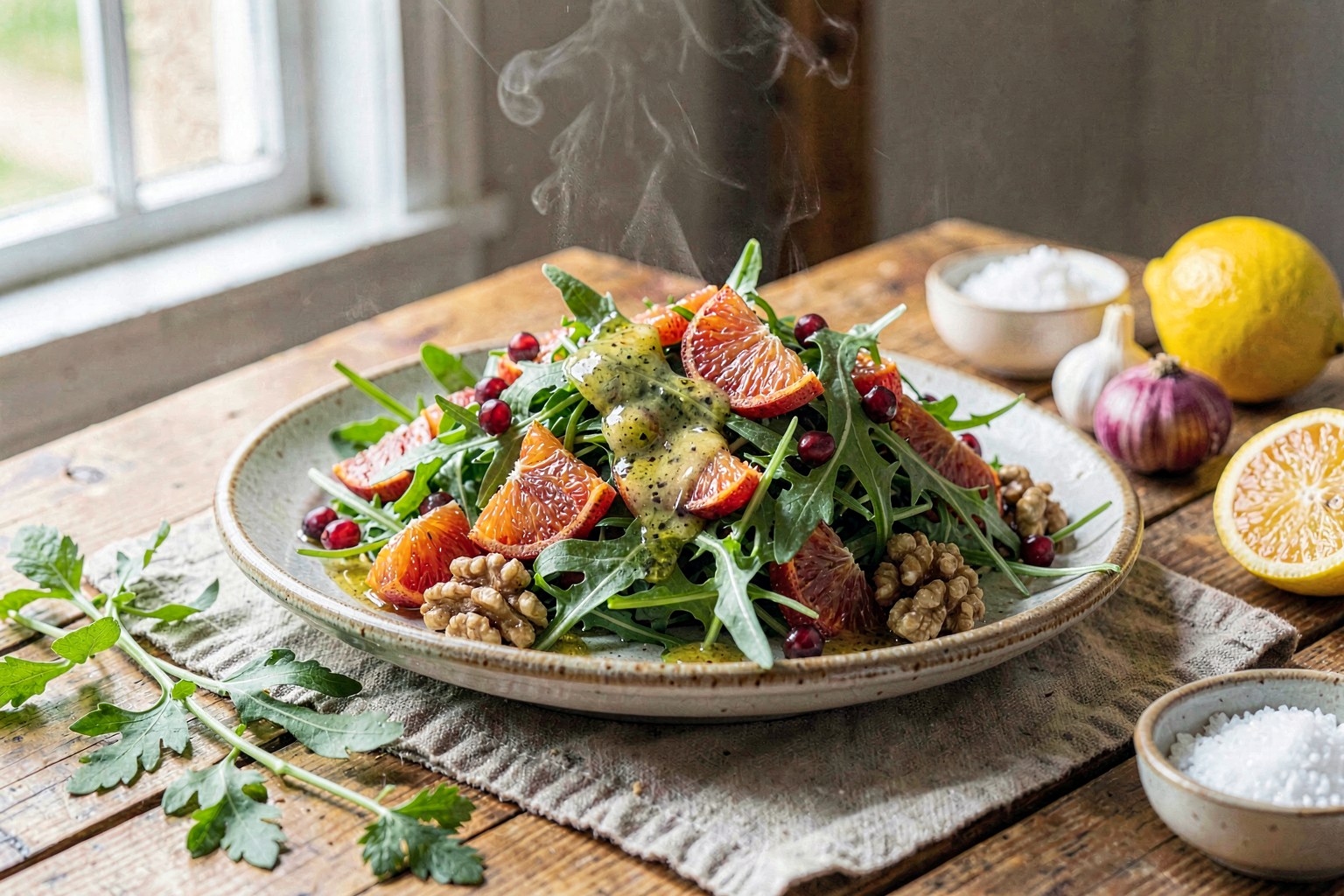
Arugula & Blood Orange Salad with Lemon-Olive Oil Emulsion
A vibrant California dinner featuring peppery baby arugula tossed with supremed blood oranges and a bright, emulsified lemon-olive oil dressing. This dish balances bitter greens with natural citrus sweetness, delivering a clean, polyphenol-rich meal that feels substantial without heavy cooking.
A little context
Rooted in the sunny, produce-heavy traditions of California's Central Coast, this recipe honors the local farm-to-table ethos where citrus and leafy greens are harvested within hours of serving. We have stripped away the California-style habit of drizzling honey or using canola-based dressings, replacing them with cold-pressed extra-virgin olive oil and the natural fructose of ripe fruit to respect the original flavor profile while adhering to strict longevity standards.
The longevity story
This salad is a polyphenol powerhouse, leveraging the high levels of flavonoids in extra-virgin olive oil and the anthocyanins found in the deep red pigment of blood oranges. The arugula provides glucosinolates, which support the body's natural detoxification pathways, while the fiber from the whole fruit segments promotes satiety and gut motility. Unlike traditional Caesar or citrus salads that rely on seed oils and refined sugar, this version uses only cold-pressed fats and whole-fruit sweetness to maintain a low-glycemic profile while maximizing nutrient density.
Method
- 01
Prepare the oranges
Cut the top and bottom off each orange. Stand the fruit on a cutting board and slice downward following the curve to remove all peel and white pith, revealing the naked segments. Hold the fruit over a small bowl to catch the juice, then slice between the membranes to release the supremes. Set the segments aside and reserve the accumulated juice in the bowl.
- 02
Toast the walnuts
Place the raw walnuts in a dry skillet over medium-low heat. Toast for 3–4 minutes, shaking the pan frequently, until fragrant and slightly darkened. Do not burn. Transfer immediately to a plate to cool.
- 03
Make the emulsion
In a small jar or bowl, combine the reserved orange juice, fresh lemon juice, lemon zest, sea salt, and black pepper. While whisking vigorously, slowly drizzle in the extra-virgin olive oil in a thin, steady stream until the dressing thickens and becomes cloudy (emulsified). Taste and adjust salt if needed.
- 04
Dry the greens
Ensure the arugula is thoroughly dry after washing. Any residual water will break the emulsion and dilute the flavor. Use a salad spinner or pat gently with clean linen towels.
- 05
Assemble the salad
Place the arugula in a large serving bowl. Drizzle with about two-thirds of the dressing and toss gently with tongs to coat without bruising the leaves. Arrange the orange supremes on top.
- 06
Finish and serve
Sprinkle the toasted walnuts and pomegranate arils (if using) over the top. Drizzle with the remaining dressing just before serving to maintain the crunch of the nuts. Serve immediately at room temperature.
Nutrition facts
Per serving · 1 of 4- — Saturated
- 3 g
- — Polyunsaturated
- 9 g
- Carbohydrates
- 7 g
- — Fiber
- 3 g
- — Sugars
- 2 g
- Cholesterol
- 0 mg
- Sodium
- 230 mg
- Potassium
- 409 mg
Estimated from USDA FoodData Central for matched ingredients (89% ingredient coverage). Values vary with brand, preparation, and exact measurements.
Pro tips
- ✦Source blood oranges specifically for their higher anthocyanin content compared to standard navel oranges; look for a deep red blush on the skin.
- ✦Do not skip the salad spinner; water is the enemy of a good vinaigrette and will make the arugula slimy.
- ✦Toast the walnuts just before serving to preserve their delicate omega-3 fats from oxidation.
- ✦For a protein boost that aligns with Blueprint principles, add 100g of grilled wild-caught sardines or smoked mackerel on top.
- ✦If the oranges are not very sweet, add 1/2 tsp of pure maple syrup to the dressing, though ripe California fruit usually requires no addition.
Shop this recipe
As an Amazon Associate we earn from qualifying purchases.
Substitutions
- blood oranges → Cara Cara oranges or ruby red grapefruit (Cara Cara offers lower acidity and natural sweetness; grapefruit adds a more bitter, complex profile.)
- walnuts → hazelnuts or pumpkin seeds (pepitas) (Hazelnuts pair beautifully with citrus; pumpkin seeds add a magnesium boost.)
- extra-virgin olive oil → avocado oil (cold-pressed) (Use only if you cannot find high-polyphenol EVOO, though EVOO is preferred for the flavor and phenol content.)
Storage
Store undressed arugula and orange segments separately in airtight glass containers in the refrigerator for up to 2 days. The dressing can be kept for 3 days. Assemble just before eating to prevent wilting.
What to serve with it
- A glass of sparkling water with a slice of fresh lemon and a sprig of rosemary
- Hot green tea (sencha or matcha) to complement the bitterness of the arugula
- A small glass of dry, low-sulfite Pinot Noir or a non-alcoholic fermented kombucha with citrus notes
FAQ
Why do I need to suprem the oranges instead of just slicing them?+
Removing the pith and membrane eliminates the bitter, fibrous texture and ensures the sweet juice mixes perfectly with the oil. It also makes the salad much easier to eat in one bite.
Can I make this salad ahead of time?+
You can prep the components (wash greens, segment fruit, make dressing) up to a day in advance, but do not toss them together until you are ready to eat. Arugula wilts quickly upon contact with acid.
Is this low-carb enough for a strict Blueprint diet?+
Yes, the carbohydrates come entirely from whole fruit fiber and polyphenols, with no added sugars. The glycemic load is minimal, especially when paired with the healthy fats from the olive oil and walnuts.
Share this recipe
Notes from the community
Sign in to leave a note.
No notes yet — be the first.
You might also like