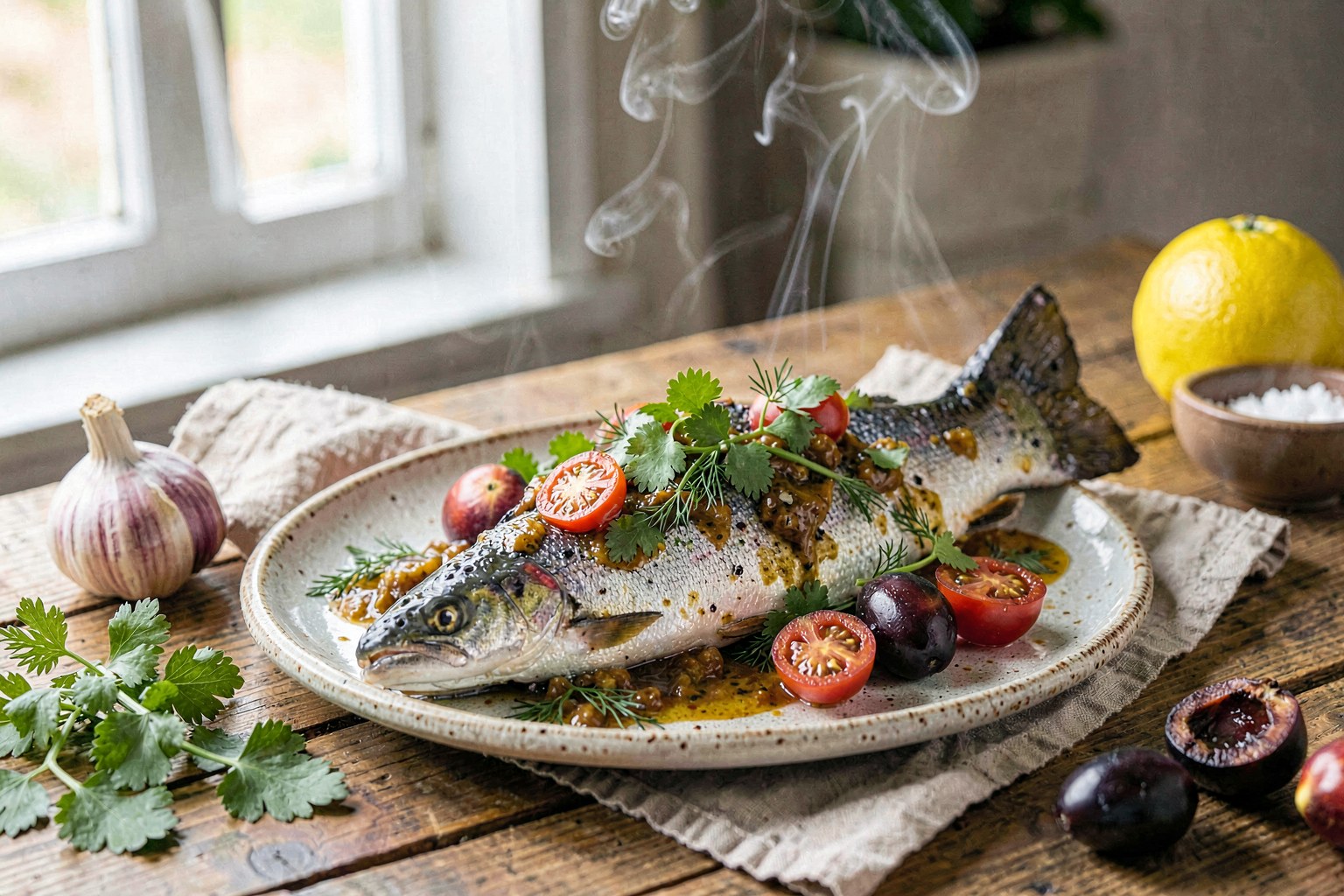
Achar Al-Bamieh: Levantine Garden-Style Pickled Okra
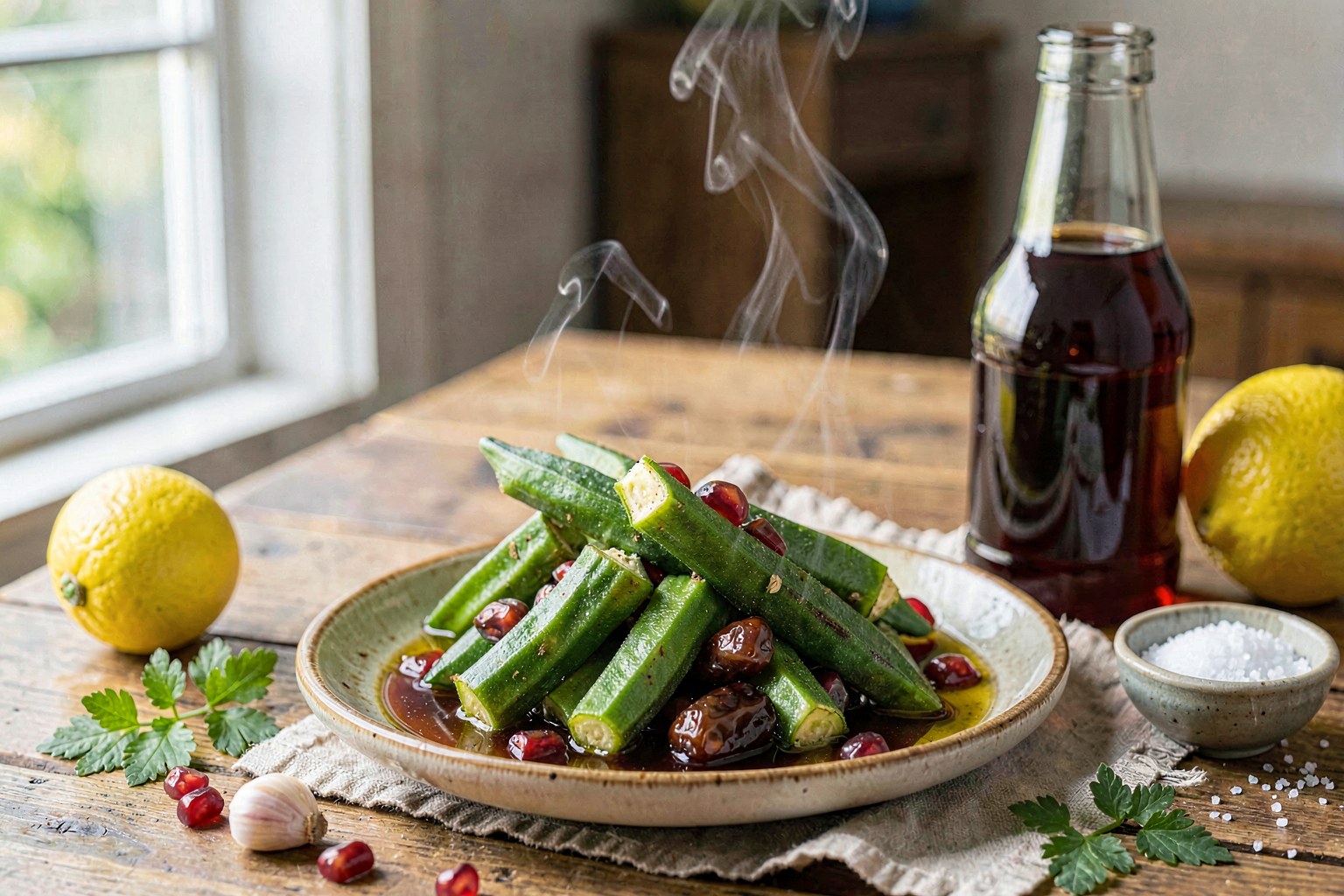
Crisp, vibrant okra spears cured in a brine of pomegranate molasses, fresh garlic, and extra-virgin olive oil, creating a tangy, savory side that honors the Levantine tradition without refined sugars. This dish transforms humble garden okra into a polyphenol-rich condiment or side, offering a satisfying crunch and a deep, fermented-like tang that pairs perfectly with grilled proteins or grain bowls.
A little context
Rooted in the Levantine tradition of preserving garden harvests in vinegar and brine, this version strips away the refined sugar often added to balance acidity, relying instead on the natural sweetness of ripe dates and the depth of pomegranate molasses. We honor the tradition by using only cold-pressed olive oil and fresh, raw garlic, avoiding the seed oils and industrial preservatives found in store-bought versions. The result is a dish that tastes authentically of the Levant but aligns with modern longevity principles.
The longevity story
This recipe leverages the prebiotic fiber in okra to support gut microbiome diversity while utilizing pomegranate molasses as a potent source of punicalagins, powerful antioxidants that reduce systemic inflammation. The generous use of cold-pressed extra-virgin olive oil introduces high levels of oleocanthal and oleuropein, compounds with proven neuroprotective and anti-inflammatory properties. Garlic provides allicin, which supports cardiovascular health, while the fermentation-style curing process enhances the bioavailability of these nutrients without the need for commercial probiotics.
Method
- 01
Prepare the Okra
Wash the okra thoroughly and pat completely dry with a clean kitchen towel. Moisture on the surface can dilute the brine and lead to spoilage. If the okra is large, slice into 1 cm rounds; if small and tender, leave whole. Trim the stem ends carefully without piercing the pod.
- 02
Pack the Jar
Place the smashed garlic, coriander seeds, turmeric, and half of the fresh dill at the bottom of the sterilized glass jar. Pack the okra tightly into the jar, standing them upright if whole or layering them if sliced. Top with the remaining fresh dill.
- 03
Make the Brine
In a blender, combine the cooled water, apple cider vinegar, pomegranate molasses, date paste, sea salt, and extra-virgin olive oil. Blend on high for 30 seconds until the mixture is emulsified and the dates are fully dissolved. The brine should be a deep ruby color with a balanced tangy-sweet aroma.
- 04
Pour and Submerge
Pour the brine over the okra, ensuring every piece is completely submerged. Use a clean spoon to release any air bubbles trapped between the pods. If necessary, add a little more water or vinegar to cover, but the original ratio is ideal.
- 05
Weight and Seal
Place a fermentation weight or a small, clean glass jar on top of the okra to keep it pressed down under the brine. Seal the main jar with a lid (loose enough to let gas escape if fermenting slightly, or tight if just curing) and place it on a small plate to catch any potential overflow.
- 06
Cure at Room Temperature
Let the jar sit at room temperature (away from direct sunlight) for 24 to 48 hours. You may see small bubbles forming, which is a good sign of activity. The okra will turn from bright green to a more olive hue as it cures.
- 07
Refrigerate and Rest
Transfer the jar to the refrigerator. While the okra is edible after 24 hours, the flavor deepens and the texture firms up beautifully after 3 to 5 days of cold curing. Serve chilled or at room temperature.
Nutrition facts
Per serving · 1 of 4- — Saturated
- 2 g
- — Polyunsaturated
- 1 g
- Carbohydrates
- 32 g
- — Fiber
- 7 g
- — Sugars
- 19 g
- Cholesterol
- 0 mg
- Sodium
- 837 mg
- Potassium
- 899 mg
Estimated from USDA FoodData Central for matched ingredients (82% ingredient coverage). Values vary with brand, preparation, and exact measurements.
Pro tips
- ✦Select okra that snaps cleanly when bent; limp or soft pods will turn mushy during curing.
- ✦Ensure your pomegranate molasses is 100% fruit reduction; many commercial brands add corn syrup or refined sugar to thicken.
- ✦Do not skip the drying step; even a drop of water can introduce unwanted bacteria in a raw cure.
- ✦For a deeper fermentation profile, let the jar sit at room temperature for 3 days before refrigerating, but monitor for any off-smells.
- ✦Store in the back of the fridge where the temperature is most consistent to preserve the crunch.
Shop this recipe
As an Amazon Associate we earn from qualifying purchases.
Substitutions
- fresh dill → fresh mint or parsley (Mint adds a different but equally Levantine freshness; parsley is more traditional in some regions.)
- pomegranate molasses → unsweetened cranberry juice reduction + 1 tsp lemon juice (Make your own reduction by boiling 200ml cranberry juice until syrupy; adds tartness but less complexity.)
- apple cider vinegar → white wine vinegar (Use only if you cannot find raw, unfiltered apple cider vinegar.)
Storage
Keep refrigerated in a sealed glass jar. The okra will stay crisp and flavorful for up to 3 weeks. The brine acts as a natural preservative.
What to serve with it
- Grilled wild-caught salmon or mackerel
- Roasted eggplant and hummus platter
- Buckwheat tabbouleh
- Sparkling water with a squeeze of lemon and fresh mint
- Dry, tannic red wine like a natural Syrah
FAQ
Why is my okra slimy?+
Overcooking or cutting okra while wet can increase slime (mucilage). In this raw cure method, the slime is minimal, but if you slice it, ensure it is bone-dry before brining. Slicing just before serving also helps maintain texture.
Can I use dried okra?+
No, this recipe relies on the fresh, crisp texture of raw okra. Dried okra has a completely different texture and will not work in this brine.
Is this fermented?+
Technically, this is a quick pickle (cure) rather than a long lacto-fermentation. However, the 24-48 hour room temp rest allows for slight enzymatic activity that enhances flavor without the risk of spoilage.
Share this recipe
Notes from the community
Sign in to leave a note.
No notes yet — be the first.
You might also like