Hummus Baladi (Levantine Garden Tradition)
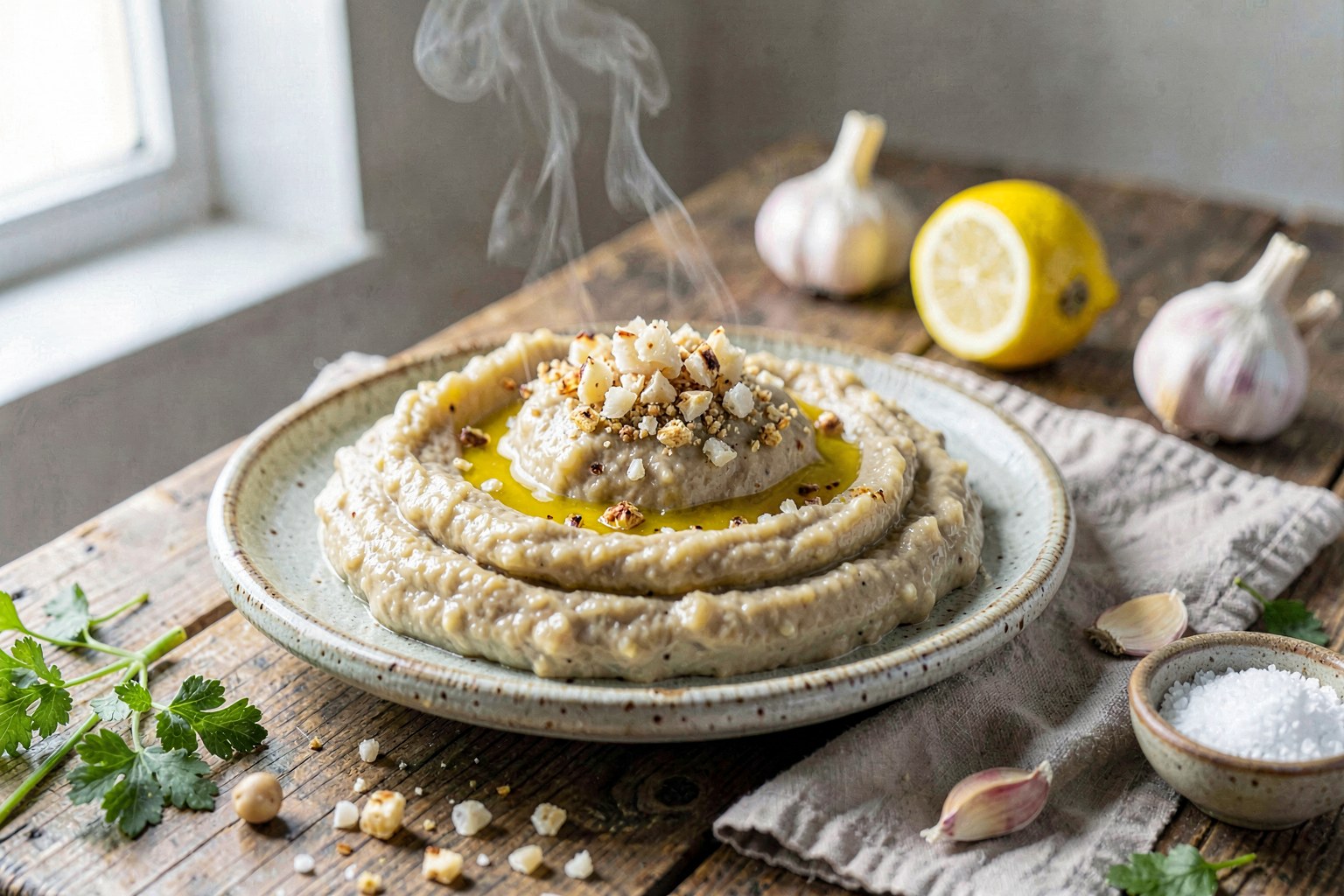
A velvety, cloud-like puree of organic chickpeas, emulsified with cold-pressed tahini and bright lemon juice, topped with crushed toasted garlic and a generous pool of polyphenol-rich extra-virgin olive oil. This Levantine staple delivers deep, nutty flavors without the heavy seed oils or processed stabilizers found in commercial versions, relying instead on slow-cooked legumes and high-quality fats for a satisfying, anti-inflammatory dinner component.
A little context
Hummus Baladi is the rustic, village-style hummus of the Levant, traditionally made with chickpeas cooked until they fall apart and blended with abundant tahini. In the spirit of honoring this tradition while adhering to Blueprint-aligned standards, we strip away the industrial seed oils often used for frying or emulsifying, replacing them with high-quality EVOO and avocado oil. We also eliminate the subtle sweetness some modern recipes add with sugar or corn syrup, relying instead on the natural earthy sweetness of the legumes and the brightness of fresh lemon to balance the dish.
The longevity story
The core of this dish lies in the synergy between soluble fiber from soaked and slow-cooked chickpeas and the healthy fats in tahini and extra-virgin olive oil (EVOO), which support stable blood sugar and gut microbiome diversity. EVOO provides high concentrations of oleocanthal and hydroxytyrosol, potent polyphenols with documented anti-inflammatory and neuroprotective properties. Tahini offers calcium and magnesium, while the garlic adds allicin, a sulfur compound that supports cardiovascular health and immune function. By avoiding seed oils and refined sugars, we eliminate inflammatory triggers and pro-oxidants, ensuring the meal supports longevity and metabolic flexibility.
Method
- 01
Soak the chickpeas
Combine 200 g dried chickpeas, 1 tsp baking soda, and 1.5 L water in a large bowl. Soak at room temperature for 12–18 hours. The chickpeas will swell significantly and the water will become slightly cloudy.
- 02
Rinse and simmer
Drain and rinse the chickpeas thoroughly. Place them in a heavy saucepan, cover with 2 L fresh water, and add another 1/2 tsp baking soda. Bring to a boil, then reduce heat to a low simmer. Cook uncovered for 45–60 minutes until the chickpeas are extremely tender and can be easily crushed between your fingers. Skim off any foam that forms.
- 03
Toast the garlic
While chickpeas cook, crush 30 g garlic cloves. In a small skillet, heat 1 tbsp of extra-virgin olive oil over medium-low heat. Add the garlic and cook gently until golden and fragrant, about 3–4 minutes. Do not let it brown dark or it will turn bitter. Remove from heat and set aside, keeping the oil.
- 04
Drain and cool
Drain the chickpeas, reserving 200 ml of the starchy cooking liquid. Allow the chickpeas to cool slightly. For the smoothest texture, you can rub them through a fine-mesh sieve now, or simply ensure they are very soft before blending.
- 05
Blend tahini and lemon
In your high-powered blender or food processor, combine the 120 g tahini and 60 ml lemon juice. Blend for 1–2 minutes until the mixture thickens and becomes pale and fluffy. This emulsification step is crucial for the final texture.
- 06
Emulsify the puree
Add the warm chickpeas, the toasted garlic (with 1 tbsp of its oil), 1 tsp sea salt, and 100 ml of the reserved chickpea cooking liquid to the blender. Blend on high for 3–5 minutes, scraping down the sides as needed. The mixture should become incredibly smooth, pale, and aerated. Add more cooking liquid (1 tbsp at a time) if the motor struggles, but aim for a thick, spoonable consistency.
- 07
Taste and adjust
Taste the hummus. It should be bright, salty, and nutty. Adjust with more lemon juice or salt if needed. The texture should be thick enough to hold a peak but soft enough to spread easily.
- 08
Serve with intention
Spoon the hummus onto a shallow serving dish. Use the back of a spoon to create deep swirls. Drizzle generously with the remaining 50 ml of high-polyphenol extra-virgin olive oil. Sprinkle with 1 tsp sumac and chopped fresh parsley. Serve immediately with warm, whole-grain flatbread or sliced raw vegetables.
Nutrition facts
Per serving · 1 of 4- — Saturated
- 5 g
- — Polyunsaturated
- 11 g
- Carbohydrates
- 21 g
- — Fiber
- 6 g
- — Sugars
- 3 g
- Cholesterol
- 0 mg
- Sodium
- 541 mg
- Potassium
- 316 mg
Estimated from USDA FoodData Central for matched ingredients (89% ingredient coverage). Values vary with brand, preparation, and exact measurements.
Pro tips
- ✦The secret to silky hummus is the baking soda soak; it breaks down the chickpea skins chemically, ensuring no grit remains.
- ✦Always bloom the spices (sumac, cumin) in a tiny bit of warm olive oil before sprinkling to unlock their aromatic oils.
- ✦When selecting tahini, look for a jar where the oil has separated and needs stirring; this indicates no stabilizers or hydrogenated oils were added.
- ✦For the highest polyphenol count, use a 'green' or 'peppery' extra-virgin olive oil for the final drizzle, as these have the highest concentrations of oleocanthal.
- ✦If the hummus feels too thick after blending, add reserved cooking liquid, not water; the starch helps maintain the emulsion.
Shop this recipe
As an Amazon Associate we earn from qualifying purchases.
Substitutions
- dried chickpeas → high-quality canned organic chickpeas (rinsed and cooked 15 mins with baking soda) (Texture will be slightly less airy, but acceptable in a pinch. Dried is always preferred for the 'Baladi' style.)
- extra-virgin olive oil → avocado oil (for high-heat toasting) + EVOO (for finishing) (Use avocado oil only for the garlic toast if you fear burning; always finish with EVOO for polyphenols.)
Storage
Store in an airtight glass container in the refrigerator for up to 4 days. A thin layer of olive oil on top prevents oxidation. Does not freeze well as the texture can become grainy upon thawing.
What to serve with it
- Warm sprouted whole-wheat pita or gluten-free almond flour flatbread
- Sliced radishes, cucumber, and fennel for a fresh crunch
- Green tea or sparkling water with a slice of lemon
- A glass of dry red wine (low-sulfite if possible) to pair with the earthy hummus
FAQ
Why does my hummus turn out gritty?+
This usually happens if the chickpeas weren't soaked long enough, didn't cook until falling apart, or if the blender wasn't powerful enough. The baking soda soak is non-negotiable for a smooth texture.
Can I make this ahead of time?+
Yes, the flavors actually improve after resting in the fridge for a few hours. Just let it come to room temperature and stir in a splash of water or lemon juice to loosen it before serving.
Share this recipe
Notes from the community
Sign in to leave a note.
No notes yet — be the first.
You might also like