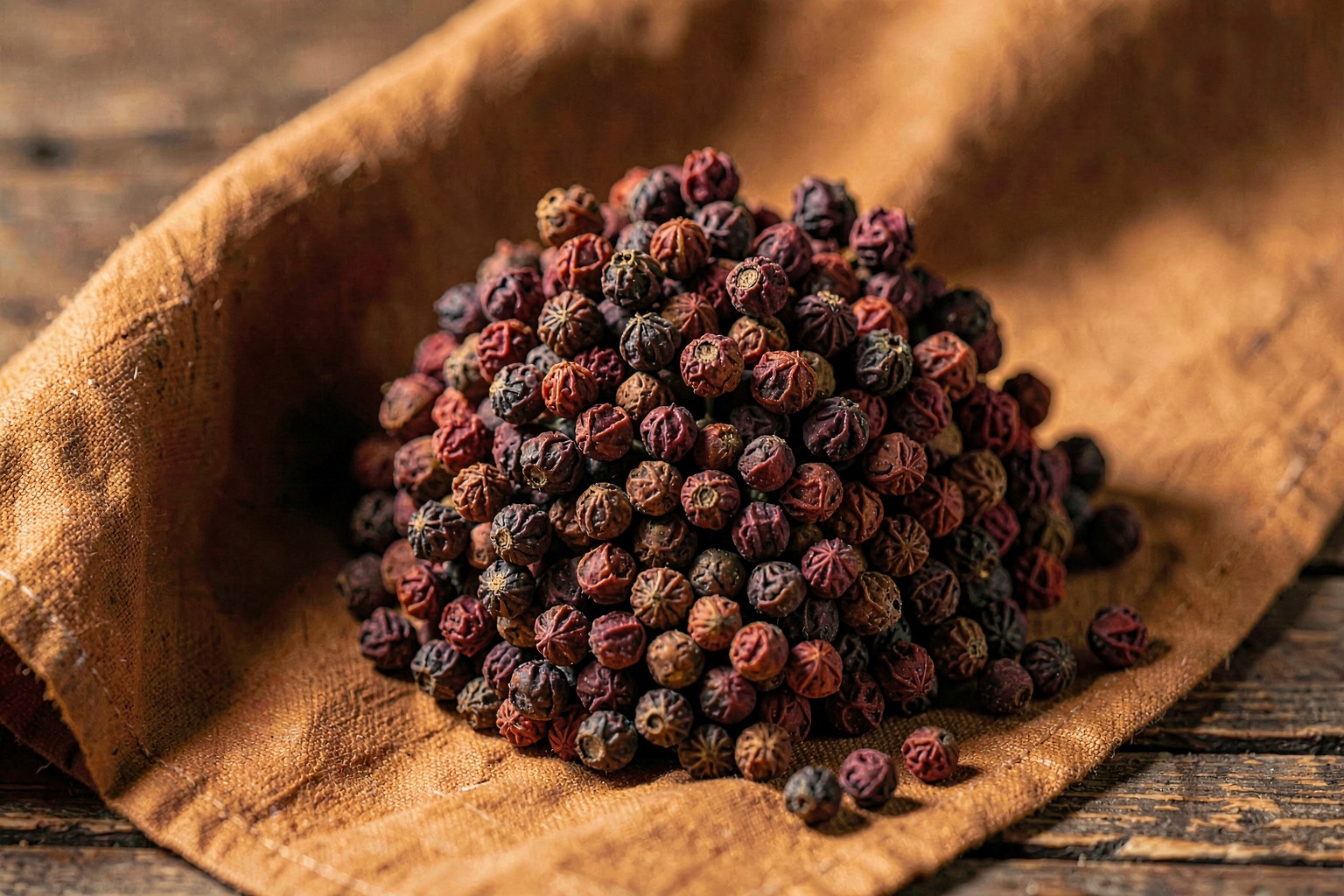
Sumac
Sumac is a tangy, crimson-red spice made from ground dried berries of the Rhus coriaria shrub, providing a lemony sourness without liquid acidity.
What it is
Sumac comes from the dried, crushed berries of the Rhus coriaria shrub, native to the Middle East and Mediterranean regions. The berries are harvested, dried, and ground into a coarse, deep purple-red powder that stains fingers and dishes alike. Unlike ground spices that are often toasted seeds or roots, sumac retains a distinct fruit-like quality. It offers a sharp, astringent sourness similar to lemon juice but with earthy, berry-like undertones and a slight salinity. The texture ranges from fine dust to coarse granules depending on the milling process. It is rarely used as a base cooking spice; instead, it is applied as a finishing garnish to preserve its volatile citrus notes against heat. Traditionally, sumac is a cornerstone of Levantine and Turkish cuisine, appearing on the table alongside olive oil for dipping bread, sprinkled over fattoush salad, and rubbed onto grilled meats like shish taouk. It provides the essential acidic balance in dishes that might otherwise rely solely on fresh lemon, which can evaporate during cooking.
How to buy
Seek out sumac with a vibrant, deep crimson or purple hue; pale or brownish powder indicates age and significant flavor loss. The aroma should be distinctly tart and fruity, not dusty or musty. Avoid pre-ground blends where sumac is a minor component, as the potency will be diluted. Purchase from Middle Eastern or Mediterranean specialty grocers where turnover is high, ensuring freshness. Online spice merchants specializing in exotic imports often provide better color consistency than mainstream supermarkets. If buying in bulk, smell a sample before committing, as oxidation dulls the flavor quickly.
Storage
Keep sumac in an airtight glass jar stored in a cool, dark pantry away from direct light and heat sources. It maintains peak potency for six months but remains usable for up to two years if sealed tightly. Discard if the color fades to brown or if it develops a stale, cardboard-like scent.
How to use
Apply sumac as a finishing touch rather than a cooking ingredient to prevent heat from dulling its volatile acids. Sprinkle generously over hummus, roasted vegetables, grilled chicken, or yogurt sauces just before serving. For salad dressings, whisk it directly into the oil and lemon juice mixture to allow the powder to bloom. Start with a small amount, as its sourness concentrates quickly; 1 teaspoon can replace half a lemon's worth of acidity. A common mistake is cooking sumac into a stew for hours, which results in a muddy, bitter flavor instead of a bright finish. It pairs exceptionally well with cumin, oregano, and sesame seeds.
Where it comes from
Sumac is indigenous to the Levant and has been a dietary staple since ancient times, valued for its ability to preserve food and add flavor without refrigeration. In Lebanese and Turkish households, a small bowl of sumac is often placed on the table alongside olive oil, serving as a universal condiment for bread and dips. It represents the region's reliance on dried fruit for acidity in the absence of consistent fresh citrus availability.
Substitutions
- Lemon zest mixed with salt — Provides citrus acidity but lacks the berry depth and requires fresh application.
- Amchur (dried mango powder) — Offers sourness and fruitiness, but adds a sweeter, less astringent profile suitable for curries.