Creamy Laban with Toasted Sumac & Za'atar
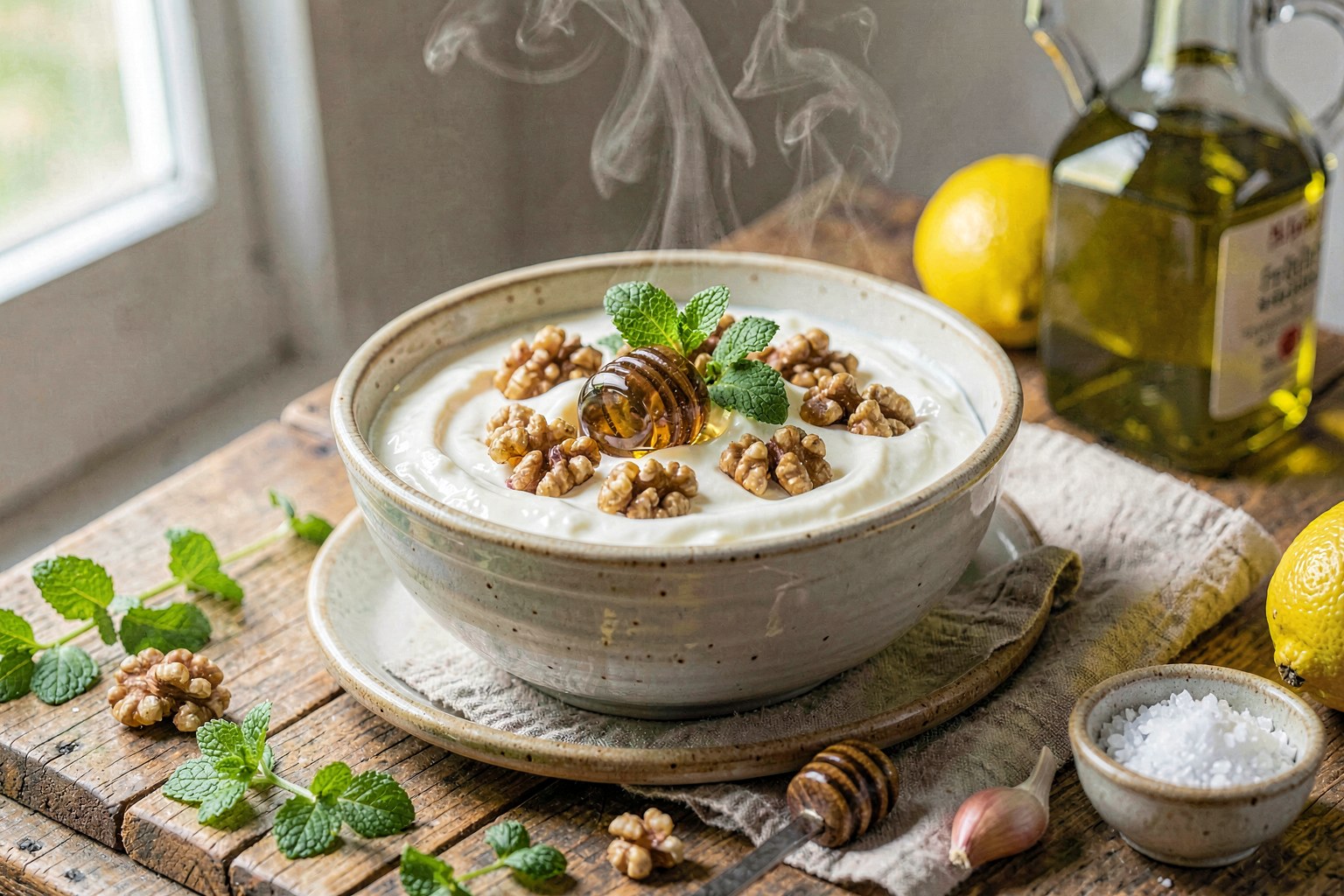
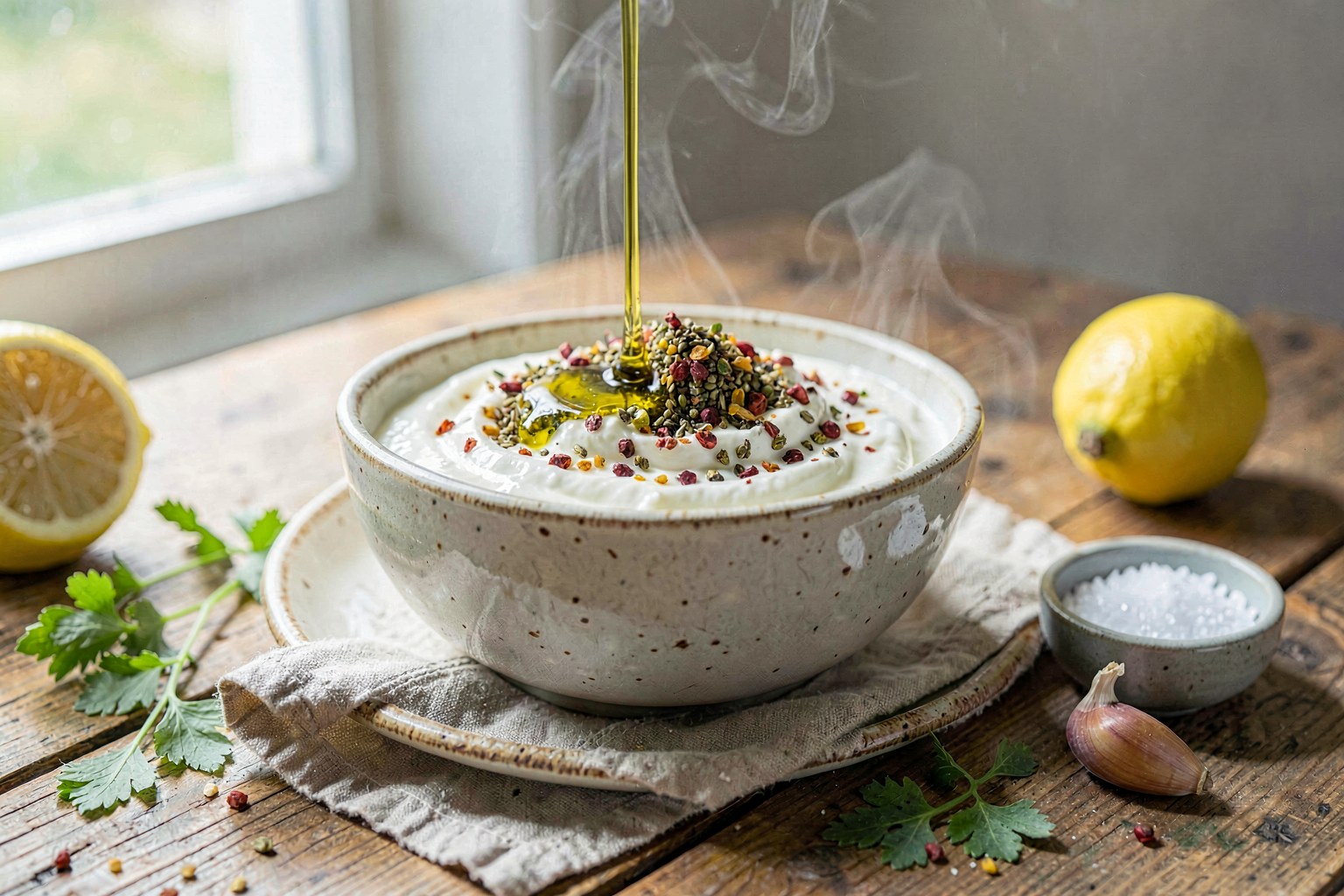
A velvety bowl of thick, pasture-raised yogurt crowned with a vibrant dusting of sumac and toasted za'atar, finished with a generous drizzle of high-polyphenol extra-virgin olive oil. This savory Levantine breakfast delivers a creamy, tangy, and herbaceous experience that stabilizes blood sugar while nourishing the gut microbiome.
A little context
Rooted in the Levantine tradition where yogurt is a staple for breakfast, this recipe honors the original preparation by focusing on the purity of fermented dairy and aromatic spices rather than processed thickeners or seed oils. We have strictly excluded the occasional hint of sugar sometimes added to sweetened laban, relying instead on the natural richness of grass-fed dairy and the brightness of sumac to balance the palate. The use of cold-pressed olive oil and hand-toasted herbs respects the farm-to-table ethos of the region's garden cuisine.
The longevity story
The core of this dish is the fermented yogurt, providing live probiotics essential for gut barrier integrity and immune modulation. The generous amount of extra-virgin olive oil introduces oleocanthal and oleuropein, potent polyphenols with proven anti-inflammatory properties. Sumac adds a unique antioxidant profile rich in quercetin and tannins, while the pasture-raised dairy base ensures a superior fatty acid profile with higher Omega-3s compared to grain-fed alternatives.
Method
- 01
Strain the yogurt
Line a fine-mesh sieve with cheesecloth and place it over a bowl. Pour the pasture-raised yogurt into the cloth, cover, and refrigerate for at least 4 hours (or up to 24) to drain excess whey. The result should be a thick, spreadable consistency similar to cream cheese.
- 02
Toast the za'atar
Heat a small dry skillet over medium-low heat. Add the za'atar blend and toast for 60-90 seconds, shaking the pan constantly, until the sesame seeds turn golden and the herbs release their aroma. Do not let it brown or burn. Transfer immediately to a small bowl to cool.
- 03
Prepare the serving vessels
Spoon the strained yogurt into four wide, shallow bowls, creating a slight well in the center of each. Use the back of a spoon to smooth the surface.
- 04
Season the yogurt
Lightly sprinkle a pinch of sea salt over the surface of the yogurt in each bowl to enhance the tangy flavor.
- 05
- 06
Drizzle with polyphenol-rich oil
Drizzle approximately 1 tablespoon of high-quality extra-virgin olive oil over each bowl, allowing it to pool slightly in the center and coat the spices.
- 07
Garnish and serve
Top immediately with torn fresh mint and chopped parsley. Serve at cool room temperature or slightly chilled, accompanied by sliced cucumbers or radishes if desired.
Nutrition facts
Per serving · 1 of 4- — Saturated
- 6 g
- — Polyunsaturated
- 1 g
- Carbohydrates
- 18 g
- — Fiber
- 0 g
- — Sugars
- 18 g
- Cholesterol
- 22 mg
- Sodium
- 709 mg
- Potassium
- 629 mg
Estimated from USDA FoodData Central for matched ingredients (86% ingredient coverage). Values vary with brand, preparation, and exact measurements.
Pro tips
- ✦Sourcing is critical: Look for yogurt labeled 'pasteurized but not ultra-pasteurized' to ensure the live cultures remain viable.
- ✦When buying sumac, check the color; it should be a deep, vibrant burgundy. If it looks dull or brown, it has oxidized and lost its potency.
- ✦Toast the za'atar in a dry pan, not with oil; the sesame seeds release their own fat, and adding oil can cause the herbs to burn instantly.
- ✦If the yogurt is too thick to spread easily, whisk in a teaspoon of the reserved whey to loosen it slightly before serving.
Shop this recipe
As an Amazon Associate we earn from qualifying purchases.
Substitutions
- cow's milk yogurt → full-fat goat milk yogurt or sheep milk yogurt (goat and sheep milk are often easier to digest and have a naturally tangier profile that pairs beautifully with sumac.)
- fresh mint and parsley → fresh dill and green onion (provides a different but equally Levantine herbaceous profile.)
Storage
Store the strained yogurt in an airtight glass container in the refrigerator for up to 5 days. Do not add the fresh herbs, olive oil, or spices until just before serving to prevent wilting and oil separation.
What to serve with it
- Warm green tea (sencha or matcha) for a polyphenol boost
- Sparkling water with a squeeze of fresh lemon
- A side of sliced raw cucumber and radish for crunch
- One or two whole dates on the side for a touch of natural sweetness if desired
FAQ
Can I use store-bought labneh instead of straining yogurt?+
Yes, but check the label carefully. Many commercial labneh brands add stabilizers, gums, or seed oils. Look for a brand with only milk and cultures, or make your own straining for the cleanest ingredient list.
Is sumac safe for those avoiding nightshades?+
Yes, sumac is a shrub native to the Middle East and is not a nightshade vegetable like tomatoes or peppers.
Share this recipe
Notes from the community
Sign in to leave a note.
No notes yet — be the first.
You might also like