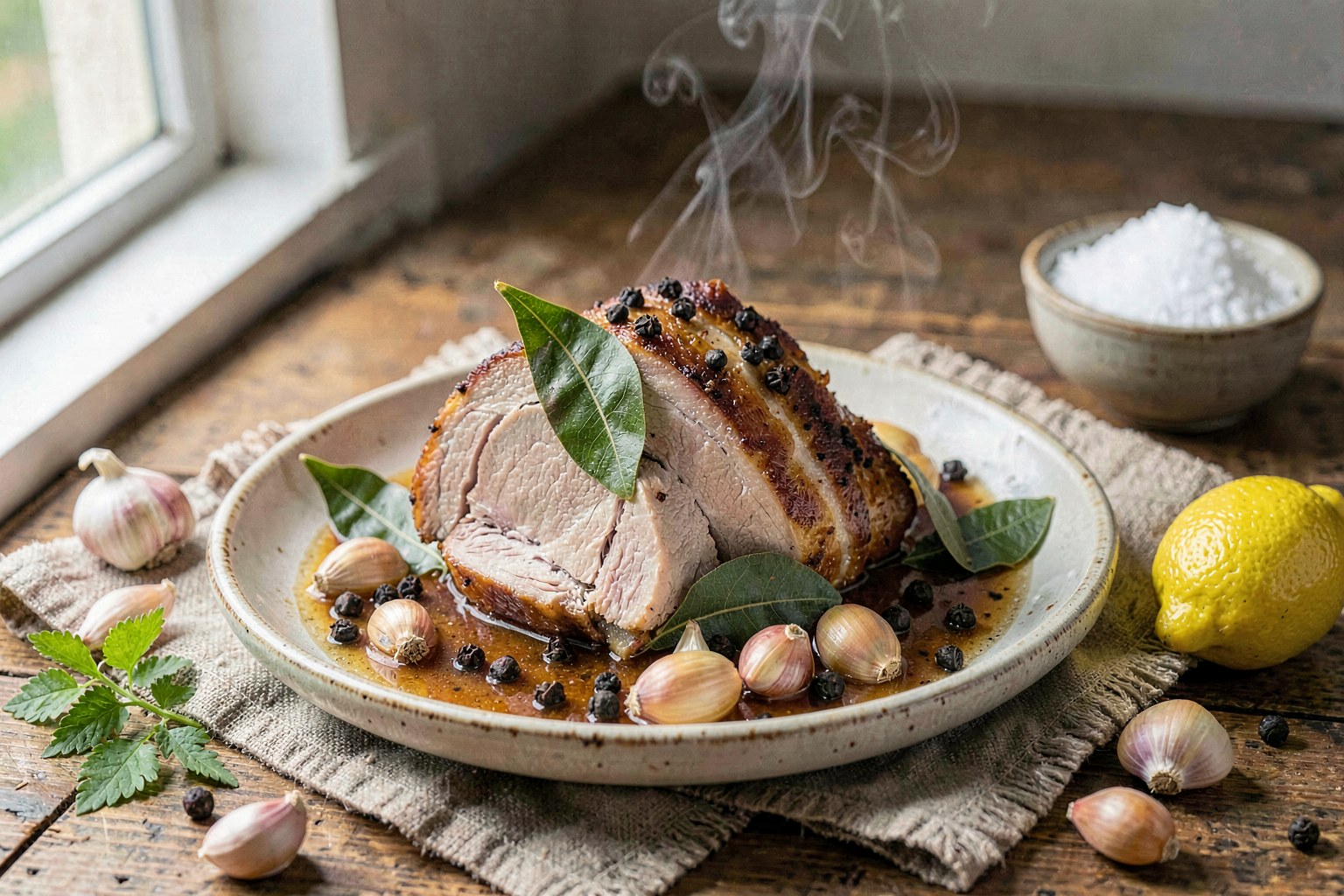
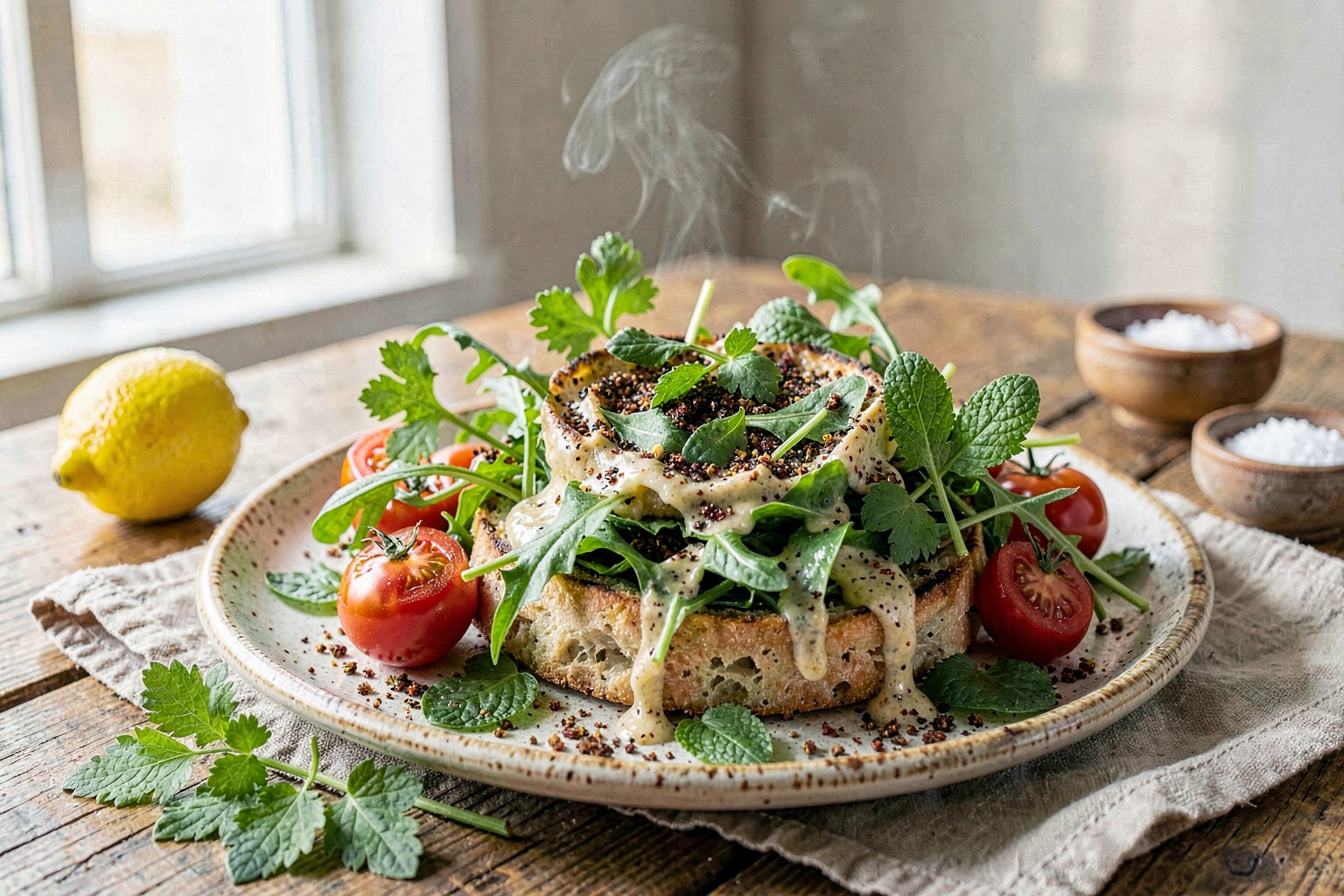
Palestinian Fattoush with Sumac & Sprouted Pita
A vibrant Levantine garden salad featuring crisp sprouted spelt pita, fresh herbs, and a zesty sumac dressing. This version honors the tradition of using toasted bread to add texture while prioritizing nutrient-dense, polyphenol-rich ingredients and zero refined sugar.
A little context
In Palestinian tradition, Fattoush is a 'poor man's salad' designed to stretch ingredients and prevent waste by toasting stale bread. We honor this thrift by using fresh sprouted grain pita for better digestibility and replacing commercial pomegranate molasses (often laden with corn syrup) with a date-sweetened reduction. Seed oils are swapped for nutrient-dense extra-virgin olive oil to maximize the polyphenol content.
The longevity story
This dish leverages sumac, a berry rich in quercetin and other flavonoids that support vascular health and reduce oxidative stress. Extra-virgin olive oil provides oleocanthal, a potent anti-inflammatory compound, while the high fiber content from fresh vegetables and sprouted grains supports stable blood sugar and gut microbiome diversity. The inclusion of raw garlic and lemon juice further boosts immune function and aids mineral absorption.
Method
- 01
Soak the onion
Slice the red onion thinly and submerge in a bowl of ice water. This mellows the sulfur compounds and keeps the slices crisp for the salad.
- 02
Toast the pita
Heat the cast-iron skillet over medium heat. Add pita triangles in a single layer (work in batches if needed). Toast for 2-3 minutes per side until golden and crisp. Drizzle lightly with 1 tsp olive oil if they seem too dry. Transfer to a wire rack to cool.
- 03
Toast the pine nuts
In the same skillet, add pine nuts. Toast over low-medium heat for 2-3 minutes, shaking the pan frequently, until fragrant and lightly golden. Watch closely as they burn easily. Set aside.
- 04
Prepare the dressing
In the mortar, crush the garlic and salt into a paste. Add the sumac and lemon juice, then slowly emulsify with the olive oil and pomegranate reduction. Taste and adjust salt or acid as needed.
- 05
Prep the vegetables
Drain the onions. In the large bowl, combine the romaine, arugula, parsley, mint, tomatoes, cucumbers, radishes, and chickpeas.
- 06
Assemble and serve
Pour the dressing over the greens and toss gently to coat. Top with the cooled toasted pita and pine nuts immediately before serving to maintain crunch.
Nutrition facts
Per serving · 1 of 4- — Saturated
- 6 g
- — Polyunsaturated
- 10 g
- Carbohydrates
- 85 g
- — Fiber
- 16 g
- — Sugars
- 10 g
- Cholesterol
- 0 mg
- Sodium
- 1199 mg
- Potassium
- 1475 mg
Estimated from USDA FoodData Central for matched ingredients (88% ingredient coverage). Values vary with brand, preparation, and exact measurements.
Pro tips
- ✦Source sumac carefully: high-quality sumac is deep red and smells tangy; pale powder indicates age and lost potency.
- ✦Toast pita just before serving; if it sits too long, the dressing wilts the bread and softens the texture.
- ✦Always crush garlic and let it rest for 10 minutes before adding acid to activate the allicin enzyme for maximum immune benefit.
- ✦If fresh pomegranate molasses is unavailable, reduce 1 cup 100% pomegranate juice with 2 pitted dates until syrupy.
Shop this recipe
As an Amazon Associate we earn from qualifying purchases.
Substitutions
- sprouted spelt pita → sourdough einkorn pita (einkorn is an ancestral grain with lower gluten sensitivity for some)
- pine nuts → toasted walnuts or pumpkin seeds (walnuts add omega-3s, seeds add magnesium)
- chickpeas → cooked lentils or white beans (maintains protein and fiber content)
Storage
Store dressing and toasted pita separately in airtight glass containers. Veggies keep 2 days in fridge; assemble just before eating to prevent sogginess.
What to serve with it
- Matcha green tea (rich in EGCG)
- Sparkling water with fresh lemon and mint
- Dry herbal tea like hibiscus or chamomile
FAQ
Can I make this gluten-free?+
Yes, substitute the spelt pita with certified gluten-free oat or almond flour pita, ensuring no seed oils are used in baking.
Is store-bought pomegranate molasses safe?+
Most contain added cane sugar or corn syrup. Look for brands with only pomegranate juice or make your own reduction with dates.
Why use sprouted grain?+
Sprouting reduces phytic acid and improves mineral absorption and digestibility compared to conventional flour.
Share this recipe
Notes from the community
Sign in to leave a note.
No notes yet — be the first.
You might also like