Levantine Garden Manakish with Herbed Labneh
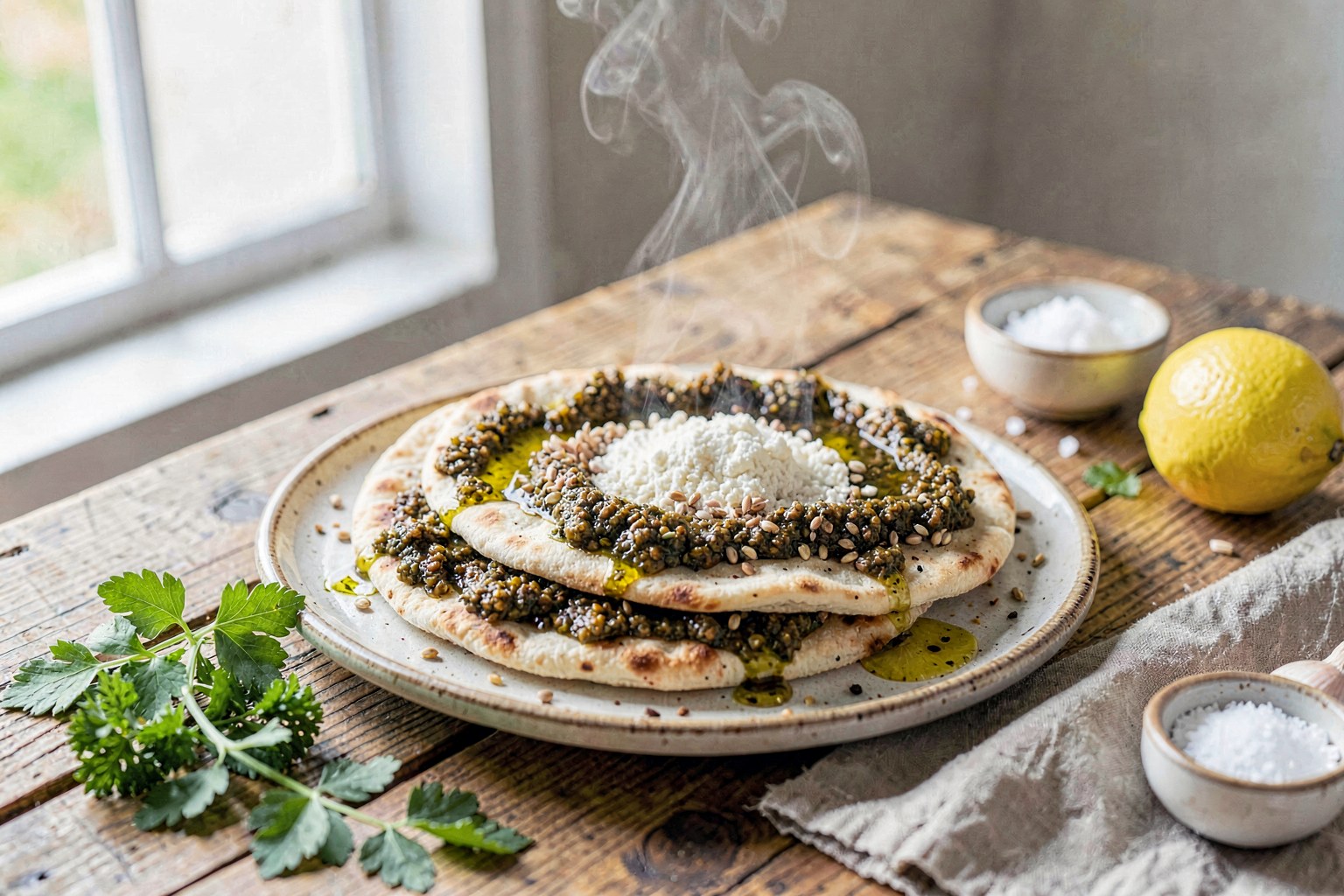
A sun-drenched Levantine breakfast featuring a yeast-leavened flatbread baked until crisp, then immediately drenched in a vibrant za'atar paste made with extra-virgin olive oil and topped with cooling, probiotic-rich labneh. This dish balances the earthy, thyme-forward notes of the herbs with the tangy creaminess of fermented goat or sheep milk cheese, delivering a nutrient-dense start to the day without refined sugars or industrial seed oils.
A little context
Manakish is the traditional Levantine 'pizza,' historically eaten at dawn to fuel the day's labor, often topped with cheese, sumac, or za'atar. We honor this heritage by strictly using cold-pressed EVOO instead of the seed oils sometimes found in modern commercial versions, and by ensuring the labneh is strained from organic, pasture-raised milk to maximize nutrient density. No refined sugar is used to balance the dough; the fermentation of the yeast provides the necessary sweetness and depth, keeping the flavor profile authentic and bio-hacking compliant.
The longevity story
This recipe leverages the polyphenol power of high-quality extra-virgin olive oil (EVOO) and wild thyme (za'atar) to combat oxidative stress, while the fermentation of the labneh introduces live cultures essential for gut microbiome diversity. The use of sprouted spelt flour (or traditional white flour in moderation) provides a lower glycemic impact than refined wheat, and the absence of seed oils prevents the ingestion of pro-inflammatory omega-6 linoleic acid. The combination of healthy monounsaturated fats and fiber supports stable blood glucose levels, aligning with longevity protocols.
Method
- 01
Activate the Yeast
In a small bowl, whisk the warm filtered water (38°C/100°F) with the yeast. Let sit for 5–10 minutes until foamy. If it doesn't foam, the yeast is dead; discard and start fresh.
- 02
Mix the Dough
In a large mixing bowl, combine the sprouted spelt flour and sea salt. Pour in the activated yeast mixture. Mix with a wooden spoon or your hands until a shaggy dough forms. It will be tacky but manageable.
- 03
Knead and Rest
Turn the dough onto a lightly floured surface (use spelt flour). Knead for 5–7 minutes until smooth and elastic. Form into a ball, place in a lightly oiled bowl (use a drop of EVOO), cover with a damp cloth, and let rise in a warm spot for 1–1.5 hours, or until doubled in size.
- 04
Prepare the Za'atar Paste
While the dough rises, whisk the extra-virgin olive oil and za'atar blend in a small bowl until it forms a thick, sand-like paste. Set aside. Do not add water; the oil is the binder.
- 05
Preheat the Oven
Place your baking steel or stone on the middle rack. Preheat the oven to its highest setting (260°C / 500°F) for at least 45 minutes to ensure the stone is fully saturated with heat.
- 06
Shape the Manakish
Divide the risen dough into 4 equal portions. On a floured surface, stretch or roll each portion into a thin oval or round (about 3mm thick). Transfer to a piece of parchment paper.
- 07
Apply the Topping
Generously spread the za'atar paste over the surface of each dough round, leaving a tiny border. Ensure an even coating; this prevents the bread from drying out during baking.
- 08
Bake
Slide the parchment with the manakish onto the hot baking steel. Bake for 8–10 minutes until the edges are golden brown and the za'atar is fragrant. The oil should sizzle slightly.
- 09
Prepare the Labneh
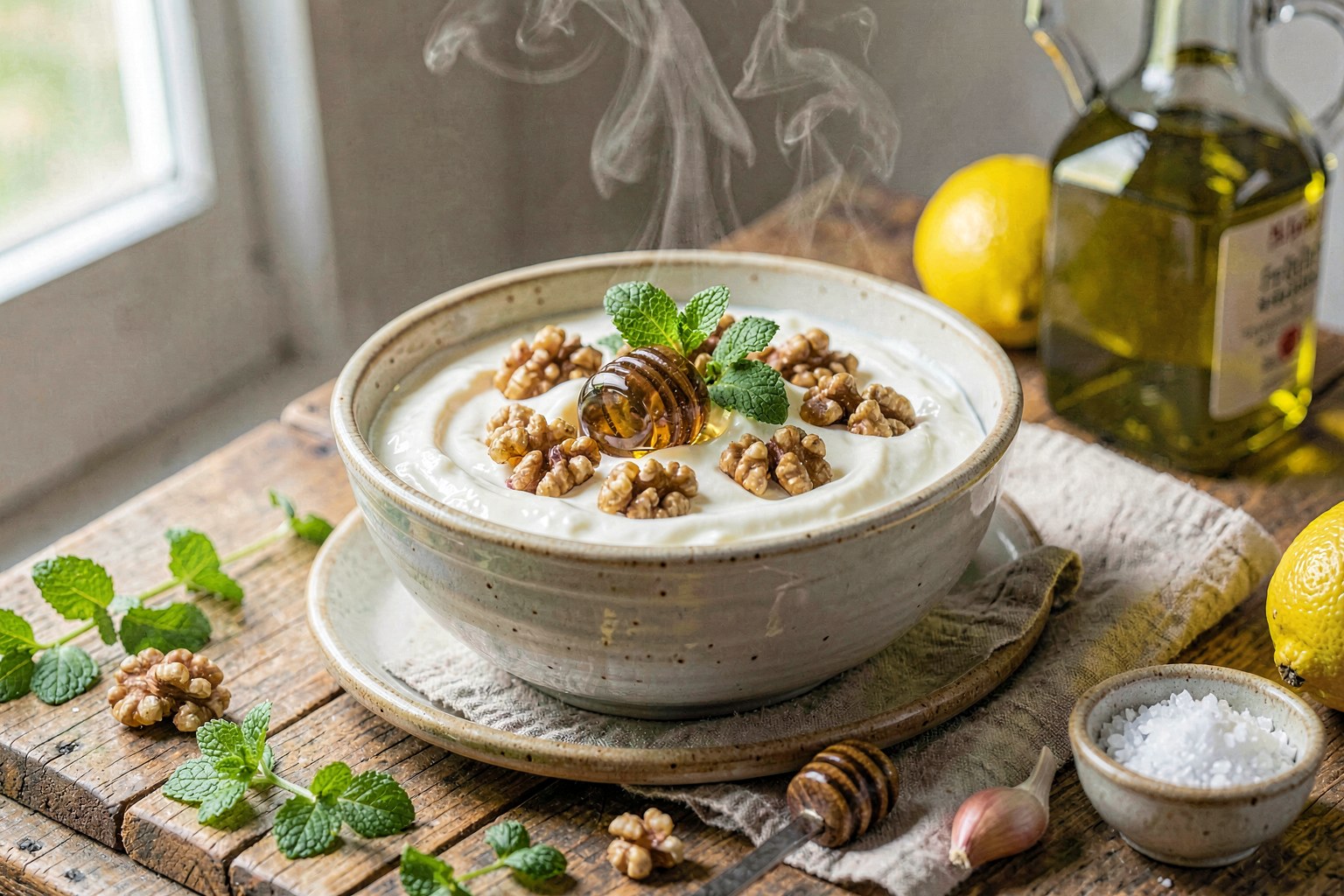
While the bread bakes, mix the labneh with the chopped fresh mint and parsley. Season with a tiny pinch of sea salt if needed. The consistency should be thick and scoopable.
- 10
Assemble and Serve
Remove the manakish from the oven. Immediately top each hot flatbread with a generous dollop of the herbed labneh. Sprinkle with fresh sumac and a final drizzle of high-quality EVOO. Serve warm.
Nutrition facts
Per serving · 1 of 4- — Saturated
- 8 g
- — Polyunsaturated
- 3 g
- Carbohydrates
- 46 g
- — Fiber
- 6 g
- — Sugars
- 0 g
- Cholesterol
- 18 mg
- Sodium
- 1111 mg
- Potassium
- 240 mg
Estimated from USDA FoodData Central for matched ingredients (80% ingredient coverage). Values vary with brand, preparation, and exact measurements.
Pro tips
- ✦Sourcing Za'atar: Look for a blend where thyme and sumac are the first two ingredients; avoid blends with added sugar or cornstarch. If making your own, use dried wild thyme (Origanum syriacum) if you can find it for authentic potency.
- ✦The Oil Ratio: The health benefit comes from the polyphenols in the oil. Do not skimp on the EVOO in the topping; it acts as a preservative for the herbs and a vehicle for fat-soluble nutrients.
- ✦Labneh Texture: If your labneh is too runny, strain it through a cheesecloth-lined sieve in the fridge for 4 hours to achieve a creamy, cheese-like consistency.
- ✦Dough Hydration: Sprouted flours absorb more water than regular flour. If the dough feels too dry, add water 1 tablespoon at a time; it should feel like a soft earlobe, not stiff.
Shop this recipe
As an Amazon Associate we earn from qualifying purchases.
Substitutions
- sprouted spelt flour → organic einkorn flour or white all-purpose flour (Einkorn is an ancient grain with higher protein and lower gluten impact; white flour is acceptable in moderation for this specific cultural dish if gluten sensitivity is not a primary concern.)
- sheep/goat milk labneh → full-fat coconut yogurt (strained) (For a strictly vegan version, use unsweetened coconut yogurt, though the probiotic profile and mineral content will differ from dairy.)
- za'atar blend → homemade blend (3 parts thyme, 1 part sumac, 1 part toasted sesame seeds, 1/2 part sea salt) (Toasting the sesame seeds briefly in a dry pan unlocks their oils and enhances the nutty aroma.)
Storage
Store baked manakish in an airtight glass container at room temperature for up to 24 hours (best eaten fresh). Re-crisp in a toaster oven or skillet. Labneh must be stored in the fridge in a glass jar for up to 5 days.
What to serve with it
- Hot green tea (sencha or matcha) to boost polyphenol intake
- Sparkling water with a wedge of fresh lemon and a pinch of sea salt
- A small side of sliced cucumbers and radishes for crunch and hydration
FAQ
Can I use regular white flour instead of sprouted spelt?+
Yes, traditional manakish often uses white flour. While sprouted spelt offers better digestibility and a lower glycemic response, the dish remains compliant as long as no refined sugar or seed oils are added. If using white flour, reduce the water slightly as it absorbs less moisture.
Why is the topping so oily?+
In the Levantine tradition, the oil is not just a binder; it is a primary ingredient that keeps the bread moist and delivers the health benefits of EVOO. It should soak into the dough slightly, not sit on top as a pool.
Share this recipe
Notes from the community
Sign in to leave a note.
No notes yet — be the first.
You might also like