Fattoush Beirut (Levantine Garden Tradition)
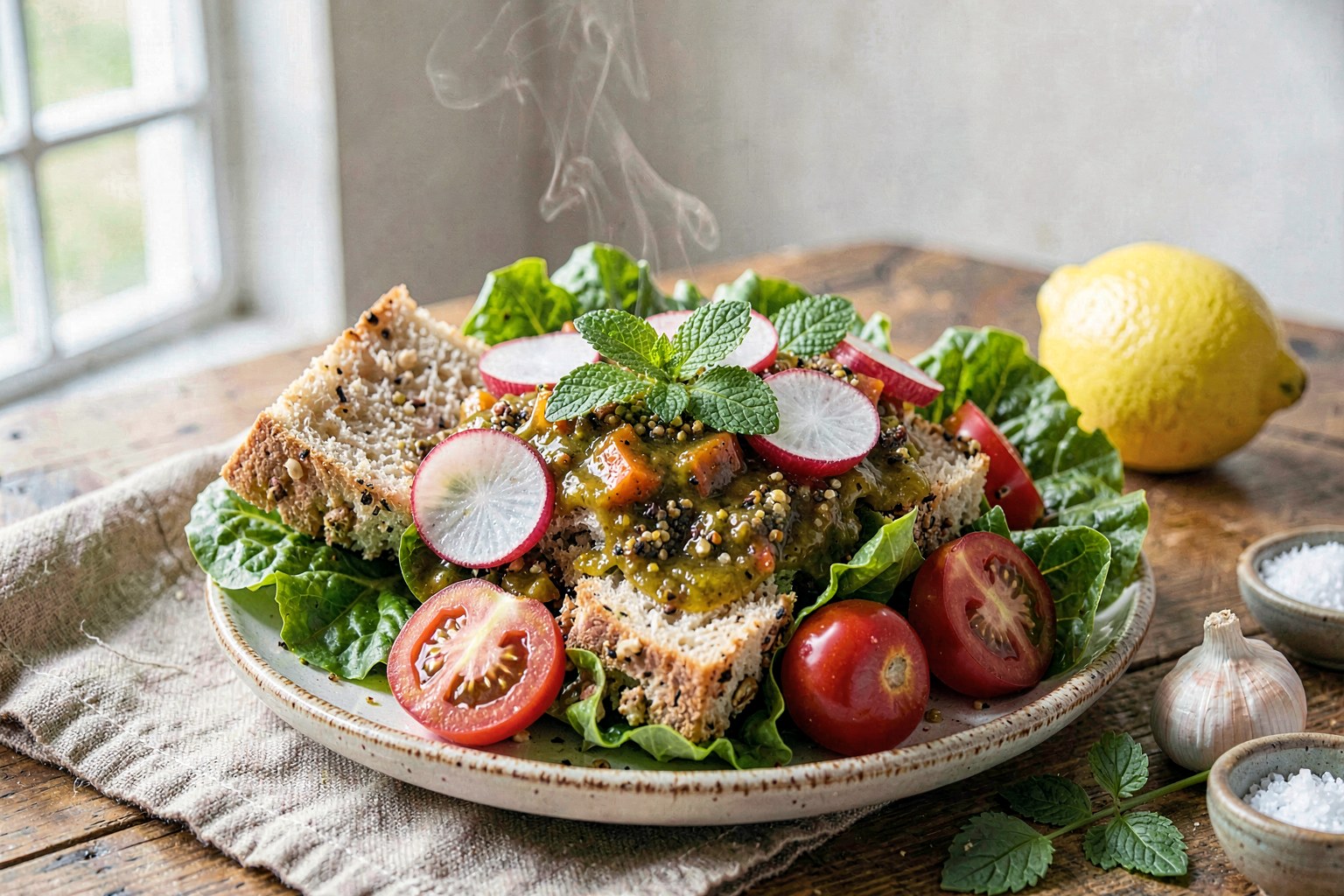
A vibrant Levantine bread salad featuring crispy sprouted-grain pita, crisp radishes, vine-ripened tomatoes, and fresh mint. The dressing is a bright, sumac-heavy emulsion of extra-virgin olive oil and lemon, delivering deep umami without refined sugar or seed oils.
A little context
Fattoush is traditionally a way to use stale pita and garden surplus in Beirut. We honor this by using sprouted einkorn pita instead of refined white flour and swapping industrial seed oils for cold-pressed extra-virgin olive oil. No sugar is added to the dressing, relying on the natural sweetness of ripe tomatoes and a touch of date syrup only if balancing acidity is needed.
The longevity story
This dish leverages sumac, a tart berry rich in polyphenols and antioxidants that support metabolic health. Extra-virgin olive oil provides oleocanthal, a potent anti-inflammatory compound similar to ibuprofen. The inclusion of organic pickled turnips introduces live probiotics for gut health, while chickpeas add soluble fiber to stabilize blood sugar.
Method
- 01
Toast the Pita
Preheat oven to 180°C (350°F). Brush pita triangles with 30 ml olive oil and spread on a baking sheet. Bake for 10-12 minutes until golden and crisp. Set aside to cool completely.
- 02
Prep the Vegetables
While pita bakes, wash and dry all produce thoroughly. Chop tomatoes, cucumber, radishes, lettuce, and herbs. Keep turnips separate until assembly.
- 03
Make the Dressing
In a small jar or bowl, combine lemon juice, minced garlic, sumac, and salt. Whisk in 120 ml extra-virgin olive oil slowly until emulsified. Taste; add a few drops of date syrup only if the lemon is too sharp.
- 04
Combine Base
In the large wooden bowl, toss lettuce, tomatoes, cucumber, radishes, chickpeas, parsley, and mint with half of the dressing. Let sit for 5 minutes to allow flavors to meld.
- 05
Add Crunch and Ferment
Just before serving, fold in the cooled crispy pita and chopped pickled turnips. Drizzle with the remaining dressing. Toss gently to coat without crumbling the pita.
- 06
Serve Immediately
Serve at room temperature to preserve the texture of the pita and the integrity of the olive oil fats.
Nutrition facts
Per serving · 1 of 4- — Saturated
- 6 g
- — Polyunsaturated
- 4 g
- Carbohydrates
- 21 g
- — Fiber
- 7 g
- — Sugars
- 8 g
- Cholesterol
- 0 mg
- Sodium
- 622 mg
- Potassium
- 1102 mg
Estimated from USDA FoodData Central for matched ingredients (80% ingredient coverage). Values vary with brand, preparation, and exact measurements.
Pro tips
- ✦Source sumac specifically from the Middle East or a specialty spice shop; generic blends often contain fillers like salt or cornmeal.
- ✦Choose pita labeled 'sprouted' or 'whole grain' to avoid refined white flour, which spikes insulin.
- ✦Dry your herbs thoroughly after washing; wet greens dilute the dressing and make the pita soggy.
- ✦If the dressing separates, whisk again before drizzling; EVOO solidifies in the fridge, so bring to room temp first.
- ✦For maximum polyphenol retention, use the pita within 24 hours of toasting.
Shop this recipe
As an Amazon Associate we earn from qualifying purchases.
Substitutions
- sprouted einkorn pita → gluten-free brown rice flatbread (to make the dish gluten-free; toast similarly)
- pickled turnips → homemade fermented kimchi (maintains gut-health benefit, changes flavor profile)
Storage
Store dressing and salad base separately in glass containers in the fridge for up to 2 days. Keep pita in an airtight container at room temperature. Assemble only when ready to eat to maintain texture.
What to serve with it
- Matcha green tea
- Sparkling water with fresh lemon
- Dry red wine (low sulfite)
- Unsweetened fermented kombucha
FAQ
Why is sumac important in this recipe?+
Sumac is a dried berry rich in polyphenols and antioxidants. It provides the signature tartness without needing vinegar or added sugar.
Can I use store-bought pita?+
Only if it is certified sprouted whole grain. Standard supermarket pita is often made with white flour and preservatives, which violates Blueprint principles.
Is this low-carb?+
It is low-glycemic due to the fiber and healthy fats, but contains carbohydrates from the pita and chickpeas. Adjust portion sizes if strictly managing carb intake.
Share this recipe
Notes from the community
Sign in to leave a note.
No notes yet — be the first.
You might also like