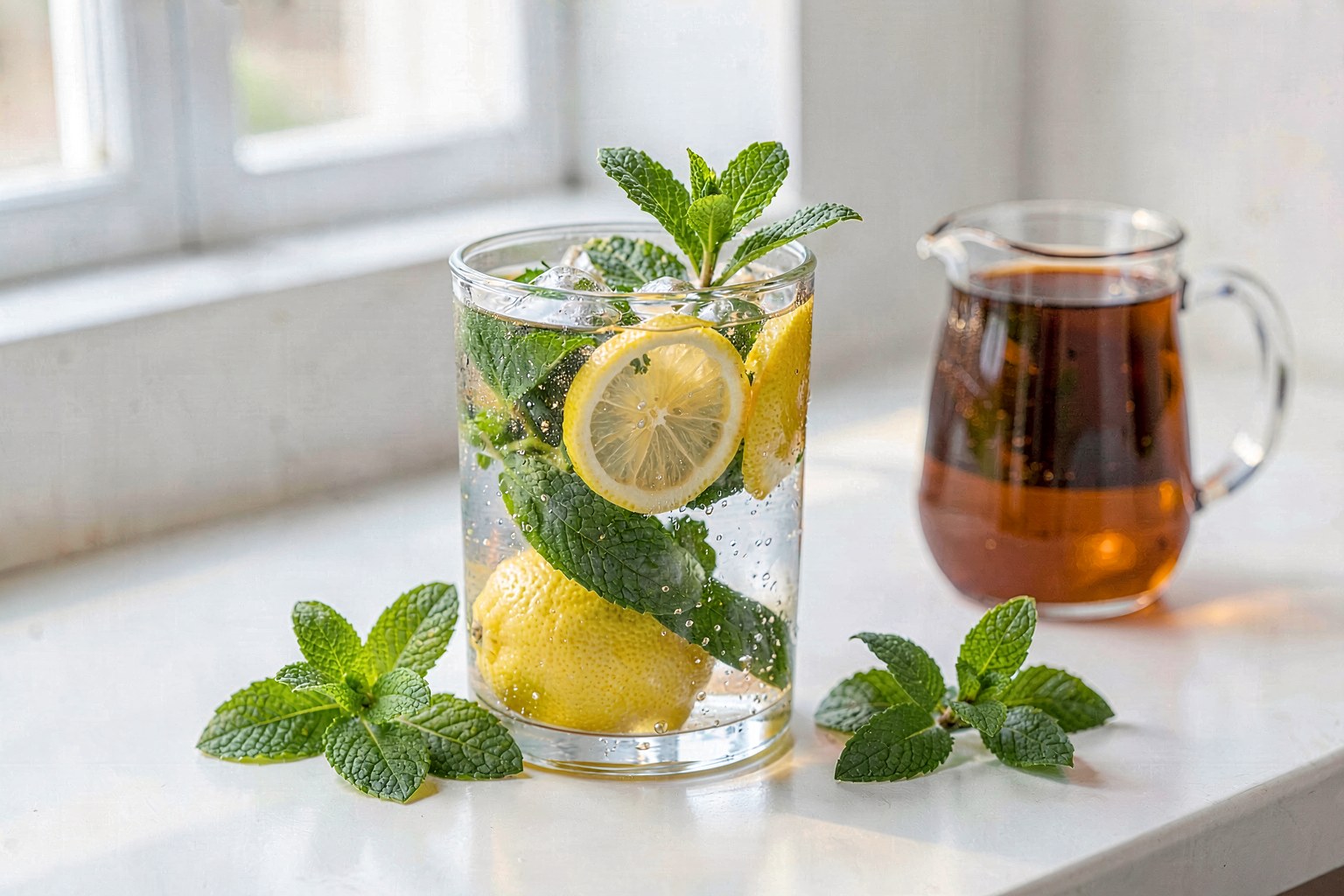
Cretan Lemon Water (Mediterranean Blue Zone Tradition)
A revitalizing, cold-infused elixir born from the Cretan diet, blending the bright acidity of organic lemons with the cooling, antimicrobial properties of fresh wild mint. Sweetened only by the floral notes of raw, unfiltered honey, this drink delivers a potent dose of polyphenols without spiking blood glucose, serving as the perfect hydration companion for longevity-focused living.
A little context
In the Blue Zones of Crete, water is rarely plain; it is often enhanced with local herbs and citrus to encourage hydration and aid digestion after meals. We honor this tradition by strictly avoiding the refined sugars common in modern lemonades and the artificial flavorings found in bottled versions. Instead, we rely on the integrity of cold-pressed organic lemons, foraged or garden-grown mint, and raw honey to create a beverage that is as nourishing as it is refreshing.
The longevity story
This infusion leverages the high vitamin C content of fresh lemons to support collagen synthesis and immune function, while the limonoids provide antioxidant protection. Fresh mint leaves contribute rosmarinic acid, a compound with demonstrated anti-inflammatory and digestive soothing properties. The raw honey, used sparingly, introduces trace enzymes and flavonoids that are destroyed by pasteurization, offering a low-glycemic sweetness that respects the body's insulin response.
Method
- 01
Prepare the lemons
Thoroughly scrub the organic lemons under cool running water. Slice them into thin, uniform rounds (approx. 4mm). Do not peel; the zest contains the highest concentration of polyphenols.
- 02
Activate the mint
Take the fresh mint leaves and gently clap them between your palms or use a muddler to press them lightly in the bottom of the glass pitcher. You want to see the leaves turn a slightly darker green, indicating the essential oils have been released, but avoid tearing them into tiny pieces.
- 03
Dissolve the honey
Add the raw honey to the pitcher with the mint. Pour in just 100 ml (½ cup) of the filtered water (room temperature or slightly warm, not hot) and stir vigorously until the honey is fully dissolved. Using hot water would destroy the delicate enzymes in the raw honey.
- 04
Combine and steep
Add the lemon slices to the honey-mint mixture. Pour in the remaining chilled filtered water. Stir gently to combine. Cover the pitcher with the lid.
- 05
Cold infuse
Place the pitcher in the refrigerator for a minimum of 20 minutes, ideally 2 hours. This slow, cold extraction pulls the limonoids and vitamin C from the lemon peel and the rosmarinic acid from the mint without extracting the bitter tannins that heat would release.
- 06
Serve
Pour into tall glasses over ice if desired. Strain the leaves and lemon slices if you prefer a clear drink, or leave them in for a continuous infusion. Consume immediately for peak freshness.
Nutrition facts
Per serving · 1 of 4- — Saturated
- 0 g
- — Polyunsaturated
- 0 g
- Carbohydrates
- 0 g
- — Fiber
- 0 g
- — Sugars
- 0 g
- Cholesterol
- 0 mg
- Sodium
- 2 mg
- Potassium
- 25 mg
Estimated from USDA FoodData Central for matched ingredients (25% ingredient coverage). Values vary with brand, preparation, and exact measurements.
Pro tips
- ✦Source organic lemons; the non-organic peel often retains waxes and pesticides that concentrate in the infusion.
- ✦Bruise, don't shred: When handling mint, the goal is to rupture the oil glands, not to pulverize the leaf tissue which can lead to a grassy, bitter taste.
- ✦Raw honey only: Do not substitute with agave or maple syrup for this specific Blue Zone tradition; the specific enzymatic profile of raw honey pairs uniquely with the lemon acids.
- ✦Infusion window: Do not let this sit in the fridge for more than 24 hours, as the lemon peel can eventually release bitter compounds and the mint can become slimy.
Substitutions
- fresh wild mint → fresh basil or lemon balm (Basil adds a peppery, anise-like depth; lemon balm offers a milder, more citrus-forward profile. Both are rich in antioxidants.)
- raw honey → monk fruit syrup or stevia drops (For a zero-calorie, strictly low-glycemic Blueprint variation, use high-quality monk fruit syrup. Note that you lose the enzymatic benefits of raw honey.)
Storage
Keep refrigerated in a sealed glass container for up to 24 hours. The flavor profile is best within the first 12 hours. Discard if the mint turns dark brown or the liquid becomes cloudy.
What to serve with it
- Serve alongside a light Greek salad with Kalamata olives and extra virgin olive oil
- Pair with a morning cup of matcha or green tea for a double dose of catechins
- Excellent as a pre-meal hydration tonic before a pescatarian dinner of grilled sardines
FAQ
Can I use bottled lemon juice?+
No. Bottled juice often contains preservatives like sodium benzoate and lacks the vital polyphenols found in the fresh peel and flesh. For a Blueprint-aligned drink, fresh is non-negotiable.
Is the honey too much sugar?+
We use 30g total for 4 servings, which is 7.5g per serving. This is a minimal amount used to balance acidity, keeping the glycemic load low while providing antimicrobial benefits.
Share this recipe
Notes from the community
Sign in to leave a note.
No notes yet — be the first.
You might also like