Cretan Fava Soup with Crispy Wild Greens & Golden Olive Oil
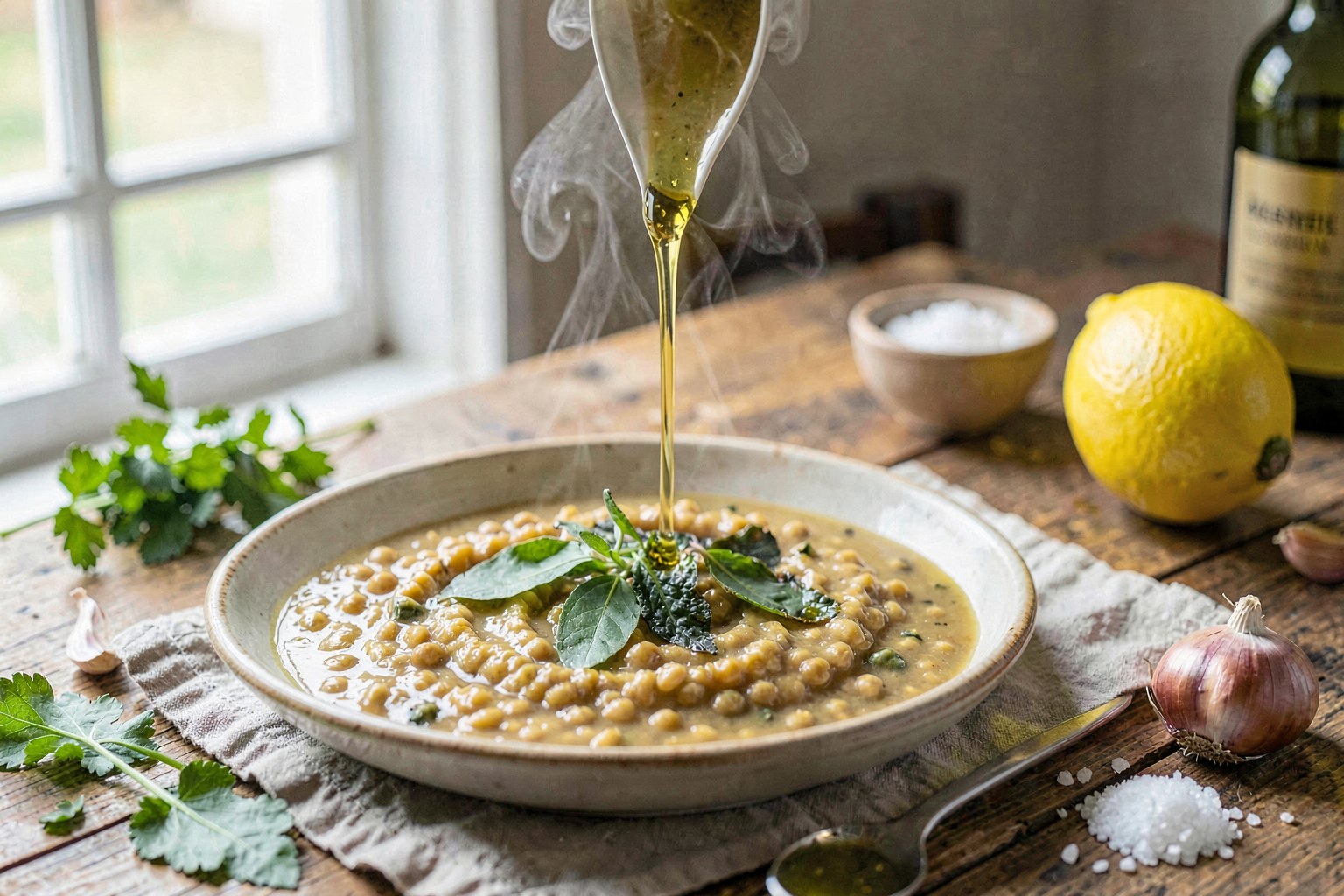
A velvety, golden puree made from yellow split peas (fava) that are simmered until they melt into a rich, earthy broth. This Blue Zone staple is finished with a generous pour of polyphenol-rich extra-virgin olive oil and topped with crispy, fried wild greens for a textural contrast that honors the Cretan tradition.
A little context
In the Greek islands, particularly Santorini and Crete, 'fava' refers not to broad beans but to yellow split peas, a staple since Minoan times. Traditional recipes often call for frying the topping in seed oils or adding a touch of sugar to balance the bitterness, which we have corrected here by using cold-pressed extra-virgin olive oil and relying on the natural sweetness of caramelized onions. We honor the tradition by using the specific split pea variety and the 'drizzle' technique, but we strip away the ultra-processed shortcuts to align with modern longevity science.
The longevity story
This dish is a powerhouse of soluble fiber from yellow split peas, which supports gut microbiome diversity and stabilizes blood glucose. The defining health feature is the liberal use of high-quality extra-virgin olive oil, delivering potent polyphenols like oleuropein and hydroxytyrosol that drive anti-inflammatory pathways. The addition of wild greens (such as dandelion or chicory) introduces bitter compounds that stimulate digestive enzymes and provide a dense profile of vitamins A, C, and K without adding glycemic load.
Method
- 01
Sauté the Aromatics
In a heavy-bottomed pot, heat 60 ml (1/4 cup) of extra-virgin olive oil over medium heat. Add the finely diced yellow onion and a pinch of salt. Sauté gently for 8–10 minutes until the onions are soft and translucent but not browned; we want to preserve their natural sugars, not caramelize them aggressively.
- 02
Simmer the Peas
Add the rinsed yellow split peas and the bay leaf to the pot. Pour in the hot filtered water. Increase heat to bring to a boil, then immediately reduce to a low simmer. Cover the pot, leaving the lid slightly ajar to allow steam to escape. Cook for 35–45 minutes, stirring occasionally, until the peas are completely falling apart and the liquid has thickened significantly.
- 03
Blend to Silk
Remove the bay leaf. Using an immersion blender directly in the pot (or transferring in batches to a high-speed blender), puree the soup until it is perfectly smooth and velvety. If the soup is too thick, add a splash of hot water to reach a creamy, pourable consistency. Stir in half of the remaining extra-virgin olive oil now to emulsify the fats into the starch.
- 04
Fry the Greens
While the soup simmers, heat the remaining 120 ml (1/2 cup) of olive oil in a small sauté pan over medium-high heat. Once the oil is shimmering but not smoking, add the wild greens in a single layer (you may need to do this in two batches). Fry for 30–60 seconds until crisp and darkened, then immediately remove with a slotted spoon to a paper towel-lined plate. Season lightly with sea salt while hot.
- 05
Season and Serve
Taste the soup and adjust seasoning with sea salt and the fresh lemon juice. The lemon is crucial to cut through the richness of the oil and peas. Ladle the hot soup into deep bowls. Top generously with the crispy fried greens, a final drizzle of high-quality extra-virgin olive oil, and a crack of black pepper if desired.
Nutrition facts
Per serving · 1 of 4- — Saturated
- 7 g
- — Polyunsaturated
- 5 g
- Carbohydrates
- 43 g
- — Fiber
- 15 g
- — Sugars
- 3 g
- Cholesterol
- 0 mg
- Sodium
- 510 mg
- Potassium
- 823 mg
Estimated from USDA FoodData Central for matched ingredients (78% ingredient coverage). Values vary with brand, preparation, and exact measurements.
Pro tips
- ✦Source yellow split peas labeled 'Santorini Fava' or 'Cretan Fava' for the authentic texture and flavor profile; standard grocery store split peas can be grittier.
- ✦When selecting wild greens, look for vibrant, turgid leaves without yellowing; dandelion greens should be deep green and slightly bitter in smell.
- ✦Do not overcook the greens; they should be crispy like a chip, not wilted and soggy. The oil temperature is key—drop a small piece of leaf first to test the sizzle.
- ✦For the best polyphenol intake, use a fresh bottle of extra-virgin olive oil that was harvested within the last 12 months, as older oil loses its antioxidant power.
Shop this recipe
As an Amazon Associate we earn from qualifying purchases.
Substitutions
- wild greens (chicory/dandelion) → fresh kale or spinach (kale can be fried similarly; spinach should be wilted quickly and added at the end for a softer texture)
- filtered water → homemade vegetable broth (ensure the broth is made from fresh veggies and herbs only, with no added salt or seed oils)
Storage
Store in an airtight glass container in the refrigerator for up to 4 days. The soup will thicken as it cools; reheat gently with a splash of water. The crispy greens are best made fresh, but you can store them in an airtight container for 6 hours. The soup freezes exceptionally well for up to 3 months; thaw overnight in the fridge.
What to serve with it
- A glass of dry, organic Assyrtiko white wine or a crisp red like Xinomavro
- Sparkling water with a wedge of lemon and a sprig of oregano
- A side of raw, fermented olives (kalamata) for extra probiotics and fat-soluble vitamins
FAQ
Why do we use so much olive oil?+
In the Mediterranean diet, olive oil is the primary fat source. The polyphenols are fat-soluble and require the oil for absorption. We use high-quality, cold-pressed oil specifically for its anti-inflammatory properties, not just for cooking.
Can I make this with whole yellow peas (not split)?+
No, whole yellow peas require soaking and much longer cooking times (2+ hours) and will not achieve the same creamy, melt-in-your-mouth texture as split peas.
Share this recipe
Notes from the community
Sign in to leave a note.
No notes yet — be the first.
You might also like