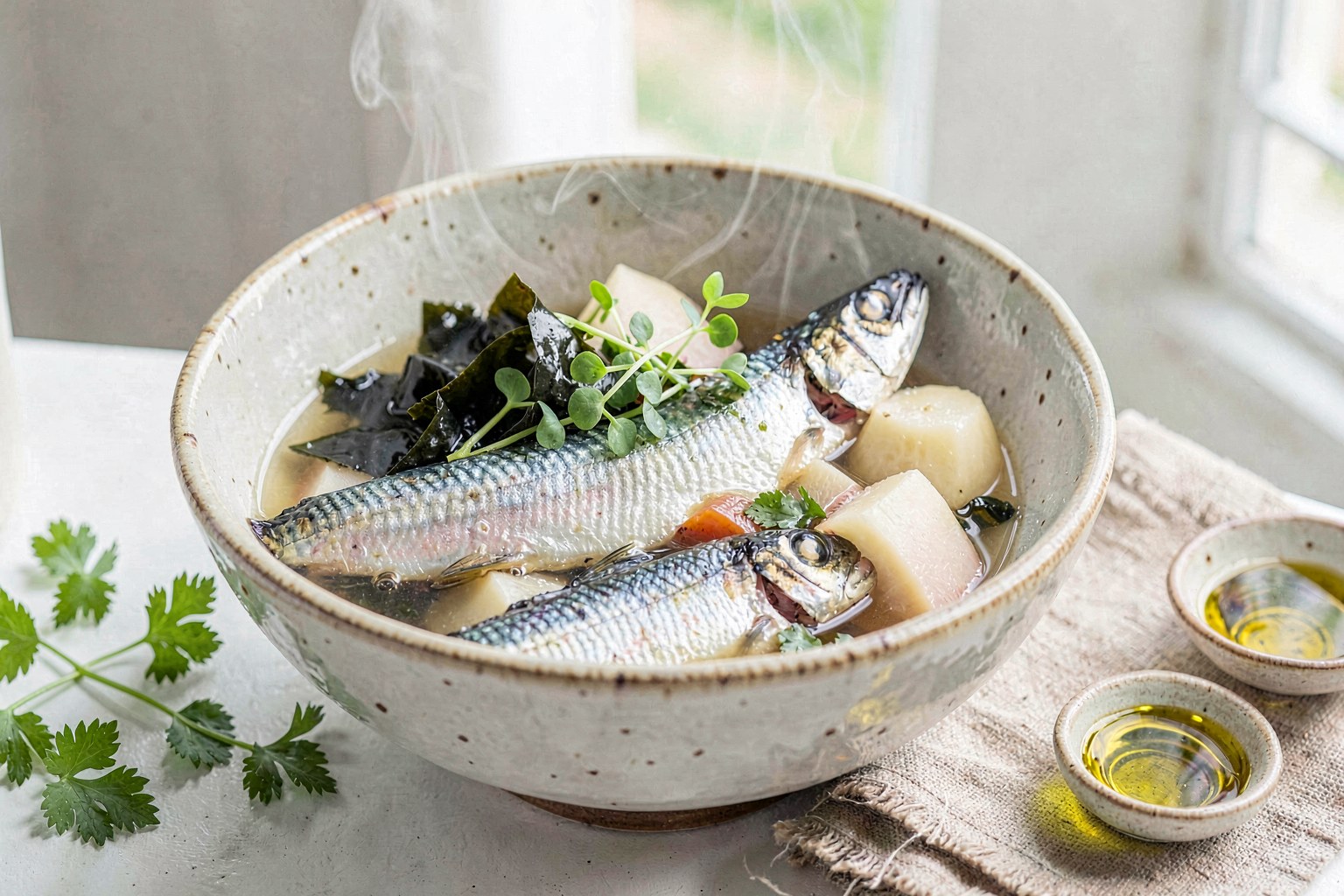
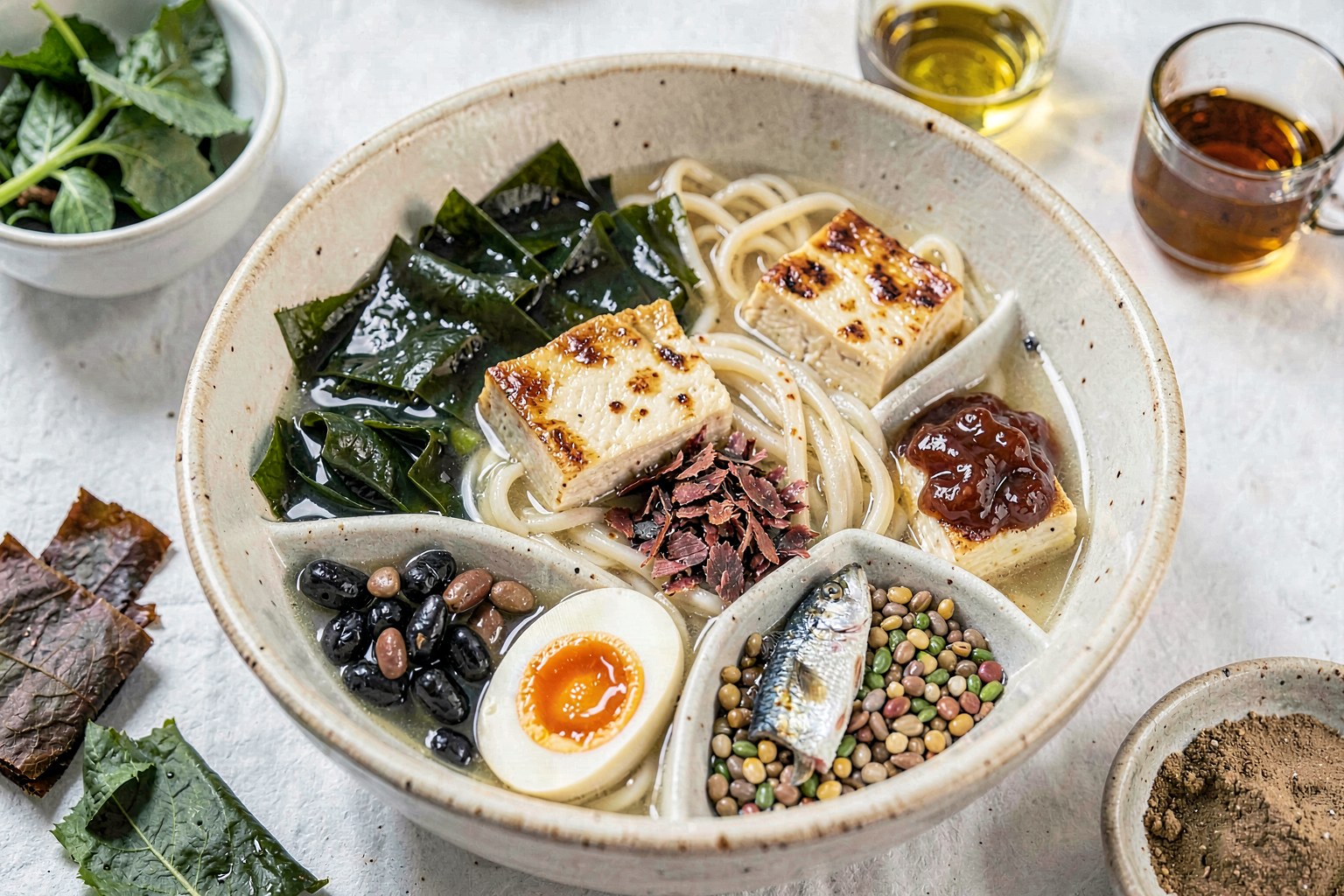
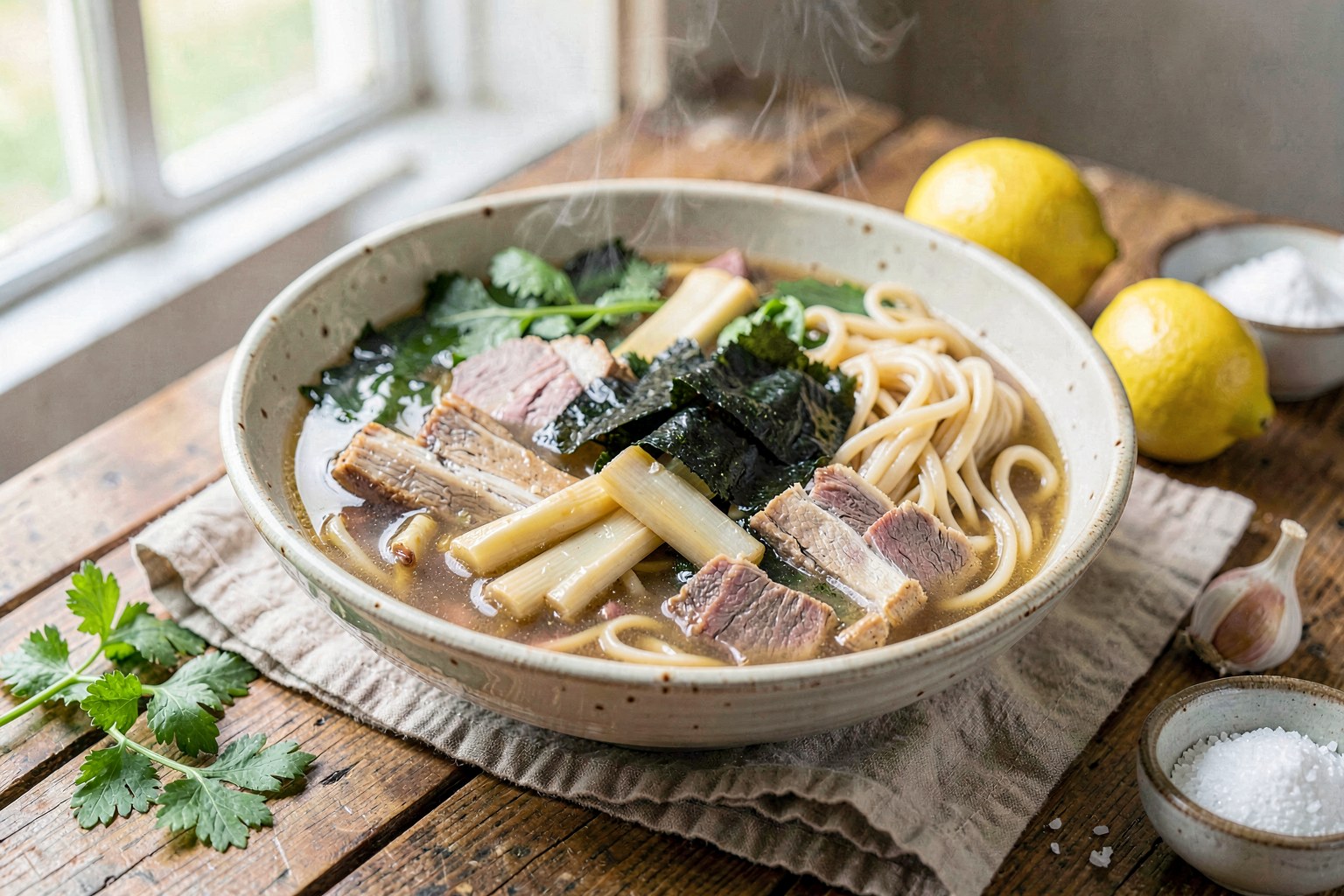
Okinawan Kishimen-Style Broth Bowl
Flat rice noodles swim in a rich, pasture-raised pork bone broth layered with bamboo shoots, seaweed, and fresh greens. This dish delivers the savory depth of traditional ramen without refined sugar or seed oils, focusing on collagen-rich stocks and polyphenol-dense vegetables.
A little context
This recipe adapts the Okinawan Blue Zone tradition of 'Hara Hachi Bu' (eating until 80% full) and high vegetable intake. We have swapped the traditional sugar-heavy tare for a clean date syrup and coconut aminos blend to eliminate refined sugars while preserving the umami profile.
Method
- 01
Blanch the bones
Place pork bones in the stockpot, cover with cold water, and bring to a boil for 5 minutes. Drain and rinse bones thoroughly to remove impurities that cloud the broth.
- 02
Simmer the stock
Return bones to the clean pot with 2 L filtered water, sliced ginger, and kombu. Bring to a bare simmer (do not boil) and cook for 45 minutes. The kombu should be removed after 20 minutes to prevent bitterness.
- 03
Prepare the tare
While the stock simmers, whisk together coconut aminos and date syrup in a small bowl. Taste and adjust; it should be salty-sweet but not cloying.
- 04
Cook the noodles
Boil a separate pot of salted water. Cook flat rice noodles according to package instructions until al dente. Drain and rinse briefly with warm water to prevent sticking.
- 05
Sear the pork topping
Heat avocado oil in a skillet over medium-high heat. Sear the sliced pork belly for 2-3 minutes until edges crisp. Set aside.
- 06
Blanch the greens
Drop the spinach or choy sum into the boiling noodle water for 30 seconds. Remove and drain well.
- 07
Strain the broth
Remove bones and ginger from the stock pot. Pour the broth through a chinois or fine-mesh strainer into a clean pot. Keep warm over low heat.
- 08
Assemble the bowls
Divide noodles among 4 deep bowls. Ladle hot broth over noodles. Add the tare mixture to the bottom of each bowl before adding broth, or drizzle over top.
- 09
Garnish and serve
Top with bamboo shoots, seared pork belly, blanched greens, and green onions. Serve immediately while broth is piping hot.
Pro tips
- ✦Source kombu from a trusted supplier to ensure it is harvested from clean waters free of heavy metals.
- ✦Do not overcook the rice noodles; they absorb broth quickly and can turn mushy if not timed perfectly.
- ✦For a richer broth, add a dash of miso paste (check for no sugar) at the very end, off the heat.
- ✦Blanch the greens briefly to retain their bright color and crunch.
Shop this recipe
As an Amazon Associate we earn from qualifying purchases.
Substitutions
- pasture-raised pork bones → organic chicken carcasses or beef marrow bones (adjust simmer time: chicken 30 min, beef 2+ hours)
- flat rice noodles → shirataki noodles (lower calorie, higher fiber, requires rinsing well)
- date syrup → monk fruit syrup
Storage
Store broth and noodles separately in glass containers. Broth keeps 5 days refrigerated; noodles should be eaten within 2 days. Freeze broth in portions for up to 3 months.
What to serve with it
- Hot green tea or hojicha
- Sparkling water with a wedge of yuzu or lemon
- Side of fermented pickled radish (no sugar)
FAQ
Why use coconut aminos instead of soy sauce?+
Traditional soy sauce often contains added sugar and wheat.
Can I make the broth ahead?+
Yes, the broth actually improves in flavor after 24 hours in the fridge. Make it 2 days in advance for a quick dinner assembly.
Share this recipe
Notes from the community
Sign in to leave a note.
No notes yet — be the first.
You might also like