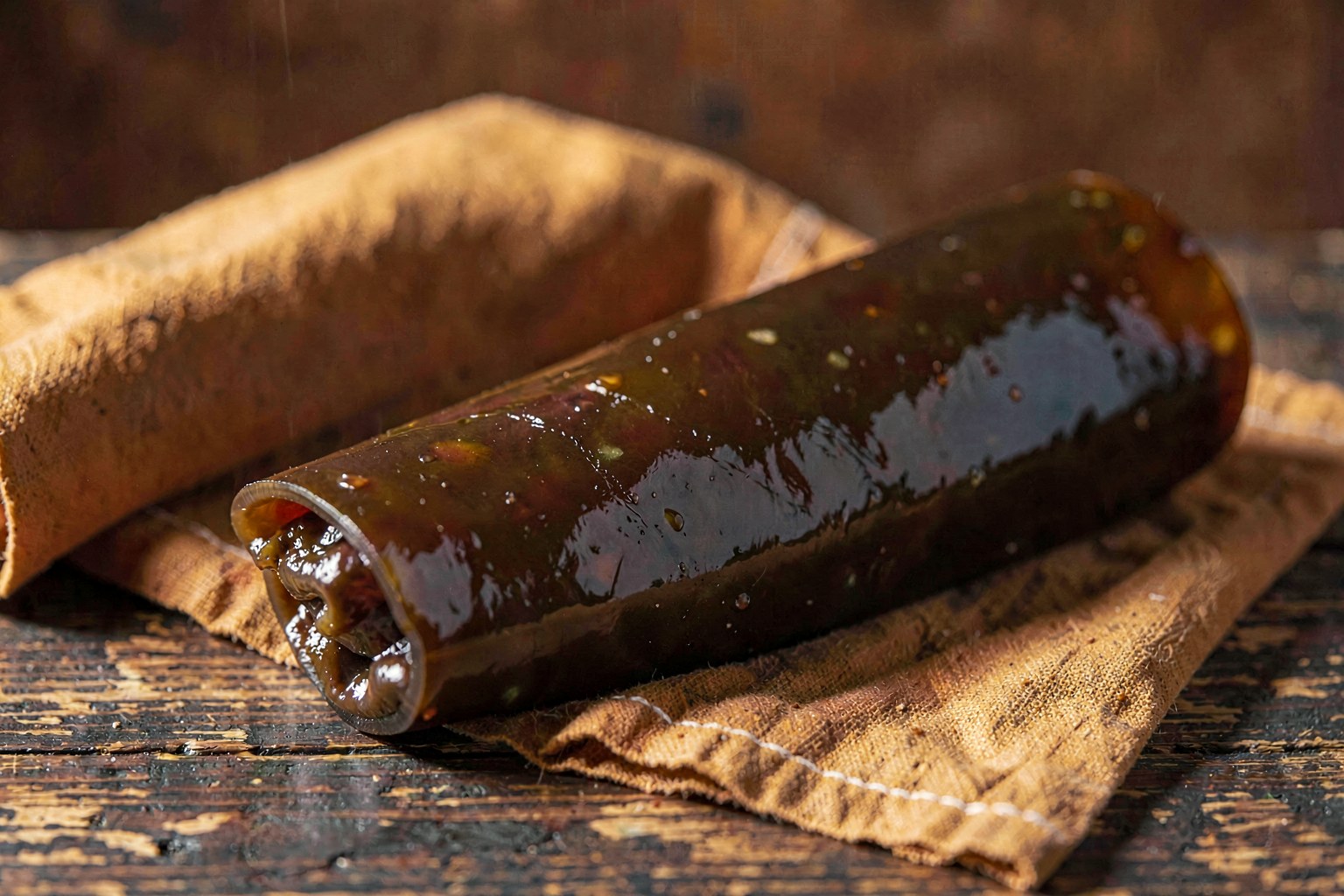
Kombu
Kombu is a dried, edible kelp harvested from cold ocean waters, primarily used in East Asian cuisine to create the savory, umami-rich base for broths and stocks.
What it is
Kombu refers to several species of edible kelp from the Laminariaceae family, most notably Saccharina japonica. It is harvested, dried, and often bleached with natural sea salt, resulting in a dark green to black, leathery sheet covered in a white, powdery residue known as mannitol, which is a natural source of umami. The texture is tough and chewy when raw but softens significantly when simmered, releasing glutamates that form the backbone of dashi, the fundamental stock of Japanese cooking. While it has a subtle oceanic aroma, its primary flavor contribution is a deep, savory depth rather than a fishy taste.
How to buy
Purchase kombu in whole dried sheets or pre-cut strips from well-sealed packaging. Look for a vibrant dark green color on the underside and a generous coating of white crystalline mannitol; avoid sheets that appear brittle, faded, or have a yellowish tint, as these indicate age and loss of flavor. While mainstream grocery stores may carry small packets in the international aisle, Asian markets offer the widest variety of grades, including premium 'Rishiri kombu' for clear stocks and 'Ma kombu' for hearty broths. If buying online, check the harvest date if available, as kombu has a finite shelf life even when dried.
Storage
Store kombu in an airtight container in a cool, dark, and dry pantry away from heat sources and moisture. Properly stored, it retains peak flavor for 12 to 18 months. Do not refrigerate, as humidity can cause the kelp to become slimy or moldy. If the white mannitol powder disappears entirely or the kelp develops an ammonia-like odor, it has spoiled and should be discarded.
How to use
The most common technique is to soak a piece of kombu in cold water for 20 minutes before gently heating it to just below a simmer to extract flavor without releasing bitterness. Never boil kombu vigorously, as this turns the stock slimy and bitter; remove the kelp just before the water reaches a full boil. For a quick stock, wipe the surface with a damp cloth to remove dust (do not wash off the white powder) and simmer for 10–15 minutes. Kombu can also be sliced into thin strips and added to pickling brines or simmered directly into soups like miso, where it dissolves slightly to thicken the broth.
Where it comes from
Originating in Japan, kombu has been cultivated and consumed for centuries, forming the spiritual and culinary foundation of Japanese cuisine alongside soy sauce and miso. It is essential to the concept of 'dashi,' one of the five mother stocks in Japanese cooking, and is often given as a gift during New Year celebrations to symbolize longevity and good fortune. Its use has spread throughout Korea (as dasima) and parts of China, where it remains a critical ingredient for balancing flavors in regional stews and cold noodle dishes.
Substitutions
- Dried wakame — Provides a similar oceanic flavor but less glutamate power; use double the quantity and expect a slightly softer texture.
- Mushroom stock powder or dried shiitake — A vegetarian pantry swap for umami depth when kombu is unavailable, though it will lack the specific mineral salinity of seaweed.