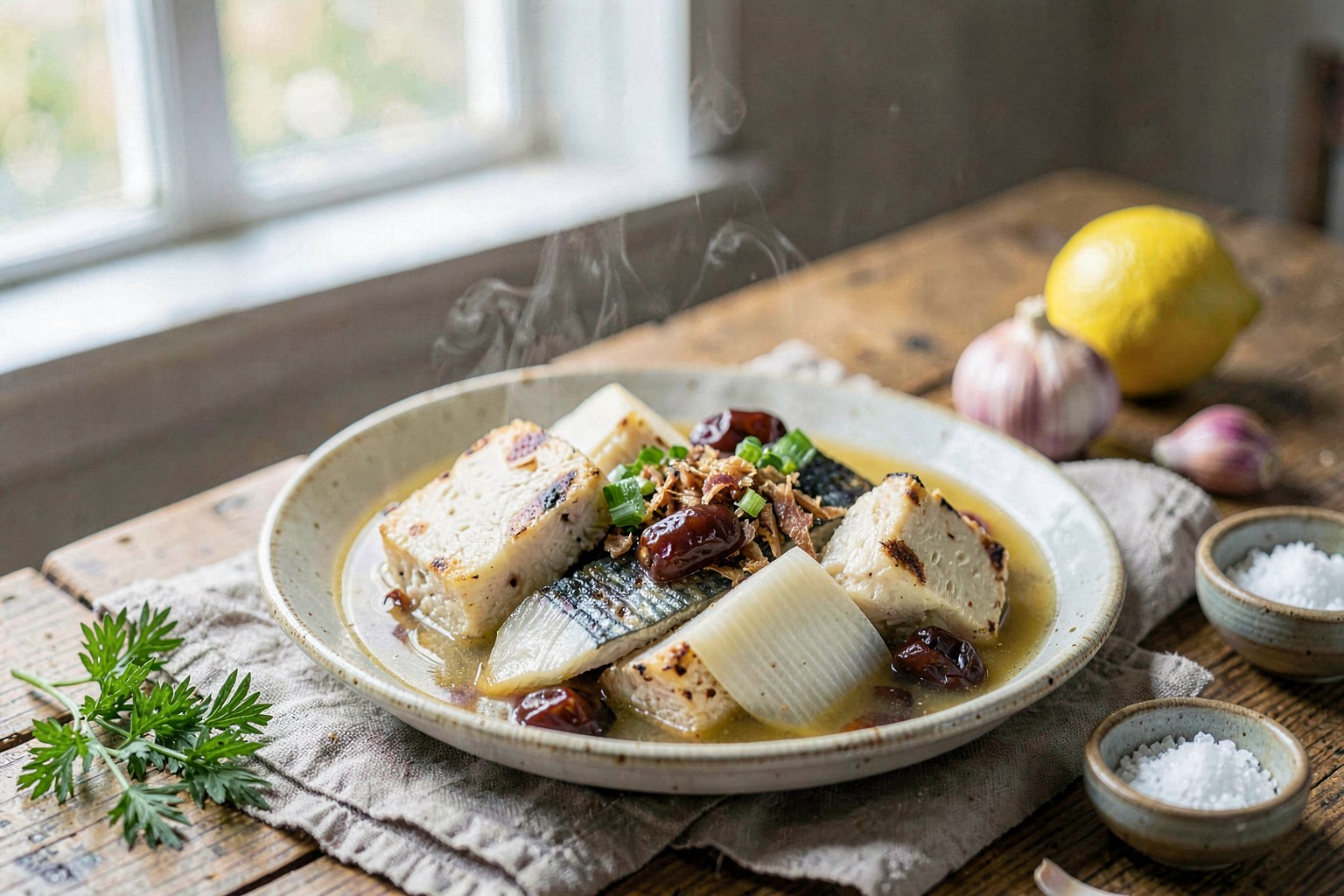
Winter Oden: Wild-Caught Fish & Daikon in Polyphenol-Rich Dashi
A comforting, slow-simmered Japanese stew featuring tender slices of daikon radish, pasture-raised eggs, and wild-caught fish cakes in a savory, umami-rich dashi broth. This version honors the Washoku tradition by eliminating refined sugar and seed oils, relying instead on the natural sweetness of whole dates and the clean fat profile of extra-virgin olive oil for finishing.
A little context
Oden is a beloved Japanese winter staple, traditionally simmered in a sweetened soy-based broth. We honor this heritage by replacing the standard white sugar and processed fish cakes with whole-food alternatives: sweetening the broth with mashed Medjool dates and using artisanal, additive-free fish cakes made from wild-caught fish. The cooking method remains true to the original—low and slow to break down fibrous vegetables—ensuring the dish retains its soulful, warming character without the inflammatory load of modern shortcuts.
The longevity story
This dish is a powerhouse of bioavailable nutrients: daikon radish provides digestive enzymes (diastase) and vitamin C, while the wild-caught fish delivers high-quality omega-3 fatty acids essential for cellular membrane health. The dashi broth, made from kombu and bonito, is rich in glutamates and iodine, supporting thyroid function and gut motility. By using whole dates instead of refined sugar to balance the broth, we maintain a low-glycemic load while introducing polyphenols that combat oxidative stress.
Method
- 01
Prepare the Dashi Base
In your Dutch oven, combine 1.5 L of cold water and the wiped kombu. Place over medium-low heat and bring to a bare simmer (do not boil). Just before bubbles break the surface, remove the kombu. Add the bonito flakes, turn off the heat, and let steep for 10 minutes. Strain through a fine-mesh sieve, pressing gently on the flakes to extract flavor without bitterness.
- 02
Season the Broth
Return the clear broth to low heat. Add the chopped Medjool dates, coconut aminos (or tamari), and fresh grated ginger. Simmer gently for 10 minutes to allow the dates to dissolve and sweeten the broth naturally. Taste and adjust; the broth should be savory with a subtle, rounded sweetness from the fruit.
- 03
Par-cook the Daikon
Add the scored daikon rounds to the simmering broth. Cover and cook for 20 minutes. The daikon is dense and requires time to become translucent and tender. Skim any foam that rises to the top to keep the broth clear.
- 04
Add Hard Proteins
Gently add the boiled eggs, konjac root, and fish cakes to the pot. Ensure they are submerged. Continue to simmer on low heat for another 15–20 minutes. The fish cakes and eggs will absorb the dashi flavors during this time.
- 05
Check Tenderness
Test the daikon with a skewer; it should slide through with zero resistance. If the daikon is ready but the other ingredients need more time, proceed carefully to avoid breaking the fish cakes. If everything is tender, turn off the heat.
- 06
Wilt Greens and Finish
Stir in the baby spinach or komatsuna and let the residual heat wilt the leaves for 1 minute. Ladle the stew into deep bowls, ensuring each serving has daikon, egg, fish, and greens. Drizzle generously with cold-pressed extra-virgin olive oil just before serving to preserve the polyphenols and add a lush mouthfeel.
Nutrition facts
Per serving · 1 of 4- — Saturated
- 13 g
- — Polyunsaturated
- 1 g
- Carbohydrates
- 26 g
- — Fiber
- 5 g
- — Sugars
- 14 g
- Cholesterol
- 0 mg
- Sodium
- 462 mg
- Potassium
- 914 mg
Estimated from USDA FoodData Central for matched ingredients (67% ingredient coverage). Values vary with brand, preparation, and exact measurements.
Pro tips
- ✦Source your fish cakes carefully: look for packages listing 'wild-caught fish' as the first ingredient and explicitly stating 'no seed oils' or 'no vegetable oil' in the binder.
- ✦When buying daikon, choose ones that feel heavy for their size with firm, unblemished skin; avoid any with soft spots or hollow sounds when tapped.
- ✦Do not boil the dashi after adding the bonito flakes, as this releases bitter tannins; a steep at 80°C (175°F) is perfect.
- ✦If you have time, let the oden sit in the pot off the heat for 30 minutes before serving; the flavors deepen significantly as they rest.
- ✦For maximum polyphenol benefit, use a high-quality, early-harvest EVOO with a high polyphenol count (>500 mg/kg) for the finishing drizzle.
Shop this recipe
As an Amazon Associate we earn from qualifying purchases.
Substitutions
- wild-caught fish cakes → slices of wild-caught salmon or cod fillets (toss in at step 4, cook only 8-10 minutes to prevent flaking apart)
- Medjool dates → 1 tbsp pure maple syrup or monk fruit syrup (add in step 2, but note that the depth of flavor from whole fruit dates is superior)
- Konjac root → sliced shiitake mushrooms or baby bok choy stems (adds earthy umami and fiber)
Storage
Store in a glass container in the refrigerator for up to 3 days. The daikon and fish cakes actually improve in flavor after a day. Reheat gently on the stove; do not boil. Freezing is not recommended as the daikon texture will become mushy upon thawing.
What to serve with it
- Hot Genmaicha (green tea with roasted brown rice) to aid digestion
- Sparkling water with a wedge of yuzu or lemon
- A small side of fermented pickled ginger (gari) or kimchi for gut health
- Dry, unsweetened kombucha
FAQ
Why did my broth turn cloudy?+
This usually happens if the water boiled vigorously after adding the bonito flakes or if the fish cakes released starch. Always simmer gently and strain the dashi well.
Can I make this vegan?+
Yes, substitute the katsuobushi (bonito) with dried shiitake mushrooms or a high-quality kombu-only dashi, and replace the fish cakes with firm tofu marinated in the broth.
Share this recipe
Notes from the community
Sign in to leave a note.
No notes yet — be the first.
You might also like