Kitsune Udon (Fox Tofu Udon) — Okinawan Longevity
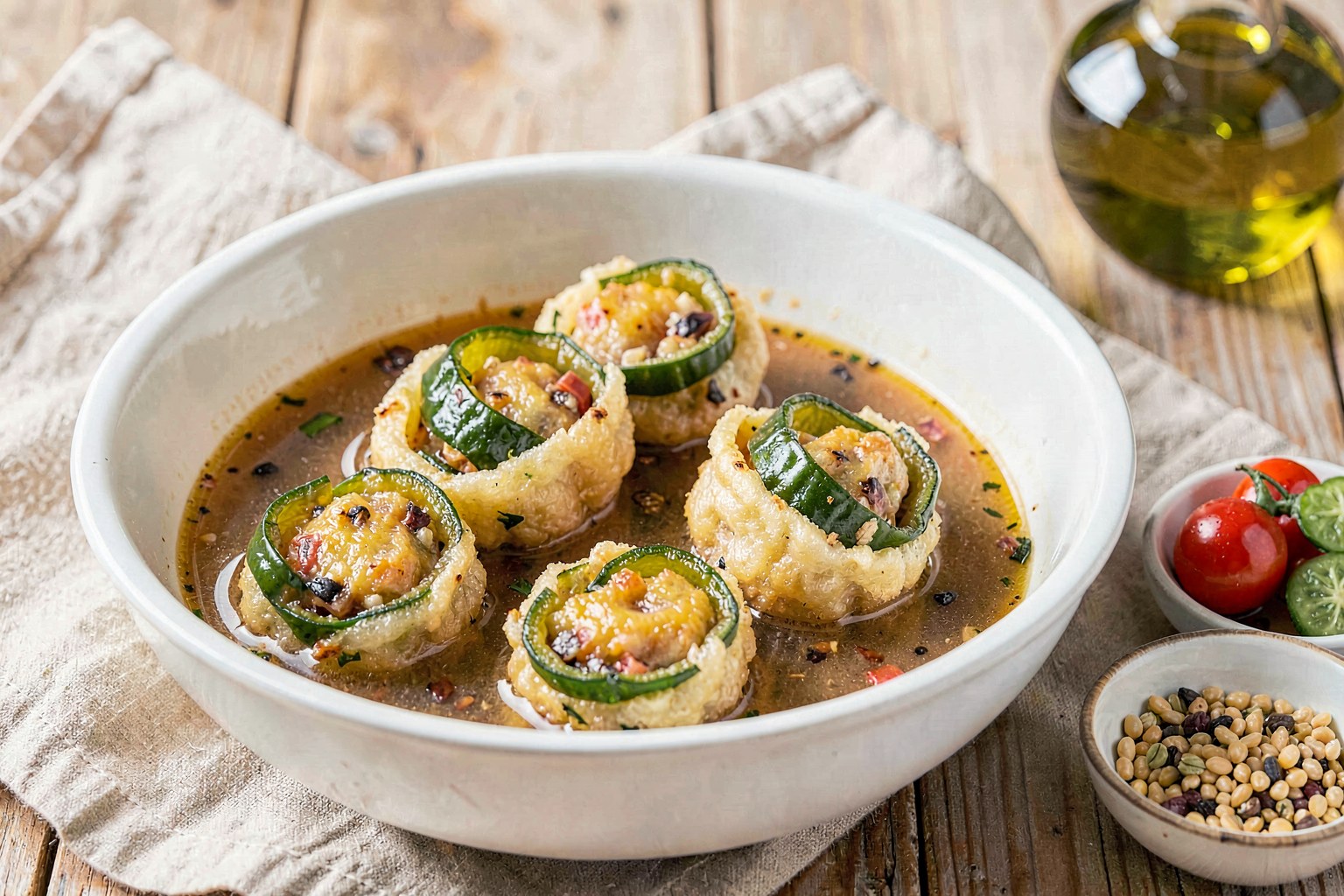
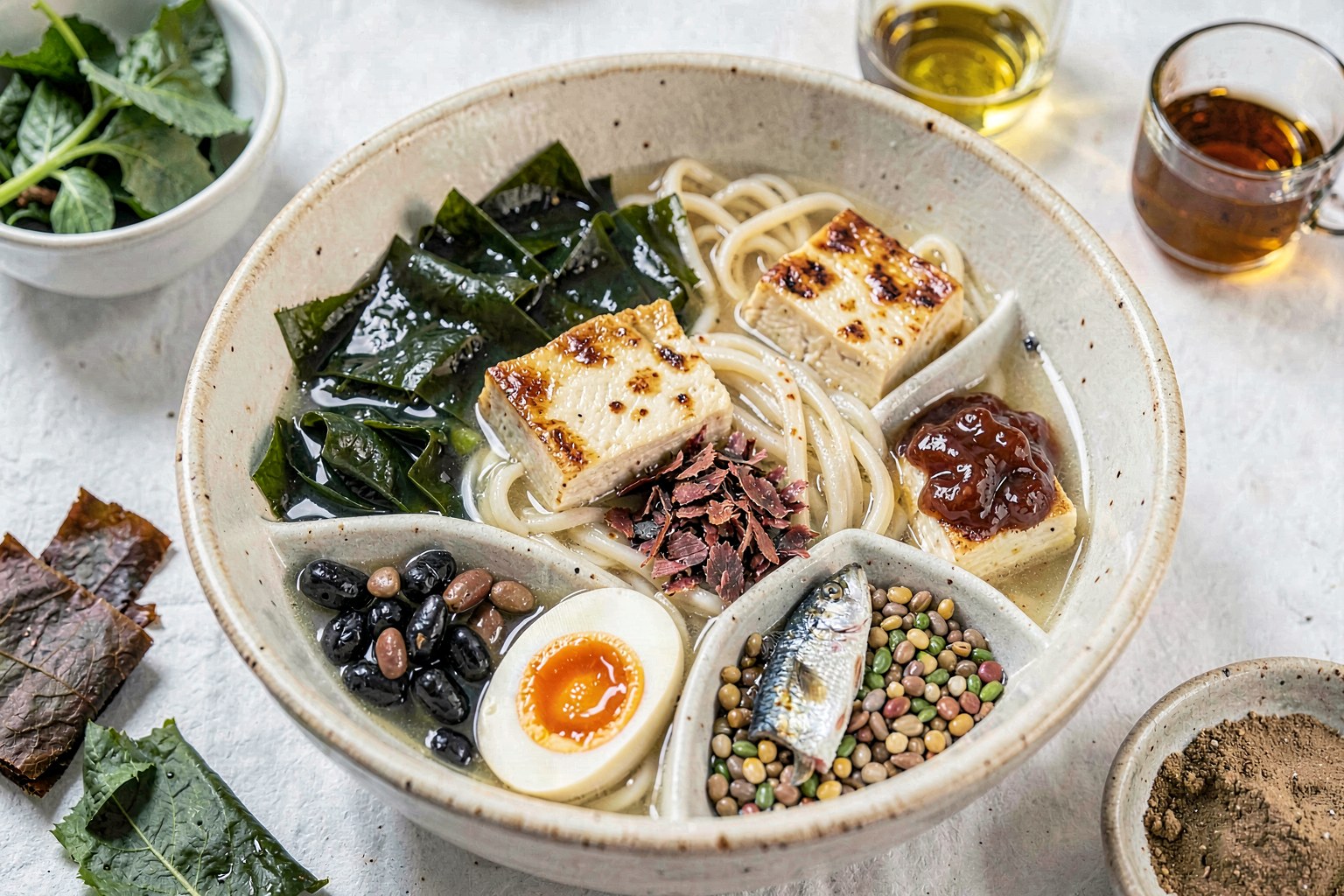
Soft sprouted wheat noodles swim in a clear, mineral-rich kombu dashi broth topped with savory-sweet tofu pockets. This farm-fresh adaptation honors the Okinawan longevity tradition while eliminating refined sugars and industrial seed oils.
A little context
Kitsune Udon is a staple of Japanese comfort food, traditionally featuring aburaage (fried tofu) and a sweetened broth. We honor this by using sprouted wheat noodles for better digestibility and sourcing aburaage fried in avocado oil or making them fresh. The broth is sweetened with date syrup instead of white sugar, aligning with longevity nutrition standards.
The longevity story
The kombu provides iodine and alginate, supporting thyroid function and gut motility. Wild-caught bonito flakes add umami without the sodium load of processed stock, while isoflavones in the tofu support hormonal balance. Date syrup replaces refined sugar, offering a lower glycemic response and trace minerals. The dish is rich in polyphenols from the soy and seaweed, promoting cellular longevity.
Method
- 01
- 02
Season the Broth
Return the clear dashi to the pot. Stir in tamari and date syrup. Taste and adjust sweetness if needed. Keep warm over low heat but do not boil vigorously.
- 03
Fry the Tofu Pockets
Pat tofu slices dry. Heat avocado oil in a skillet over medium heat. Fry tofu slices until golden brown on both sides. Remove and drain on paper towels. Cut a small slit in the side of each slice to create a pocket.
- 04
Simmer the Tofu
Add the fried tofu pockets to the seasoned broth. Simmer gently for 5 minutes so they absorb the savory-sweet flavors. Remove tofu and set aside, reserving the broth.
- 05
Cook the Noodles
Bring a separate large pot of water to a rolling boil. Add sprouted udon noodles. Cook according to package instructions (usually 8-10 minutes). Drain and rinse under cold water to remove excess starch.
- 06
Assemble the Bowls
Divide noodles among four deep bowls. Ladle hot broth over the noodles. Top with the simmered tofu pockets. Garnish with scallions and a dusting of sansho pepper.
Nutrition facts
Per serving · 1 of 4- — Saturated
- 1 g
- — Polyunsaturated
- 2 g
- Carbohydrates
- 51 g
- — Fiber
- 2 g
- — Sugars
- 5 g
- Cholesterol
- 0 mg
- Sodium
- 873 mg
- Potassium
- 295 mg
Estimated from USDA FoodData Central for matched ingredients (60% ingredient coverage). Values vary with brand, preparation, and exact measurements.
Pro tips
- ✦Select kombu with a heavy white dusty coating; this is mannitol, a natural umami compound.
- ✦Ensure your soy sauce is naturally brewed and aged, not chemically hydrolyzed, to avoid hidden sugars.
- ✦Rinse noodles thoroughly after cooking to prevent clumping and ensure a clean mouthfeel.
- ✦If you cannot find sprouted udon, look for whole wheat udon as the next best option.
- ✦For a richer broth, add a few dried shiitake mushrooms during the initial dashi steep.
Shop this recipe
As an Amazon Associate we earn from qualifying purchases.
Substitutions
- wild-caught bonito flakes → dried shiitake mushrooms (makes the recipe fully vegan while adding earthy umami)
- avocado oil → coconut oil (refined) (neutral flavor, high smoke point for frying tofu)
- date syrup → pure maple syrup (Grade A) (use sparingly to maintain low glycemic impact)
Storage
Store broth and noodles separately in glass containers for up to 3 days. Reheat broth gently before serving. Do not freeze tofu pockets as texture will degrade.
What to serve with it
- hot sencha green tea
- sparkling water with a wedge of yuzu
- dry sake (optional)
FAQ
Can I use standard white flour udon?+
Standard white flour is refined and lacks the fiber of sprouted grains. We recommend sprouted whole wheat udon for better blood sugar response and nutrient absorption.
Why not use commercial aburaage?+
Most store-bought aburaage is fried in seed oils like soybean or canola. Frying fresh tofu in avocado oil ensures you control the fat quality.
Is this dish suitable for a strict low-glycemic diet?+
Sprouted wheat has a lower glycemic index than white flour, and date syrup is used sparingly. It fits within a balanced whole-food approach but should be monitored if you are very sensitive to carbohydrates.
Share this recipe
Notes from the community
Sign in to leave a note.
No notes yet — be the first.
You might also like