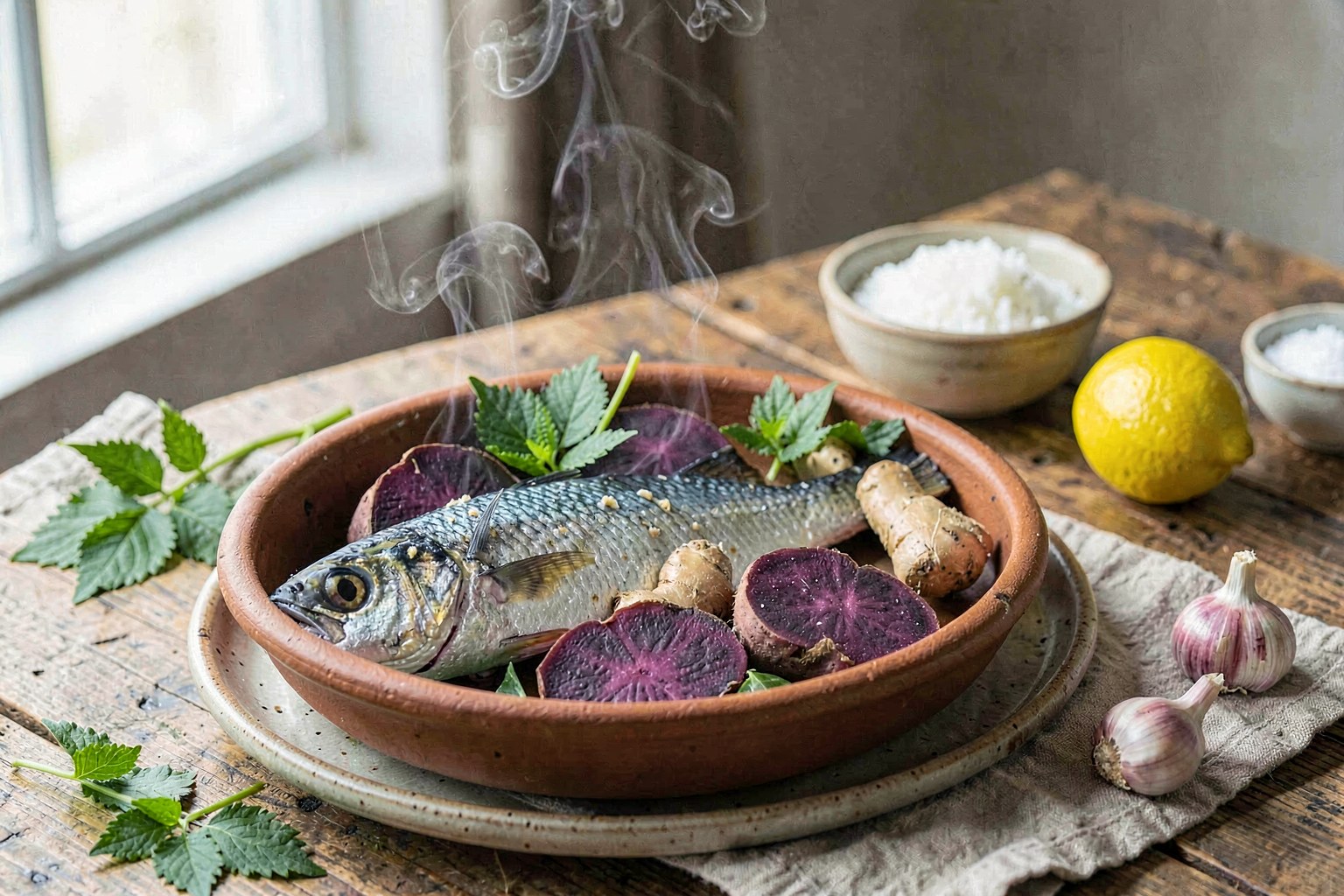
Aji no Suka: Clay-Pot Baked Horse Mackerel with Purple Sweet Potato
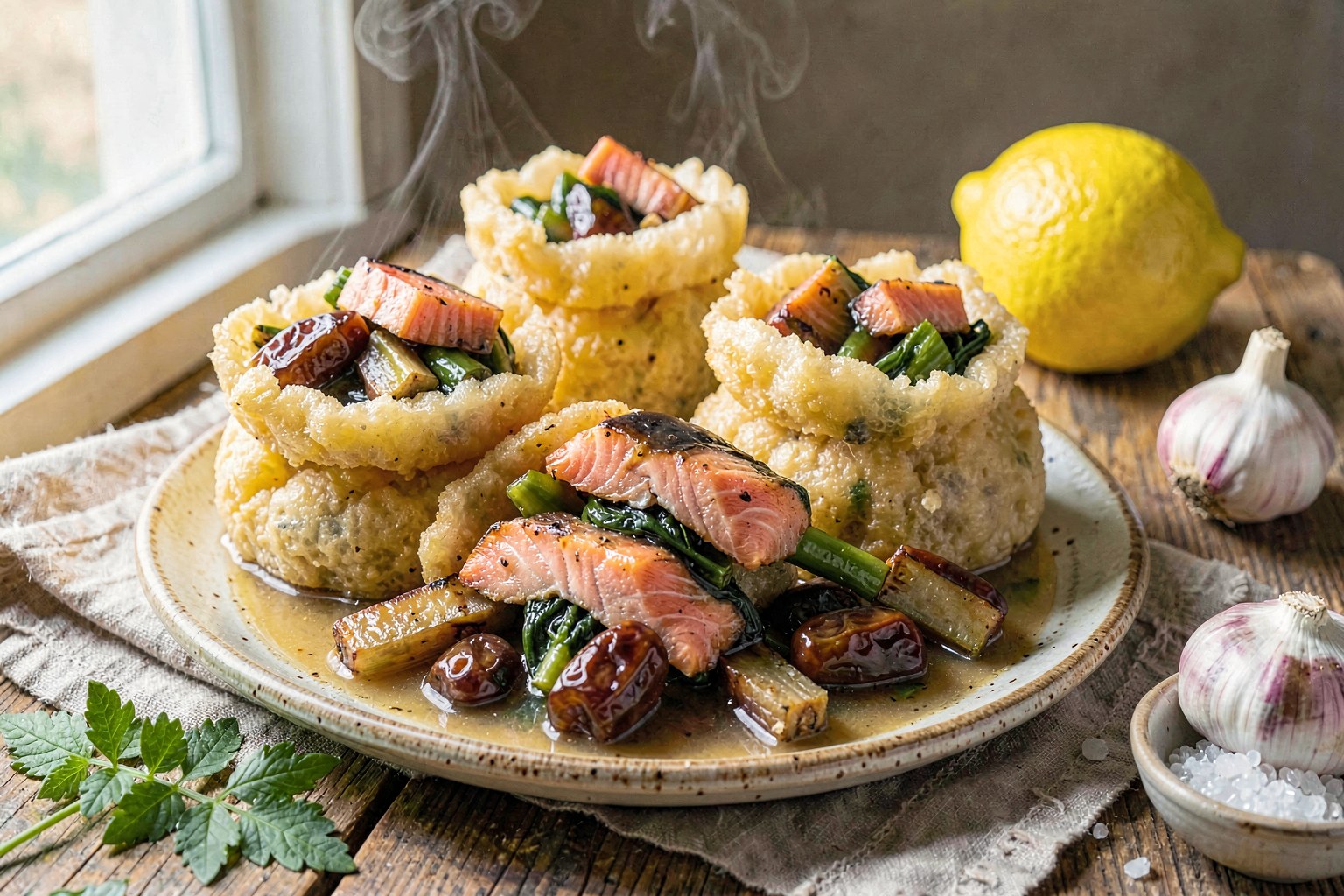
This rustic Okinawan dish features wild-caught horse mackerel (aji) slow-roasted in a clay pot alongside vibrant purple sweet potatoes and fresh ginger. The fish steams in its own juices and a light brine of rice vinegar and kombu, creating a tender, deeply savory meal rich in omega-3s and anthocyanins without a single drop of refined sugar or seed oil.
A little context
Traditionally, Aji no Suka is a home-style simmered dish where the sweetness of the broth balances the richness of the fish. We have honored this balance by replacing the traditional refined sugar and mirin (often containing additives) with the natural sweetness of ripe dates and a splash of high-quality rice vinegar. Instead of frying in seed oils, we roast the ingredients in a clay pot to concentrate flavors and retain moisture, staying true to the rustic, farm-to-table spirit of Okinawan longevity cuisine.
The longevity story
The star of this dish is the wild-caught horse mackerel, a fatty fish packed with EPA and DHA omega-3s that support cognitive longevity and reduce systemic inflammation. Purple sweet potatoes (beni imo) provide a massive dose of anthocyanins, potent polyphenols that protect against oxidative stress and support vascular health. The inclusion of fresh ginger and kombu adds digestive enzymes and iodine, while the cooking method preserves the delicate nutrients of the fish better than high-heat frying.
Method
- 01
Prepare the fish
Pat the wild-caught horse mackerel fillets completely dry with paper towels. Score the skin side diagonally 3-4 times to prevent curling and ensure even cooking. Rub lightly with 1/4 tsp of the coarse sea salt and let rest at room temperature for 15 minutes.
- 02
Layer the vegetables
In the bottom of your clay pot or Dutch oven, arrange the purple sweet potato cubes in a single layer. Scatter half of the julienned ginger over the potatoes. This creates a natural steaming rack for the fish.
- 03
Make the sweet-savory brine
In a small bowl, whisk together the rice vinegar, filtered water, minced dates, kombu strips, and the remaining sea salt until the salt dissolves. The dates will begin to soften, releasing their natural sugars into the liquid.
- 04
Assemble the pot
Place the fish fillets skin-side up on top of the sweet potatoes and ginger. Pour the brine mixture evenly over the fish and vegetables. Do not submerge the fish completely; it should steam in the liquid rather than boil.
- 05
Initial roast
Cover the pot with its lid. If using a clay pot, start it in a cold oven, then set to 190°C (375°F). If using cast iron, preheat to 190°C (375°F) first. Roast for 20 minutes. The sweet potatoes should begin to soften.
- 06
Add aromatics and finish
Remove the lid carefully (watch for steam). Arrange the fresh shiso leaves and the remaining ginger on top of the fish. Drizzle the extra-virgin olive oil over the surface. Return to the oven, uncovered, for another 15-20 minutes.
- 07
Check for doneness
The fish is done when it flakes easily with a fork and the internal temperature reaches 57°C (135°F). The sweet potatoes should be tender when pierced with a knife. The liquid should have reduced to a glossy, slightly thickened glaze.
- 08
Rest and serve
Let the dish rest for 5 minutes with the lid slightly ajar to allow the flavors to meld. Serve directly from the pot to keep the fish warm, ensuring each portion gets both fish and sweet potato.
Nutrition facts
Per serving · 1 of 4- — Saturated
- 13 g
- — Polyunsaturated
- 13 g
- Carbohydrates
- 41 g
- — Fiber
- 6 g
- — Sugars
- 17 g
- Cholesterol
- 143 mg
- Sodium
- 7476 mg
- Potassium
- 1263 mg
Estimated from USDA FoodData Central for matched ingredients (70% ingredient coverage). Values vary with brand, preparation, and exact measurements.
Pro tips
- ✦Sourcing is key: Look for horse mackerel or mackerel labeled 'wild-caught' from the Pacific or North Atlantic; farmed versions often have a higher ratio of inflammatory omega-6 fats.
- ✦If your clay pot requires seasoning, soak it in water for 30 minutes before the first use to prevent cracking.
- ✦The skin of the fish should be crispy and golden; if it's sticking, ensure the pan was hot enough before adding the oil.
- ✦Select sweet potatoes that feel heavy for their size with smooth, unblemished skin for the highest nutrient density.
- ✦Do not overcook the fish; it continues to cook slightly from residual heat once removed from the oven.
Shop this recipe
As an Amazon Associate we earn from qualifying purchases.
Substitutions
- wild-caught horse mackerel → wild-caught mackerel or sardines (Mackerel is more readily available in many markets and has a similar fatty profile; sardines cook faster (reduce time by 10 mins).)
- purple sweet potatoes → organic orange sweet potatoes (Still nutritious, but lower in anthocyanins. Adjust roasting time if the pieces are smaller.)
- medjool dates → 1 tbsp pure maple syrup or monk fruit syrup (Use sparingly to maintain the no-refined-sugar profile, though dates offer better fiber.)
Storage
Store in an airtight glass container in the refrigerator for up to 3 days. The flavors often improve overnight. Reheat gently in a skillet with a splash of water or in the oven at 150°C (300°F) to prevent drying. Not recommended for freezing as the texture of the fish may change.
What to serve with it
- Hot green tea (sencha or matcha) to complement the umami and aid digestion
- Steamed white rice or brown rice (traditional pairing, optional for low-carb)
- A side of quick-pickled cucumber with rice vinegar and sesame seeds
- Dry, low-sulfite white wine or sparkling water with a wedge of lemon
FAQ
Can I use canned mackerel for this recipe?+
No, canned fish is already cooked and will fall apart during roasting. This recipe relies on the texture of fresh, raw fish steaming in the pot.
Why use a clay pot instead of a baking sheet?+
The clay pot traps steam effectively, cooking the fish gently and keeping it moist without needing excessive oil. A baking sheet would dry out the delicate flesh.
Is this dish gluten-free?+
Yes, provided you use unseasoned rice vinegar and ensure your kombu is pure. Traditional soy sauce is not used in this specific preparation.
Share this recipe
Notes from the community
Sign in to leave a note.
No notes yet — be the first.
You might also like