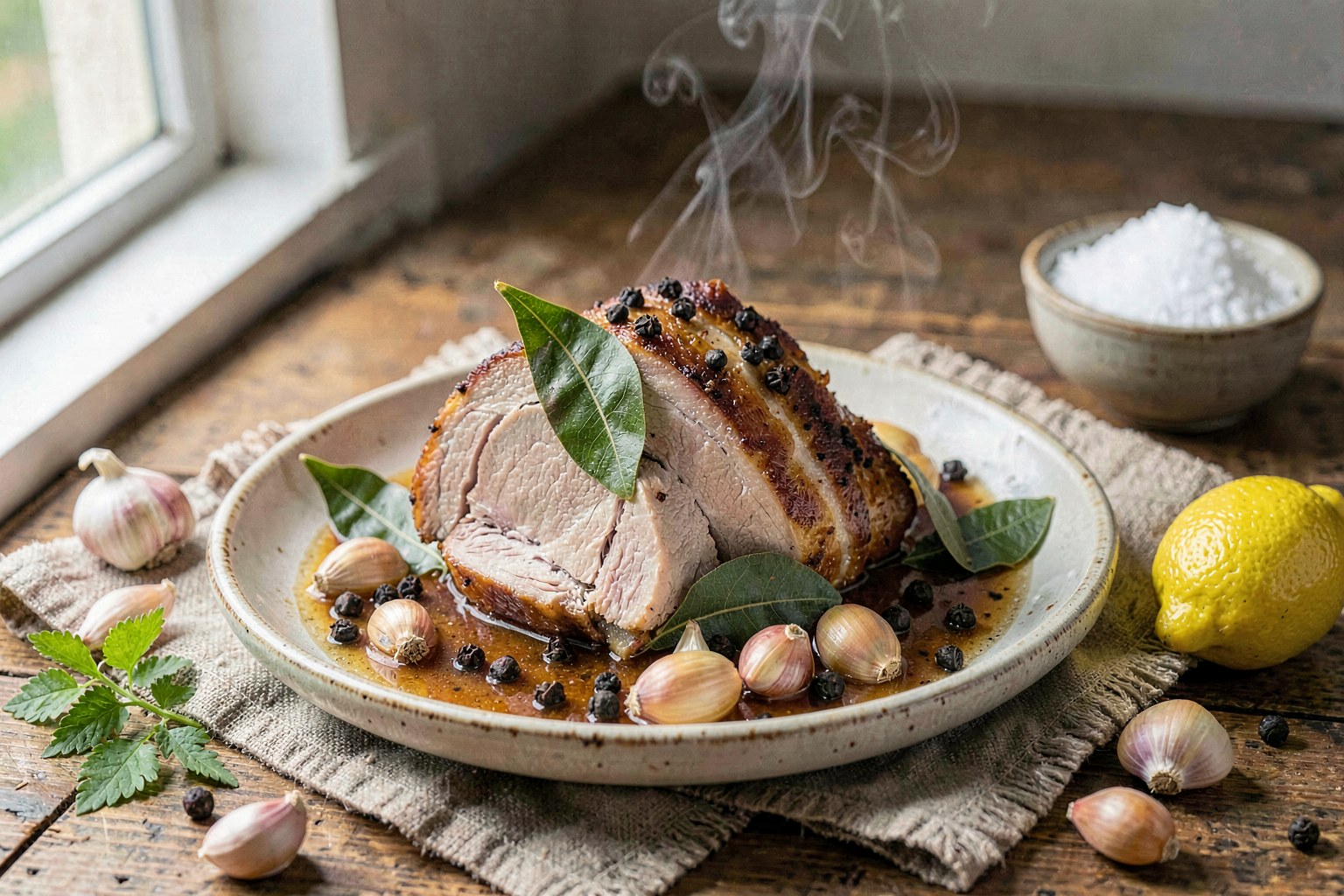
Okinawan Goya Champuru with Pastured Pork and Shimeji Mushrooms
This farm-fresh iteration of the Okinawan staple Goya Champuru replaces refined sugar and seed oils with a savory dashi glaze sweetened sparingly with whole dates and cooked in extra-virgin olive oil. Crisp-tender bitter melon, earthy shimeji mushrooms, and tender pasture-raised pork belly are bound by fluffy, nutrient-dense eggs for a dish that balances deep umami with a bright, clean finish.
A little context
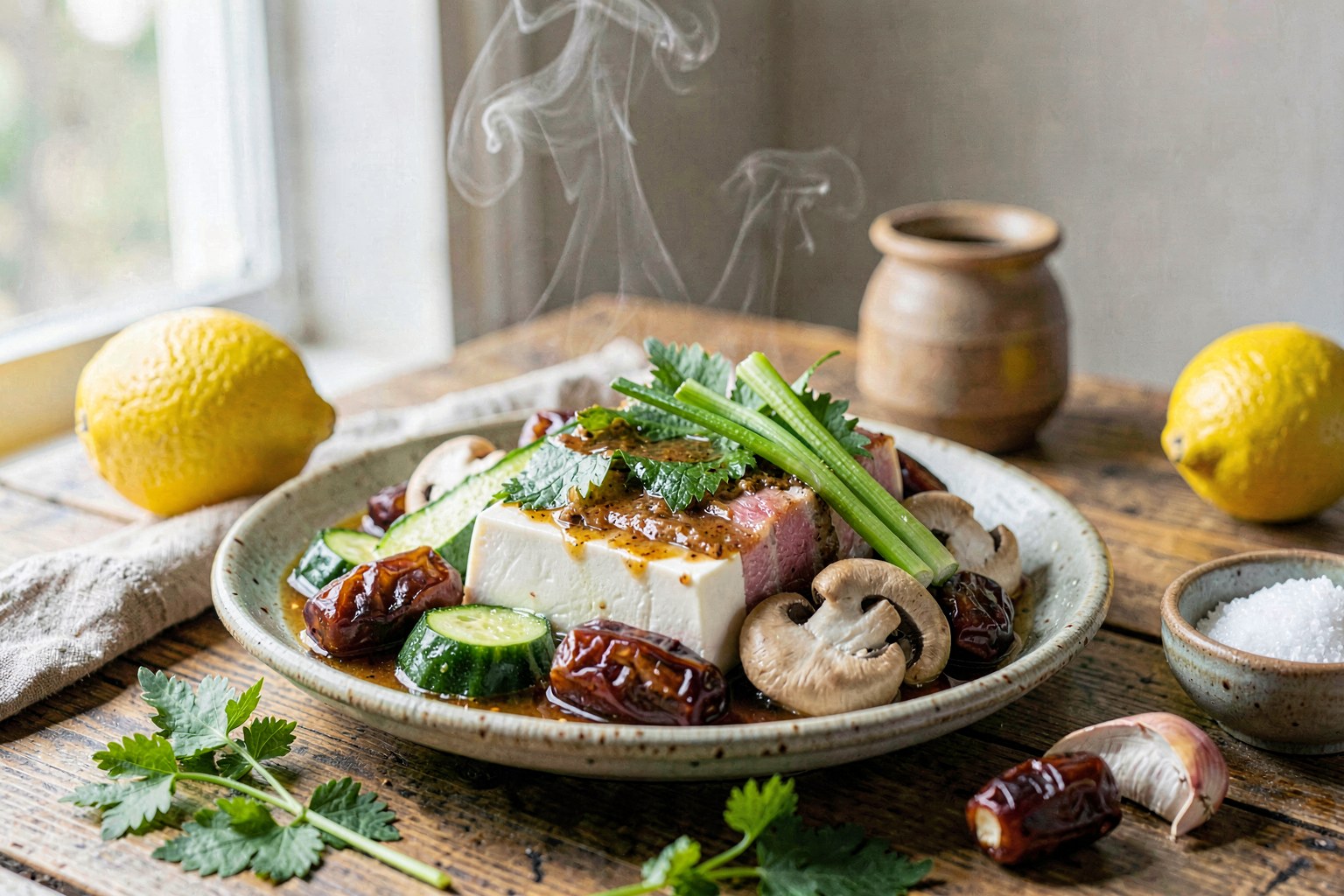
Goya Champuru is the cornerstone of the Okinawan Blue Zone diet, historically celebrated for its ability to balance the bitterness of the melon with savory ingredients. We honor this tradition by strictly omitting the traditional sugar and canola oil, instead using organic whole dates for a mineral-rich sweetness and extra-virgin olive oil for its heat-stable monounsaturated fats. This approach preserves the dish's structural integrity while aligning with modern longevity science.
The longevity story
The star ingredient, bitter melon (goya), contains momordicin and charantin, compounds shown to support healthy blood sugar regulation and insulin sensitivity. The dish is rich in polyphenols from the extra-virgin olive oil and the dark leafy greens often added, which combat oxidative stress. Pasture-raised pork provides high-quality protein and conjugated linoleic acid (CLA), while shimeji mushrooms contribute beta-glucans to support immune function and gut microbiome diversity.
Method
- 01
Bitterness management
Slice the bitter melon into thin half-moons. Toss with 1 tsp sea salt, let sit for 10 minutes to draw out moisture and bitterness, then rinse thoroughly under cold water and squeeze dry with a clean kitchen towel.
- 02
Prepare the glaze
In a small bowl, whisk the homemade dashi, coconut aminos, and the blended date paste until the date is fully dissolved and the mixture is uniform. Set aside.
- 03
Sear the pork
Heat 1 tbsp of extra-virgin olive oil in your cast-iron skillet over medium-high heat. Add the pasture-raised pork strips and sear until browned and the fat has rendered, about 4-5 minutes. Remove pork to a plate, leaving the rendered fat in the pan.
- 04
Sauté the aromatics
Add the remaining 1 tbsp of olive oil to the pan. Toss in the shimeji mushrooms and the squeezed-dry bitter melon. Stir-fry for 5-6 minutes until the melon is bright green and just tender-crisp, and the mushrooms are golden.
- 05
Combine and glaze
Return the pork to the skillet. Pour the date-dashi glaze over the mixture. Stir gently to coat, cooking for another 2 minutes until the liquid reduces to a light, glossy sheen. Add the cubed tofu and cook for 1 minute to warm through.
- 06
Scramble and bind
Push the vegetable and meat mixture to the sides of the pan, creating a well in the center. Pour the beaten eggs into the center. Let them set slightly for 30 seconds, then gently fold the egg into the mixture until just cooked but still soft and moist. Do not overcook.
- 07
Finish and serve
Remove from heat immediately. Stir in half of the chopped shiso or scallions. Transfer to serving plates and garnish with the remaining fresh herbs. Serve warm.
Nutrition facts
Per serving · 1 of 4- — Saturated
- 9 g
- — Polyunsaturated
- 5 g
- Carbohydrates
- 23 g
- — Fiber
- 4 g
- — Sugars
- 8 g
- Cholesterol
- 8 mg
- Sodium
- 421 mg
- Potassium
- 578 mg
Estimated from USDA FoodData Central for matched ingredients (80% ingredient coverage). Values vary with brand, preparation, and exact measurements.
Pro tips
- ✦When selecting bitter melon, choose ones that are firm and bright green; yellowing indicates over-ripeness and increased bitterness.
- ✦Squeezing the salted melon dry is non-negotiable; if too much moisture remains, the dish will steam rather than stir-fry, leading to a soggy texture.
- ✦For the best polyphenol profile, source your extra-virgin olive oil from a dark glass bottle with a harvest date within the last 12 months.
- ✦If the date paste is too thick to whisk into the dashi, add a teaspoon of warm water to thin it before combining.
- ✦Use a carbon steel wok if you have one, as it heats faster and more evenly for the final egg integration step.
Shop this recipe
As an Amazon Associate we earn from qualifying purchases.
Substitutions
- pasture-raised pork belly → wild-caught mackerel fillets or firm tofu only (Mackerel adds high omega-3s; add in the last 2 minutes of cooking to avoid breaking.)
- whole Medjool dates → 1 tbsp pure maple syrup or monk fruit syrup (Use sparingly to maintain low-glycemic profile; dates are preferred for fiber.)
- shimeji mushrooms → fresh shiitake mushrooms (Shiitake offers a deeper umami flavor; slice thinly.)
Storage
Store in an airtight glass container in the refrigerator for up to 3 days. Reheat gently in a skillet with a splash of water to restore moisture; do not microwave to preserve texture.
What to serve with it
- Hot sencha or genmaicha tea to complement the umami
- Unsweetened kombucha with ginger
- A small side of natto or fermented miso soup
- Steamed brown rice or buckwheat soba noodles (optional)
FAQ
Can I skip the step of salting and rinsing the bitter melon?+
You can, but the dish will be significantly more bitter. Salting draws out the bitter compounds (momordicin) while retaining the beneficial nutrients.
Is this recipe truly sugar-free?+
Yes. Traditional recipes use refined white sugar. We use whole Medjool dates, which provide sweetness along with fiber and minerals, preventing the blood sugar spike associated with refined sugar.
Share this recipe
Notes from the community
Sign in to leave a note.
No notes yet — be the first.
You might also like