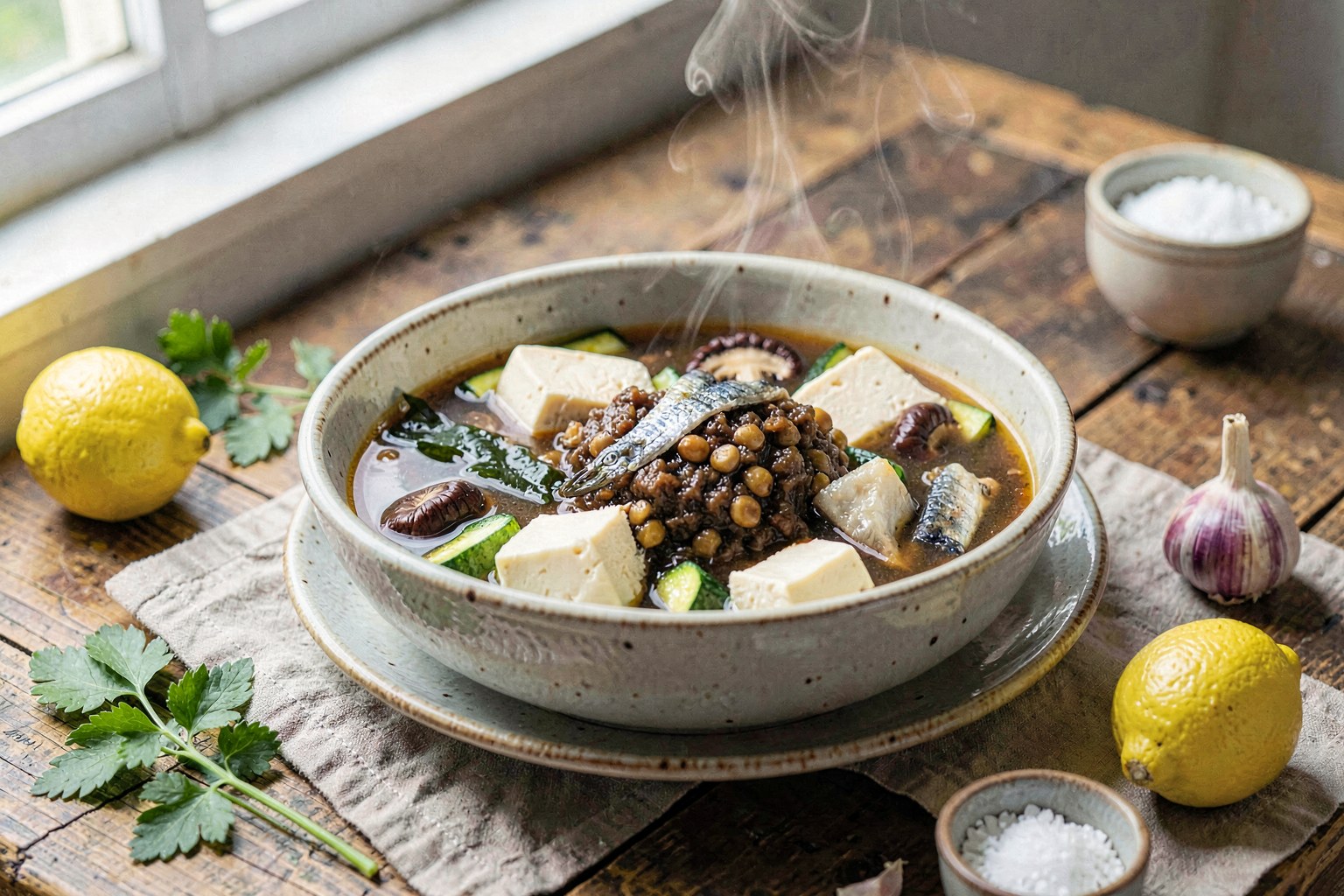
Farm-Fresh Doenjang Guk (Korean Fermented Soybean Soup)
A savory, deeply umami-rich soup centered on traditionally fermented organic soybean paste, loaded with seasonal zucchini, shiitake mushrooms, and organic tofu. This version honors the gut-healing power of fermentation while eliminating refined sugars and industrial seed oils found in commercial shortcuts.
A little context
This soup stems from the Korean tradition of 'jang' (fermented paste) culture, where beans are aged for months to develop complex enzymes. We honor this by sourcing sugar-free, organic doenjang and using homemade kelp-anchovy stock instead of bouillon cubes. Sautéing aromatics in extra-virgin olive oil replaces traditional sesame oil heating to preserve the oil's polyphenols and avoid seed oil oxidation.
The longevity story
The core ingredient, doenjang, is rich in isoflavones and probiotics that support gut microbiome diversity and metabolic health. Shiitake mushrooms provide beta-glucans for immune modulation, while extra-virgin olive oil delivers hydroxytyrosol, a potent polyphenol for cardiovascular protection. Wild-caught clams add mineral density like zinc and selenium without the inflammatory load of feedlot meat. Garlic and green onions contribute allicin and quercetin, further enhancing the dish's anti-inflammatory profile.
Method
- 01
Make the mineral stock
In your heavy pot, combine filtered water, dried kelp, and cleaned anchovies. Bring to a gentle boil over medium-high heat, then immediately reduce to low and simmer uncovered for 20 minutes. Do not let it boil vigorously or the stock will become bitter.
- 02
Strain the broth
Remove the pot from heat. Using a fine mesh sieve, strain out the solids (kelp and anchovies), reserving the clear golden broth. Wipe the inside of the pot clean with a paper towel to remove any film.
- 03
Sauté the aromatics
Return the pot to medium heat. Add the extra-virgin olive oil. Once shimmering, add the minced garlic, grated ginger, and chopped green onion whites. Sauté for 2 minutes until fragrant but not browned.
- 04
- 05
Build the soup
Pour in the remaining stock to bring the volume back up. Add the sliced shiitake mushrooms and zucchini. Bring to a gentle simmer. Do not boil rapidly, as this can break down the tofu and vegetables.
- 06
Add protein
Gently add the cubed organic tofu and the wild-caught clams. Cover the pot with a lid and simmer for 10-15 minutes. The clams are done when they open; discard any that remain closed.
- 07
Finish and serve
Turn off the heat. Stir in the cold-pressed sesame oil and the green onion greens. Taste for salt (doenjang is salty, so you likely won't need more). Ladle into bowls immediately while hot.
Nutrition facts
Per serving · 1 of 4- — Saturated
- 4 g
- — Polyunsaturated
- 6 g
- Carbohydrates
- 50 g
- — Fiber
- 5 g
- — Sugars
- 14 g
- Cholesterol
- 40 mg
- Sodium
- 647 mg
- Potassium
- 649 mg
Estimated from USDA FoodData Central for matched ingredients (71% ingredient coverage). Values vary with brand, preparation, and exact measurements.
Pro tips
- ✦Always check the doenjang label for 'no added sugar' or 'saccharin'; traditional fermentation should not require sweeteners.
- ✦Select clams that are tightly closed or close immediately when tapped; this indicates freshness and safety.
- ✦Toast the doenjang paste briefly in the oil before adding liquid to deepen the umami flavor profile.
- ✦If you have time, make the stock a day ahead; the flavors of kelp and anchovy deepen overnight.
- ✦Use the green onion greens for garnish to maximize the visual appeal and nutrient retention.
Shop this recipe
As an Amazon Associate we earn from qualifying purchases.
Substitutions
- wild-caught littleneck clams → wild-caught shrimp or firm white fish chunks (add in the last 5 minutes of cooking to prevent overcooking)
- organic firm tofu → extra shiitake mushrooms or king oyster mushrooms (for a fully plant-based, higher-fiber variation)
- Korean red pepper flakes → smoked paprika or cayenne pepper (adjust quantity to taste for heat level)
Storage
store in a glass container in the fridge for up to 3 days; the broth thickens upon cooling. Reheat gently on the stove. Do not freeze with clams as the texture will degrade.
What to serve with it
- warm brown rice or sprouted millet
- fresh kimchi (fermented, no sugar)
- hot green tea or roasted barley tea
- side of blanched spinach with sesame oil
FAQ
Is soy unhealthy for longevity?+
Fermented soy like doenjang is generally beneficial due to the breakdown of anti-nutrients and increased probiotics. It is distinct from heavily processed soy isolates.
Can I use regular vegetable oil?+
No. Seed oils like canola or soybean are high in omega-6 fatty acids and prone to oxidation. We use extra-virgin olive oil for cooking and sesame oil only for finishing.
Can I make this vegan?+
Yes. Simply omit the clams and use the mushroom stock or increase the mushroom quantity. The flavor remains deep and savory.
Share this recipe
Notes from the community
Sign in to leave a note.
No notes yet — be the first.
You might also like