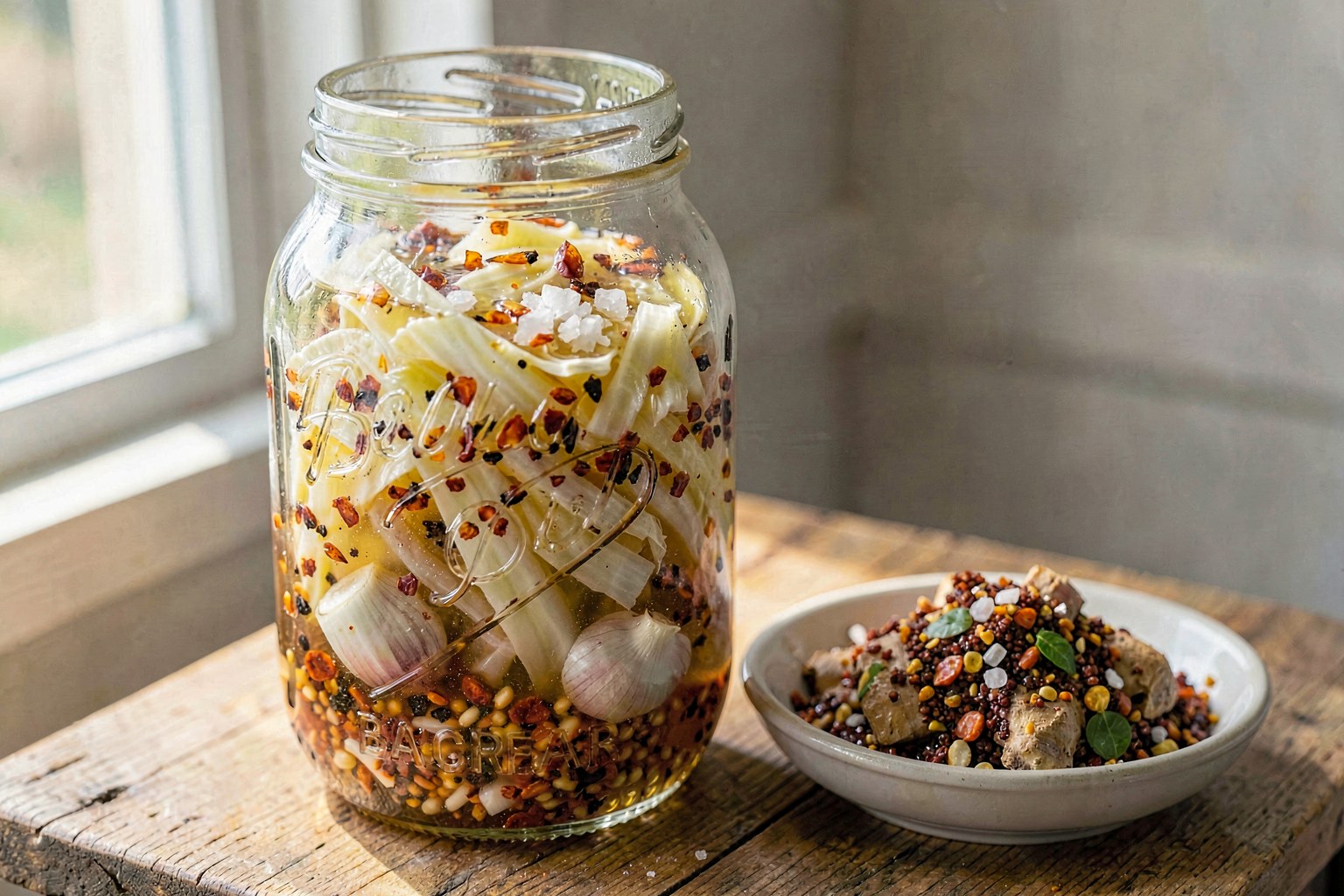
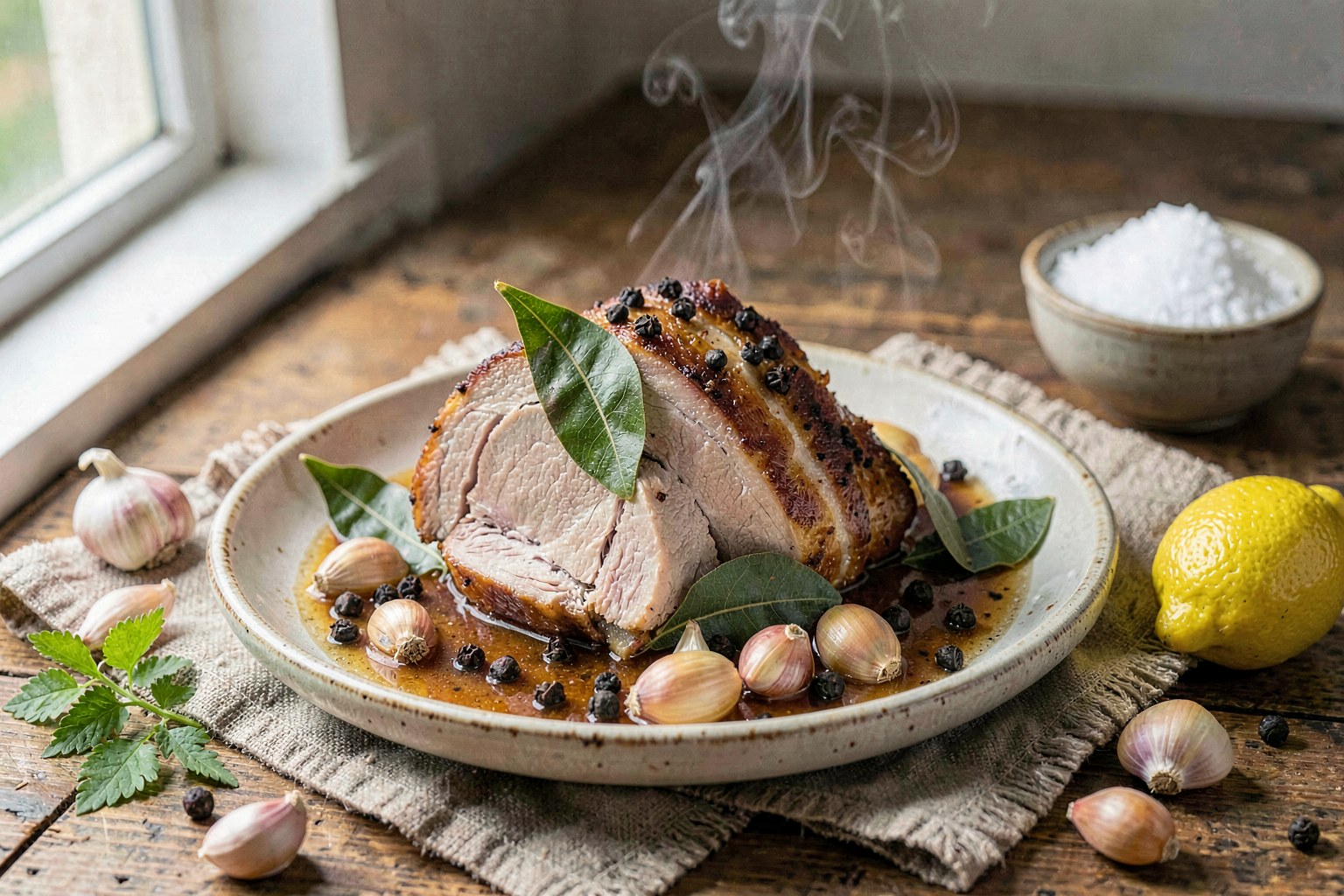
Blueprint-Aligned Baechu-Kimchi (Napa Cabbage Ferment)
The quintessential spicy, tangy fermented cabbage of the Korean table. This version honors tradition by using wild-caught anchovy fish sauce and ripe pear for sweetness, stripping out refined sugar and seed oils to prioritize gut health and longevity.
A little context
Rooted in the Korean tradition of kimjang (shared kimchi-making), this recipe respects the use of jeotgal (salted seafood) for umami depth. We have honored the fermentation process while replacing refined sugar with ripe pear and date syrup, and strictly avoiding sesame oil to adhere to a low omega-6, seed-oil-free protocol.
The longevity story
This dish is a powerhouse for gut health, introducing Lactobacillus plantarum through spontaneous fermentation. The napa cabbage provides sulfur-rich glucosinolates, while garlic and ginger contribute allicin and gingerols with potent anti-inflammatory properties. The coarse gochugaru delivers capsaicin and polyphenols that support metabolic health without spiking blood sugar.
Method
- 01
Salt the cabbage
Cut cabbage quarters into 5 cm chunks. Dissolve sea salt in 4 liters of water. Submerge cabbage and soak for 2 hours, turning every 30 minutes until leaves are pliable but not mushy.
- 02
Rinse and drain
Rinse cabbage thoroughly under cold water 3 times to remove excess salt. Place in a colander, cover with a clean towel, and let drain for 30 minutes. Squeeze gently to remove surface water.
- 03
Make the rice porridge
Whisk rice flour and water in a small saucepan over medium heat. Stir constantly for 5-7 minutes until it thickens into a translucent paste. Let cool completely.
- 04
Blend the paste
In a blender, combine fish sauce, pear puree, garlic, ginger, and gochugaru. Blend until smooth. Stir this mixture into the cooled rice porridge.
- 05
Combine ingredients
In a large bowl, mix the cabbage, julienned radish, and scallions. Pour the paste over the vegetables.
- 06
Massage and pack
Wearing gloves, massage the paste into the cabbage leaves, ensuring every piece is coated. Pack tightly into sterilized glass jars, pressing down to remove air pockets.
- 07
Ferment
Leave jars at room temperature (20°C) for 2-3 days until slightly bubbly and tangy. Seal and transfer to the refrigerator. Flavor deepens over 1-2 weeks.
Nutrition facts
Per serving · 1 of 4- — Saturated
- 1 g
- — Polyunsaturated
- 1 g
- Carbohydrates
- 41 g
- — Fiber
- 2 g
- — Sugars
- 2 g
- Cholesterol
- 21 mg
- Sodium
- 987 mg
- Potassium
- 785 mg
Estimated from USDA FoodData Central for matched ingredients (73% ingredient coverage). Values vary with brand, preparation, and exact measurements.
Pro tips
- ✦Wear disposable gloves when mixing; the capsaicin in gochugaru will burn your skin and eyes.
- ✦Source stone-ground gochugaru that lists only red pepper; avoid blends with corn syrup or seed oils.
- ✦Use a glass weight or a clean small jar filled with water to keep cabbage submerged under the brine during fermentation.
- ✦Taste test after 3 days; if it is too salty, dilute the brine with filtered water before cooling.
- ✦Look for napa cabbage with tight, pale yellow leaves; loose leaves indicate age and poor texture.
Shop this recipe
As an Amazon Associate we earn from qualifying purchases.
Substitutions
- wild-caught anchovy fish sauce → coconut aminos or mushroom soy sauce (for a strictly vegan version; add a tablespoon of miso for depth)
- ripe asian pear → green apple or 1 tbsp date syrup (apple adds similar enzymes; date syrup adds more sweetness)
Storage
Keep refrigerated in airtight glass jars. Fermenting continues slowly in the fridge. Best consumed within 3 months, though it remains safe for up to 6 months.
What to serve with it
- Serve as a side dish with grilled wild-caught salmon or grass-fed beef.
- Pair with warm miso soup or plain brown rice for a complete meal.
- Drink alongside unsweetened green tea or sparkling water with lemon.
- Complement with a glass of dry red wine for a polyphenol boost.
FAQ
Can I use regular table salt?+
No. Iodized table salt contains anti-caking agents that can inhibit fermentation and affect texture. Use non-iodized sea salt or kosher salt.
Why did my kimchi turn pink?+
This is normal. It happens due to the reaction between the red pepper pigments and the acid environment. It does not indicate spoilage unless the smell is foul.
Share this recipe
Notes from the community
Sign in to leave a note.
No notes yet — be the first.
You might also like