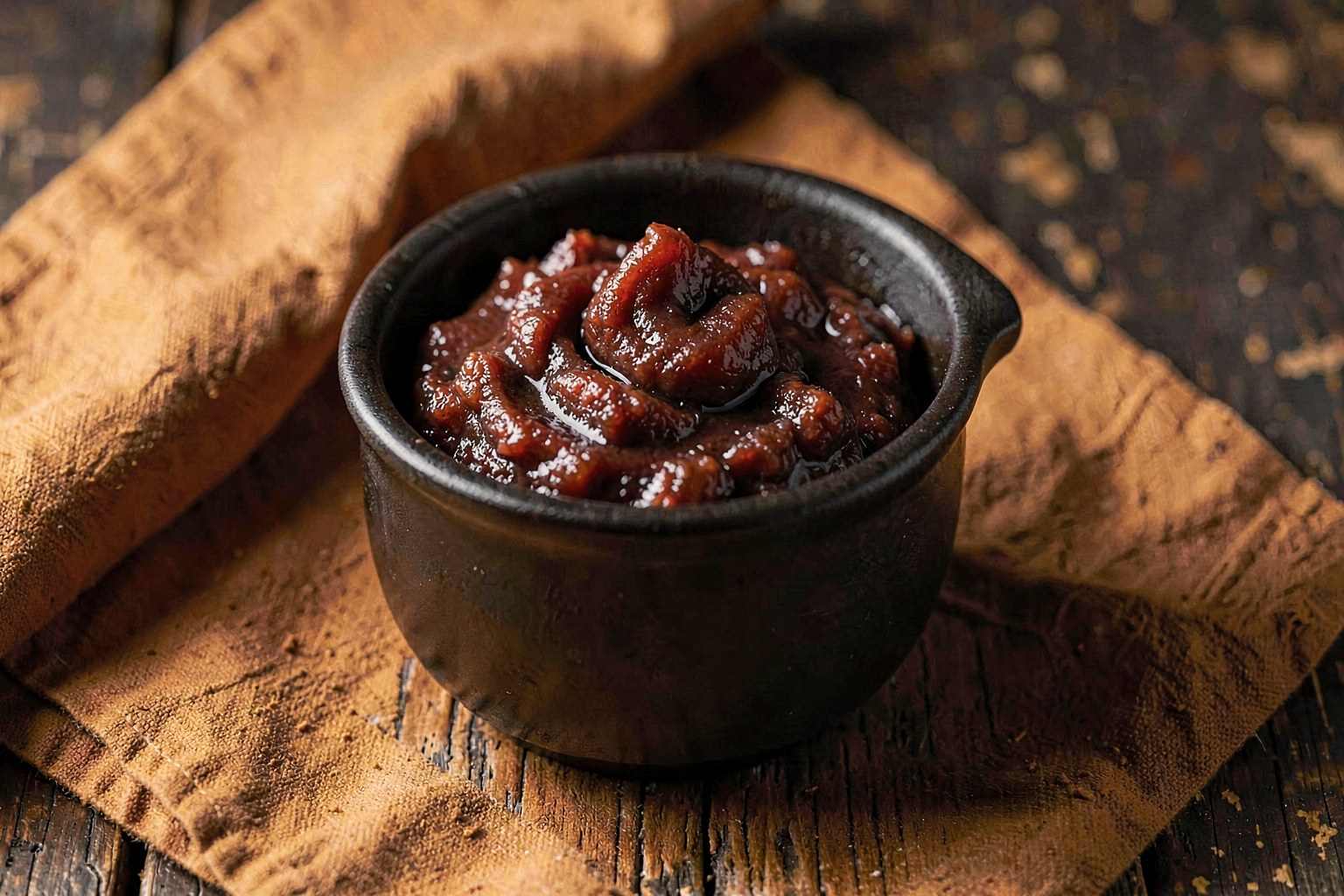
Doenjang
Doenjang is a thick, savory Korean fermented soybean paste made from meju (fermented soybean blocks) and brine, serving as the foundational umami backbone of Korean cuisine.
What it is
Doenjang is produced through a dual-fermentation process starting with meju, dried blocks of boiled soybeans inoculated with koji mold and natural bacteria. These blocks are submerged in brine for several months, during which the soybeans break down into a rich, dark paste. The resulting product is far more complex than standard soybean paste; it possesses a deep, earthy funk with notes of mushroom, caramel, and roasted nuts, balanced by a sharp, lingering salinity. Unlike the sweeter, smoother Japanese miso, traditional doenjang retains a coarser texture and a more aggressive, savory punch.
How to buy
Seek out authentically fermented doenjang sold in plastic jars or glass containers at Korean grocery stores or well-stocked Asian markets. Look for labels indicating 'traditionally made' or 'meju-based,' as these contain the complex flavor profile required for authentic dishes. Avoid bright orange or red pastes with a uniform, smooth texture and a sweet smell; these are often mass-produced chemical blends containing soybean oil, sugar, and preservatives that lack depth. If buying online, check for refrigerated shipping options, as many premium brands are kept cold to preserve live cultures.
Storage
Keep doenjang refrigerated immediately after opening, even if the label claims it is shelf-stable. Its high salt content prevents rapid rotting, but the live enzymes and beneficial bacteria remain active, causing the flavor to evolve and potentially turn bitter or develop off-odors if left at room temperature. A white film (kahm yeast) on the surface is harmless and can be skimmed off, but any sign of black mold, slimy texture, or a sour, alcoholic smell indicates spoilage. Properly stored, it can last for years, developing a deeper, more intense flavor over time.
How to use
Doenjang is rarely eaten raw; it is typically dissolved into hot broth to create soups (jjigae) or used as a base for dipping sauces (ssamjang). To maximize flavor, fry a small amount in sesame oil with garlic and onions before adding liquid, which unlocks its nutty aromatics. Start with conservative amounts (1-2 tablespoons per quart of liquid) as it is intensely salty; you can always add more, but you cannot remove it. Avoid boiling doenjang vigorously for extended periods, as high heat can flatten its complex fermented notes and turn the soup bitter.
Where it comes from
Originating from the ancient practice of preserving soybeans in meju form, doenjang is a pillar of Korean culinary identity, historically prepared in every household during winter. It represents the Korean philosophy of fermentation (jang), where time and patience transform simple ingredients into a powerful source of nutrition and flavor. It is so central to the diet that the phrase 'no jang, no meal' reflects its indispensability, appearing in everything from daily stews to the national dish, kimchi jjigae.
Substitutions
- Japanese Miso (Red or Awase) — Provides similar salt and umami but lacks the distinct earthy funk; use slightly less as it can be saltier, and expect a milder, smoother flavor profile.
- Soy Sauce mixed with a dash of sugar and mushroom powder — A last-resort pantry swap that mimics the salt and savoriness but completely misses the fermented depth and texture; best used in soups where texture matters less.