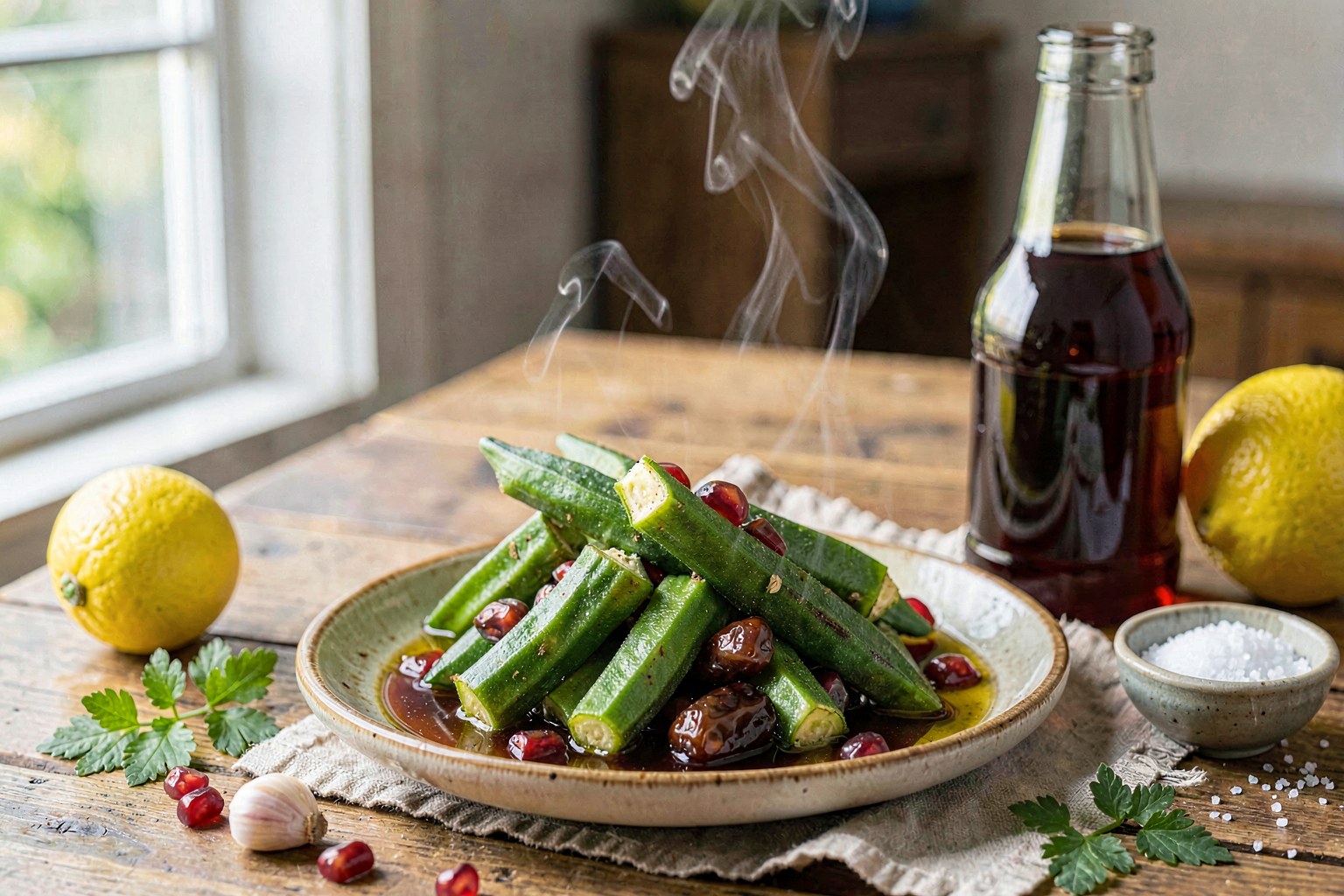
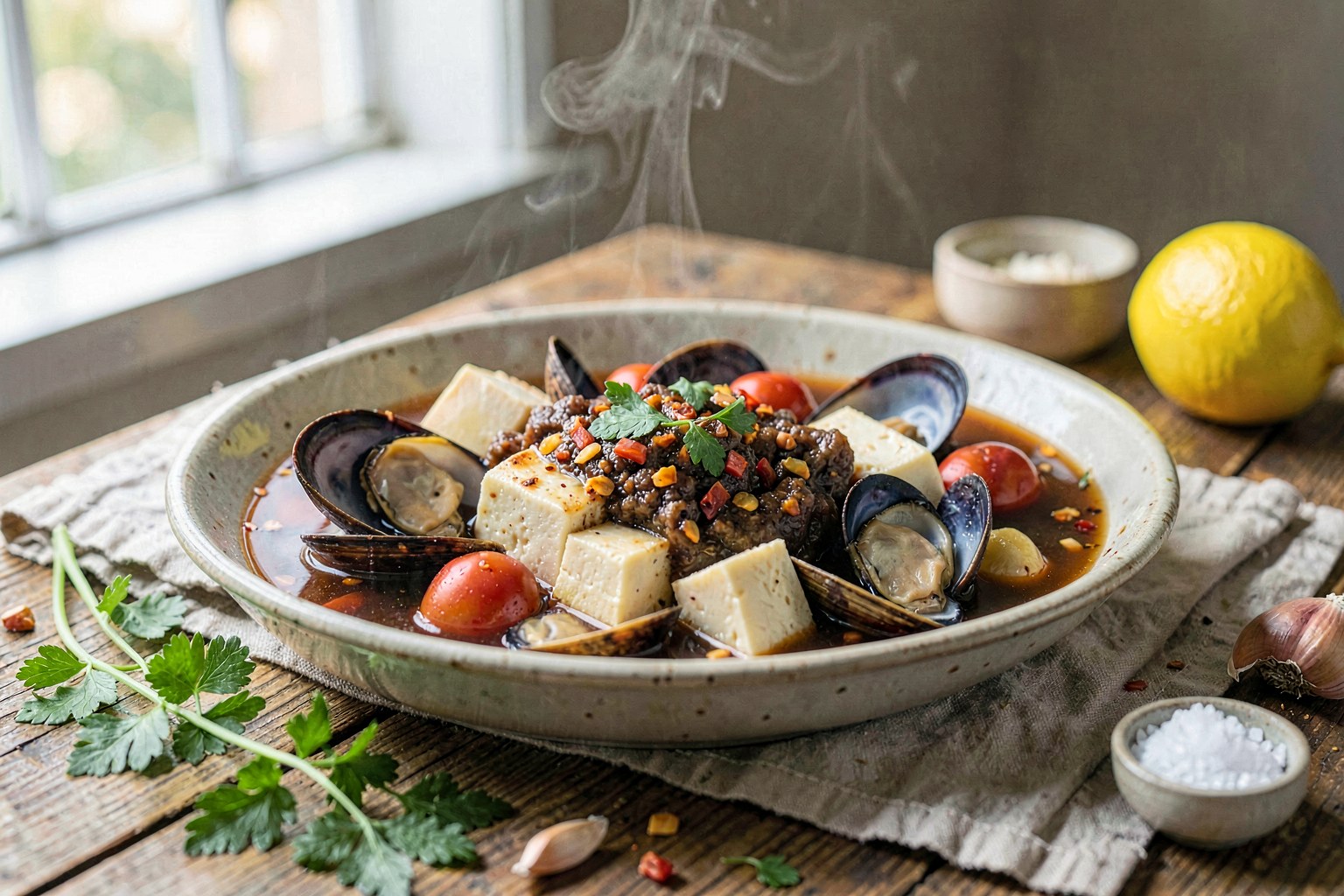
Farm-Fresh Doenjang Jjigae (Clean Soybean Stew)
A deeply savory, fermented soybean stew simmered with wild-caught clams, organic tofu, and seasonal root vegetables. This version strips out refined sugars and seed oils while honoring the gut-friendly fermentation tradition of Korea.
A little context
Doenjang Jjigae is a Korean staple traditionally made with homemade soybean paste and bone broth. We honor this by sourcing organic, no-added-sugar fermented paste and using grass-fed bone broth instead of processed stock cubes. Traditional recipes often sweeten with sugar or use seed oils; we balance the saltiness with the natural sweetness of sautéed onions and use EVOO for a clean, stable fat source.
The longevity story
This dish centers on Doenjang, a fermented soybean paste rich in probiotics and isoflavones that support gut microbiome diversity and hormonal health. The wild-caught clams provide zinc and omega-3 fatty acids, while shiitake mushrooms contribute beta-glucans for immune modulation. Sautéing in extra-virgin olive oil preserves polyphenols, avoiding the oxidative damage associated with heated seed oils.
Method
- 01
Prepare the aromatics
Heat the extra-virgin olive oil in your heavy pot over medium heat. Add the sliced onion and minced garlic. Sauté for 5 minutes until translucent and fragrant, avoiding browning to preserve polyphenols.
- 02
- 03
Build the broth
Pour in the grass-fed bone broth. Bring to a gentle simmer. Add the shiitake mushrooms and potato cubes. Simmer for 10 minutes until potatoes begin to soften.
- 04
Add remaining vegetables
Stir in the zucchini and the white parts of the green onions. Simmer for another 5 minutes. The broth should be rich and slightly thickened by the starch from the potatoes.
- 05
Add proteins
Gently place the wild-caught clams and tofu cubes into the stew. Cover and cook for 5-7 minutes. The clams should open fully; discard any that remain closed.
- 06
Final seasoning and serve
Taste the broth. If it lacks depth, add a pinch of sea salt (avoid soy sauce unless gluten-free and sugar-free). Garnish with the chopped green onion greens. Serve immediately while hot.
Nutrition facts
Per serving · 1 of 4- — Saturated
- 5 g
- — Polyunsaturated
- 6 g
- Carbohydrates
- 77 g
- — Fiber
- 9 g
- — Sugars
- 14 g
- Cholesterol
- 41 mg
- Sodium
- 688 mg
- Potassium
- 1191 mg
Estimated from USDA FoodData Central for matched ingredients (50% ingredient coverage). Values vary with brand, preparation, and exact measurements.
Pro tips
- ✦Sourcing: Look for Doenjang that lists only soybeans, salt, water, and koji. Avoid brands containing corn syrup or vegetable oil.
- ✦Clams: Buy clams live and scrub the shells under cold running water to remove grit before cooking.
- ✦Texture: For a thicker stew, mash a few pieces of the cooked potato against the side of the pot before adding the clams.
- ✦Storage: This stew tastes better the next day as the flavors meld; store in a glass container.
Shop this recipe
As an Amazon Associate we earn from qualifying purchases.
Substitutions
- wild-caught clams → wild-caught mussels or shrimp (adjust cooking time so seafood does not become rubbery)
- grass-fed beef bone broth → homemade kombu and shiitake stock (makes the dish fully plant-forward while retaining umami)
- russet potato → sweet potato (adds natural sweetness, reducing need for any sweetener)
Storage
Refrigerate in a glass container for up to 3 days. Freezing is not recommended as the tofu texture changes upon thawing.
What to serve with it
- steamed brown rice or cauliflower rice
- green tea or barley tea (boricha)
- fresh kimchi (check for no added sugar)
- sparkling water with lemon
FAQ
Can I use commercial soy sauce instead of Doenjang?+
No, Doenjang provides the signature fermented depth. If you must substitute, use a high-quality fermented soybean paste without sugar.
Is sesame oil allowed?+
Strictly speaking, sesame oil is a seed oil. We use EVOO for cooking stability and flavor depth. You may add a tiny drop at the table for aroma if you tolerate sesame, but it is not required.
Share this recipe
Notes from the community
Sign in to leave a note.
No notes yet — be the first.
You might also like