Gut-Healing Doenjang-Jorim with Wild-Caught Salmon & Crisp Cabbage
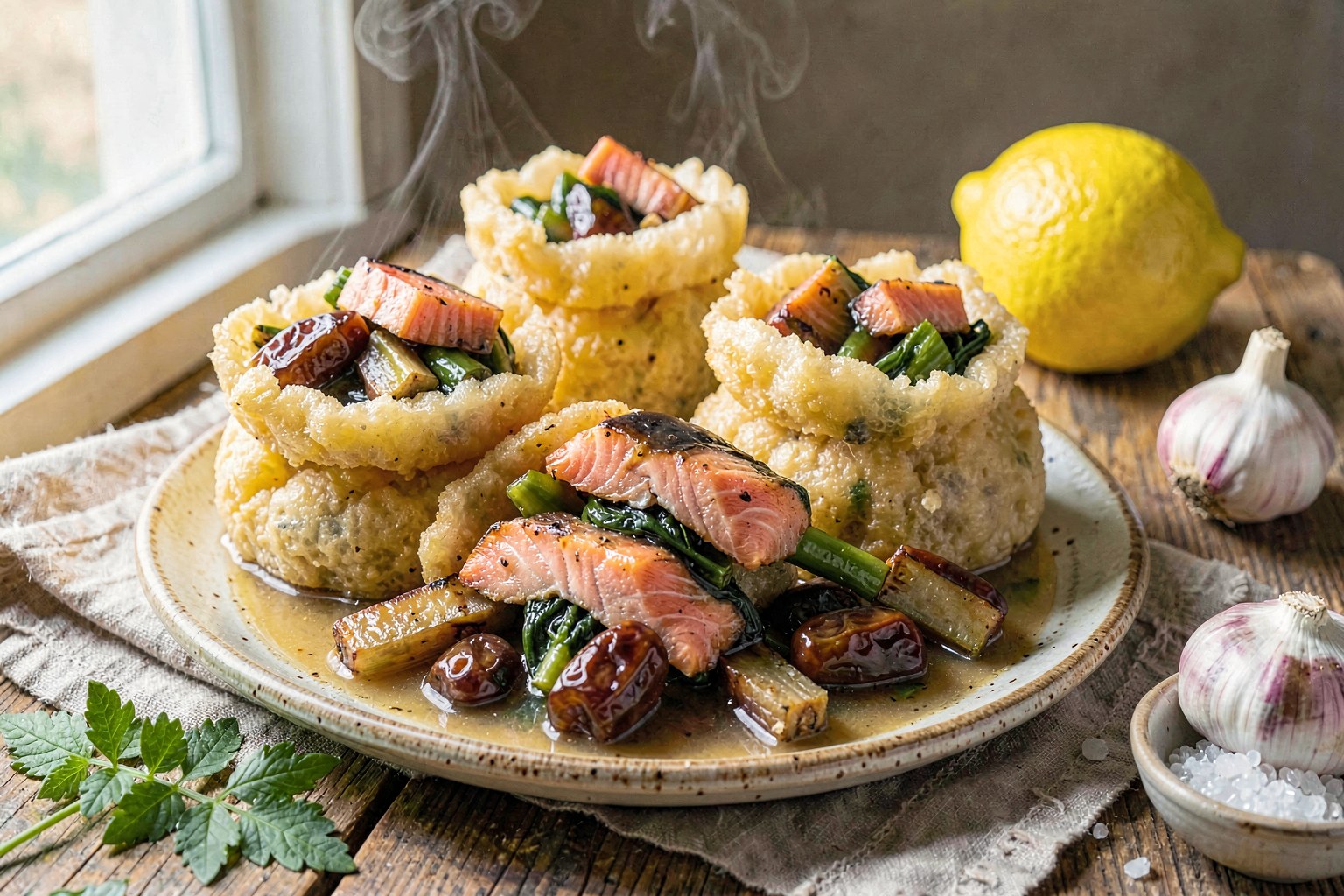
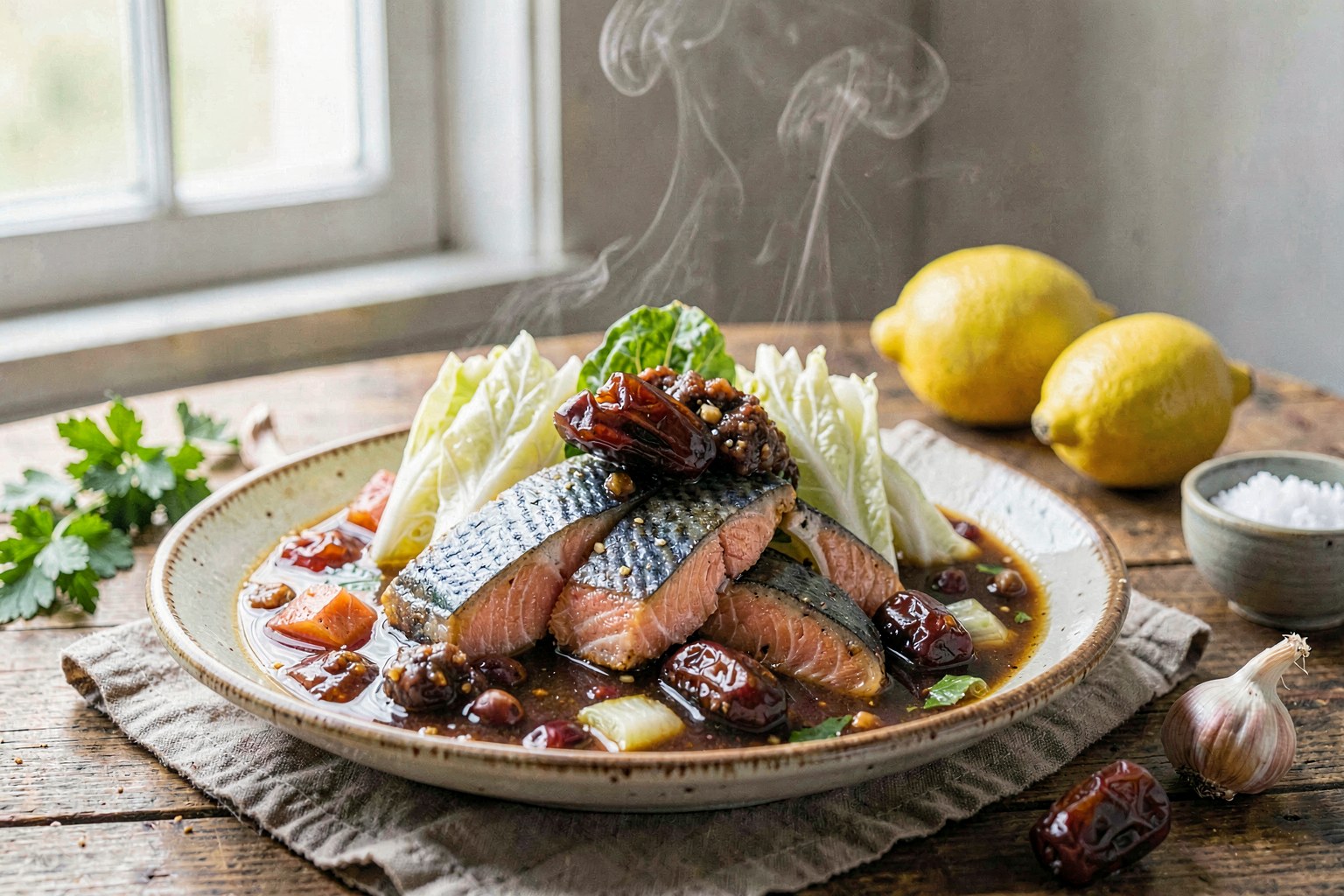
A nourishing banchan where tender wild-caught salmon and crisp Napa cabbage simmer in a deeply savory, fermented soybean broth enriched with fresh aromatics. This dish replaces traditional refined sugar with the natural sweetness of whole dates and uses only cold-pressed avocado oil, delivering a rich umami profile that supports gut health without inflammatory seed oils.
A little context
Rooted in the Korean tradition of 'jang' (fermented pastes) as the soul of the table, this recipe honors the ancient fermentation practices of doenjang while adapting them for a modern longevity diet. Traditional versions often rely on corn syrup or sugar to balance the saltiness; we have substituted this with finely chopped whole dates to provide a slow-release sweetness that does not spike blood glucose. We also swapped standard vegetable oils for cold-pressed avocado oil to protect the delicate omega-3s in the fish from oxidation during cooking.
The longevity story
This dish is a powerhouse of bioactive compounds: the fermented doenjang provides probiotics and isoflavones that support microbiome diversity, while the wild-caught salmon delivers high-quality omega-3 fatty acids (EPA/DHA) essential for reducing systemic inflammation. The inclusion of Napa cabbage and green onions adds polyphenols and glucosinolates, which support liver detoxification pathways. By eliminating refined sugars and seed oils, we preserve the anti-inflammatory integrity of the meal, ensuring the focus remains on cellular repair and longevity.
Method
- 01
Prepare the aromatics
In a small bowl, combine the minced dates, ginger, garlic, and the white parts of the green onions. Set aside. This resting period allows the enzymes in the garlic and ginger to activate.
- 02
Sauté the base
Heat the avocado oil in the Dutch oven over medium heat. Add the date-ginger-garlic mixture. Sauté gently for 3-4 minutes until fragrant and the dates begin to soften, being careful not to brown the garlic.
- 03
Dissolve the doenjang
Lower the heat to low. Add the doenjang paste directly to the aromatics. Stir constantly with the wooden spoon for 2 minutes to toast the paste slightly, releasing its nutty aroma. Slowly whisk in the broth until the paste is fully dissolved and the liquid is smooth.
- 04
Simmer the cabbage
Increase heat to medium-high and bring the broth to a gentle boil. Add the Napa cabbage chunks, starting with the thick stems. Reduce heat to low, cover, and simmer for 10-12 minutes until the stems are tender but still have a slight bite.
- 05
Poach the salmon
Gently nestle the wild-caught salmon fillets skin-side down into the simmering broth. The liquid should come halfway up the sides of the fish. Cover and cook for 6-8 minutes, depending on thickness, until the salmon is just opaque and flakes easily.
- 06
Finish and garnish
Remove the pot from heat. Stir in the toasted sesame oil and the green parts of the green onions. Taste the broth; if it needs more depth, add a splash more broth or a tiny pinch of sea salt (doenjang is already salty).
- 07
Serve immediately
Serve hot in shallow bowls, ensuring each portion gets a piece of salmon, cabbage, and a generous ladle of the savory broth. Pair with a side of kimchi or plain steamed brown rice if desired.
Nutrition facts
Per serving · 1 of 4- — Saturated
- 1 g
- — Polyunsaturated
- 2 g
- Carbohydrates
- 10 g
- — Fiber
- 1 g
- — Sugars
- 6 g
- Cholesterol
- 65 mg
- Sodium
- 534 mg
- Potassium
- 688 mg
Estimated from USDA FoodData Central for matched ingredients (80% ingredient coverage). Values vary with brand, preparation, and exact measurements.
Pro tips
- ✦Source your doenjang from a Korean grocery store looking for 'traditionally fermented' (dallang) varieties; avoid mass-market brands that add sugar or preservatives.
- ✦When selecting Napa cabbage, choose heads that feel heavy for their size with crisp, unblemished leaves; avoid any with yellowing edges.
- ✦Do not overcook the salmon; it continues to cook slightly from residual heat once removed from the pot, so pull it when it is just barely opaque in the center.
- ✦If the broth is too salty, add a splash of unsweetened coconut water or a few more minced dates to balance the sodium naturally.
Shop this recipe
As an Amazon Associate we earn from qualifying purchases.
Substitutions
- wild-caught sockeye salmon → wild-caught Arctic char or rainbow trout (these fish have a similar fat profile and hold up well to poaching in broth)
- Napa cabbage → Bok choy or regular green cabbage (Bok choy cooks faster (add in last 5 mins); regular cabbage takes longer (add with stems))
- avocado oil → ghee or grass-fed tallow (works well if you are not strictly vegan, adding a rich, buttery depth)
Storage
Store in an airtight glass container in the refrigerator for up to 3 days. The flavors deepen overnight. Reheat gently on the stovetop with a splash of water or broth; do not microwave aggressively to preserve the delicate fish texture.
What to serve with it
- Hot green tea (sencha or matcha) to enhance polyphenol absorption
- Unsweetened kombucha for additional probiotic support
- Sparkling water with a wedge of fresh lemon
- A small glass of dry red wine (Pinot Noir) if alcohol is part of your routine
FAQ
Is doenjang safe for those avoiding soy?+
No, traditional doenjang is made from fermented soybeans and contains soy proteins. However, there are chickpea-based or mung bean-based fermented pastes available that can mimic the flavor profile for those with soy allergies.
Can I make this without dates?+
Yes, you can use a small amount of pure maple syrup or monk fruit extract, but whole dates provide a superior texture and fiber content that aligns better with the whole-food philosophy.
Share this recipe
Notes from the community
Sign in to leave a note.
No notes yet — be the first.
You might also like